Today is Glioblastoma (GBM) Awareness Day. GBM is the most common and aggressive brain tumor.
Together, we continue working toward a future where glioblastoma is no longer a devastating diagnosis.
🧠🧫🧬🔬🦀🎗️
#GlioblastomaAwarenessDay#Glioblastoma#BrainCancer#CancerResearch
Thrilled and honored to be one of the recipients of the EACR-AACR-Mark Foundation Best Abstract Prize at the 37th Pezcoller Symposium! Grateful for the recognition and for the chance to share our work with such an inspiring community.
The symposium itself was fantastic — great science, discussions, and connections. Already looking forward to the next one! #CancerResearch #PezcollerSymposium
@pezcoller@EACRnews@AACR@TheMarkFdn
A new CRISPR approach developed by a team led by Jennifer Doudna can selectively destroy cancer cells carrying p53 mutations—one of the most common drivers of cancer—while sparing healthy cells. A promising step toward tackling “undruggable” cancers.
https://t.co/XrHGED9UHy
🎉 Excited to share my friend & colleague @NihalOlcay's new paper on genetically engineered human cell-based microrobots for selective cancer cell killing—now out in @ScienceAdvances! 🤖🧬
Unlike conventional microrobots that rely only on physical targeting, these living systems combine magnetic guidance with biological specificity—secreting tumor-targeting proteins to eliminate cancer cells while sparing healthy tissue.
A step toward smarter, more precise cancer therapies. 🎯
https://t.co/iVAhAUU5yC
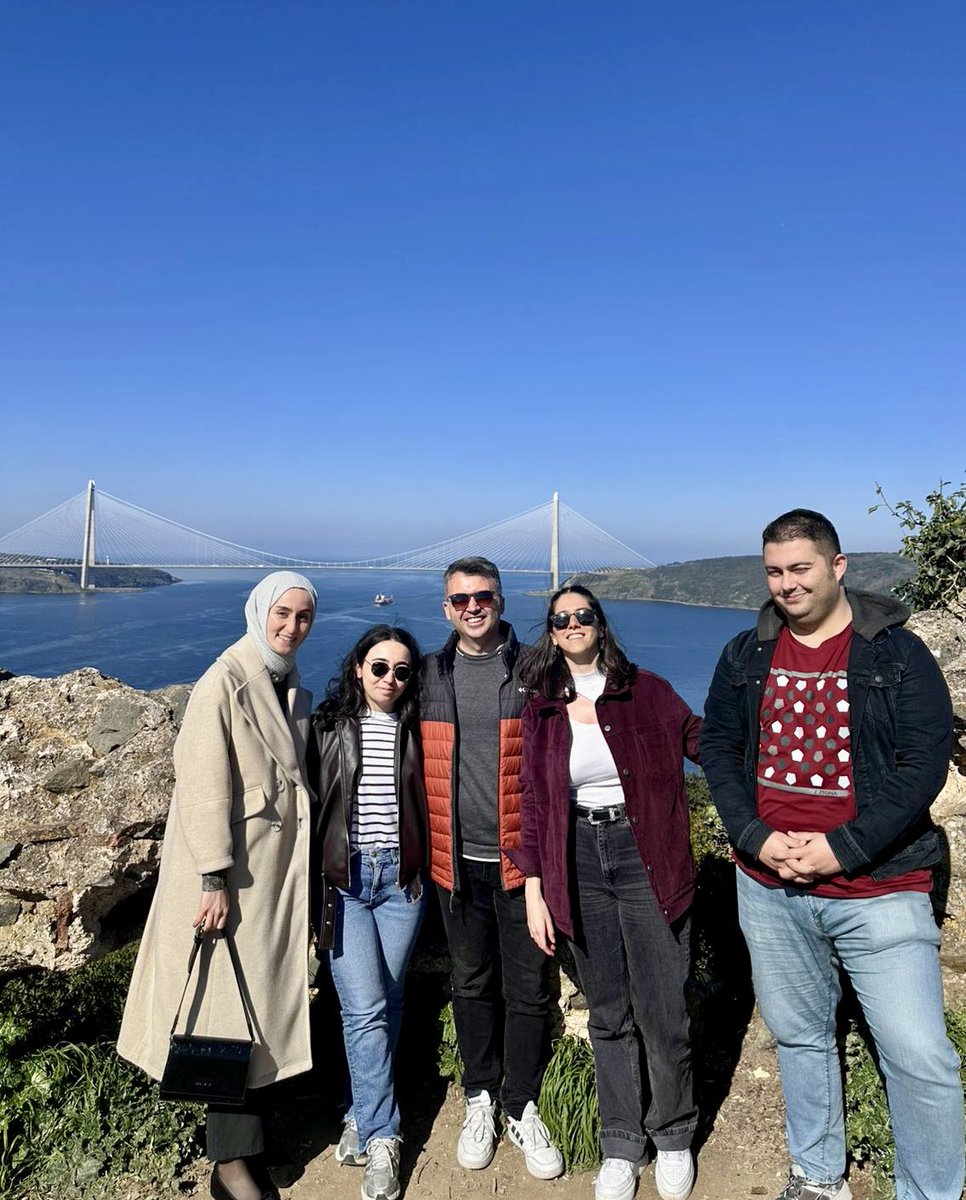
We explored the 13th-century Yoros Castle and took in Istanbul from the northernmost point of the Bosphorus. A perfect mix of history, views, and team vibes! 🏰🌿 #TeamOuting#CingözLab
Scientists from Yale just find that cancerous tumors help themselves grow by hacking the brain.
And the mechanism is more diabolical than we thought.
New Nature paper (Yale + UPenn) just mapped the complete circuit.
Here's what's actually happening:
Step 1: Lung tumors secrete NGF — nerve growth factor — to physically grow their own nerve supply into the tumor. Cancer is farming neurons.
Step 2: These nerves are TRPV1+ vagal sensory neurons. Yes — the same receptor that detects the heat in hot peppers. Cancer hijacked your capsaicin sensors.
Step 3: They fire signals up the vagus nerve → brainstem (RVLM) → sympathetic system. Full fight-or-flight activation. But you're not running from a lion. You're just sitting there while your tumor pulls the strings.
Step 4: Sympathetic nerves flood the tumor with noradrenaline. This hits β2 adrenergic receptors on alveolar macrophages — turning them immunosuppressive. Macrophages then actively block T cells from entering the tumor.
The result: Your immune system doesn't attack the cancer. Not because it can't see it. Because it's been neurologically blocked from doing so.
Cut the wire? Ablating TRPV1+ vagal neurons → tumor burden drops 50%+. Silence the brainstem circuit → same effect. Block β2 adrenergic receptors on macrophages → same effect.
That last one is already a drug class. Beta blockers.
Cancer just became a neuroscience problem — and the kill switch might already be in our medicine cabinet.
Sources:
• Nature: https://t.co/hyxWWANPRl
• Yale: https://t.co/uhTwULIjAP
The new edition of Hallmarks of Cancer, a cornerstone for cancer researchers, has just been released — a must-read for anyone exploring cancer biology.
https://t.co/h0o5ryfGrB
🎉 Great news!
Our TÜBİTAK 1001 project has been approved for funding.
🧠🔬 In this project, we will investigate the role of lipid metabolism in therapy-resistant brain tumors, aiming to uncover novel mechanisms and potential therapeutic targets.
I am grateful to TÜBİTAK for their support and to my team and collaborators for their dedication. Excited to move this research forward!
#CingözLab @ACingozLab
🎉 Excited to share a new paper led by my friend & colleague @betul_ersoy!
The study uncovers a distinct mechanism where HOXB13 drives proliferation in AR-negative prostate cancer by rewiring chromatin through AP-1 and converging on SMARCD2, pointing to a promising therapeutic target. 🧬
Great to reconnect scientifically and contribute to this work — fantastic collaboration with Betül and the Lack Lab.
https://t.co/LN5h2h3z9g
Researchers have applied serial biopsies to safely monitor glioblastoma progression and responses to immunotherapy in two patients, capturing details that are invisible to standard-of-care MRI.
Learn more in @ScienceTM: https://t.co/LE6ofSMdBW
Tümör metabolizması ve kanserde terapi direnci alanlarında araştırmalar yürüten grubumuza, TÜBİTAK-2218 Yurt İçi Doktora Sonrası Araştırma Burs Programı kapsamında başvuru yapabilecek doktora sonrası (post-doc) araştırmac��ları bekliyoruz.
Adaylardan beklenen nitelikler:
· Moleküler biyoloji laboratuvar tekniklerine ileri düzeyde hâkim olmak.
· Bilimsel çalışma yapabilecek düzeyde iyi derecede İngilizce bilmek.
· Takım çalışmasına yatkın, araştırmaya istekli ve sorumluluk sahibi olmak.
· Hayvan deneyleri konusunda deneyimli olmak tercih sebebidir.
İlgilenen adayların, özgeçmişlerini ve kısa bir motivasyon mektubunu [[email protected]] adresine göndermeleri rica olunur.
#CingözLab
https://t.co/qpwWTFOIwq