Cheers, chills, and a standing ovation when RASolute 302 showed unprecedented survival on daraxonrasib for patients with progressive pancreatic cancer
Seldom do you sense you’re witnessing a historic moment in cancer care but this feels like ras targeting has arrived
#ASCO26
Oorja Bio has reported promising Phase 1 and preclinical results for ORJ-001, a first-in-class peptide therapy for idiopathic #PulmonaryFibrosis that restores alveolar epithelial cell function and is advancing to Phase 2 trials. 💊
Press release: https://t.co/VcRN1Ux86g
A large-scale study of human mobility and wildlife movement across the United States suggests that the day-to-day presence of humans—not just how they alter the landscape—is a major ecological force that shapes how animals move through and use their environments, researchers report in Science. https://t.co/1KjBXuobzE
Researchers investigated an intermediate subpopulation of alveolar epithelial cells, termed “Regeneration Alveolar Epithelial cells“, which reached a peak 14 days post-injury.
🔗 https://t.co/ioWYvjN0lh
This is really cool (and wild):
Scientists simulated a complete living cell for the first time. Every molecule, every reaction, from DNA replication to cell division.
The paper (Luthey-Schulten et al., Cell 2026, https://t.co/PXxXWKC8yp), just out today, used JCVI-Syn3A — a synthetic minimal bacterium with fewer than 500 genes. A 3D+time simulation of the full 105-minute cell cycle: DNA replication, protein translation, metabolism, division. Every gene, protein, RNA, and chemical reaction tracked through physical space.
It took years to build. Multiple GPUs. Six days of compute time per run.
And this is the simplest possible cell.
A human cell has ~20,000 genes. It lives in tissue. It interacts with neighbors. It differentiates. It responds to drugs in ways that depend on context we haven't fully measured.
Mechanistic simulation of the minimal cell costs 6 GPU-days for 105 minutes of biology. You cannot scale that to human cells. The complexity isn't 40x harder. It's exponentially harder.
This is why the field pivoted to data-driven models. You can't hand-encode the regulatory wiring of a human hepatocyte. But you can learn it — if you have the right perturbation data collected across enough diverse biological contexts.
The two approaches aren't competing. Papers like this generate the ground truth that future ML models need for validation. But the path to a clinically useful virtual cell runs through foundation models, not through scaling up mechanistic simulation.
Amazing work!
Of course the main problem with Peer Review is that is is a system of EXPLOITATION. Reviewers do work, but are not paid for their effort, while publishers make huge profit.
Academics are literally the only people expected to work for free.
This needs to change
#Pay4PeerReview
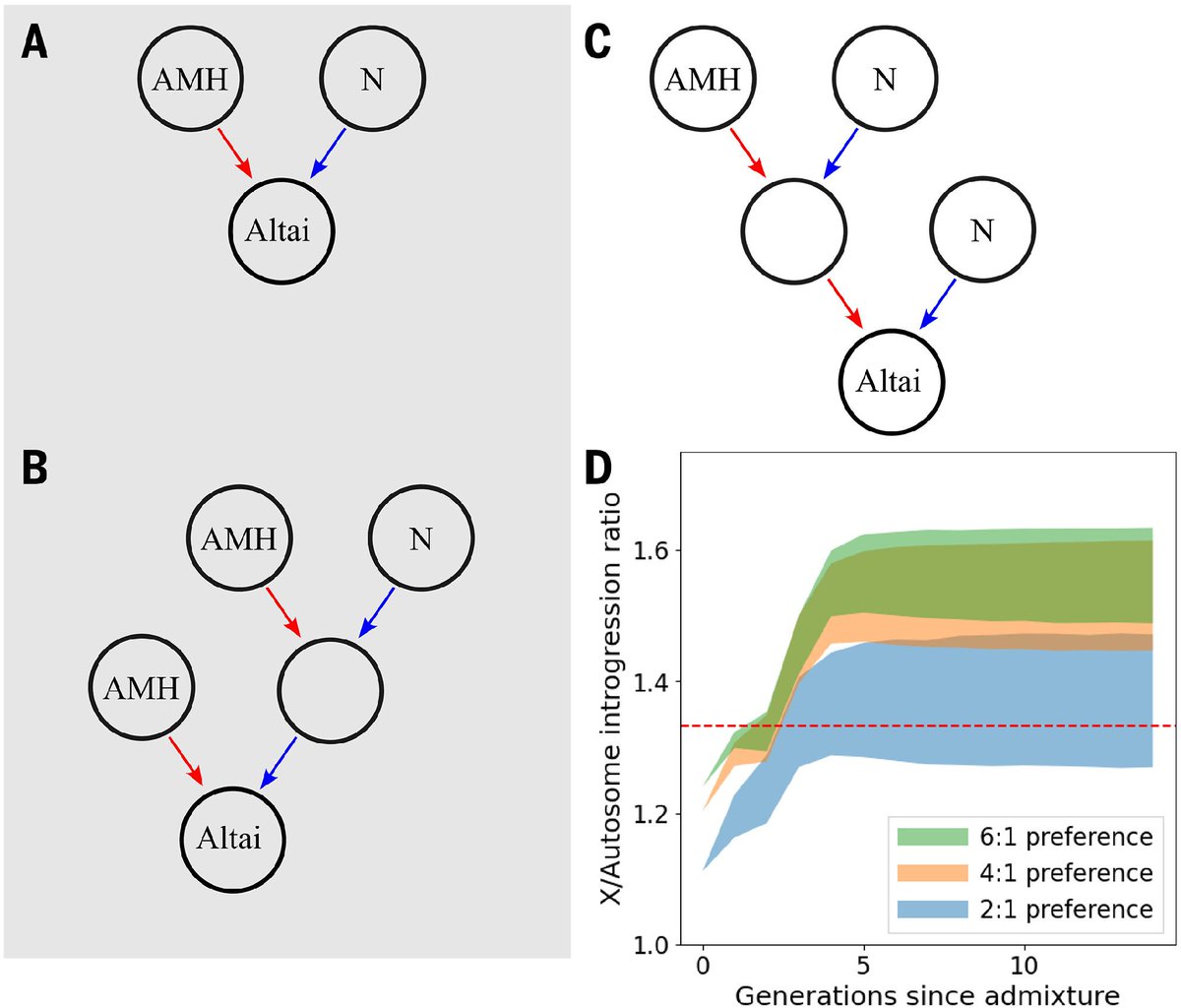
When Neanderthals and ancient modern humans interbred, the pairings were mostly between male Neanderthals and female humans, according to a new Science study.
This finding helps explain why Neanderthal ancestry present in most humans is unevenly distributed. https://t.co/yd0A66qEqF
🤩 Check it out!
Scientists present a novel 3D bioprinted #osteosarcoma (OS) model by incorporating OS spheroids into an OS-tailored bioink, enriched with OS cell-derived decellularized ECM.
👉 https://t.co/zX79xHQd6F
🥼 Researchers evaluated the role of LOXL2 in temporomandibular joint (TMJ) cartilage, its molecular mechanism, and gene networks using in vivo Loxl2 knockout mice and ex vivo goat TMJ cartilage.
@budental | https://t.co/pfeXacRENV
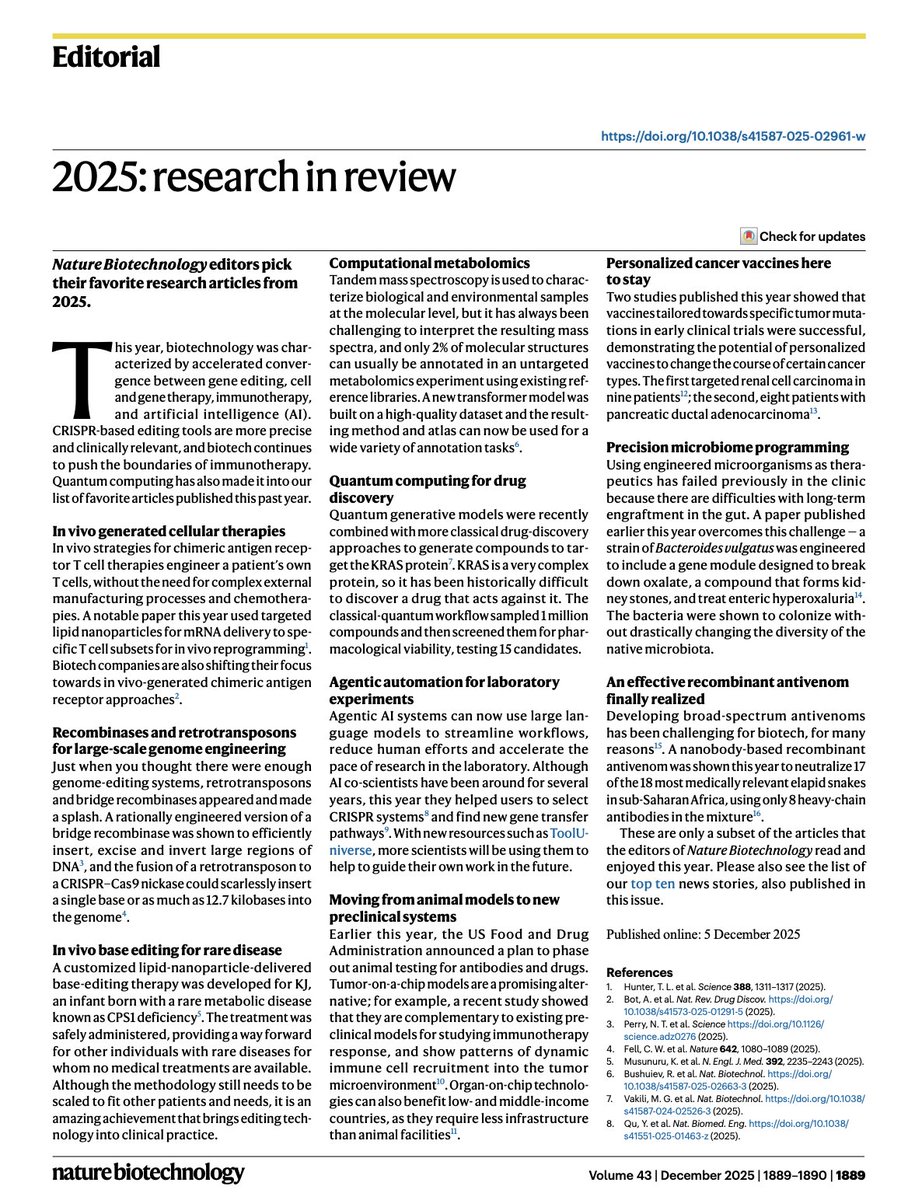
Check out the top 10 advances in biotechnology in 2025 by Nature Biotechnology. Happy to see our research making the list. Hoping to make much bigger impact in 2026.
Let's collaborate and make this world a better place.
https://t.co/tdwgnNmjZl
Just out in @NatureBiotech - a deep dive into what's next in idiopathic pulmonary fibrosis after the approval of @Boehringer 's Jascayd (nerandomilast). There's still huge scope for innovation here - & many good ideas being pursued. https://t.co/XFTJ0i8ULT
NOAA has upgraded its forecast to a G3 (strong) geomagnetic storm, meaning up to 21 U.S. states may see aurora overnight on Nov. 6-7, 2025. https://t.co/EtzP3rKagT
Scientists explain how Maya calendar specialists developed their eclipse tables with centuries-long accuracy.
Learn more in @ScienceAdvances: https://t.co/cnN5TyOw4d
Rejected within 24 hours.
That’s how my academic journey really started.
My writing has never been the same since.
Here’s what I learned from 300+ submissions:
Too many papers get rejected instantly.
Predicting protein-protein interactions in the human proteome
Predicting which human proteins shake hands—and how—is a longstanding bottleneck. Proteins rarely act alone; they assemble into complexes that drive immunity, metabolism, signaling, and disease. But testing hundreds of millions of possible pairs experimentally is slow, expensive, and blind to many weak or transient interactions.
Jing Zhang, Qian Cong, David Baker and coauthors tackle this with a smart AI + data pipeline. First, they amplify evolutionary “clues” by assembling omicMSAs—deep multiple sequence alignments mined from petabytes of raw eukaryotic genomic data—so coevolution across species pops out. Second, they train a fast interaction model, RoseTTAFold2-PPI, not just on scarce complex structures, but on domain–domain contacts distilled from ~200M AlphaFold monomers—a huge synthetic training set that teaches the network what real interfaces look like.
The payoff is big: a proteome-scale screen over ~200M human pairs yields ~18,000 PPIs at ~90% precision (and ~29k at 80%), including ~3,600 not previously reported. The method excels on transmembrane interactions, a class that’s notoriously hard in the lab, and produces 3D complex models—so you don’t just get a yes/no, you see the interface. Mapping human variants onto these models flags ~4,950 PPIs with disease mutations at the contact surface, offering concrete hypotheses for mechanism.
Beyond pairs, the team reconstructs higher-order assemblies and nominates new components for well-studied complexes (e.g., telomere maintenance, GPI-GnT, cilia/flagella machinery), and highlights GPCR partners and mitochondrial modules that have been hiding in plain sight.
Stepping back: this is a credible path toward a computed 3D human interactome—faster, cheaper, and increasingly comprehensive as more genomes and structures arrive. It doesn’t replace experiments; it prioritizes them, focusing bench time where the biology is richest.
Paper: https://t.co/IphUI7KEQT