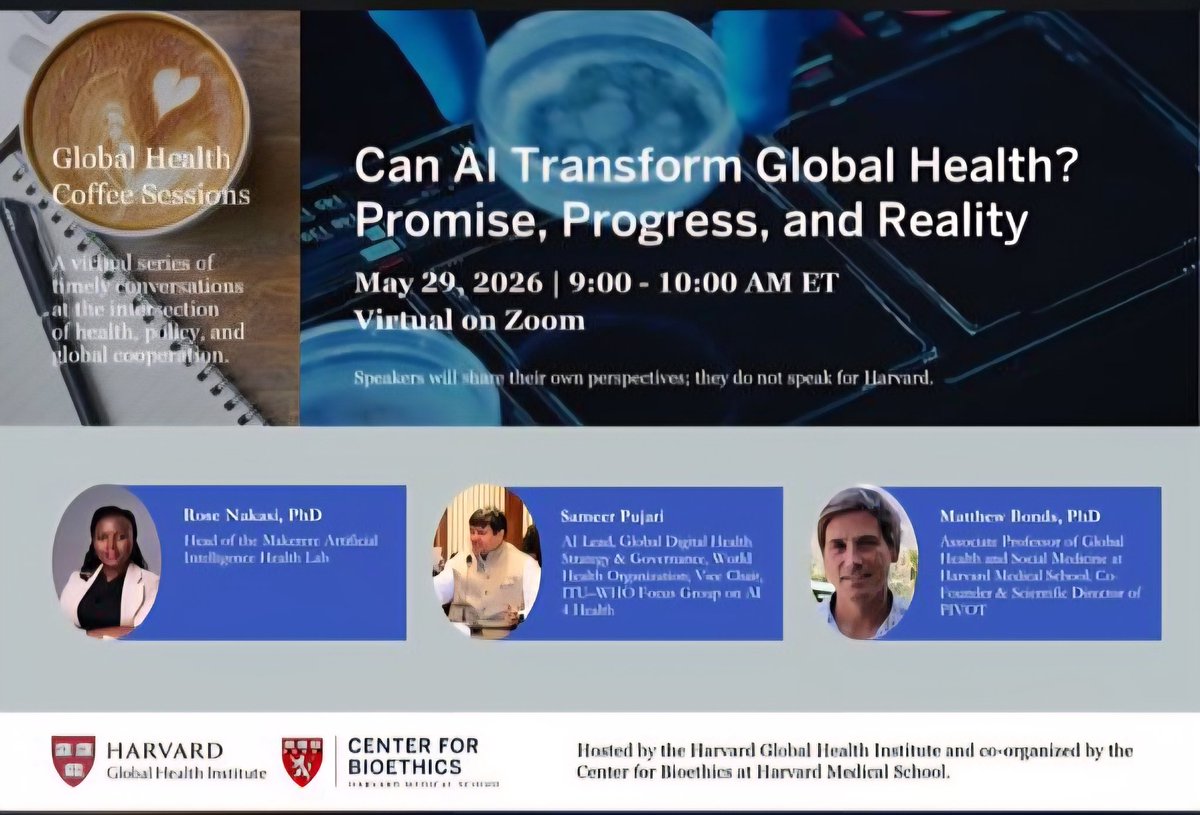
Our Lab Lead, @RoseNakasikiire, will be part of an important global conversation this week on #AIandGlobalHealth.
This is exactly the work we believe in ethical, inclusive, and impactful AI that serves real people.
🔹 Theme: "Can AI Transform Global Health, Promise, Progress, and Reality?"
Harvard Global Health Institute & Harvard Medical School Center for Bioethics.
Date: May 29, 2026
Time: 9:00 – 10:00 AM EAT | Free on Zoom
👉 Register: https://t.co/ZRBlntdR3P
At @AI_HealthLabMak, we remain committed to ensuring African voices shape the AI systems the world will live with tomorrow.
#AIForGlobalGoals
Congratulations to the @AI_HealthLabMak team on their latest publication in @FrontiersIn Digital Health.
Their paper, "Adapting DeepLabV3+ for Biopsy Cervical Cancer Lesion Segmentation, " presents a practical approach to #CervicalCancerDiagnosis in resource-limited settings, combining smartphone-assisted microscopy with deep learning to achieve a 93.1% Dice coefficient and 75.8% mean IoU across 5,966 histopathological images from the @UgandaCancerIns .
This work demonstrates that reliable digital pathology analysis is technically feasible using readily available smartphone hardware, outperforming the U-Net baseline by approximately 25% on mIoU. African-led AI research solving real health challenges with accessible tools.
Read the full paper: https://t.co/48GLjlBflX
#AIFORGLOBALGOALS
Earlier this week, we had the opportunity to showcase @Ocular_Project 's progress in supporting malaria diagnosis to technical experts from @FightingMalaria
For a tool designed to work inside Uganda's health system, feedback from organisations that have spent decades on the ground supporting malaria elimination efforts here is necessary.
These conversations surface the texture of community experience, the realities of how diagnosis actually happens in the field, and the gaps our models need to close to be genuinely useful.
Iteration is only as good as the feedback that shapes it. We're grateful for stakeholders who take the work seriously enough to engage with it critically.
Learn more: https://t.co/8ZntTIPAbC
#AIforGlobalGoals
𝗜𝗻𝘀𝗶𝗴𝗵𝘁𝘀 𝗳𝗿𝗼𝗺 𝗼𝘂𝗿 𝗢𝗰𝘂𝗹𝗮𝗿 𝗗𝗲𝗺𝗼 𝗗𝗮𝘆
Our recent Demo Day was a powerful testament to how the @AI_HealthLabMak is harnessing technology to bridge the gap between innovation and life-saving care.
Healthcare practitioners from the field shared how this technology can empower technicians in remote villages by enhancing diagnostic accuracy and significantly shortening the time to results. Clinics in hard-to-reach areas can potentially clear patient backlogs and deliver critical care exactly when it’s needed most.
We explored how @Ocular_Project doubles as a vital microscopy teaching aid and transforms diagnostic data into real-time digital insights for smarter public health planning and disease surveillance. Every piece of feedback from our community is now directly fueling the next phase of this journey.
@Ocular_Project is setting a new standard for health service delivery. How do you see AI transforming the pulse of your sector?
#AIFORGLOBALGOALS
Happy #LabourDay. 🛠️
Behind Ocular's AI models are the laboratory professionals, software engineers, data scientists, and clinical partners who show up every day to build diagnostic tools that actually work in the real world, in Ugandan health facilities, with the conditions and constraints that come with them.
From staining slides in the field to annotating datasets in the lab, their work is a direct contribution to Uganda's health system strengthening the diagnostic capacity that clinicians, patients, and communities depend on.
AI in health is built by people, for people. And that is worth recognising today.
To our entire team: this is your day. Thank you. 🙌
#AIForGlobalGoals
Today is #WorldMalariaDay. 🌍
A trained microscopist is expected to manually analyze up to 20 slides a day. In Kampala alone, there is just one lab technician for every 3,000 people far below the @WHO's recommended 1:1,500 ratio. In reality, this makes diagnostics slow, error-prone, and unsustainable.
@Ocular_Project Tool automates parasite counting and analysis helping lab technicians diagnose more patients in less time.
Visit US: https://t.co/NIMgOe8gmo , https://t.co/fMwZkAkwaF
#AIFORGLOBALHEALTH
Kampala will host the @dsa_org 2026 Workshop, convening researchers, practitioners, and innovators advancing data science, machine learning, and generative AI across the continent.
This workshop aligns closely with @AI_HealthLabMak commitment to leveraging data science and responsible AI to address real-world challenges in healthcare. Platforms like @dsa_org create opportunities for interdisciplinary collaboration, capacity building, and knowledge exchange all critical for developing context-aware AI solutions that strengthen health systems and improve decision-making.
📅 Workshop Dates: 23–24 July 2026
📍 Location: Makerere University, Kampala
We encourage researchers, students, and professionals to take advantage of this opportunity to connect, learn, and contribute to shaping the future of Data Science and AI in Africa.
🔗 Register: https://t.co/EdwdlUlu5l
#AIFROGLOBALGOALS
From the Field 🔬
What do laboratory professionals actually think of the Ocular AI Tool? Our researcher @EBarasa27141 took the improved model to Komamboga Health Centre to find out. Here's what the lab team had to say:
For Sarah Phiona-Acayi, it was the time saved for patients and an improved workflow. For Nakitende Mariam, it was the confidence that comes with reduced human error in diagnosis.
This is why the From the Field segment exists: to keep our development grounded in the realities of frontline laboratory work
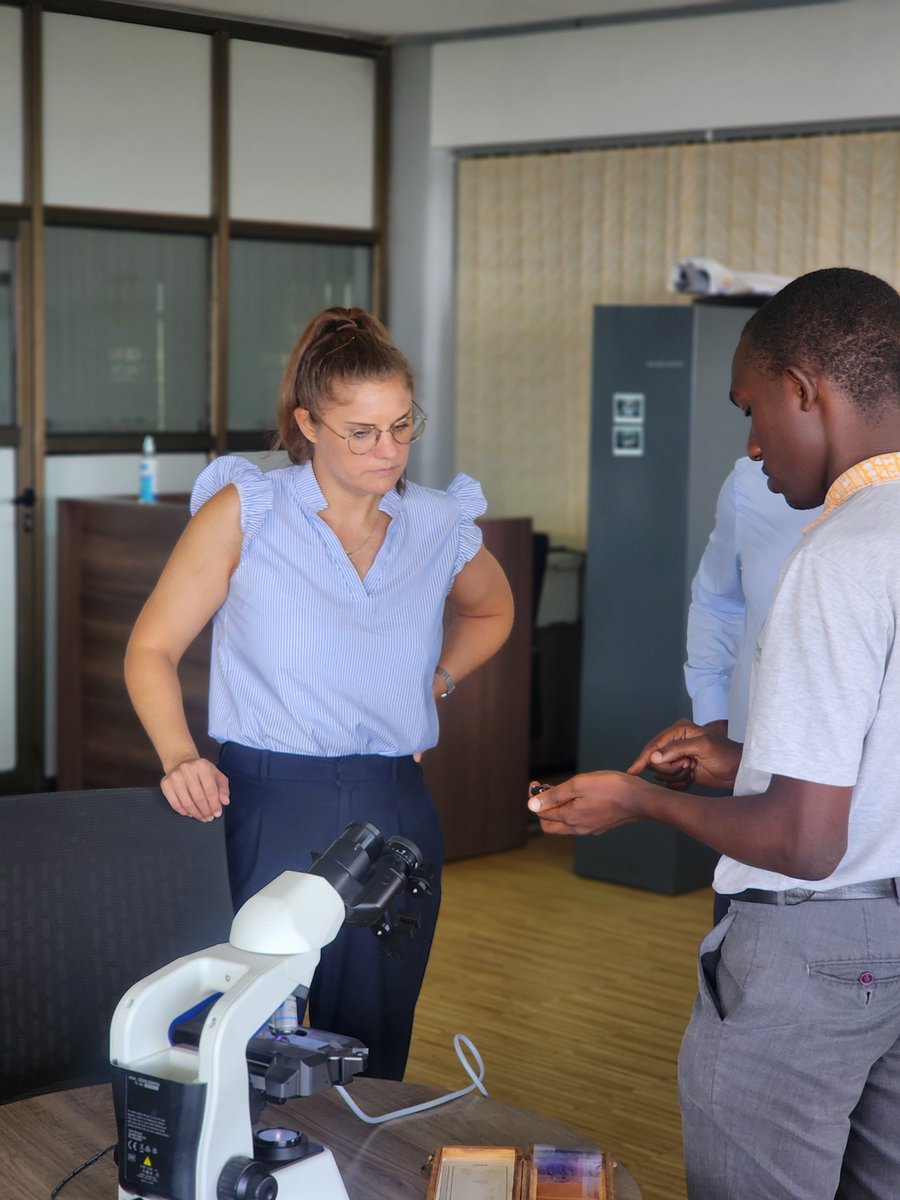
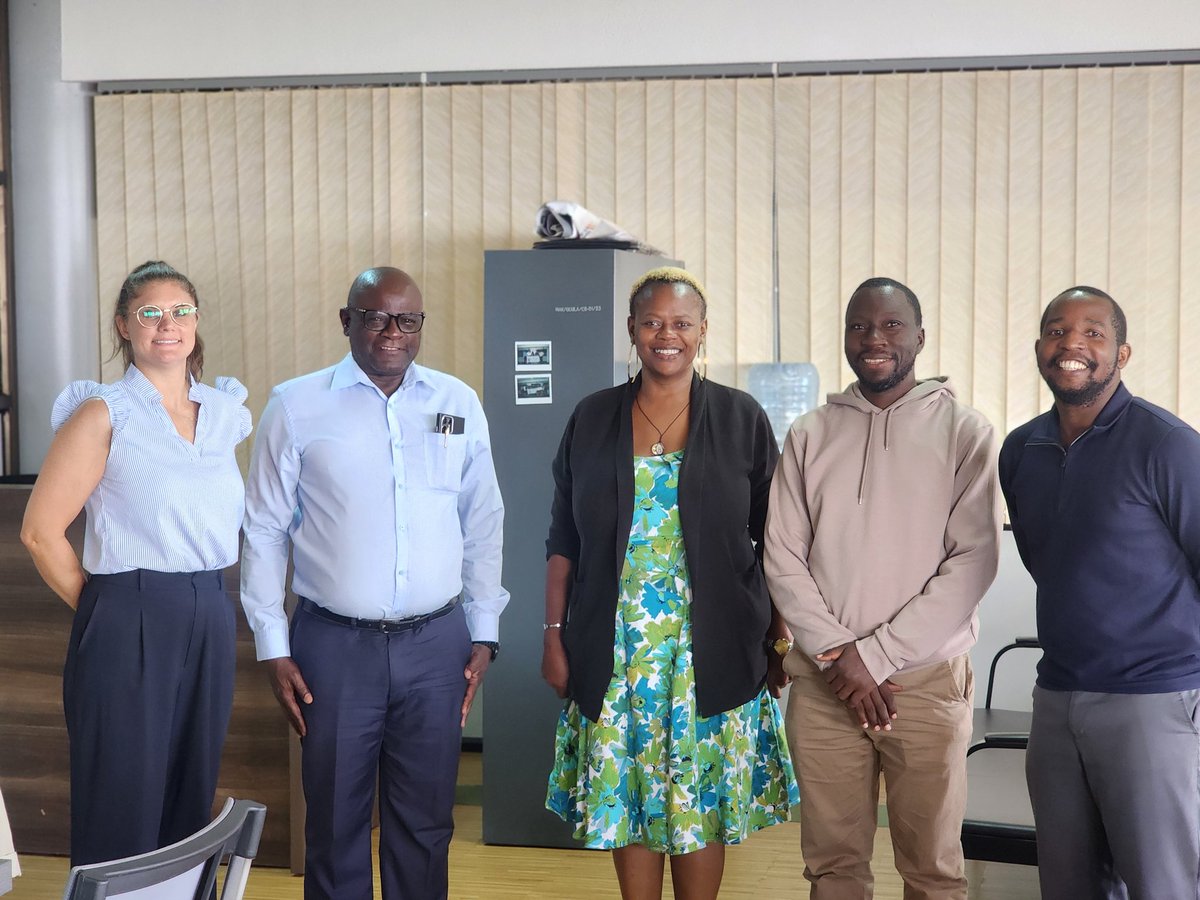
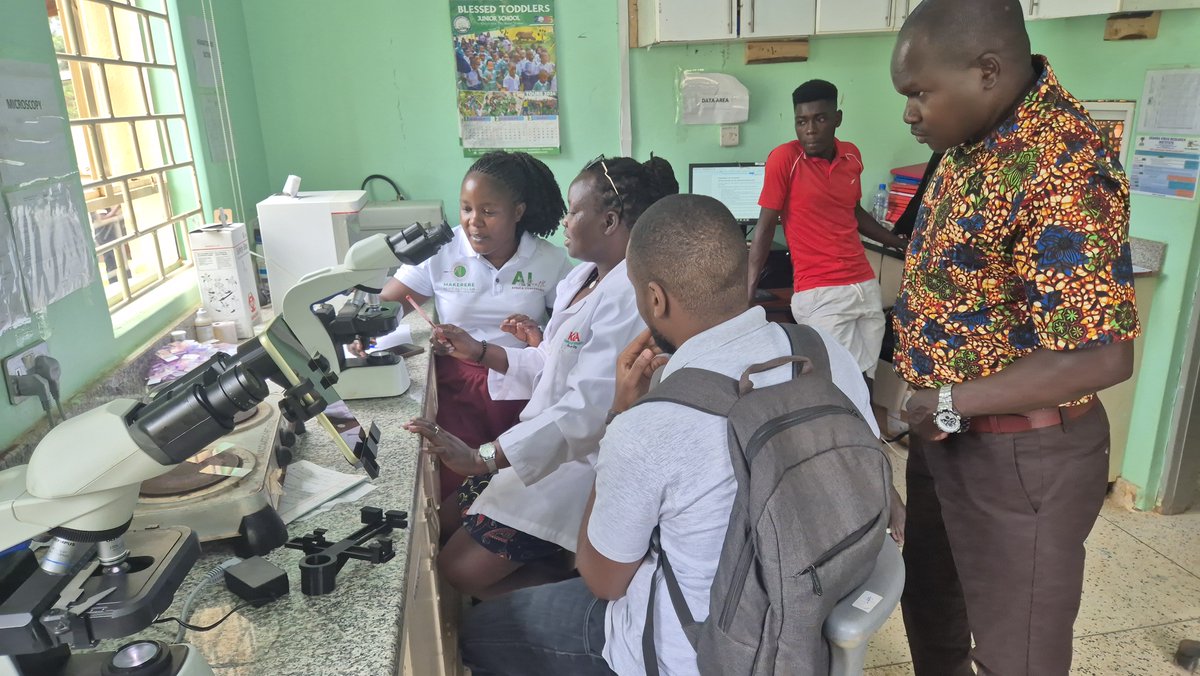
This week, we hosted the @FightingMalaria ~team at @AI_HealthLabMak in collaboration with the @Ocular_Project
During the visit, we showcased a live demo of our solution, highlighting how our work is contributing to smarter, technology-driven health interventions. The session evolved into a rich and engaging dialogue, where we explored shared priorities, innovation pathways, and opportunities for impact across digital health and disease response.
This is just the beginning. More insights, outcomes, and next steps from the engagement will be shared soon.
#AIFORGLOBALGOALS
Our team lead Dr. @RoseNakasikiire ,will be speaking at the upcoming Global Conversations on Sustainable Health.
The discussion aligns closely with the Lab’s mission to design, develop, and evaluate responsible artificial intelligence solutions that strengthen health systems, improve clinical decision-making, enhance disease surveillance, and promote equitable access to digital health innovations.
Through this platform, Dr.@RoseNakasikiire , will highlight how locally driven AI research, capacity building, and multidisciplinary collaboration can support sustainable health outcomes while addressing critical issues of data governance, ethical AI deployment, and inclusive innovation for low and middle-income settings.
🎙Theme: “ AI & Sustainable Health: Innovation, Equity, and Power. ”
🗓 Date : 07- May-2026
⏰Time : 2–3 PM EAT
https://t.co/ifcMkCyrfO
Join us as we explore practical pathways for leveraging AI to build resilient, equitable, and sustainable health systems.
#AIFORGLOBALGOALS
Co-Designing the Future of Diagnostics in Uganda 🇺🇬🧪
We recently had the privilege of sitting down with the @mengo_hospital Lab. team to discuss the potential of @Ocular_Project. For @RonaldLugwana, the Deputy Laboratory Superintendent, the value of Ocular is about standardization and trust.
Why this matters for lab techs:
▪️ The tool has the potential to eliminate human-related variations like technician fatigue or even color blindness ensuring that every patient gets a standardized, reliable result.
▪️ When patient numbers are high, AI acts as a vital support system, maintaining accuracy even when the workload is heavy.
@Ocular_Project is a tool in active development. We believe that those closest to Uganda’s diagnostic challenges lab technicians, clinicians, and public health planners are best placed to shape what Ocular becomes. Feedback from professionals like Ronald directly informs our next iteration. By co-designing with the local medical community, we’re building capacity and trust from the ground up.
How do you see AI supporting the next generation of laboratory diagnostics? Let’s discuss in the comments. 💬
#AIForGlobalGoals
Co-designing the Future of Diagnostics in Uganda.
We met with the @mengo_hospital Lab team to explore Ocular. The goal: standardization and trust. AI can reduce human variation, support heavy workloads, and help ensure reliable results.
How do you see AI shaping lab diagnostics?
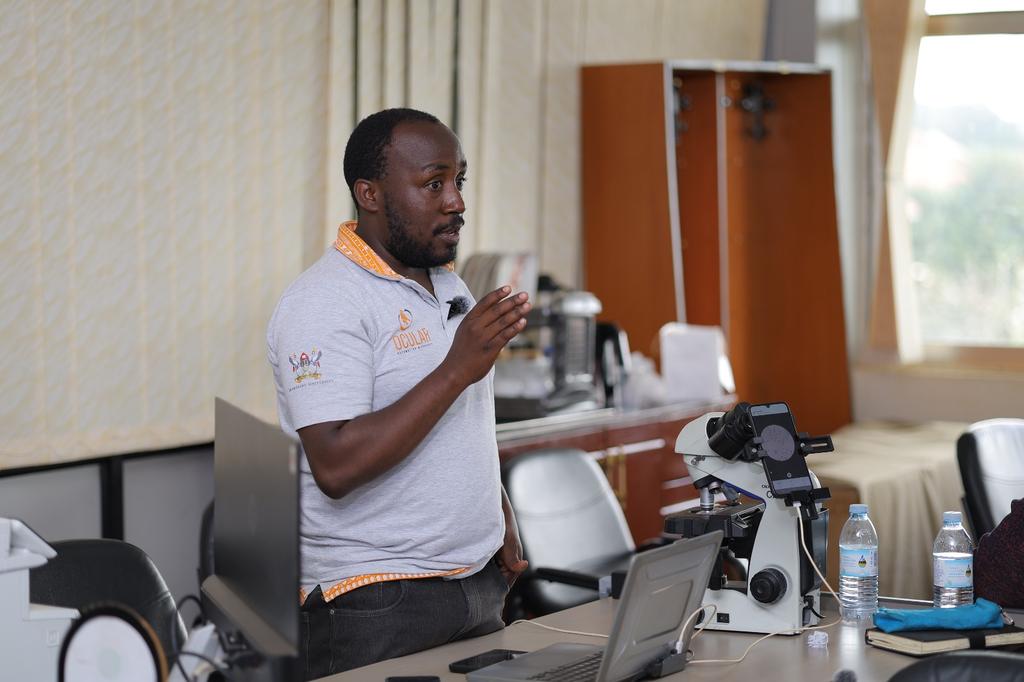
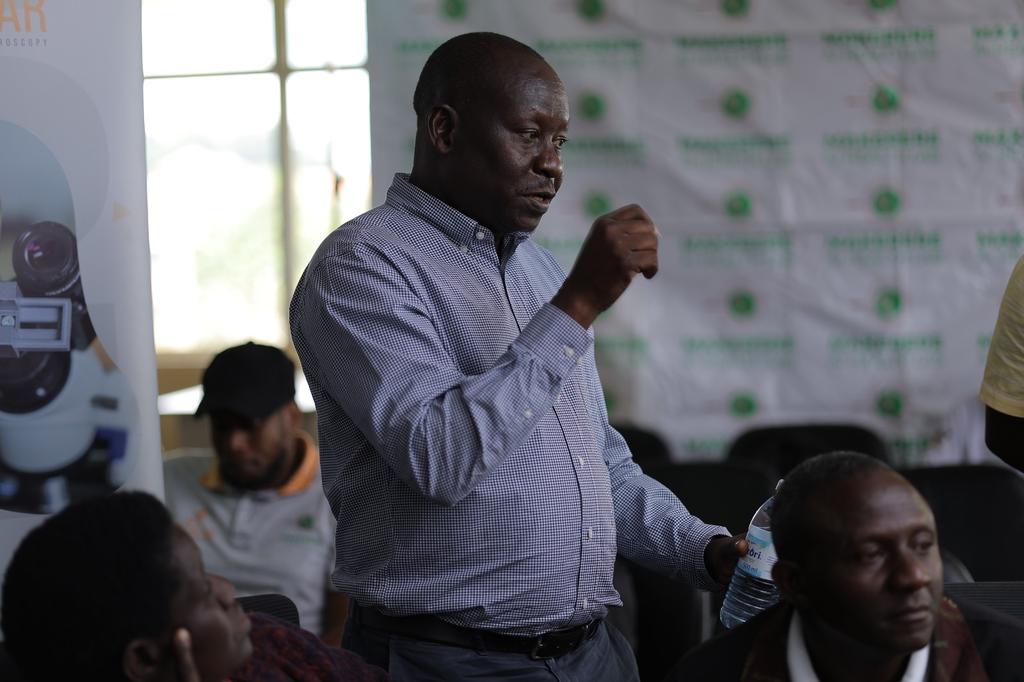
We hosted the first Demo Day.
The highlight? Direct interaction between end users and our project team. Attendees got to ask questions, explore the tool hands-on, and see how Ocular works in real time from slide analysis to its role as a teaching aid and source of data for disease surveillance.
It was amazing to see feedback flow straight to our engineers and lab experts, helping shape the next phase of development and improve model accuracy.
#AIForGlobalGoals
We hosted our first Demo Day and it delivered. 🔬
Real users. Real feedback. Live walkthroughs of Ocular from slide analysis to disease surveillance to teaching tool.
Engineers and lab experts heard it directly. That's how we improve.
#AIForGlobalGoals
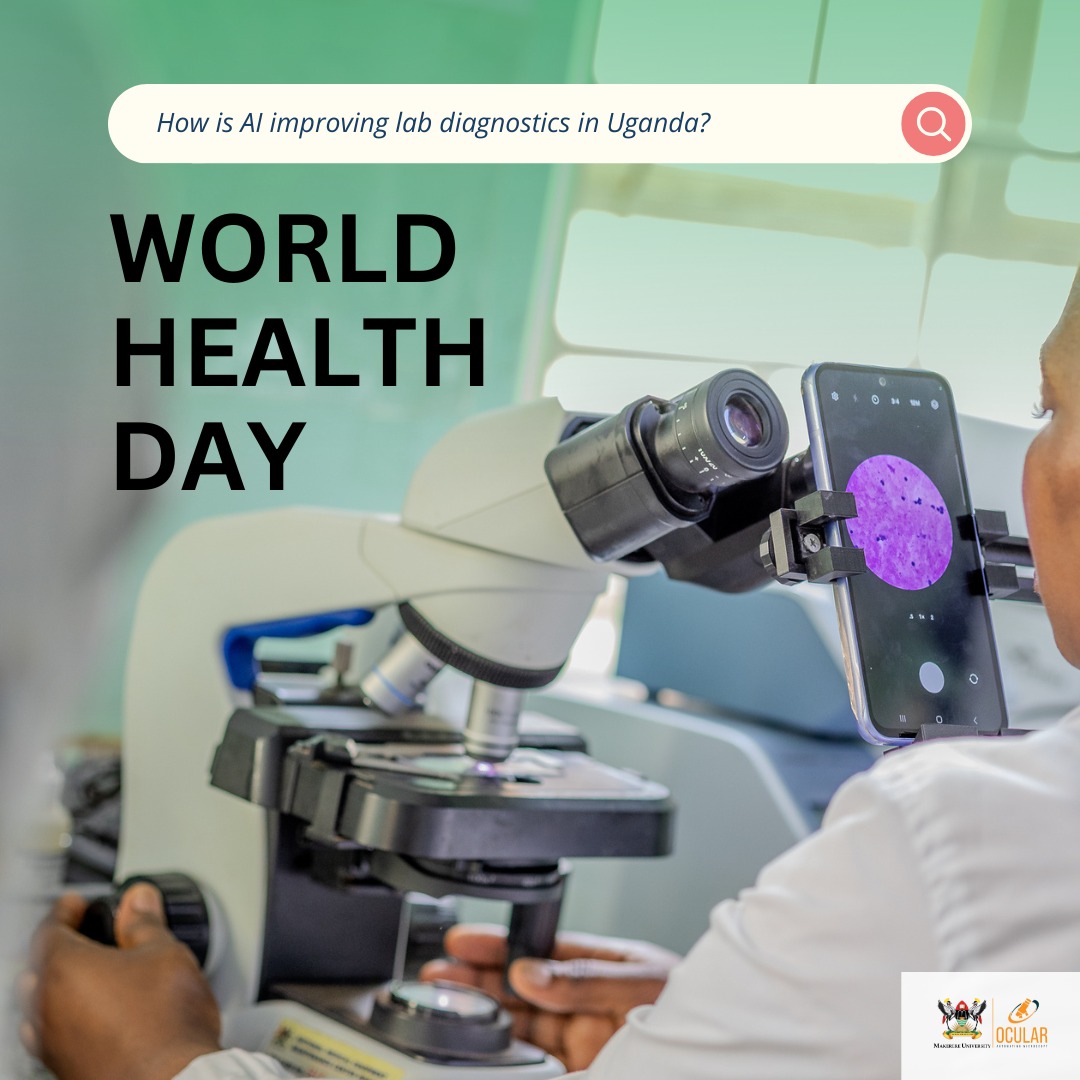
𝗪𝗼𝗿𝗹𝗱 𝗛𝗲𝗮𝗹𝘁𝗵 𝗗𝗮𝘆 𝟮𝟬𝟮𝟲: 𝗦𝘁𝗿𝗲𝗻𝗴𝘁𝗵𝗲𝗻𝗶𝗻𝗴 𝗗𝗶𝗮𝗴𝗻𝗼𝘀𝘁𝗶𝗰𝘀 𝗶𝗻 𝗨𝗴𝗮𝗻𝗱𝗮 🌍🩺
On this #WorldHealthDay, we reflect on the critical role of diagnostics in building resilient health systems.
Across many settings, laboratory services remain under strain. Yet timely and accurate diagnostics are foundational to effective treatment, disease control, and better health outcomes.
As these challenges persist, AI offers new possibilities:
▪️ Supporting overburdened health workers
▪️ Improving speed, consistency, and access to diagnostic insights.
AI has the potential to strengthen health systems in meaningful and scalable ways. Grounded in local contexts, these technologies can help close critical gaps bringing us closer to more responsive and effective healthcare for all. 🤖📊
#AIForGlobalGoals
Across many health facilities, one challenge keeps coming up, there simply aren’t enough lab technicians.
When labs are overstretched, diagnoses can be delayed or missed altogether. And when that happens, patients don’t get the care they need in time. In some cases, this can lead to complications like drug resistance.
Our Chief Laboratory Technician, Dr. Andama Alfred spotlights this dilemma.
The @Ocular_Project tool leverages computer vision to support more efficient and consistent diagnosis, right at the point of care. For malaria, tuberculosis and cervical cancer, the goal is to make it easier for health workers to do their jobs, even in resource-constrained settings.
#AIFORGLOBALGOALS
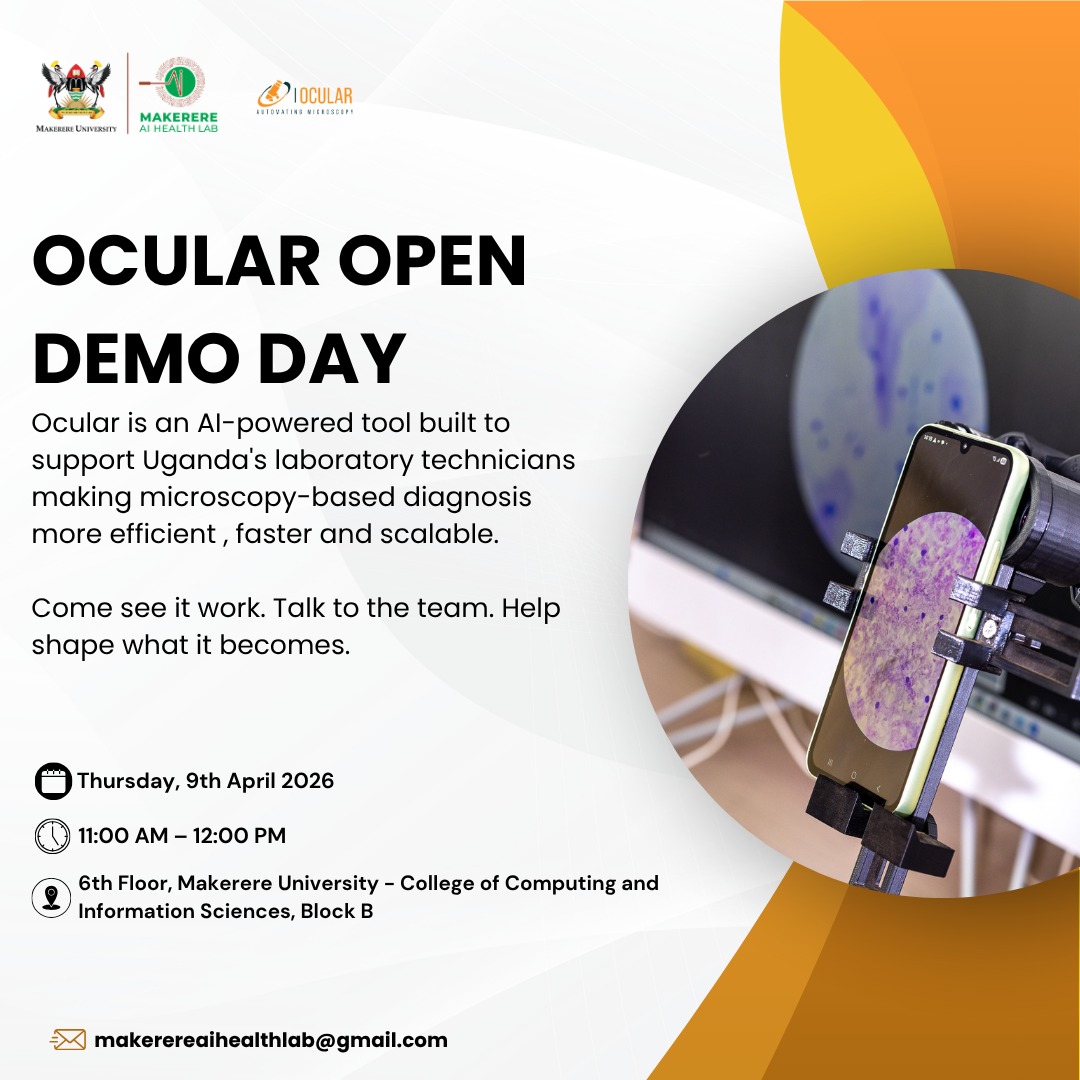
𝗝𝗼𝗶𝗻 𝗨𝘀: 𝗢𝗰𝘂𝗹𝗮𝗿_𝗣𝗿𝗼𝗷𝗲𝗰𝘁 𝗢𝗽𝗲𝗻 𝗗𝗲𝗺𝗼 𝗗𝗮𝘆.
Uganda’s laboratories face a growing diagnostic demand, yet capacity remains limited. What if AI could enhance & support laboratory technicians to deliver faster, accurate and more consistent microscopy-based diagnosis?
Our project is an AI-powered diagnostic support tool designed to assist with malaria, tuberculosis, and cervical cancer slide analysis while also serving as a teaching aid and disease surveillance data source.
𝗪𝗵𝗮𝘁 𝘁𝗼 𝗲𝘅𝗽𝗲𝗰𝘁:
▪️ Live demonstrations of AI-assisted slide analysis
▪️ Use of Ocular as a microscopy training tool
▪️ Insights into structured data for disease surveillance
▪️ Interactive Q&A with engineers, data scientists, and laboratory experts
▪️ Opportunity to shape the next phase of development
This session is ideal for laboratory professionals, clinicians, public health practitioners, researchers, digital health enthusiasts, and partners interested in strengthening diagnostics in low-resource settings.
𝗗𝗲𝗺𝗼 𝗗𝗮𝘆 𝗗𝗲𝘁𝗮𝗶𝗹𝘀:
📅 Thursday, 9th April 2026
⏱️11:00 AM – 12:00 PM
📍 6th Floor, College of Computing & Information Sciences, Block B
📎 Register: https://t.co/wvn3GcnhIp
#AIForGlobalGoals
On World TB Day, we're thinking about what happens before the treatment.
Ending TB starts with accurate, timely diagnosis and in Uganda, that happens in a laboratory under significant pressure.
Lab technicians face a significant structural challenge, fatigue that compounds error. High volumes and long shifts mean human eyes tire and concentration dips.
@Ocular_Project is an AI-powered microscopy tool developed at the @AI_HealthLabMak that supports TB sputum smear analysis working alongside lab technicians, with the microscopes already in our labs, to bring efficiency where the system creates pressure. @Ocular_Project is built from local data, tested in local labs and designed for local realities.
On this World TB Day, @WHO is urging countries to fast-track near-point-of-care diagnostic tools for early detection. @Ocular_Project is Uganda's contribution to that direction.
Listen to @mubirukenneth, MSc, MScR, PGDME as he shares: 👇
#AIFORGLOBALGOALS
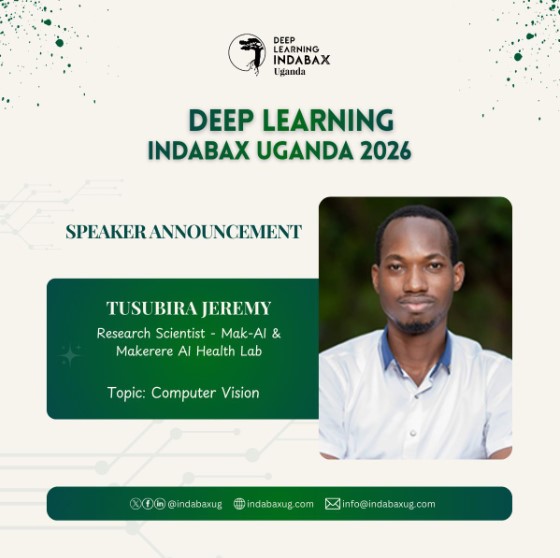
Our Research Scientist, @TusubiraJeremy , will be contributing to @indabaxug 2026 as a facilitator in Computer Vision.
His participation is part of our wider commitment to mentoring and training the next generation of AI talent in Uganda. Through hands-on sessions in image classification and object detection, Jeremy will support participants in building practical skills applicable to real-world challenges.
At @AI_HealthLabMak , we are intentional about developing local capacity in AI to drive innovation in healthcare and beyond.
Platforms like @indabaxug Uganda play a critical role in strengthening Africa’s AI ecosystem through knowledge sharing, mentorship, and collaboration.
#AIForGlobalGoals
In Uganda, patients arrive at the @UgandaCancerIns when the disease has already reached Stage 4. At that point, treatment becomes much harder. Early diagnosis can dramatically improve survival rates, yet awareness and access to screening remain major challenges.
Behind every diagnosis is a complex process. Pathologists carefully examine tissue slides under microscopes, sometimes spending hours reviewing a single case. In complicated cases, multiple specialists must confirm the final report. The reality is clear, we need faster, more scalable ways to support early cancer detection.
Technology may play an important role in closing this gap and at @AI_HealthLabMak we are building an app under @Ocular_Project , AI trained to help pathologists in enhancing their work so we can have early diagnosis with accuracy and cover more patients.
#AIForGlobalGoals