This morning @spinesection using #Ai for ideal alignment targets in Lumbar Degeneration. Many applications include patient specific pre-bent rods, surgical planning and #Robotics#spine2021
Images Are More than Pictures, They Are Data!
Gillies et al. @RSNA provide a great overview of Radiomics and its potential power to facilitate better clinical decision making https://t.co/FiWFTKyixF
It's today! In a few hours, we'll step into the age of intelligence-based spine care with AO Spine experts.
AO Spine webinar on Artificial Intelligence and Machine Learning, Cutting Edge Applications in Spine 🗓 Tuesday, November 24, 2020 ⏰ 15:00 CET ➡ https://t.co/yAjChkwe3e
@spinesurgerydoc @JohnHShinMD Thank you Kris. This is not our picture. This is provided by @JAMANetworkOpen with the article link. Thus showing. We should reach to the journal to correct it. Thank you
🔔#ArtificialIntelligence shows increasing loss of normal cervical lordotic curvature for both sexes and young adults. Analysis of 13 691 cervical spine radiographs. using Deep Learning image segmentation https://t.co/V6hf510AnF
#ArtificialIntelligence in spine surgery has focused on predictive analytics and supervised image recognition for radiographic diagnosis. Thinking about future directions? Check out this review @WendeNGibbs@jrasouli https://t.co/otwIfuDACZ
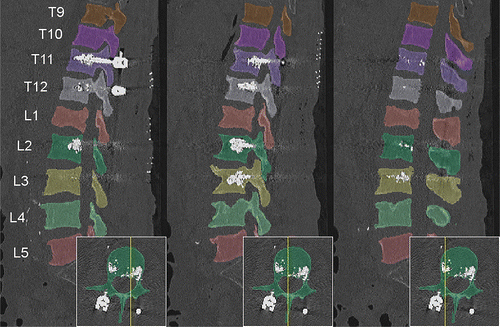
Data is available from https://t.co/oYet5Mdu9X and is intended for large-scale machine learning aimed at automated spine processing and fracture detection.
#AI#spine#DeepLearning
Today we highlight the work of Löffler et al. A Vertebral Segmentation Dataset with Fracture Grading published in @Radiology_AI. They used deep learning CNN for vertebral segmentation and a semi-quantitative method to classify vertebral fracture https://t.co/xb4maGWIrR
#Thread
@HopkinsNsurg uses predictive analytics and R Shiny to quantify the risk of C5 palsy following posterior cervical decompression. Score is available online 👇🏻
The authors evaluated #ML models for identifying individuals with abnormal bone mineral density (BMD) through an analysis of spine X-ray features extracted by deep learning to alert high-risk osteoporosis populations. https://t.co/ZtXSEFNYYf