Out at @nature just now!
https://t.co/6E9s9rCPz8
We present #RIED, a new paradigm for excitation-free super-resolution microscopy.
We establish chemical super-resolution microscopy using electrochemiluminescence (ECL), chemiluminescence (CL), and bioluminescence (BL).
(1/n)
How do active dendritic processes shape intelligence? 🤔
With @YiotaPoirazi, we review in vivo findings on dendritic computation in the behaving brain & its potential to inspire next-gen learning algorithms in AI. 🤖
https://t.co/zpVuMU2LC4
@dendritesgr@AnnualReviews
Sixty-two holograms at once: a 6,144-element programmable metasurface projected independent images simultaneously, rather than one by one, hinting at far higher holographic capacity from a single input frequency. @NatureElectron https://t.co/N4i5A1jW7o
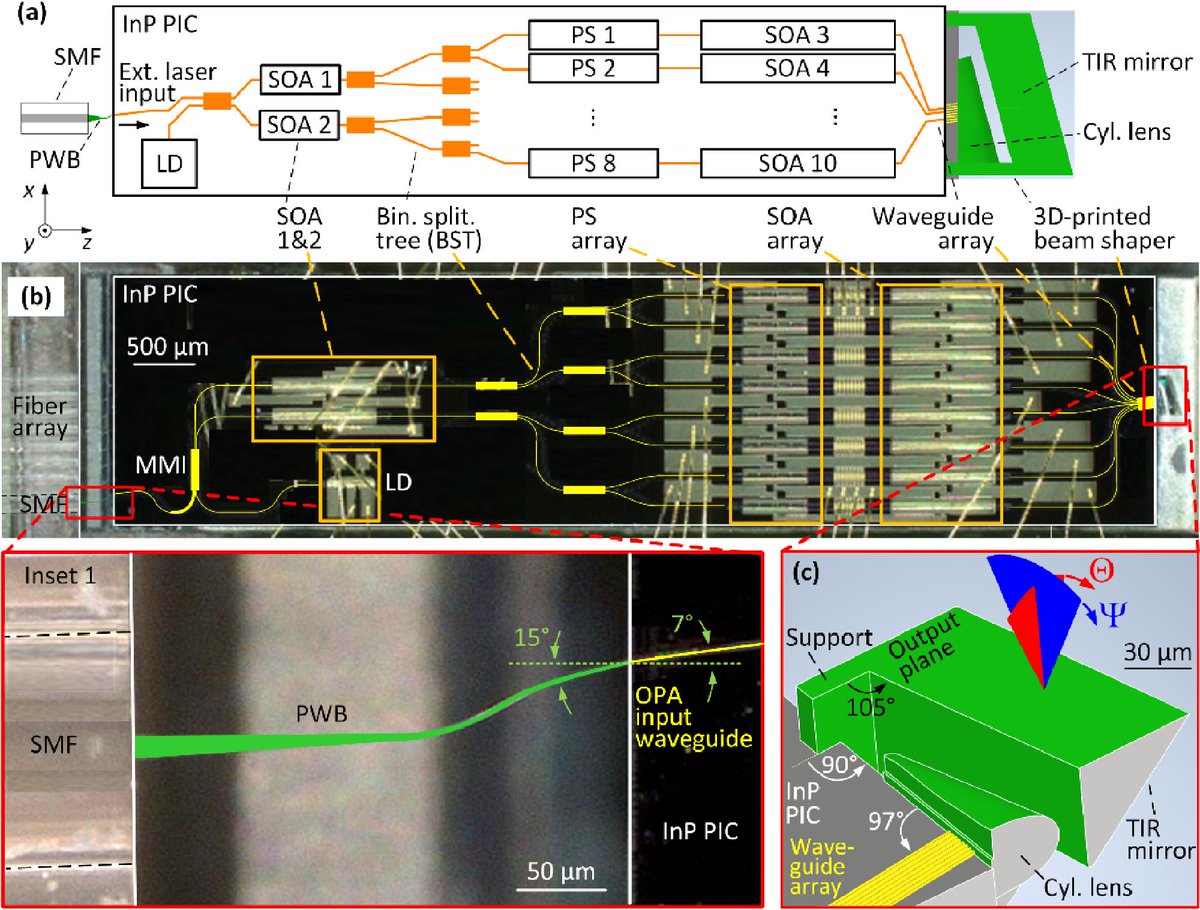
An Editors' Pick via #OPG_OpEx: LiDAR demonstration using an InP-based optical phased array with a 3D-printed beam-shaping element https://t.co/zRBvjPNqfc #OpticalAmplifiers#WaveguideGratings
It's been a year since our critique of false positives in a prominent snRNA-seq/MERFISH Nature paper, and it seems the authors have been pondering lessons learned and implications for "science integrity." Sudhof's commentary was received 2/6 and accepted 2/7....
It detected just 0.05 grams of walnut and distinguished fresh from 24- and 48-hour room-temperature chicken, milk, and eggs—though mixed-food settings have yet to be tested. @ScienceAdvances https://t.co/hvd2zt81xt
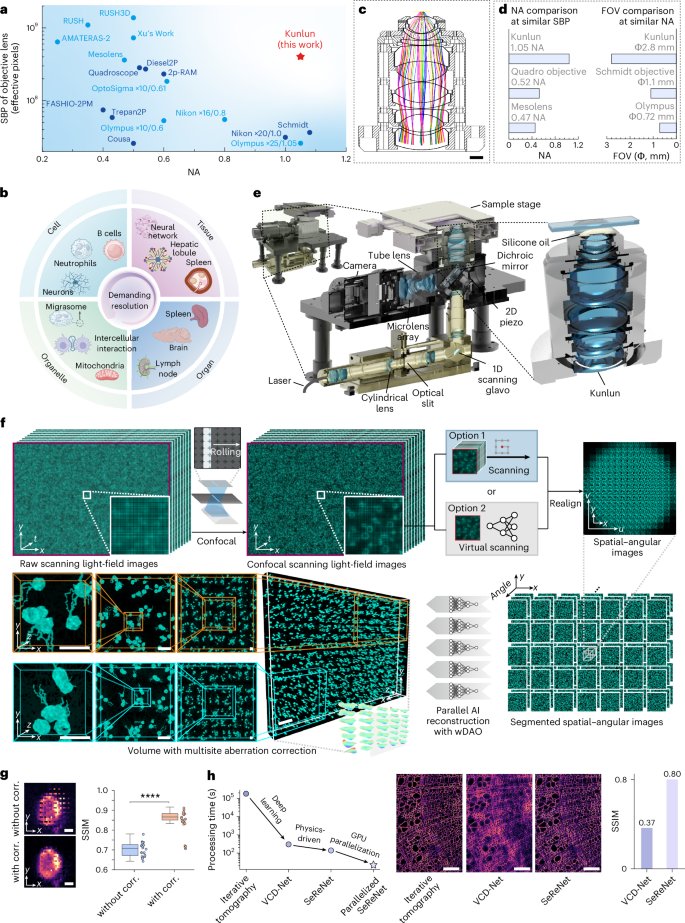
A new hybrid imaging technology integrates 3D photoacoustic tomography and ultrasound localization microscopy, allowing for continuous, noninvasive, whole-brain imaging in mice through an intact skull.
Learn more in this week’s issue of Science Advances: https://t.co/NIwLWBhuyV
Excited to share our first red ACh sensor!
We developed GRAB_rACh1h, the first genetically encoded red fluorescent sensor for recording acetylcholine dynamics in vivo. (1/3)
A lightweight head-mounted multiplane microscope allows simultaneous imaging of 1800 neurons in freely moving mice, sampled over weeks.
https://t.co/z8KvAMqFEh
In our work "single cortical neurons as deep artificial neural networks" we strongly suggested that one biological neuron has a deep network equivalent of computations packed inside it,
but we never definitively showed a neuron solving any specific computational task so it was not clear whether these computations are utilizable in practice
In this work, @IdoAizenbud shows that a single neuron solves multiple specific hard computational tasks and demonstrates that all these dendritic computations are indeed very utilizable, locking down the remaining gap from our previous work
More than that, in order to do all this, we developed a new and general method to determine if any specific computation can be mapped onto a single neuron, for any specific computation one has in mind.
We do this by constructing a deep neural network for the neuron, a differentiable digital twin, through which one can propagate gradients and optimize using gradient descent for any purpose.
These optimization changes transfer nicely from the twin to the real neuron simulation!
We term this new method TwinProp (as gradients are propagated through the twin)
One interesting and important property of this method is that it does not require any explicit computation of the derivative for the object we wish to propagate gradients through during training.
it's all taken care of by the process of constructing a sufficiently accurate deep network twin for that object (in our case, a single highly complex biological neuron).
This only requires a sufficiently large input-output dataset of that object.
This also means that even if the original object is not differentiable at all (like the spiking of a single neuron), the digital twin has the ability to approximate the derivatives in a practically useful way nevertheless.
I believe this method is extremely general and can be widely utilized in many different scientific fields for many different objects beyond single neurons, despite it being developed specifically to answer questions relating single neuron computation, that we specifically care most about.
Many more details in Ido's original thread
link to the paper on bioRxiv:
https://t.co/tPbWTisGhA
I am sending an open letter to Thermo Fisher. Their response to my response to their manipulated western blot is bullying and petty. Yes, this western blot really is manipulated, it is unfair on me to say otherwise. I don't make those accusations lightly. #ThermoFishy
A small time slip in sepsis AI can make a model look strong on paper while pulling information from the wrong direction in time. @EmoryUniversity@NaturePortfolio https://t.co/pSWWGnLXbF
Here is a great explanation why the recent nature physics papers suggesting that neurons are simple is deeply misleading. Linguistically. And statistically.
Simple input-output dependencies explain neuronal activity (
@ChrisWLynn
) has made the rounds on X with divided opinions. I show in this blog that while neurons are described simply, so can explicitly complex units: Describe and Arise are distinct claims. https://t.co/S1zgyAzorN
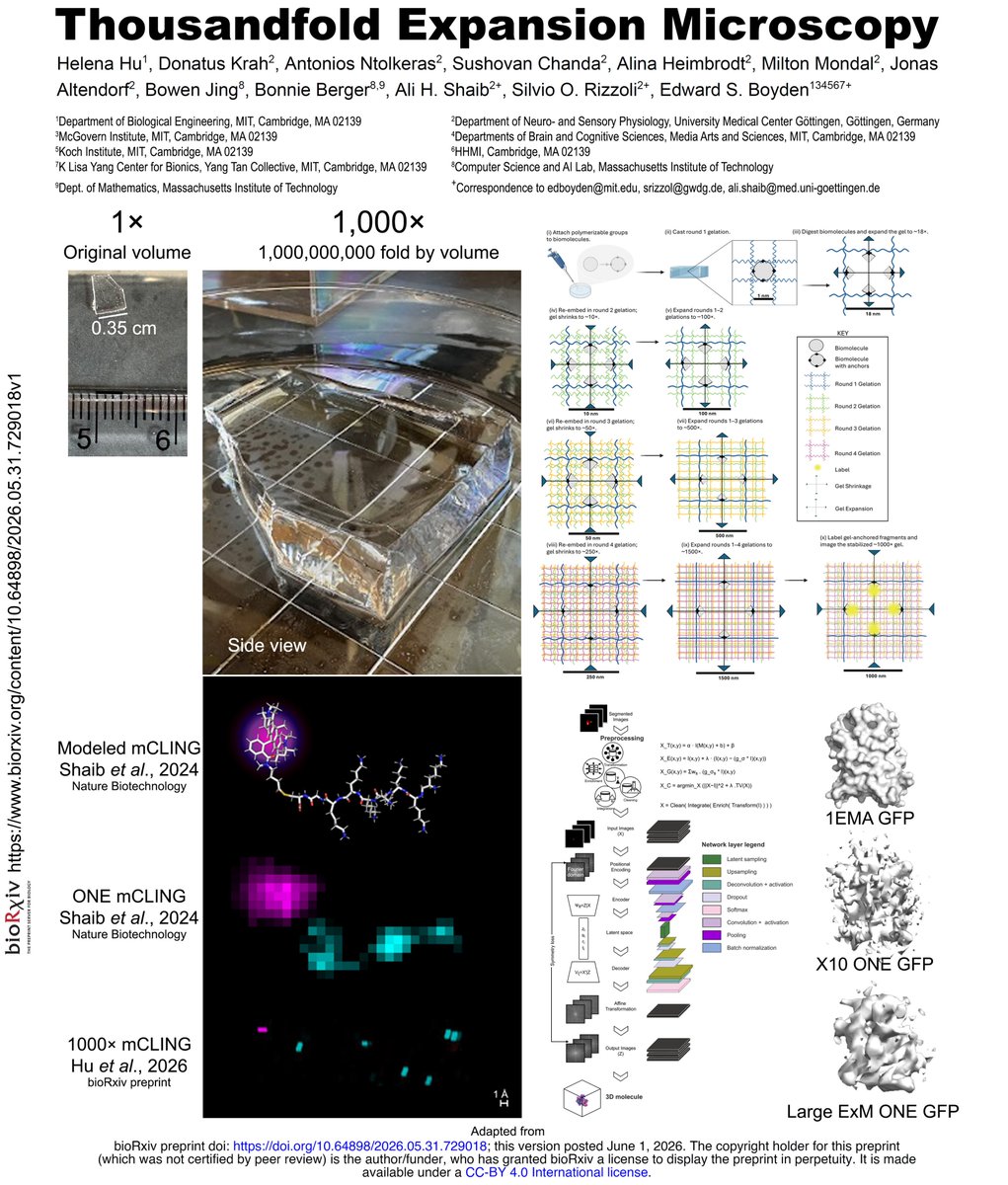
Hello world, meet 1,000× Expansion Microscopy.
1,000,000,000× expansion by volume! A gel that starts at a few centimeters will then expand to the volume of an Olympic swimming pool. https://t.co/E43kxx4O5M
In our new bioRxiv preprint, work carried out between MIT and UMG, led by Helena Hu in collaboration with scientists from the labs of @eboyden3 Ed Boyden, Silvio Rizzoli, and myself, we present Thousandfold Expansion Microscopy.
By enlarging biological specimens across multiple rounds of expansion, molecular-scale features, as small as the distances between adjacent amino acids, can be visualized with conventional optical microscopes.
Democratizing super-resolution microscopy.