Everyone needs to watch @AbbyMartin and @MikePrysner’s documentary “Gaza fights for Freedom” https://t.co/BYfNgR6psH
It brings to light the hypocrisy of the Israeli Government and their disgusting war crimes.
#FreeGaza#FreePalestine#Gaza
Some people calling Red Bull’s strategy bad are missing the point.
Pitting Max Verstappen earlier would have left him exposed to Kimi in the final stint. On top of that, Max said the car was having issues in the second part of the race.
He also lost valuable time in the battles with Hamilton, yet still delivered a brilliant race. Easily his strongest performance of the season so far. Great job by Max and Red Bull.
[📸: F1]
@C2ncel_me@formuLau16@Rob_Kub88 Check at 0.04, top right of the image, the wing is not closed fully, one side has mini DRS of sorts while the other is sealed.
This falls under the principle of
تعظيم شعائر الله
(taʿzhīm shaʿāʾirillāh) venerating the symbols of Allah, which the scholars discussed extensively as one of the foundational principles of the sharīʿah.
Allah says:
ذَٰلِكَ وَمَن يُعَظِّمْ شَعَائِرَ اللَّهِ فَإِنَّهَا مِن تَقْوَى الْقُلُوب
"That is so. And whoever honours the symbols of Allah—indeed, it is from the piety of the hearts." (Qur'an 22:32)
The scholars unanimously agreed that honouring whatever Allah has made sacred is a general obligation. Where they differed was over which particular acts constitute reverence for those sacred symbols. In many cases, these outward expressions are understood through the recognised customs (ʿurf) of a community.
Many manifestations of reverence are determined by sound custom and people's shared understanding of what constitutes honour or disrespect, provided those customs neither contradict the sharīʿah nor introduce religious innovations.
In other words, while the principle of taʿzhīm shaʿāʾirillāh is fixed by revelation, some of its practical applications are informed by custom.
This is one of the places where they applied the legal maxim:
العادة محكمة
"Custom is legally authoritative."
and
المعروف عرفًا كالمشروط شرطًا
"What is established by custom is like an explicit condition."
This does not mean that custom legislates the religion. It operates within the framework established by a the shari'ah, helping to apply general principles to everyday life.
As Shaykh al-Islām Ibn Taymiyyah (rahimahuLlah) mentioned in 'Majmū' al-Fatāwā':
والأسماء التي علق الشارع بها الأحكام إذا لم يحدها الشارع ولا اللغة، رجع فيها إلى العرف.
"Terms upon which the Lawgiver attached rulings (when neither the sharī'ah nor the Arabic language has specifically defined them) are referred back to customary understanding."
And Ibn al-Qayyim rahimahuLlah mentioned in 'I'lām al-Muwaqqi'īn:
ما عده الناس إكرامًا فهو إكرام، وما عدوه إهانة فهو إهانة، إذا لم يخالف الشرع.
This means where no textual definition exists, sharīʿah recognizes customary understandings of honor and disrespect.
Among the definitions of the word 'ta'zhīm' by scholars...
Ibn ʿĀshūr (rahimahuLlah) mentioned in his tafsir:
والتعظيم: الاعتقاد بأن الشيء عظيم، وإظهار ذلك الاعتقاد في معاملة ذلك الشيء.
"Taʿzhīm is to believe something is great and to manifest that belief in one's treatment of it."
Ibn Uthaymīn (rahimahuLlah) says:
تعظيم شعائر الله يكون بتعظيمها في القلب، ويظهر أثر ذلك على الجوارح.
"Honoring Allah's symbols begins with honoring them in the heart, and the effects of that become apparent on the limbs."
In conclusion regarding the mushaf;
Muhammad ibn Salih al-ʿUthaymīn was asked about placing the mushaf on the floor. He explained that if the floor is clean and the placement is not intended as disrespect, then there is no sin, although placing it on something elevated is more respectful and preferable.
Similarly, ʿAbd al-ʿAzīz ibn Bāz encouraged keeping the mushaf in a clean, elevated place out of reverence. -(Majmū' al-Fatāwā')
Allah knows best.
🇲🇦 After scoring his first World Cup goal, Noussair Mazraoui advises Gessime Yassine to go home and pray to thank God
“You’re going to go home, perform your ablutions, and pray two rak’ahs. And you’ll thank Allah”
روى البخاري في صحيحه : حدثنا عبد الله بن يوسف ، أخبرنا مالك ، عن إسحاق بن عبد الله بن أبي طلحة ، أنه سمع أنس بن مالك يقول : قال أبو طلحة لأم سليم : لقد سمعت صوت رسول الله ﷺ ضعيفا، أعرف فيه الجوع، فهل عندك من شيء ؟ قالت : نعم. فأخرجت أقراصاً من شعير، ثم أخرجت خماراً لها، فلفّت الخبز ببعضه ثم دسّته تحت يدي ولاثتني ببعضه، ثم أرسلتني إلى رسول الله ﷺ قال : فذهبت به فوجدت رسول الله ﷺ في المسجد ومعه الناس فقمت عليهم، فقال لي رسول الله ﷺ : " آرسلك أبو طلحة ؟ " فقلت : نعم. قال : " بطعام ؟ " فقلت : نعم.
فقال رسول الله ﷺ لمن معه : " قوموا ".
فانطلق وانطلقت بين أيديهم حتى جئت أبا طلحة فأخبرته، فقال أبو طلحة : يا أمّ سليم، قد جاء رسول الله ﷺ بالناس وليس عندنا ما نطعمهم. فقالت : الله ورسوله أعلم.
فانطلق أبو طلحة حتى لقي رسول الله ﷺ، فأقبل رسول الله ﷺ وأبو طلحة معه، فقال رسول الله ﷺ : " هلمّي يا أم سليم ما عندك ".
فأتت بذلك الخبز، فأمر به رسول الله ﷺ ففُتّ، وعصرت أم سليم عكّة فأدَمته ، ثم قال رسول الله ﷺ فيه ما شاء الله أن يقول، ثم قال : " ائذن لعشرة ".
فأذن لهم فأكلوا حتى شبعوا ثم خرجوا، ثم قال : " ائذن لعشرة ".
فأذن لهم فأكلوا حتى شبعوا ثم خرجوا، ثم قال : " ائذن لعشرة ".
فأذن لهم فأكلوا حتى شبعوا ثم خرجوا، ثم قال : " ائذن لعشرة ".
فأكل القوم كلهم وشبعوا، والقوم سبعون أو ثمانون رجلا.
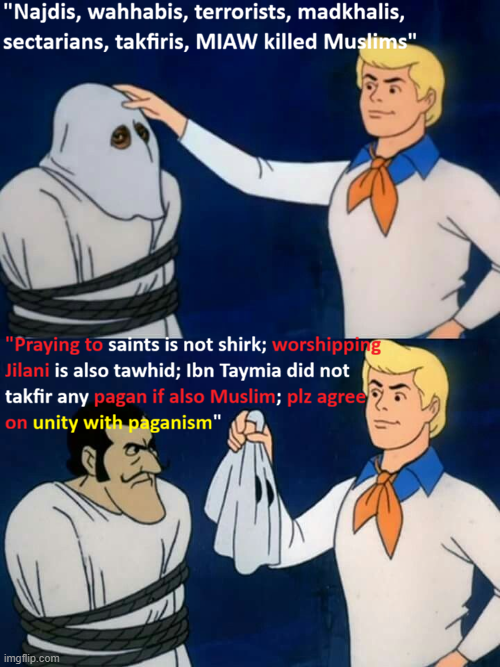
'...and invoking Hazrat Ali Asghar (the infant martyr of Karbala).'
These Rafidah mushrikun invoke a baby infant who died over 1,400 years ago in Karbala for madad (help). A baby infant who could not save himself is the one they invoke besides Allah, the All-Hearing, in a football match, yet declaring these mushrikun to be mushrikun somehow makes one a "VAHOBI Daeshi extremist".
God damn the Murji'ah, especially the 'Salafi' ones.
🚨 URGENT MEDICAL APPEAL
I genuinely do not usually organise fundraisers or publicly ask people for money. Those who know me know that already. But this situation is deeply important to me personally because Umm Ali is the mother of close family friends of ours.
My family know this family and vouch for them as sincere and honest people. Transparency was my biggest condition before helping publicly, and every medical document and proof I requested was immediately provided.
Umm Ali is currently facing a life-threatening medical emergency in Saudi Arabia requiring urgent treatment and possibly major surgery.
Please donate if you can and PLEASE share widely. Even sharing alone may help save her life.
Donation link: https://t.co/xOQZ8IfD4l
ʿUmar ibn al-Khattab (رضي الله عنه) once sat with his companions and said: make a wish. It was not idle. He wanted to see what their hearts reached for when handed the freedom to want anything at all.
One said: I wish this house were filled with gold, so I could spend every coin in the way of Allah. A fine wish. Umar said: wish again. Another said: I wish it were filled with pearls and jewels, to give all of it in charity. A finer wish. Umar said: wish again.
They ran dry. "We do not know what else to wish for, Amīr al-Muʾminīn." So he told them what he would have wished:
«ولكني أتمنى رجالاً مثل أبي عبيدة بن الجراح، ومعاذ بن جبل، وسالم مولى أبي حذيفة، فأستعملهم في طاعة الله»
"But I wish for men like Abū ʿUbaydah ibn al-Jarrāḥ, Muʿadh ibn Jabal, and Salim the freedman of Abū Hudhayfah, so that I could put them to work in the obedience of Allah."
Sit with the contrast. His companions did not even wish treasure for themselves; they wished it to give away for Allah. And still it did not satisfy him. The man governing an expanding state knew what they had missed: gold is spent once and it is gone. A single man of īmān keeps giving long after he is buried.
This was always the real wealth of Islam. The Prophet ﷺ died owning no treasure; his shield was pledged to a man for a measure of barley. What he left behind was not money. It was Abū Bakr, ʿUmar, ʿUthmān, ʿAlī, a whole generation he had raised by hand.
We spend our lives trying to fund the Ummah's problems. ʿUmar would tell us to raise its people. So whether you are bringing up a child or building an institution, his question is the one to keep: not how much can I gather, but who am I cultivating. Gold runs out. A person of īmān does not.
Fadāʾil al-Ṣaḥāba of Imam Ahmad; al-Mustadrak of al-Hakim
This World Cup is already exposing the western hypocrisy.
First there were reports of shootings near the English camp and now their equipment has been stolen.
Yet the same people who made a big deal about Qatar not allowing alcohol in stadiums haven’t said a single word about any of this.
They want to fly halfway across the world and lecture other countries on how to run things, but stay silent when it’s a Western country dealing with serious safety concerns.
Funny how it works, right?



![MV33Racing's tweet photo. Some people calling Red Bull’s strategy bad are missing the point.
Pitting Max Verstappen earlier would have left him exposed to Kimi in the final stint. On top of that, Max said the car was having issues in the second part of the race.
He also lost valuable time in the battles with Hamilton, yet still delivered a brilliant race. Easily his strongest performance of the season so far. Great job by Max and Red Bull.
[📸: F1]](https://pbs.twimg.com/media/HL6NU_8XIAI8FQz.jpg)