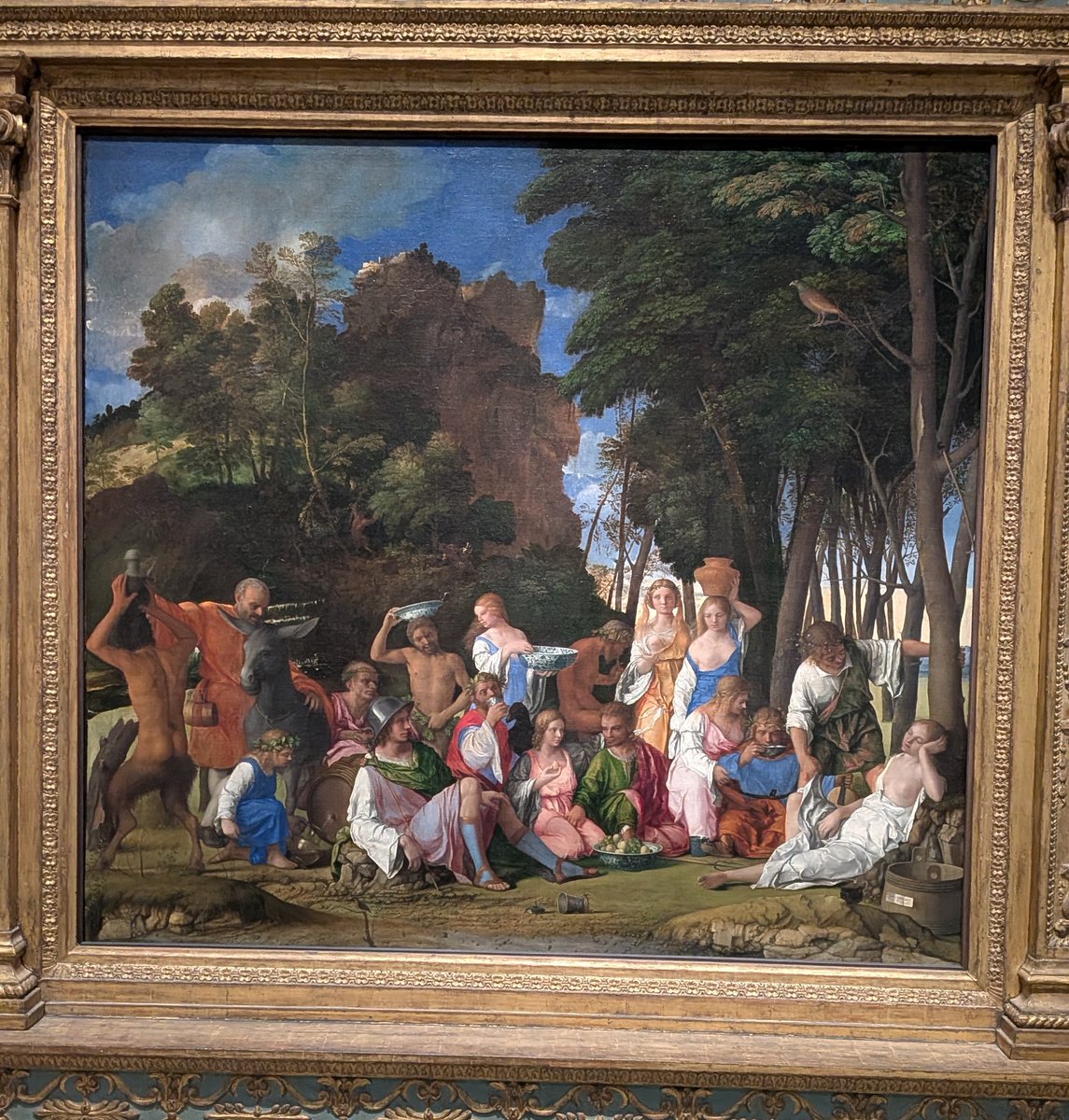
(36) This painting depicts the attempted rape of the nymph Lotis, as described in Ovid's Fasti. Painted by Andrea Mantegna's brother in law, and later altered by Titian. Albrecht Dürer claimed he was the best painter in all of Venice. 🧵(1/2)
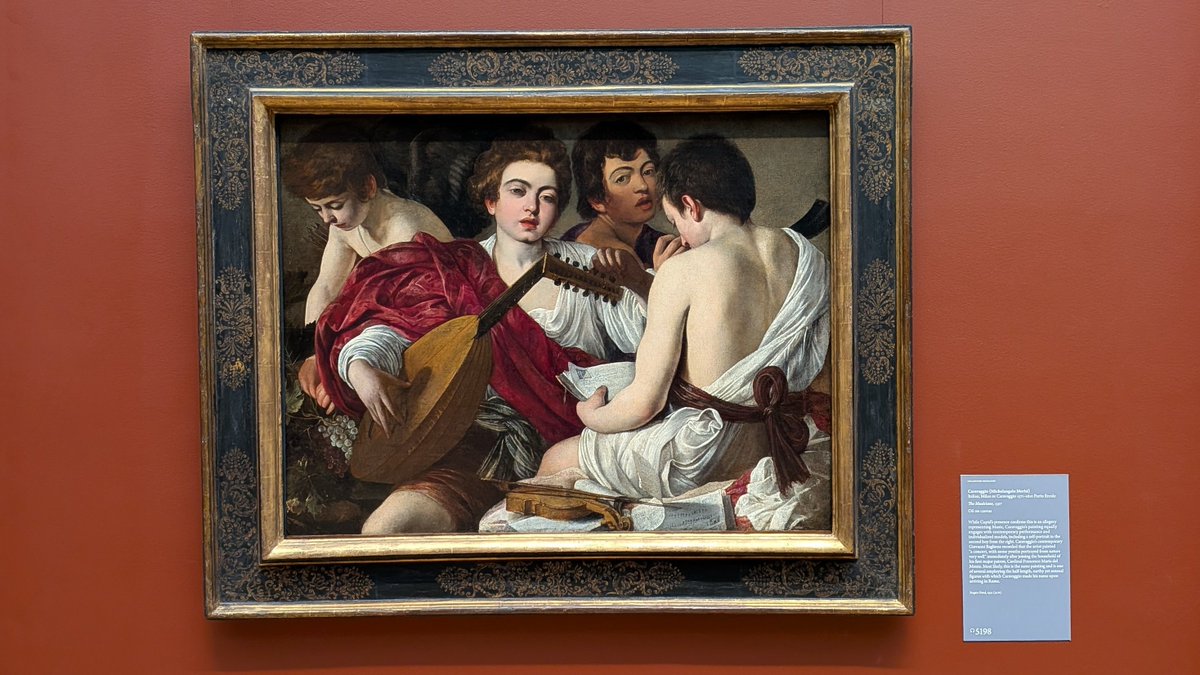
So amazing to think the level of history that comes out a single painting. Caravaggio, many times arrested for brawling, for writing offensive poems, for posession of illegal weapons, and senteced to death for killing someone, fleeing from Rome, and through all that becoming one of the finest painters the world has ever known. He painted himself on this painting, second from the right. He did the same on several more paintings throughout his life. "The Musicians" at one point belonged to Cardinal Antonio Barberini, and much later to Cardinal Richelieu. And now you can see this masterpiece at The Met. Do it. Do it now.
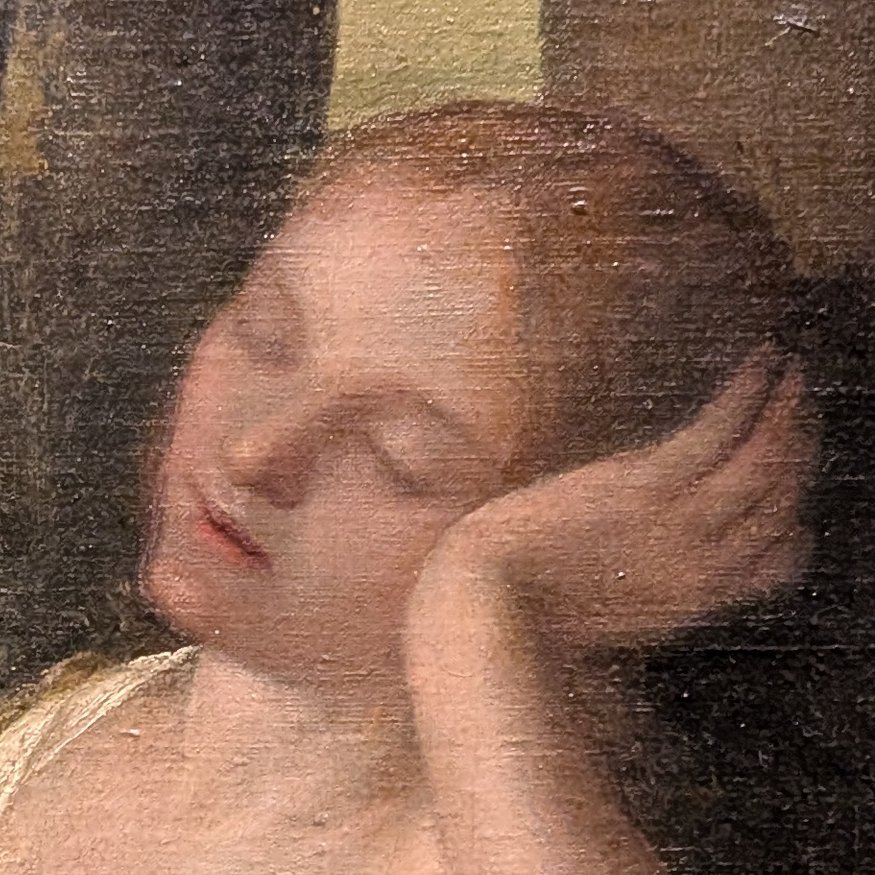
(18) This young woman appears to be dreaming, but she is actually reading. This painting was allegedly completed in one hour, and yet it is displayed in one of the top art museums in the world. 🧵(1/2)
El "cartone" o dibujo que Rafael usó para la preparación de la pintura se encuentra en la Pinacoteca Ambrosiana, en Milan. Adquirido por el Cardenal Borromeo, se nota la ausencia de Heráclito, Rafael y Protógenes, así como el fondo arquitectónico. Compuesto por 210 piezas de papel pegadas, todas dibujadas por Rafael, y se usaba para calcar los dibujos en la pared. Cuando Napoleón Bonaparte entró a Milan en 1796, ordenó llevarse todas las obras de arte de valor, incluyendo ésta, al Louvre. Allá duró, hasta después de la derrota de Napoleón en Waterloo, y en 1816, se regresa esta obra a Milan.
El "cartone" o dibujo que Rafael usó para la preparación de la pintura se encuentra en la Pinacoteca Ambrosiana, en Milan. Adquirido por el Cardenal Borromeo, se nota la ausencia de Heráclito, Rafael y Protógenes, así como el fondo arquitectónico. Compuesto por 210 piezas de papel pegadas, todas dibujadas por Rafael, y se usaba para calcar los dibujos en la pared. Cuando Napoleón Bonaparte entró a Milan en 1796, ordenó llevarse todas las obras de arte de valor, incluyendo ésta, al Louvre. Allá duró, hasta después de la derrota de Napoleón en Waterloo, y en 1816, se regresa esta obra a Milan.
"The Feast of the Gods" or "Il Festino degli Dei" by Giovanni Bellini, 1514. At the National Gallery of Art, Washington D.C. @ngadc. Altered by Dosso Dossi and Titian after Bellini's death to better align with Titian's The Bacchanal of the Andrians at the Duke of Ferrara's camerini d'alabastro 🧵(2/2)
(36) This painting depicts the attempted rape of the nymph Lotis, as described in Ovid's Fasti. Painted by Andrea Mantegna's brother in law, and later altered by Titian. Albrecht Dürer claimed he was the best painter in all of Venice. 🧵(1/2)