The African Centre of Excellence for Inequality Research undertakes multidimensional & interdisciplinary analyses of inequality in the African & global contexts
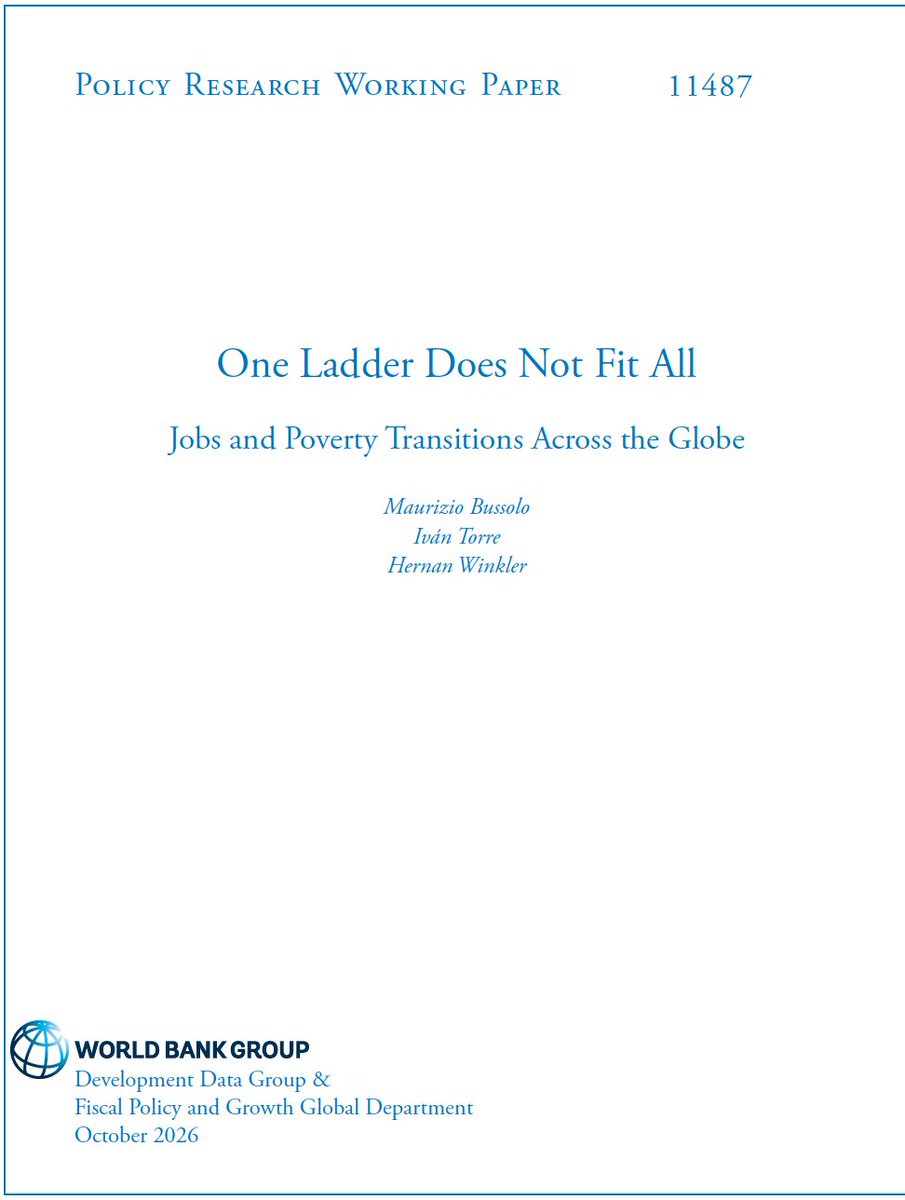
Which jobs help households escape poverty—and which help them avoid falling into it? The answer changes with a country’s level of development.
In “One Ladder Does Not Fit All: Jobs and Poverty Transitions Across the Globe,” Maurizio Bussolo, Iván Torre, and Hernan Winkler examine household panel data from 41 countries. This @WorldBankGroup Policy Research Working Paper contributed to the Poverty, Prosperity, and Planet Report 2026.
In the poorest economies, moving into non-agricultural self-employment is at least as strongly associated with escaping poverty as moving into wage employment. As economies develop, the association between wage employment and poverty exit strengthens, while that of non-agricultural self-employment weakens.
The type of employment is closely associated with a household’s chances of escaping poverty, while access to almost any employment is associated with a lower risk of falling into it.
For policy, this means that expanding opportunity requires understanding where people work, the alternatives available to them, and how these change as economies transform.
More and better jobs remain central to lasting poverty reduction. Making that agenda effective requires policies adapted to each economy—and attention to both upward mobility and protection against setbacks.
Read the paper: https://t.co/xMZ7Xi4UCw
Sign up for this workshop on frontiers in applied economics for developing countries
3 themes: Labour markets & structural transformation; Education & development policies; Inequality & the environment
🗓️ 14, 15 Dec. '26
📍 @SALDRU1
🤝 with @econrsa
✍️ https://t.co/lNryLhcmOV
Migrant labour and the crisis of social reproduction in South Africa is the topic of the 2026 memorial lecture in honour of Francis Wilson, the founder of @SALDRU1 and @DataFirstAtUCT
🎙️Fort Hare University VC, Prof. Sakhela Buhlungu
📅 Thu, 15 Oct.
✍️ https://t.co/83FNfBXh9E
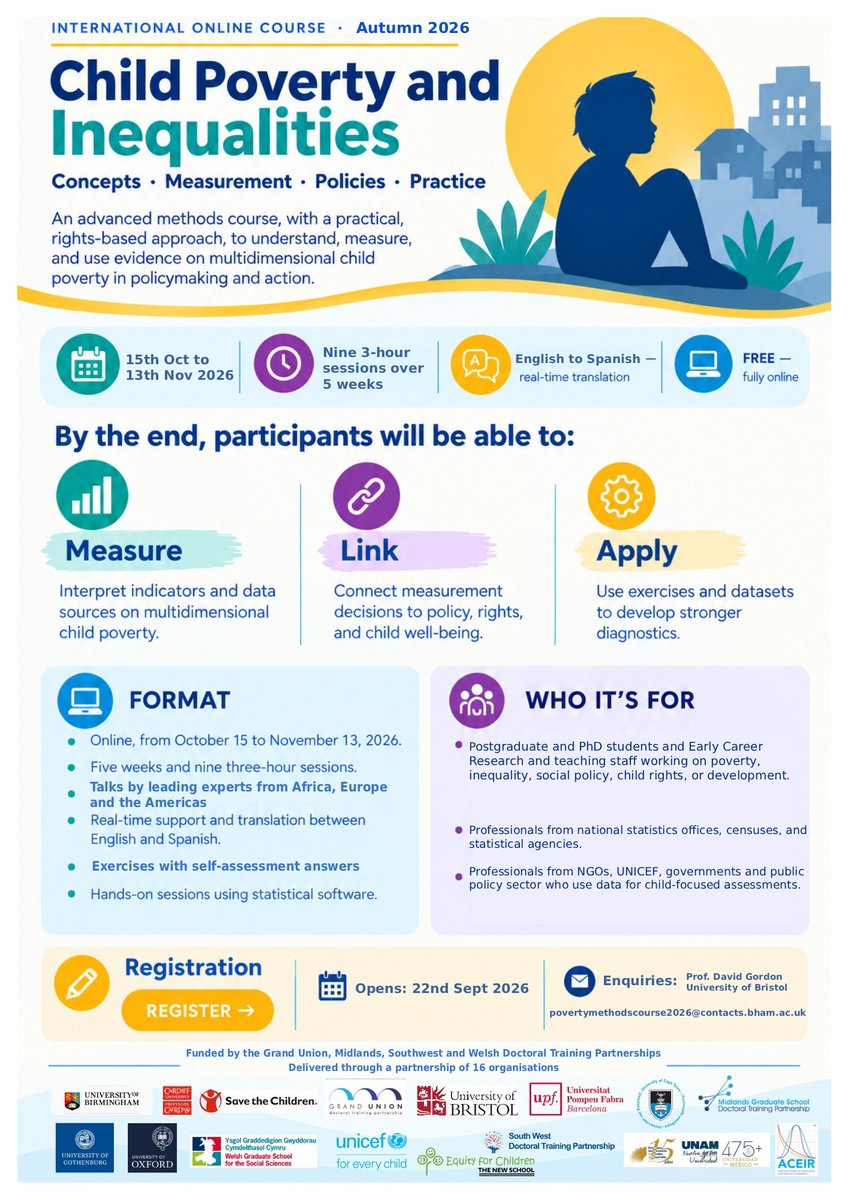
An incredible opportunity to learn from world-leading poverty research experts - it's online, free, delivered in sessions over five weeks, and caters for audiences in Africa, Europe, North and South America
📆 Starting 15 Oct. Application is required
🔗 https://t.co/GCFWfx0zrR
📢 Request for Research Proposals!
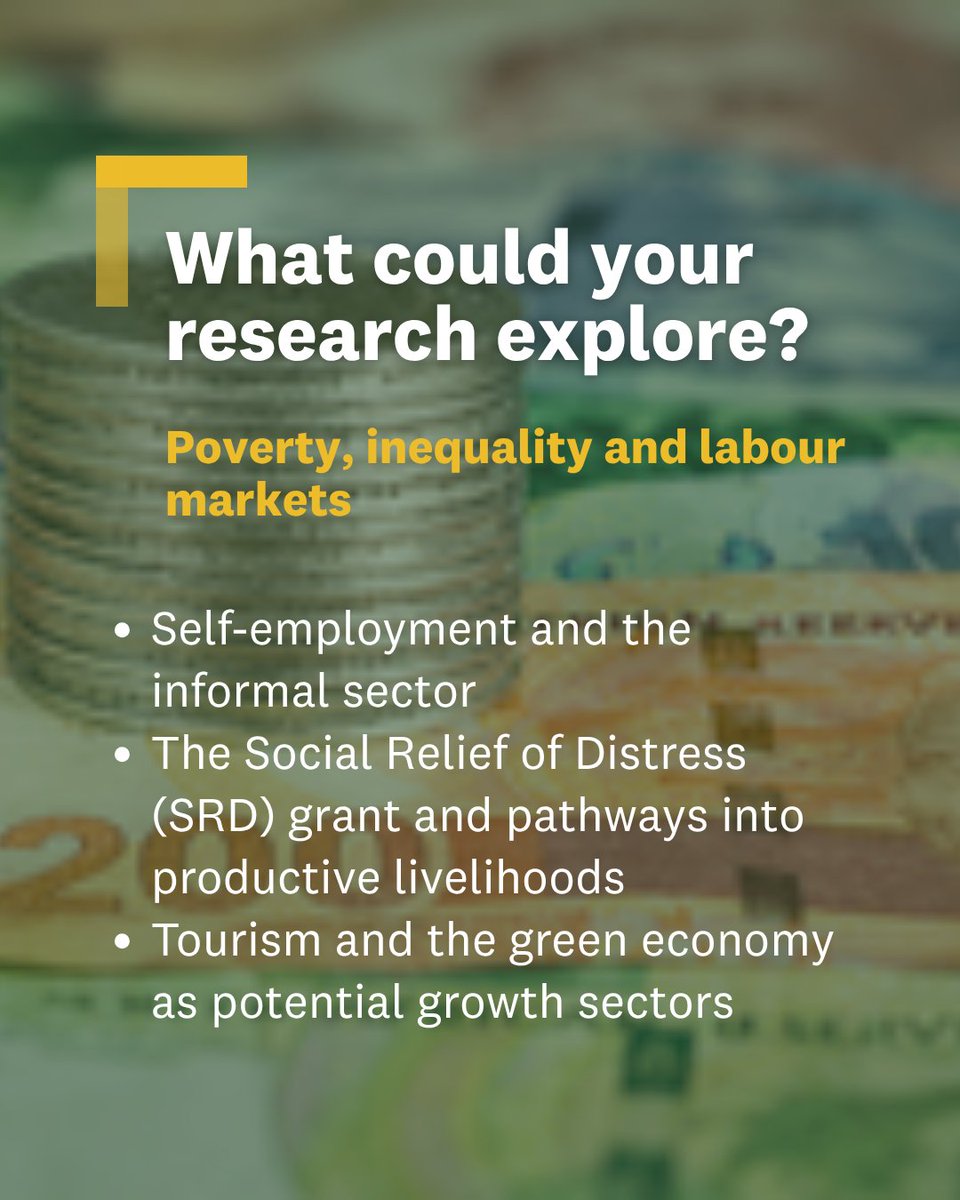
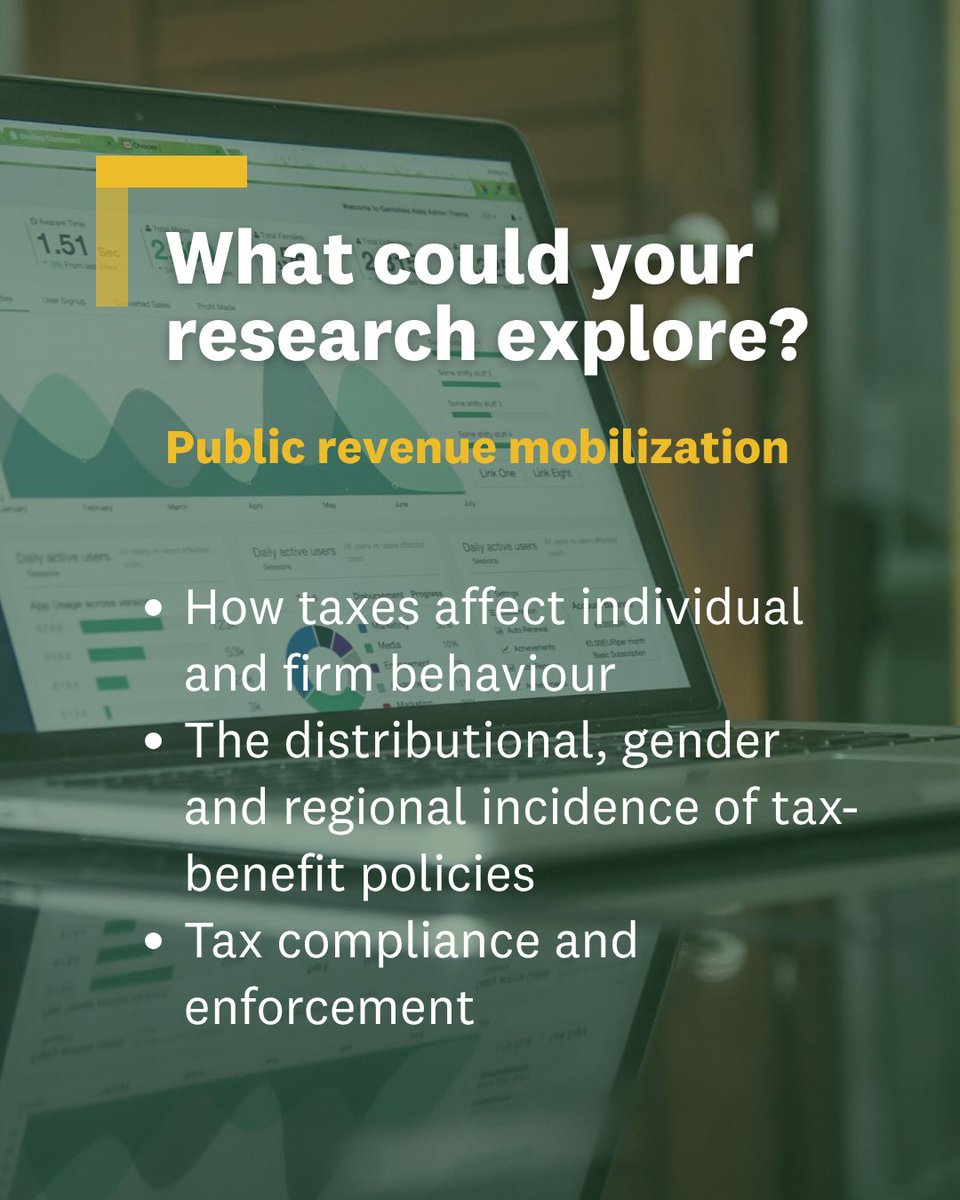
UNU-WIDER and South Africa’s National Treasury invite proposals on public revenue mobilization; poverty, inequality and labour markets.
Open to South Africa-based and international researchers.
Apply 🔗https://t.co/1Q9FaB23GL
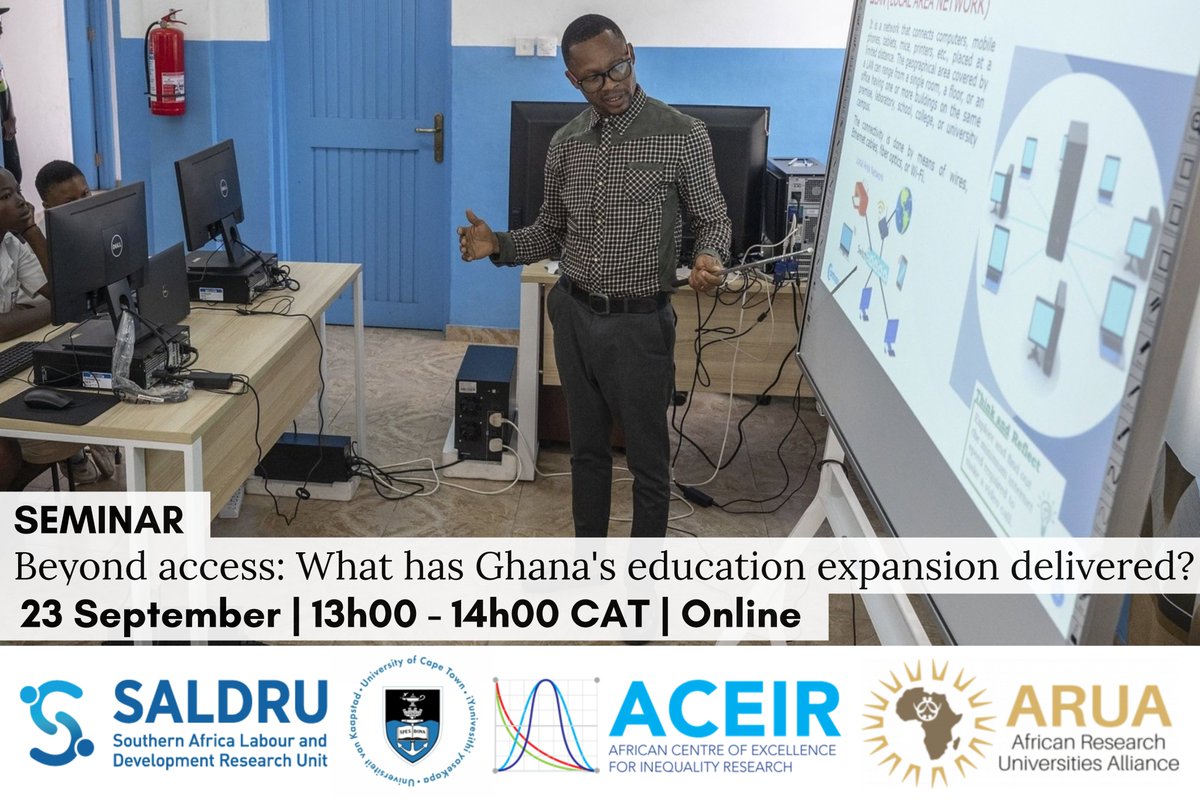
Most African countries have embraced free school education policies, whether for primary/secondary schooling, or both. Colleagues from @SALDRU1 & @ISSERUG investigated what Ghana's expansion meant beyond getting more young people into school. Join us 🔗 https://t.co/47seQJcK5l
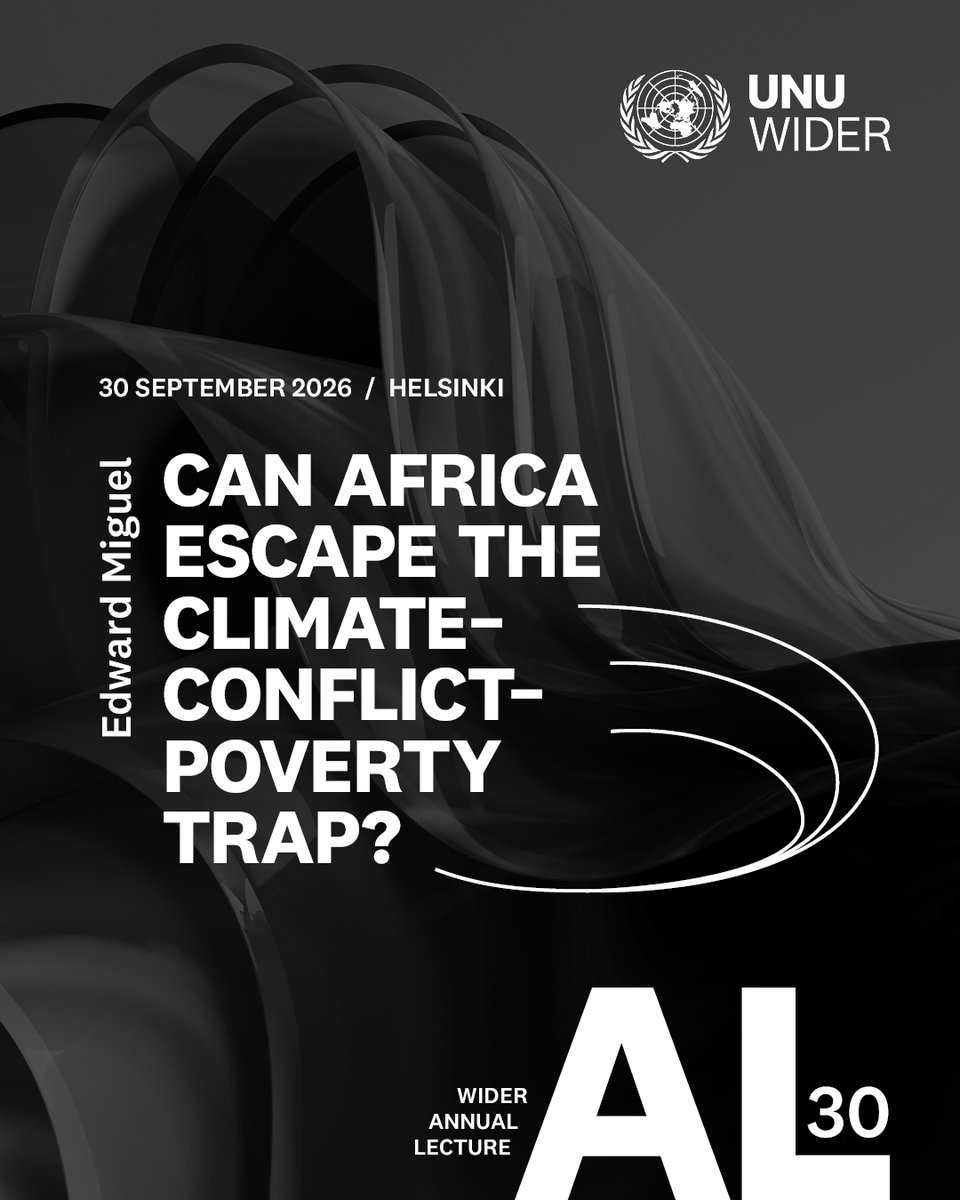
On #InternationalDayofPeace, we highlight the need for resilient societies amidst climate change. Join Edward Miguel & experts for WIDER Annual Lecture 30, Can Africa escape the climate-conflict-poverty trap?
📅 30 Sept | 📍 Helsinki & online
Register: https://t.co/6kEh8XKTzi
"The framing of the African Inequality Review is essential to its value for future evidence-informed policymaking": Trevor Manuel, chair of the G20 Africa Expert Panel
AIR is a collaboration between ACEIR, @LSEInequalities, @UNUWIDER@WorldBankAfrica
"The trusting and collaborative relationship between researchers and South African policymakers are unique in Africa. More investment in research for policymaking is needed": Anda David, @AFD_en
African Inequality Review: https://t.co/dR5VEqKK1K
"Analyses like the African Inequality Review should not just apply research methodologies developed elsewhere, but also develop Africa-specific methodologies to use in its analysis": Carlos Lopes, G20 Africa Expert Panel member and honorary professor at @MandelaUCT
"The fact that data that can assist a better understanding of inequality in Africa are not made public is a key challenge. A lack of transparency of government data also hampers accountability": Hanan Morsy, UN Economic Commission for Africa
What policy decisions contribute to inequality?
"Tax exemptions, essentially giving tax exceptions to big corporations": Hanah Morsy, member of G20 Africa Expert Panel & Chief Economist, @ECA_OFFICIAL
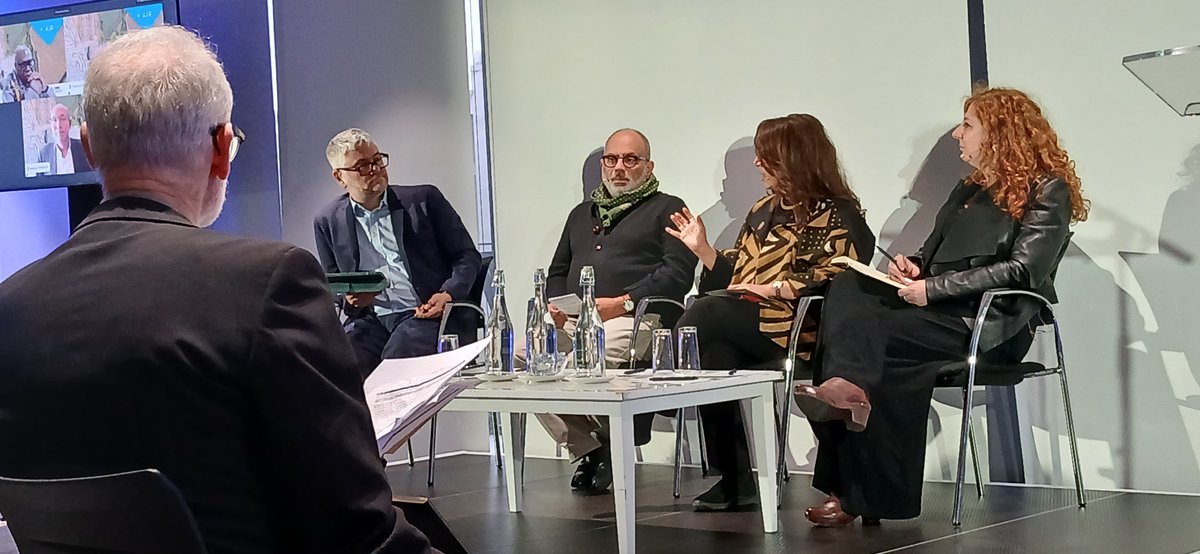
African Inequality Review launch, Cape Town
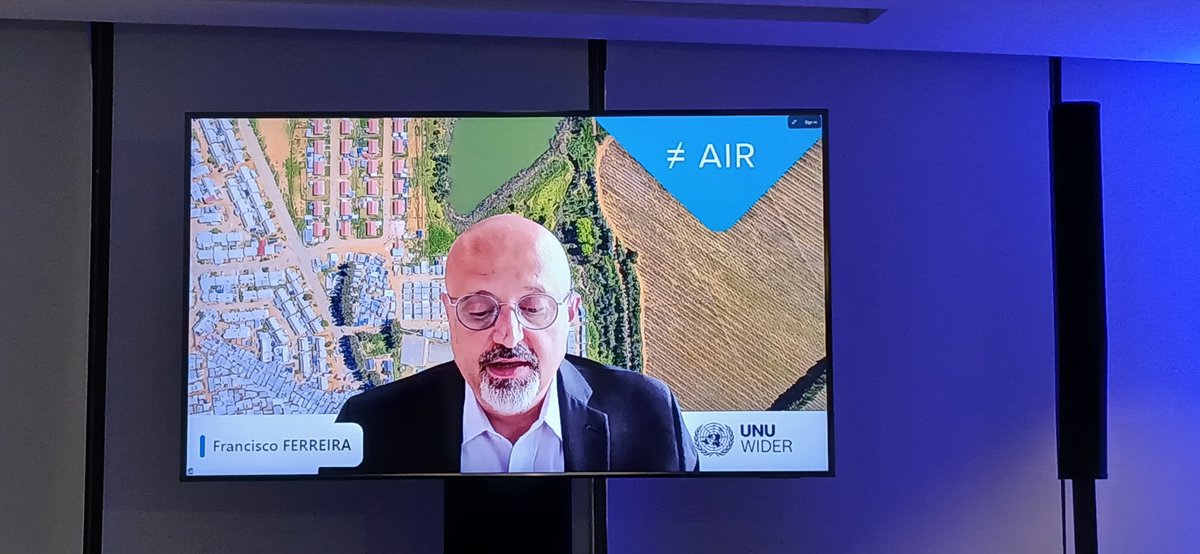
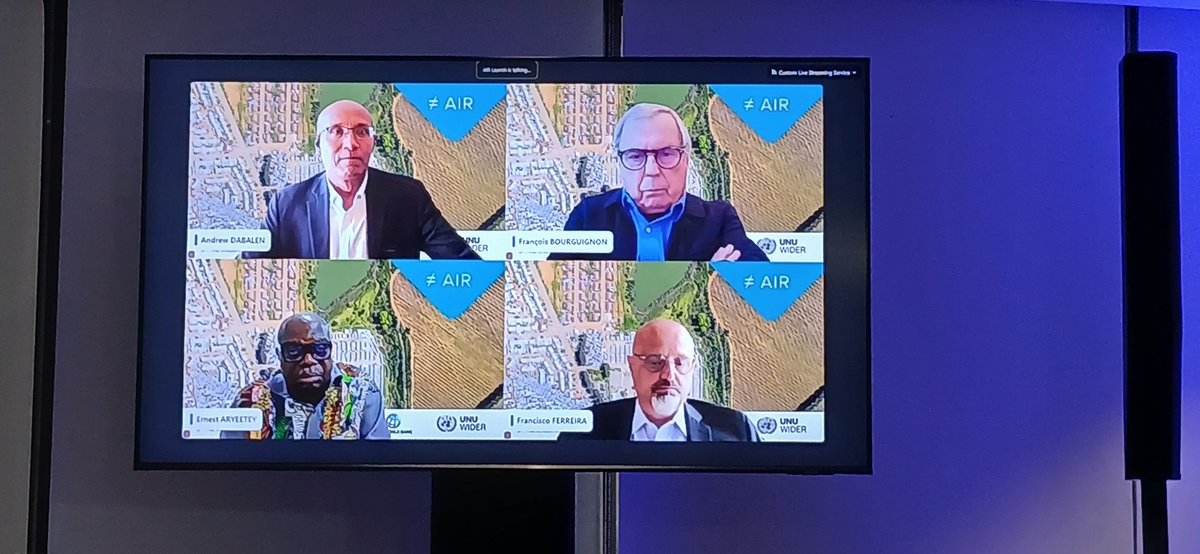
"Given the high inequality in both Latin America and Africa, it is no coincidence that these two regions of the developing world are struggling with growth and development.": Francisco Ferreira, @LSEInequalities
Launch of the African Inequality Review with @WorldBankAfrica@LSE
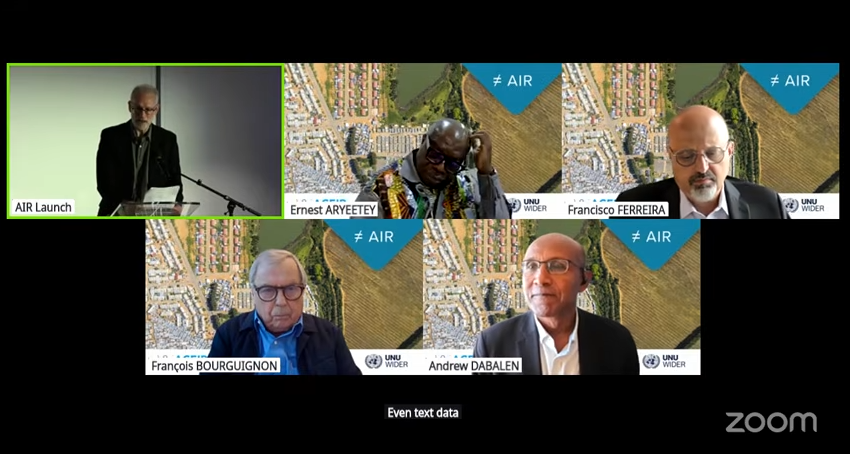
"There used to a belief that Africa's challenges are related to poverty. But research initiatives have shown that there are inequalities within and between countries on the continent." Andrew Dabalen, Chief Economist, @WorldBankAfrica
Launch of the African Inequality Review.
"Inequality is one of the defining challenges of our time. Understanding African inequality is not just an academic exercise; it's essential to sustainable development": Patricia Justino, director of @UNUWIDER
Watch live ➡️https://t.co/N52D88S83y
📽️Livestreaming:
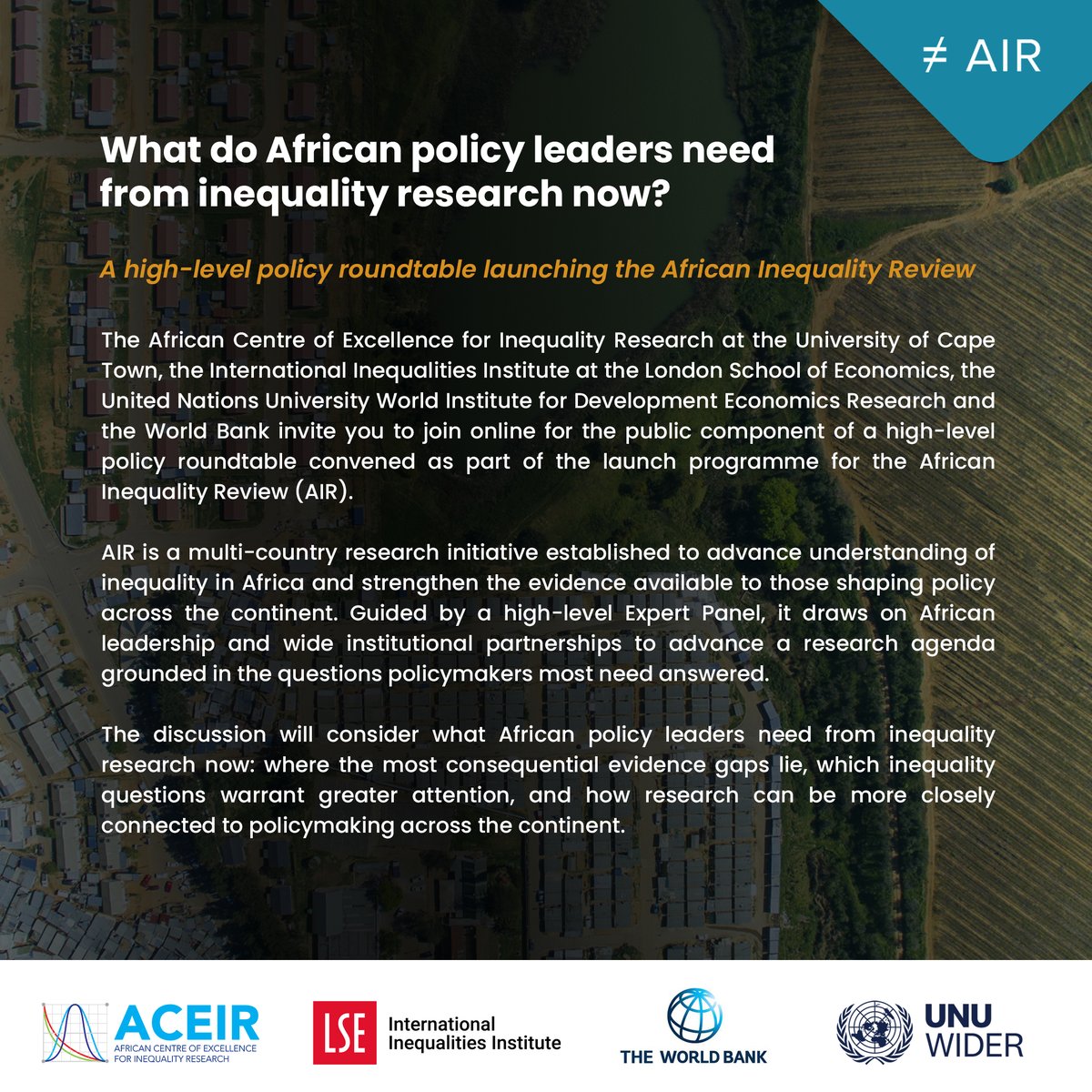
The launch of the African Inequality Review, a collaboration between ACEIR, the International Inequalities Institute, LSE; UNU-WIDER; World Bank.
https://t.co/N52D88S83y
Taking stock of the "bad doing" of inequality to people and their life trajectories: Trevor Manuel, welcoming participants at the African launch of the African Inequality Review, with @MurrayLeibbrand
A collaboration with:
@LSEInequalities@UNUWIDER@WorldBankAfrica
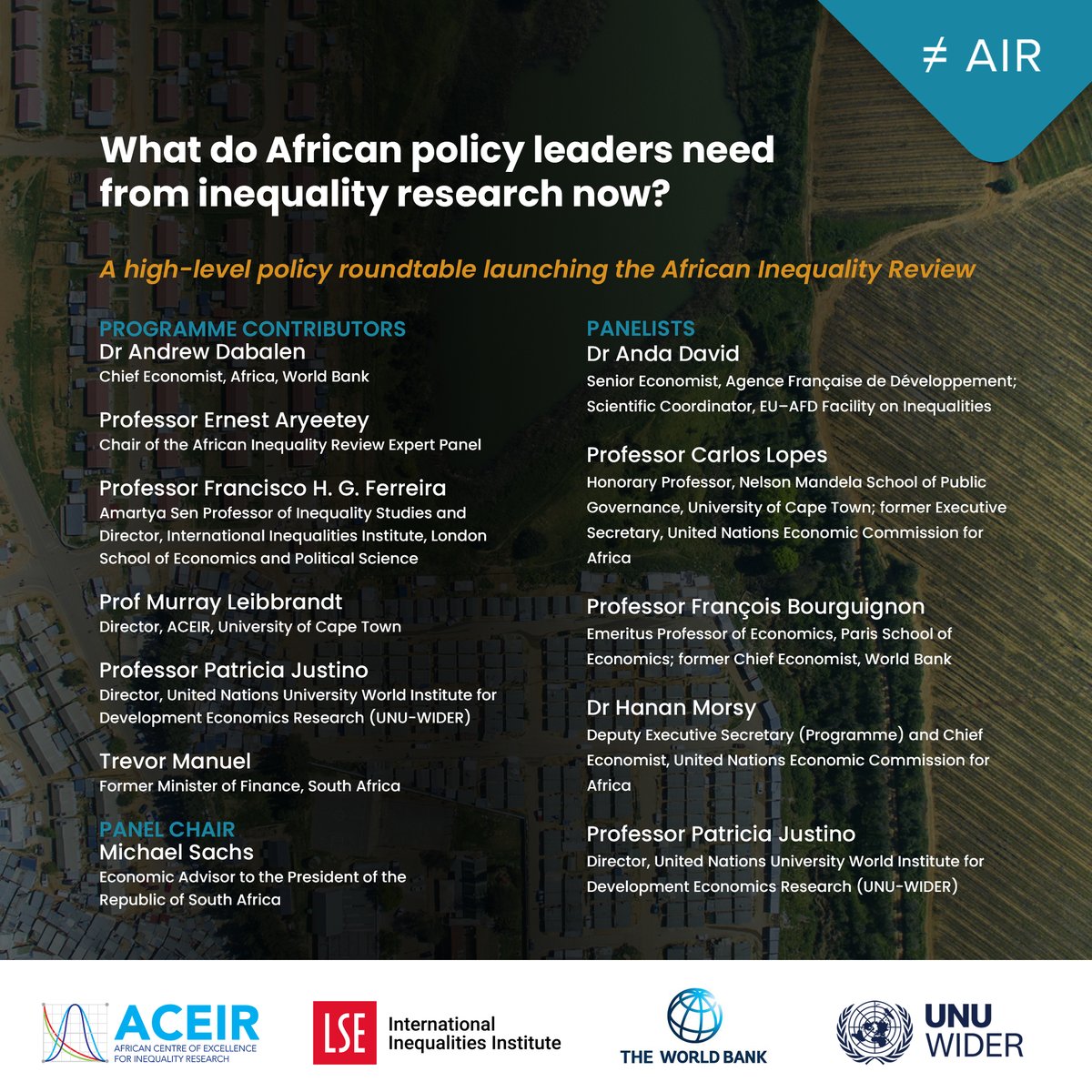
🪘It's not just the launch of a new research project. It's a consultation with snr policy leaders on the evidence needed to inform strategies to reduce inequality in Africa.
📽️Online, Tues 15/09 with @LSEInequalities@UNUWIDER@WorldBankAfrica
🔗https://t.co/Rk4Cs1u9CW
@SALDRU1