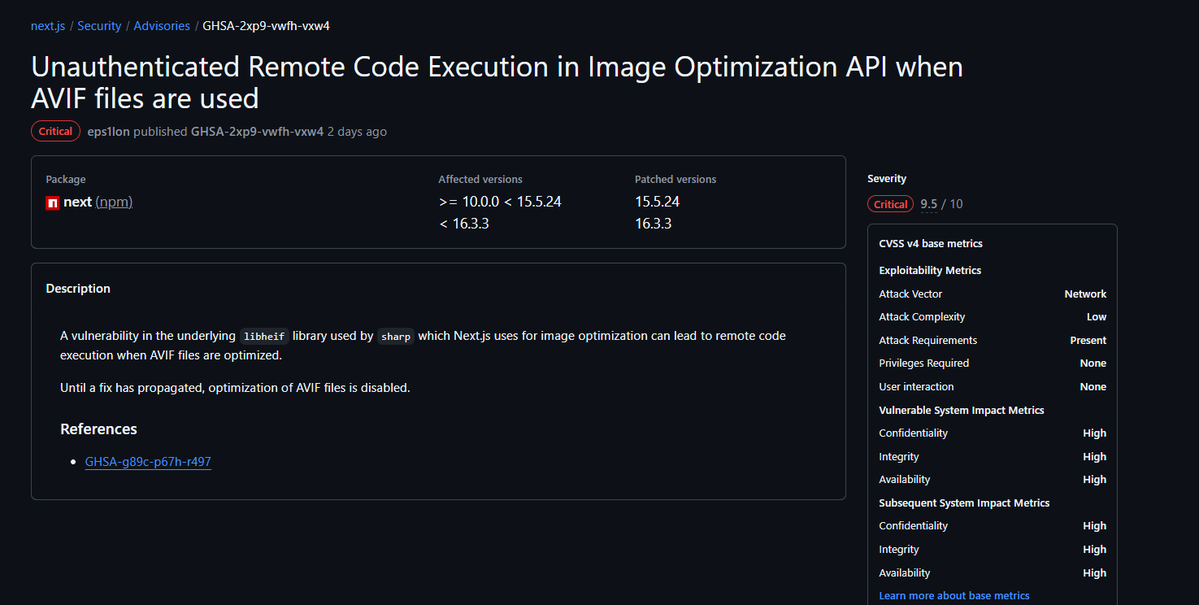
You can simply put Luna from Web inside Codex and use it for free, unlimitedly.
It uses tools and performs actions on your device with the entire Harness. And it feels absolutely natively
Repo in the comments
Chatgpt Plus free for 4 months again 😳
official student offer is back
sheerid verify → unlock plus for 4 months
no edu mail yet? do this first:
1. go to https://t.co/DmFEkxtpVm and start a free application
> people say free apply window is around sept 1, confirm on site
2. finish the form with real info
3. get your student portal + @...edu email
don't buy telegram "edu mails"
those die fast and can ban your openai account
then claim plus:
4. open https://t.co/42LZXAB1hW
5. start sheerid, use the edu mail
6. submit school + enrollment details exactly
7. wait for approve, then redeem 4 months on that same account
8. check settings and confirm plus is active
deadline people are citing: claim before oct 31
recheck the page, dates move
extra tips:
- clean network helps, dirty wifi fails captcha a lot
- one clean try beats 10 spam attempts
- if sheerid says no, stop
$80 of plus for free if it lands
bookmark this and try it once
XSS using "xss.pdf" 👀
I’ve seen a lot of people successfully find XSS by uploading a malicious PDF that gets rendered inside a PDF viewer.
But there’s another angle people often miss: data exfiltration doesn’t always require JavaScript execution.
Depending on how the PDF viewer handles interactive PDF features, an attacker may be able to trick users into submitting sensitive information through a malicious prompt or form.
I put together the PDF PoC here:
https://t.co/9MgYEL0tE1
For more technical details on portable data exfiltration:
https://t.co/UlhWc07N8J
Only test this on systems you own or have explicit authorization to assess.
#bugbounty #bugbountytips
@prayag_sonar@opencode They do not serve the capacity. They route request to the endpoints behind the model which is less of a headache than serving capacity. However; there's no denying that the server that routes suffers a lot of times because of users increasing everyday.
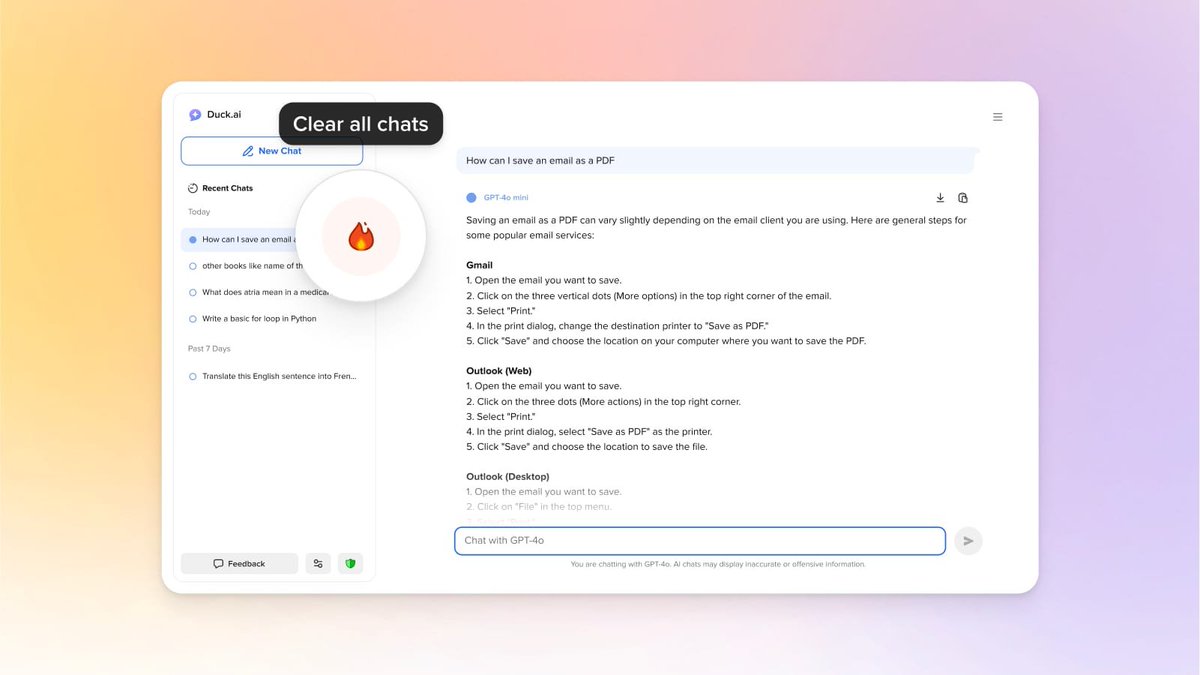
Found a way to use Claude for free ( 0$ )
DuckDuckGo strips your identity before Claude ever sees the message
no login, and your ip is gone before the query reaches Anthropic
> chats aren't stored on DuckDuckGo's side
> Anthropic destroys logs within 30 days
> none of it trains future models
the free tier only gives you haiku 4.5, not opus, but free is free
but that's still full Claude, running with less exposure than claude itself
@oscargaske@LukeParkerDev True, but for OpenCode I believe it's needed because the memory leaks and child node spiking CPU and Ram to 100% with merely OpenCode running is baffling to most of us.
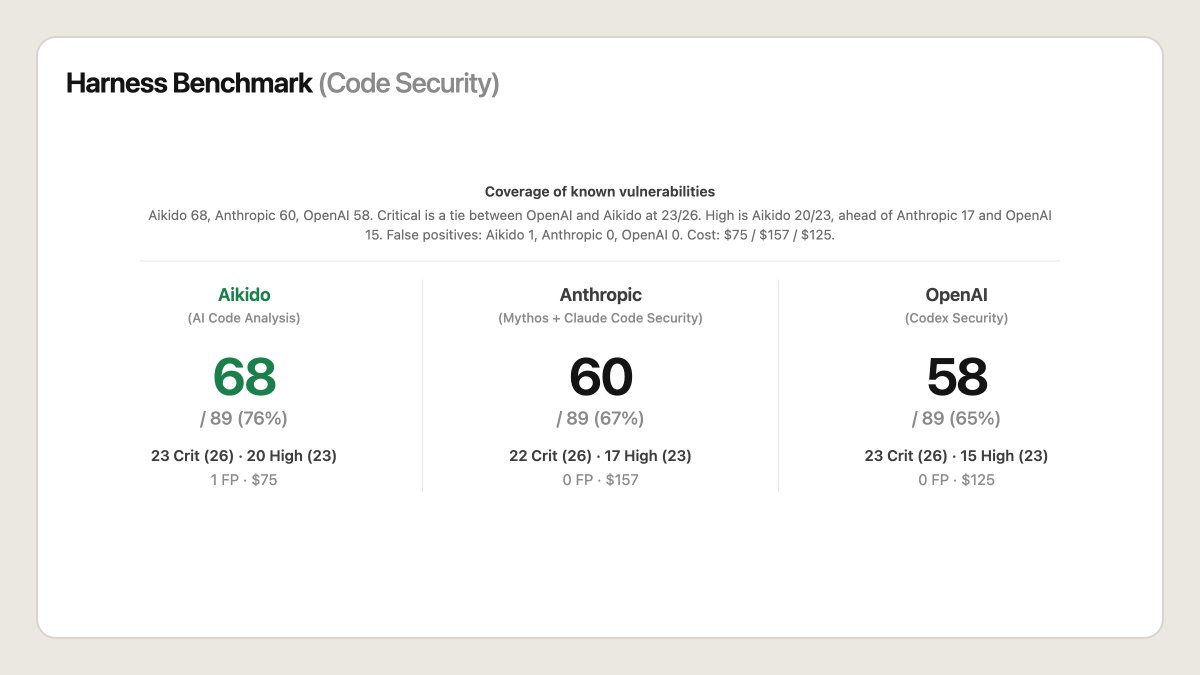
We found a way to find more vulnerabilities than Mythos (Claude Security) without burning $10k worth of tokens
TLDR: it's much better to use many agents with small models than to use a few agents with big models
Full blog post on how we did it: https://t.co/8xvHVQwMGD
This Chinese guy exploited an authorization vulnerability on Anthropic’s side and got the $214.2 Claude Max subscription for $0 😳
IMPORTANT: don’t attempt anything like this on your devices. Anthropic will patch it soon, and trying it can get your device banned.
He built a five-step local workflow on a single machine.
This involved no servers shared accounts or a team.
Instead he used a VPN, Tampermonkey, a new Claude account and a dummy SEPA payment.
Traditional users pay full price every month. His cost: $0.
Here’s the exact flow he ran:
→ VPN layer: Installed a VPN and set the exit node to Germany.
→ Account layer: Created a fresh Claude account and selected the Max plan.
→ Injection layer: Loaded a widely shared Tampermonkey script (common in certain Chinese communities) that altered the client-side authorization checks.
→ Payment layer: Chose SEPA debit as the payment method and entered a dummy IBAN.
→ Activation: Submitted. The subscription activated at $0.
That’s it. On paper it looks clean. In reality it’s an authorization bug on Anthropic’s side that let the request bypass the real charge.
He has No team. No office. No credit card. Just a browser, a VPN, one userscript, and a dummy IBAN.
Usage after activation was normal Max-tier access.
The only ongoing “expense” was the risk of a future device or account ban once Anthropic closes the hole.
One vulnerability. One temporary window.
Cleanest (and riskiest) FREE Max sub I’ve seen this year.
Don’t try it.
A Security Researcher Reworked OpenAI’s CDC Prompt — and Found a $500K RCE for About $25 in Model Usage
I adapted the approach into a generic vulnerability research prompt. The image contains the full version; here’s the short version.
Good luck hunting. If you’ve built your own prompts or harnesses, share them too.
A generic CDC-style vulnerability research harness (short version):
- Run multiple agents in parallel across distinct exploit families.
- Avoid premature convergence. Do not let every agent pursue the same promising path.
- Mark failed or exhausted paths as blocked.
- Regularly launch new hypotheses and explore neglected attack paths.
Independently adversarially validate every concrete finding.
- Have the root agent continuously synthesize results, challenge assumptions, reprioritize work, and redirect agents.
- Do not use git history, changelogs, CVE databases, or patched-version diffs as shortcuts.
- Require the full exploit chain to work in a realistic, commonly deployed configuration and meet the defined starting-privilege → impact goal.
- When behavior depends on implementation details, inspect the runtime, framework, database, libraries, and dependency source directly.
- Do not stop at the first primitive. Chain validated primitives until the concrete success condition is reached.
I have a overkill setup, but 100 advisors in every area, 5 areas. 20 agents each. All hyper specialising on one specific thing. Results are perfection. I don't recommend 100 advisors just like that, maybe start off with 1-2. It does make a big difference when you're using open models
https://t.co/U9xKBjY1QS
@zerotrustvn@opencode@Cloudflare Cloudflare cannot do it long term. Short-term they might help but for long-term even they cannot help with this. 10T token gap is no joke. DeepSeek API from China (creators of DeepSeek) itself cannot support this at that price anymore.
@adityarjn_@opencode@Cloudflare If you are on .21 you don't need to update unless they push one. Otherwise; restart your OpenCode with fresh IP on a VPN or without VPN and you are good to go
@PuterOnX@qilua02 Yes worth it but whenever OC-2 comes in main branch from beta. You should shift to OC-2 because on stable release it will be better than OMP or Pi.
@qilua02@TotallyNotParth@jayair Bun runtime. It's not written in Rust. In case it was written in Rust; the memory leaks and CPU crashes would have been solved long ago.