Super excited to announce that my first popular science article has been published by @popastro. This article is based on the work I have undertaken as a #PhD student at @cambridge_astro. Thanks to @Dr_Lucie for the final edits.
Read the full article here https://t.co/vXKIkaSpV7
Starting soon! Come join us.
Meet link:
https://t.co/dt4n8OlROX
Highly recommended for undergraduate students who wish to pursue a career in academia in the field of astronomy and astrophysics. Best of luck!
@ASarkar210294@iiserkol@cessi_iiserkol
Announcing our new @arxiv preprint submitted to #mnras! Here we describe the spin evolution of our #Sun and other Sun-like stars!
This work will prove invaluable in the construction of robust long-term stellar activity models.
https://t.co/I8NvGYnC9L
Announcing our @arxiv preprint! We find that magnetic braking in brown dwarfs could be significantly weaker, which can explain the current lack of short-period CVs aka period bouncers. Expecting many such faint bouncers to be revealed soon by @eROSITA_SRG. https://t.co/R0mifrvLeL
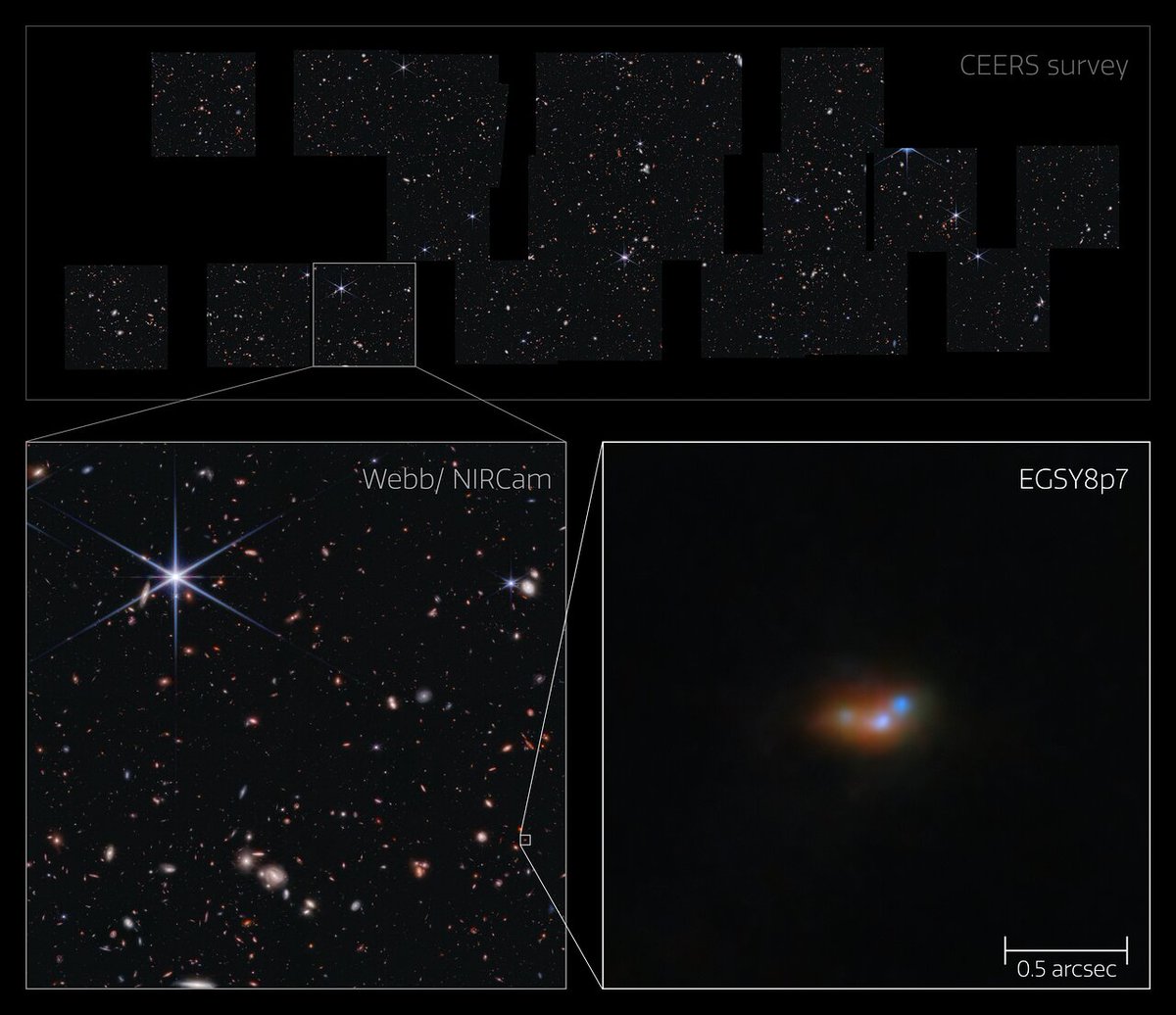
The unmatched resolution and sensitivity of James Webb has revealed, for the first time, what lies in the local environment of galaxies in the very early Universe.
New research by IoA PhD student Callum Witten, published today in Nature Astronomy.
https://t.co/u22uuFYMsw
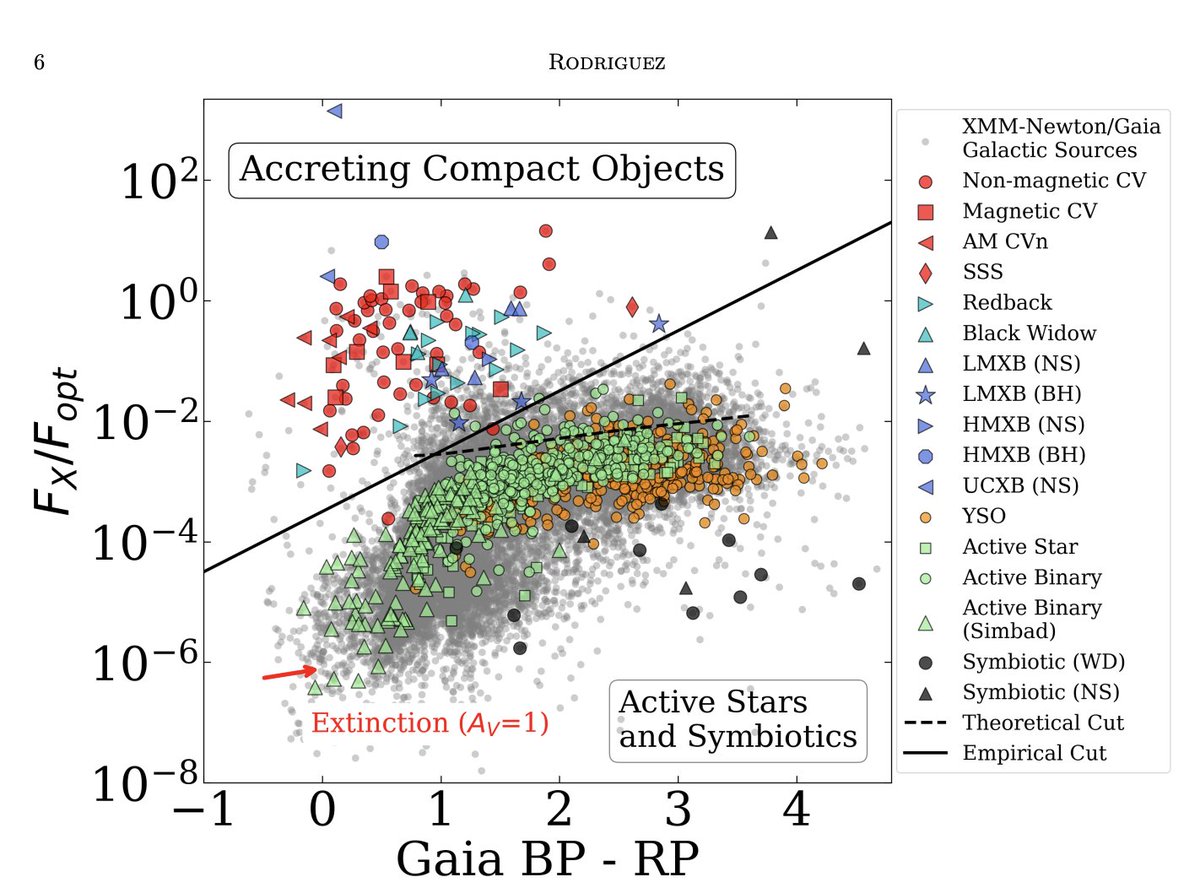
Excellent paper on the arXiv today by Tony Rodriguez: how to select compact object binaries with X-ray and optical surveys. Very useful for upcoming @eROSITA_SRG data release!
https://t.co/Nxezc0RSKd
I am very happy to have been awarded the third prize at @ChurchillCol's two-minute thesis competition.
Glad that I managed to get the judges intrigued, just a little bit, about how stars can help us answer fundamental questions on the origin of life.
#astronomy#PhD
Attendees at Churchill MCR’s annual two-minute thesis competition were treated to a fascinating event with students stepping up to explain their research with the help of one slide in just 2 minutes. Congratulations to eveyone who took up the challenge!
👉https://t.co/DlMKbZCEiX
Retweeting this one cuz it's now published in #MNRAS@RAS_Journals (https://t.co/lfClqawzen). #FRB observers, do look out for my talk as well at the FRB 2023 conference on Nov. 10.
@multimsgrbooms@shivibhandari
Arnab Sarkar is lead author on a paper which shows how spinning stars can help us understand the habitability of distant worlds - https://t.co/nsSMy1DFWR @ASarkar210294@ChurchillCol@cambridge_astro
The implications of our results on constraining the habitability around M-dwarfs have been summarised by @Astronomy_Matt in this press release on the @cambridge_astro website. The first stars we plan to analyse are Proxima Centauri and TRAPPIST-1.
https://t.co/CfcLupRQhN
Our recent paper published in #mnras describes the spin evolution of convective M-dwarf stars with a simple analytical model and is able to explain the extreme variability in spins of M-dwarfs in open clusters and in the field. @RoyalAstroSoc@RAS_Journals
https://t.co/mGIk9CYAy4
🚨Attention TRAPPIST-1 fans 🚨
We just published the first JWST spectrum of one of the TRAPPIST-1 planets!
Our findings could have important implications for the planets in the habitable zone.
THREAD
At this department in the USA, postdocs can start on $91k - £71k in UK money. This is the starting salary for a full Professorship in my own university, for which you will already have spent 2-10 years on much lower salaries as postdoc and 5-20 years as lecturer/senior lecturer.
Better late than never! Finally this work has been accepted for publication in @RoyalAstroSoc. With our model we can track the spin evolution of very-low-mass stars and study the effect of the host star on nearby exoplanets.
Check it out here:
https://t.co/VWEpLhGaHJ
Very excited about my upcoming work on addressing the spin evolution of stars about half as massive as our Sun in our galactic neighborhood. This work will have implications on the habitability around such stars, as well as the spin history of our Sun.
#astronomy