An agreement matters, but action cannot wait for it to be finalised. In AURORAI, we have just started a four-year programme with adaptable models designed to support decisions when a future pandemic threat is still unknown. The aim is to enable earlier action despite uncertainty.
@lucasgonzalez Preparedness cannot wait for negotiations to finish. Practical work has to move in parallel. For initiatives like ours, that means a clear roadmap from data foundations to Disease X modelling, outbreak prediction and decision support before the next threat is fully known.
@OECD@OECD_Social Your data make the value of projects like AURORAI very tangible. The real challenge is being ready to act even when the next threat is still unknown, with tools that can adapt as new information emerges.
Early action sounds simple. In practice, it means making sense of incomplete and fragmented information before a situation becomes obvious. This is the space AURORAI is working in, connecting early signals, modelling what may happen next and supporting decisions under uncertainty
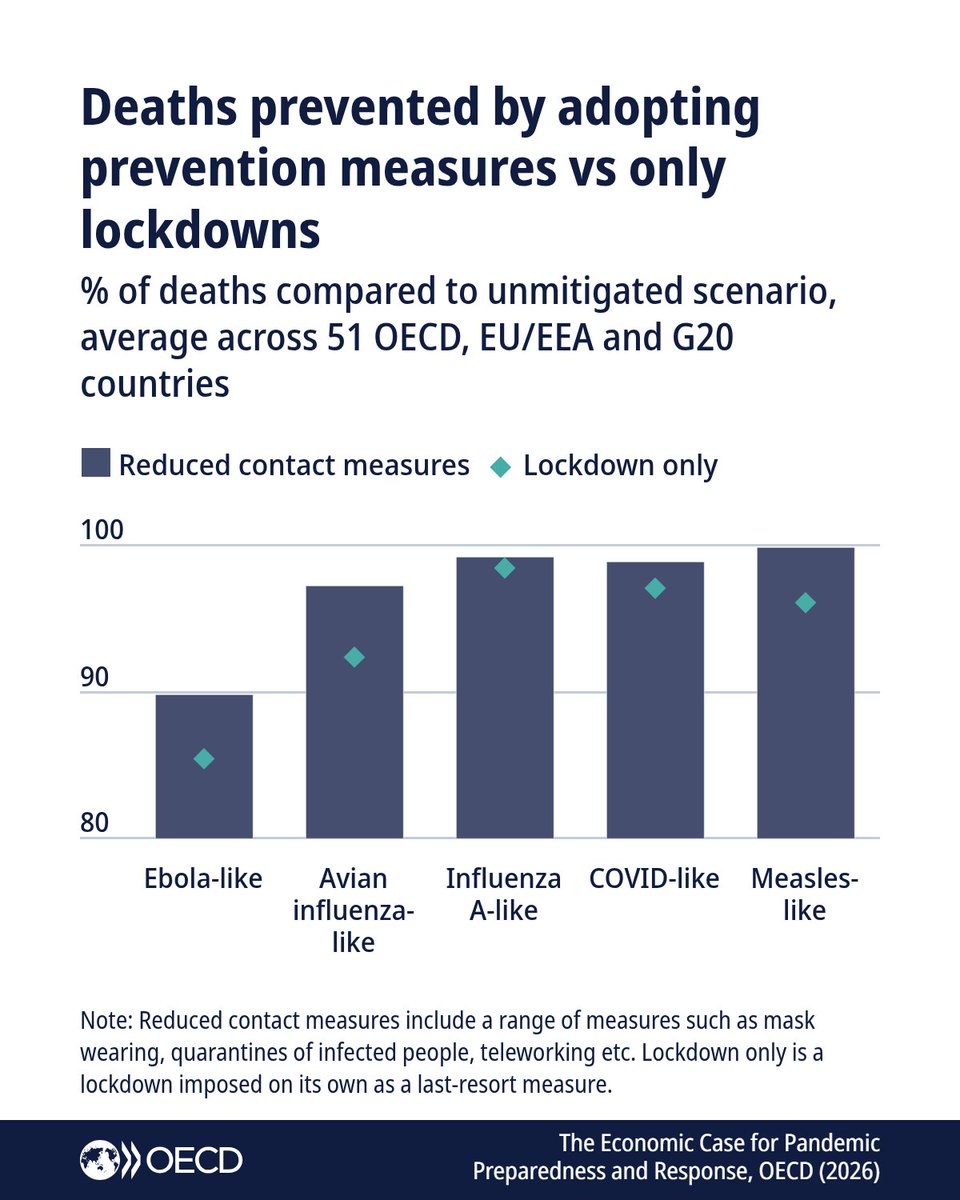
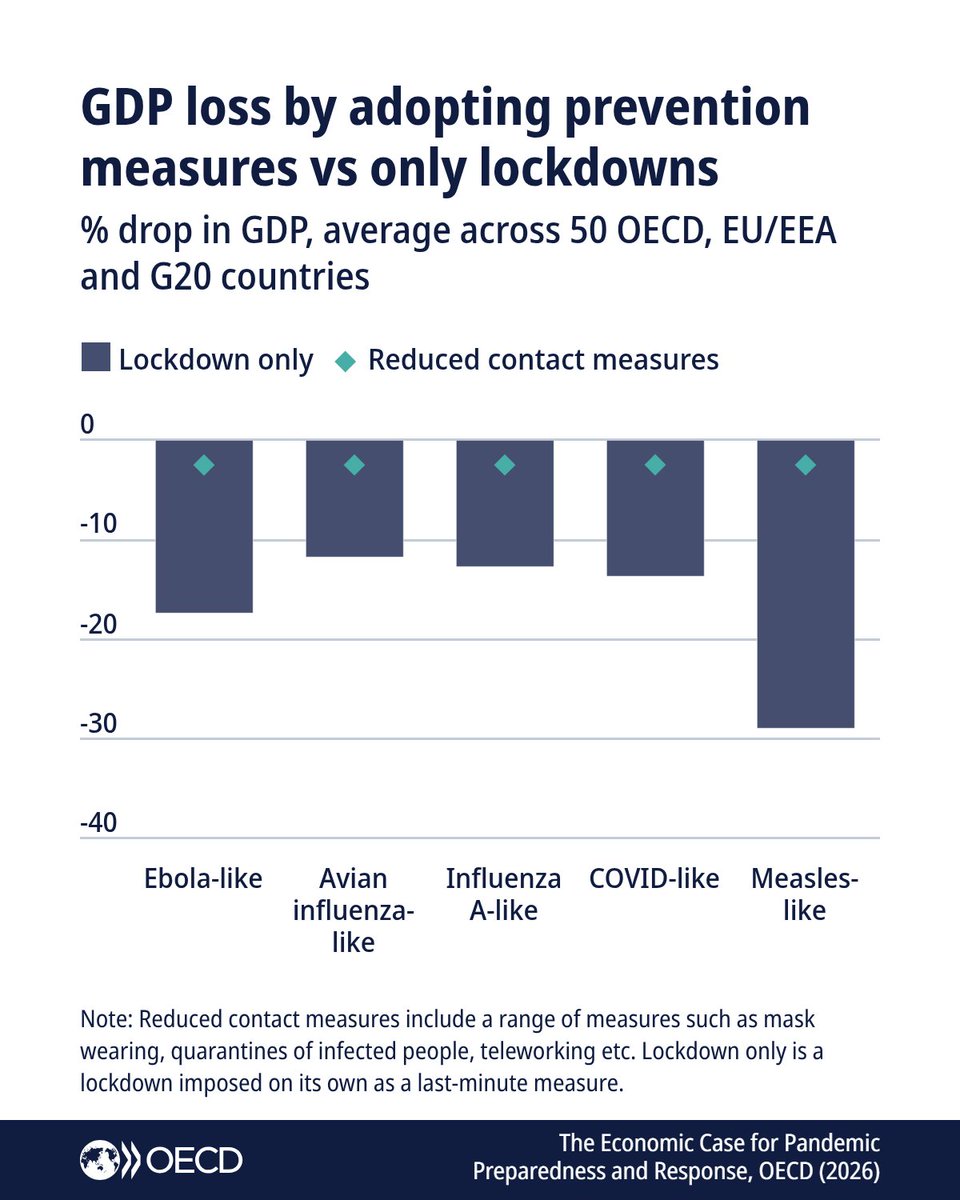
Pandemic preparedness pays off. New #OECD analysis across 51 countries finds that acting early could prevent vast majority of deaths while limiting economic damage.
Relying on lockdowns as a last resort could see GDP fall by up to 28.9%.
Read more: https://t.co/HPN0km3G56
@hadjalahbib@UN@EC_HERA@EUatUN@EU_Health The difficult part is preparing before a threat has a clear name, pattern or complete data. Early signals only become useful when systems can connect them and support decisions under uncertainty. This is a core challenge for AURORAI too.
Pandemic preparedness needs more than commitment. It also needs systems that can connect reliable data, modelling and decision support before and during a crisis. That is one of the challenges #AURORAI is working to address.
At #UNGA, world leaders renewed their commitment to preventing and preparing for future pandemics. Countries also stressed the urgent need to conclude negotiations on an annex to the WHO Pandemic Agreement that would establish the Pathogen Access and Benefit-Sharing (PABS) system.
Read the full release here: https://t.co/x8PmCUckdX
One of the technologies behind AURORAI ↓
Our partner @origin_trail explains how the Decentralized Knowledge Graph will serve as a verifiable, sovereign and interoperable data backbone for AURORAI’s decision support system.
#AurorAI is officially underway after the international consortium's successful kickoff.
The mission: give Europe an AI toolkit that's ready before the next outbreak, not after it.
Its data backbone: the OriginTrail Decentralized Knowledge Graph (DKG).
14 partners. 10 countries. One platform.
@AURORAI_project unites research institutes and universities, public health authorities, healthcare providers and technology companies.
The platform will be put to the test at national and local level, and the public health partners show the scale: from Turkey's Ministry of Health, covering a country of 86 million people, to Belgium's national public health institute and a regional hospital network in Catalonia.
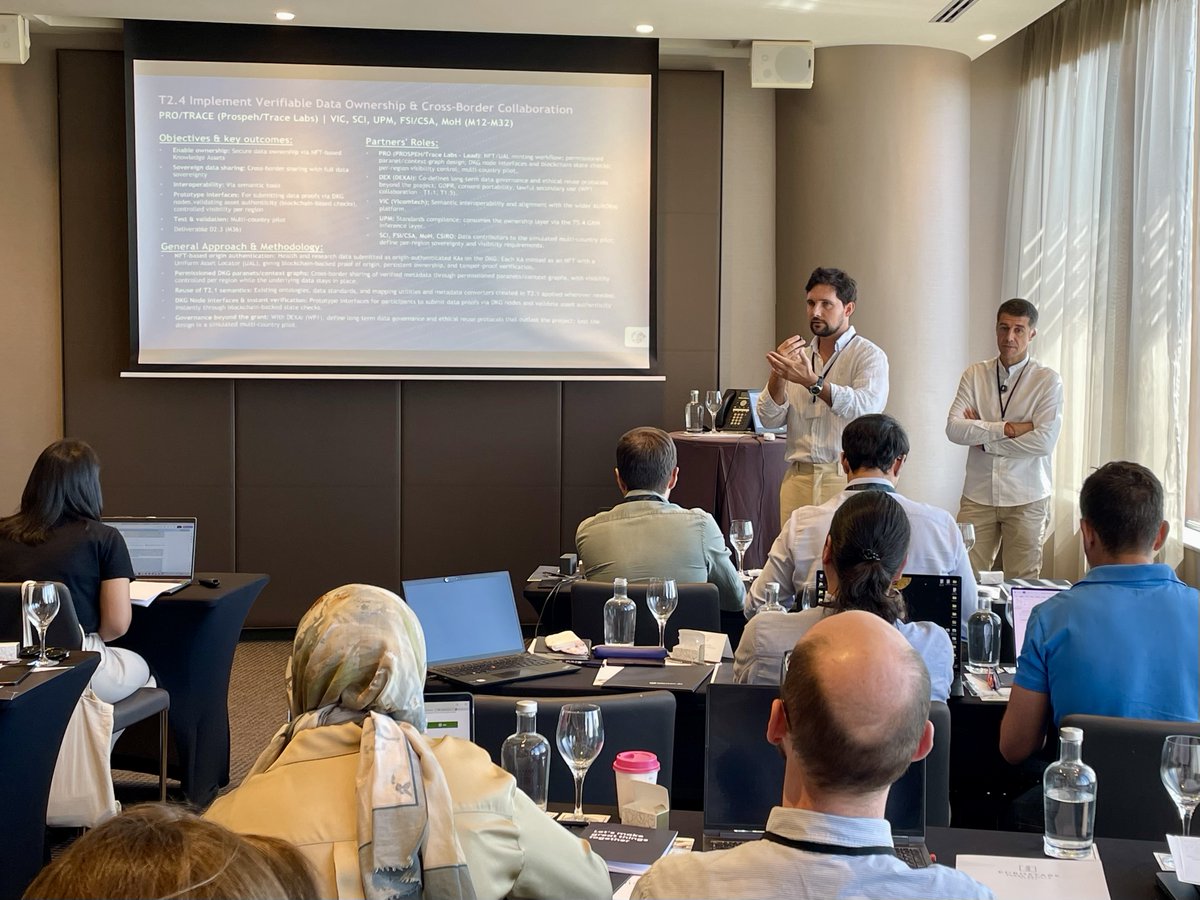
At the kickoff, @DrevZiga, co-founder of OriginTrail, walked the consortium through how the DKG keeps every partner's data verifiable, sovereign and AI-ready.
How it works:
→ Ownership. Health and research data becomes Knowledge Assets on the DKG, each with a Uniform Asset Locator (UAL): blockchain-backed proof of who published it and that it hasn't been tampered with.
→ Sovereignty. Context graphs control which regions see which metadata. The data itself stays where it is.
→ Verification. Partners submit data proofs through DKG nodes and check authenticity on-chain, instantly. → Interoperability. Shared ontologies and data standards make data from different countries and institutions work together.
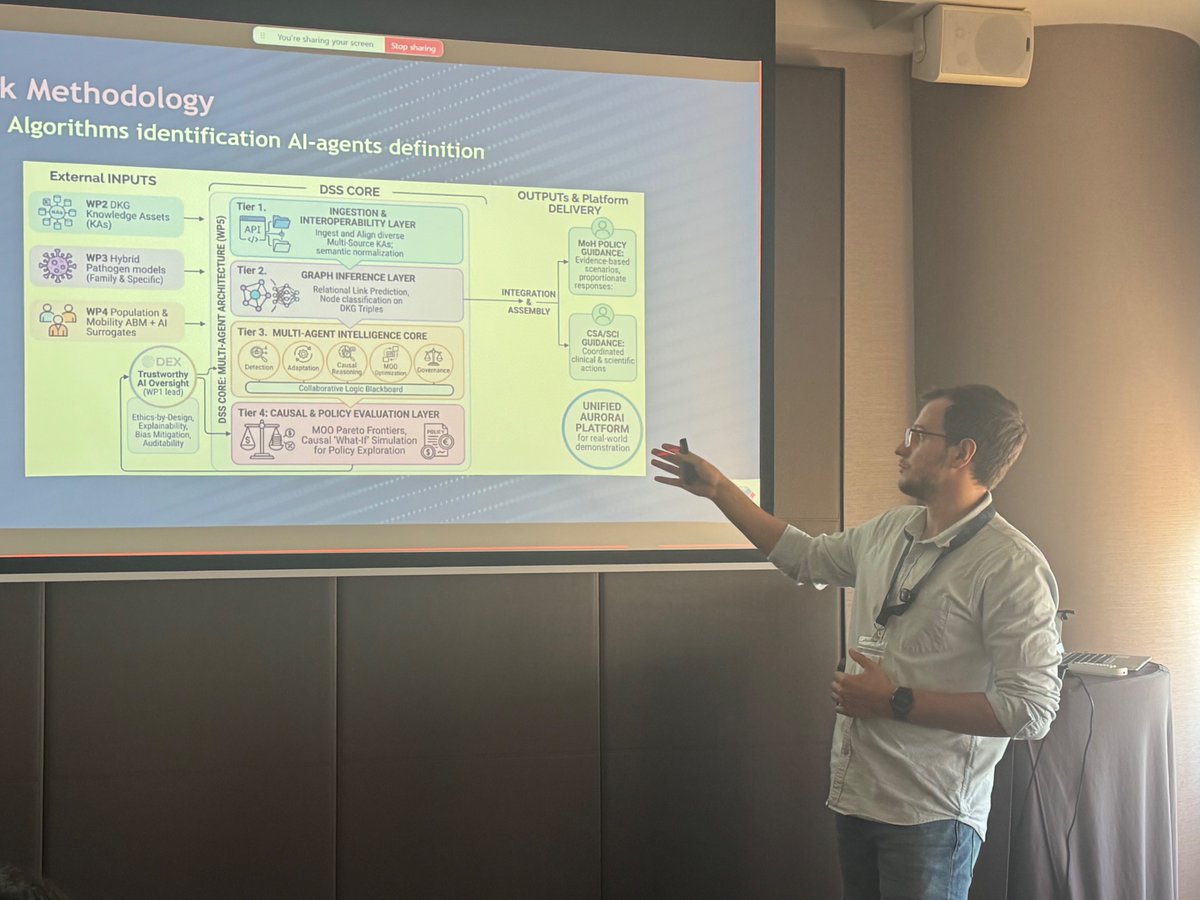
Then the AI agents get to work. That verified layer is the first input to AURORAI's decision support system, alongside pathogen models and population and mobility simulations.
The result: policy guidance for ministries of health, and coordinated clinical and scientific guidance for healthcare providers and authorities.
Every recommendation traces back to a verifiable source.
@WHO Preparing for the next pandemic also means being ready for threats we cannot yet identify. This is why adaptable modelling, early warning and trustworthy decision support are becoming such important parts of pandemic preparedness.
@UN_News_Centre@WHO Earlier warning is a lesson we cannot afford to overlook. #AURORAI is preparing for what we cannot yet predict, using high-quality data, disease modelling and trustworthy AI to strengthen early warning and response, including to yet-unknown pathogens with pandemic potential.
@WHO Preparing for the unknown is key. In #AURORAI, we’re combining high-quality data, disease modelling and trustworthy AI to help detect emerging risks earlier and support better-informed decisions when new outbreaks occur.
The next pandemic threat may be unknown. Our response shouldn’t be unprepared.
#AURORAI is working with high-quality data and trustworthy AI to help Europe respond faster and better when new outbreaks emerge.
Outbreaks keep reminding us that health threats are real.
Stay tuned for #UNGA81 and discussions around the Pandemic Agreement.
Know more: https://t.co/a3KZgd6MqI
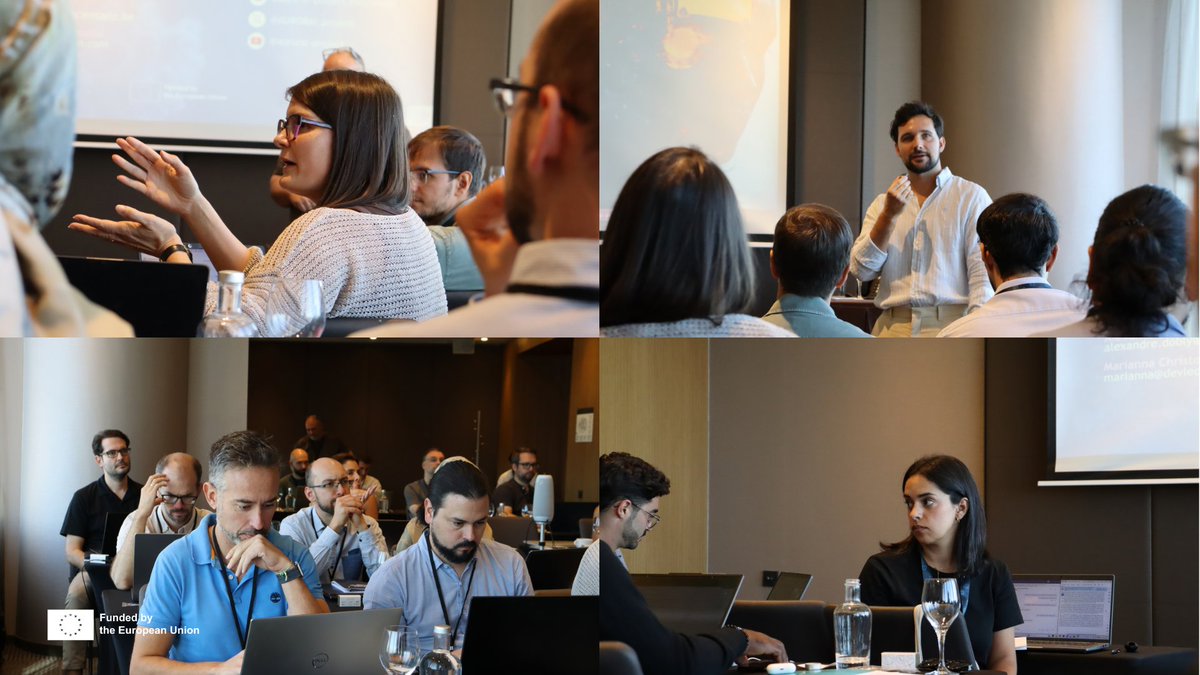
🚀A strong first day for the AURORAI partners at the kick-off.
Today we focused on the project’s foundations, from ethical and trustworthy AI to privacy-preserving data, outbreak prediction and communication.
A valuable first step, with more to come tomorrow.
Hello from Seville 👋
We’re AURORAI, a new four-year Horizon Europe project working to strengthen Europe’s preparedness for future pandemics. Our partners are meeting this week for the Kick-off Meeting to align priorities and get the work under way.
Follow us!
Two days, one new project, and a clear direction for what comes next. AURORAI closed its kick-off with discussions on Disease X modelling, decision support, co-design and the first concrete steps ahead. Thanks to @idener for hosting us and to all partners for getting us started🫶