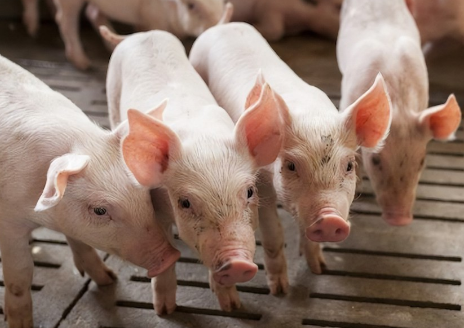
European Food Safety Authority @EFSA_EU has just issued its draft scientific opinion on the use of gene editing in animals. It's pretty clear:
"No new potential hazards, and thus, no new risks to humans, animals, or the environment are anticipated."
https://t.co/AjiGzmHwfN
The deadline to apply for a Group Leader position at the Centre is extended, send your application by January 6, 2025! 🌊An incredible opportunity to lead innovative marine science in beautiful Bergen! 👩🔬👨🔬🧪
https://t.co/1lXVnFSAis
Another iberian endemic for the #fishmas day (day 10) Iberian spined loach Cobitis paludica. In this picture you can see the sexual dimorphism incoloration pattern only visible during reproduction season. Male with bands and Female with spots. Photo by #PauloPinheiro
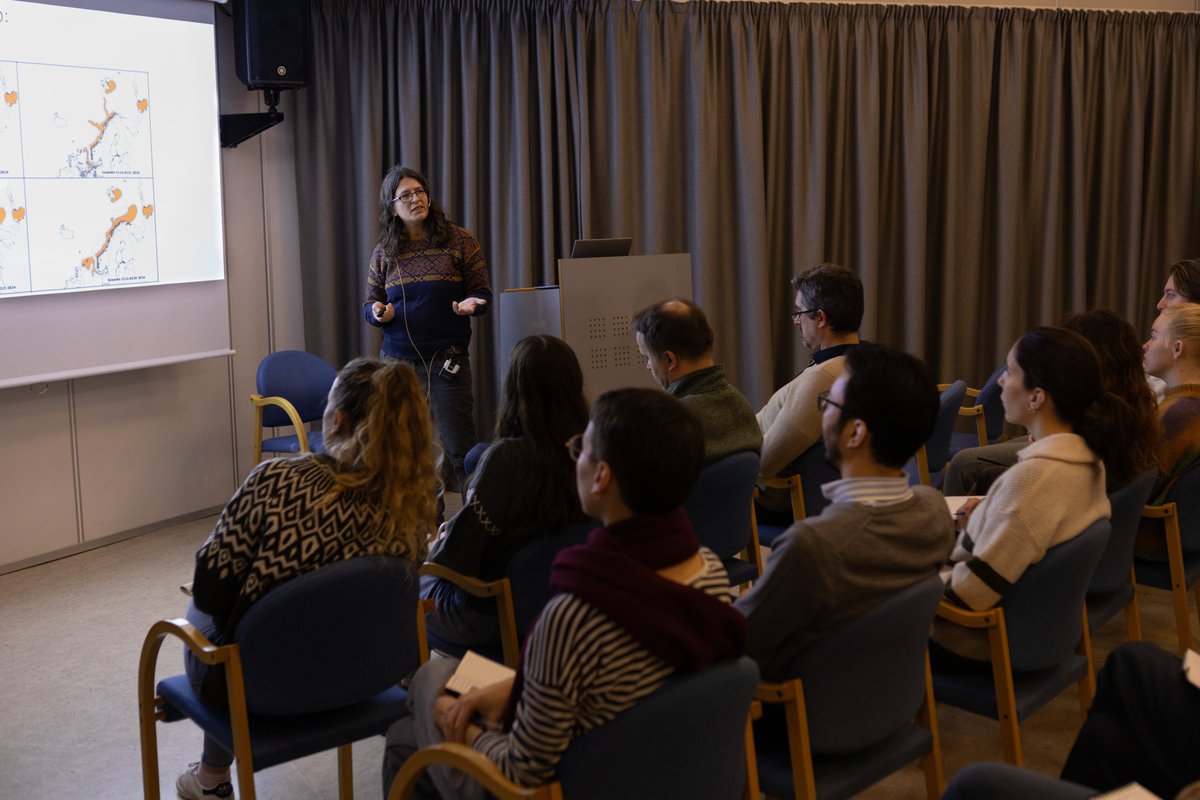
It was wonderful hosting Karen de Jong, our neighbor from the Institute of Marine Research 🌊 She shared her inspiring field work on noise pollution in the oceans, investigating its impact on local fish populations 🔊🐟 Thank you for sharing your time with us! @UiB@mchlab
New paper & PhD flashback! Led by Ross Cairnduff the paper looked at diverged genomic regions between anadromous & landlocked salmon. Specifically those linked with smoltification. One SNP showed an impact irrespective of fish size (most important trigger) https://t.co/JUxv8Dr2D6
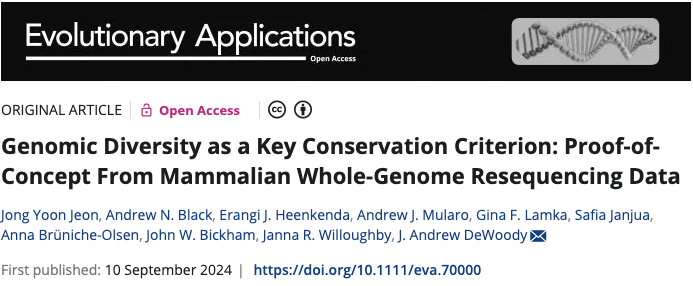
Interested in how genomic data can help improve conservation assessments and population monitoring? Check out our paper in @EvolAppJournal where we outline background, provide a bioinformatic pipeline, and suggest an analytical framework🧵https://t.co/JWvXF5SDV1
This is rich - one of the primary reasons scientists don't have a lot of time to think is that @nature and its ilk have promoted a culture where the primary goal of science is to produce bloated Nature papers that require lots of time and money, but little thought, to produce.
#SOFIA2024:
For the first time, #aquaculture has surpassed capture #fisheries in the production of aquatic animals.
Future growth must prioritize sustainability & support regions that are most in need.
Read more 👉 https://t.co/elz6XRrySF
#BlueTransformation
Restarting the process of approval of a sea cage experiment with genetically sterile fish, hoping for a scientifically sound evaluation https://t.co/iZGBK0FsVU
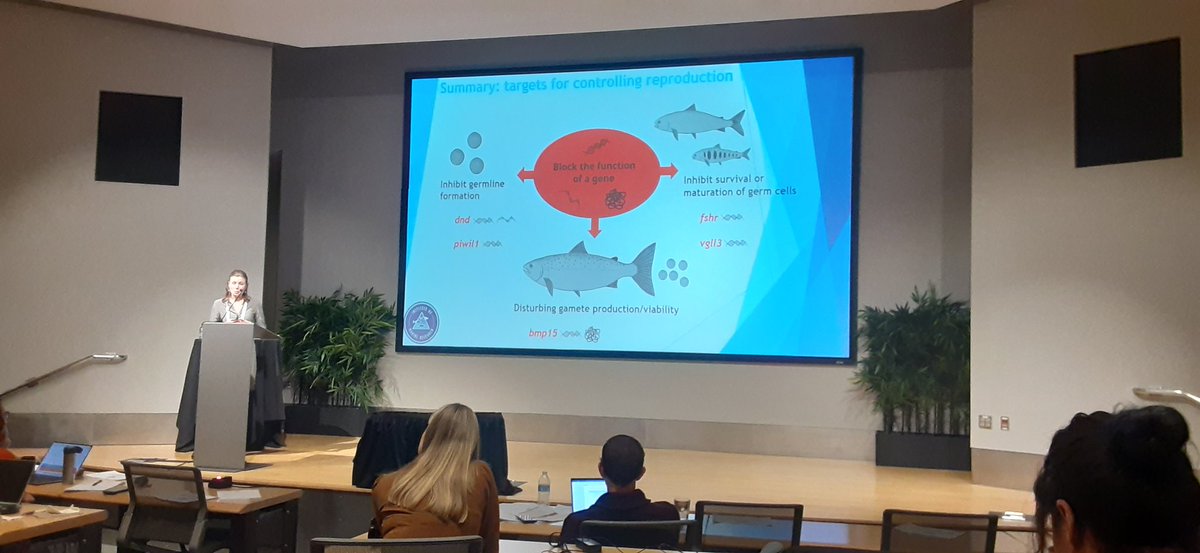
Sterility in aquaculture salmon can be achieved through triploidy, albeit with some fitness costs. @KleppeLene reveals a more elegant way to sterility: targeting specific genes using a variety of techniques from gene editing to RNA vaccines. @ICISBConference#icisb2024 🐟🧬
Happy to present these results, which represents a first step towards production of sterile gene edited salmon for use in sea cage farming Loss of Fshr prevents testicular maturation in Atlantic salmon (Salmo salar L.) | Endocrinology | Oxford Academic https://t.co/L1dBVSYOmc
We are looking for a Senior Geneticist to join our great team focussed on genetic improvement of Atlantic salmon, details below:
https://t.co/5V6TXuS84o
"With exclusively organic farming, we would have to destroy even more natural areas in order to be able to feed people," says organic scientist Professor Urs Niggli.
Genetic engineering: Why this well-known organic pioneer advises CRISPR/Cas9
https://t.co/TD1uoMPRHv