New preprint by @O_Tolstenkov and Sissel Norland on the behavioral repertoire of the benthic ascidian Ciona intestinalis. https://t.co/OLQXA1CtOm
To our surprise (since Ciona adults are sessile and do not have a centralized nervous system like the larvae) Ciona adults have 1/2
Elevated DNA damage without signs of ageing in the short-sleeping Mexican cavefish offers a unique model to study sleep, DNA repair, and ageing.
https://t.co/uvaBfB8zqc
📢Check out our latest #preprint list on FocalPlane
This list focusses on the latest research on bioimage analysis and data management. Let us know if there are any preprints that we should add to our list and send us recommendation for the next one!
https://t.co/w2xTjK63GF
Ascidians (Ciona intestinalis)🪸Our distant chordate cousins! 🌊 Simple sea squirts that reveal how vertebrate body plans evolved 🧬 A key model for notochord formation, neural induction, and cell lineage mapping 📸 Video by MBL Embryology 2019 #ModelMonday#DevBio#EvoDevo
Deadline tomorrow for applications to this PhD position looking at cool collective mito dynamics! Here's a few pics of the neighbourhood to help convince you to apply
rich embodied postural dynamics and are able to perceive different sensory stimuli and respond with distinct behavioral outputs. This has important implications for the evolution of nervous systems and behavior in sessile epibenthic organisms.
New preprint by @O_Tolstenkov and Sissel Norland on the behavioral repertoire of the benthic ascidian Ciona intestinalis. https://t.co/OLQXA1CtOm
To our surprise (since Ciona adults are sessile and do not have a centralized nervous system like the larvae) Ciona adults have 1/2
Our paper about the interplay between heat stress, viral and antiviral response in sea anemones and #corals 🪸 is finally out!
#OpenAccess
Collaboration between my lab, @maozfine and @reefgenomics
https://t.co/qVcjxCfIBP
Exciting news! Our NSF-funded project Imaging-PHD will make microscopy data more reproducible & shareable by standardizing how hardware info is captured. Thrilled to get started with our amazing multi-institutional team! 🔬🚀
https://t.co/ztZS8uvLht
Very interesting results and a technical breakthrough in gene silencing in Trichoplax:
Dissecting a peptidergic signaling pathway in Trichoplax adhaerens by gene silencing: Current Biology https://t.co/0CJOBzjWQy
Collaboration work on the computer modeling and simulations for growing cell/lumen assembly, led by Dr Tanida (UTokyo) @c100percent , with Prof Sano, Prof Nonomura, Dr Fuji and their HFSP teams, @RivelineLab@Honigmann_Lab Prof Grapin-Botton’s lab.
#ArticleIRBio
Evaluating the impact of an increase in sea water temperature on the palmerolides of the Antarctic benthic tunicate Synoicum adareanum
Author: Andrea Prófumo, Conxita Avila , Adele Cutignano
🔗https://t.co/AwPjlbrRNQ
@Conxita_LAB 👇
⌛Less than 2 weeks left to apply!
We are looking for 1-2 new Group Leaders to launch ambitious, internationally recognised research programmes!
All the info can be found 👉 https://t.co/tOaivRDVVV
📅Deadline Sept 8th, 2025!
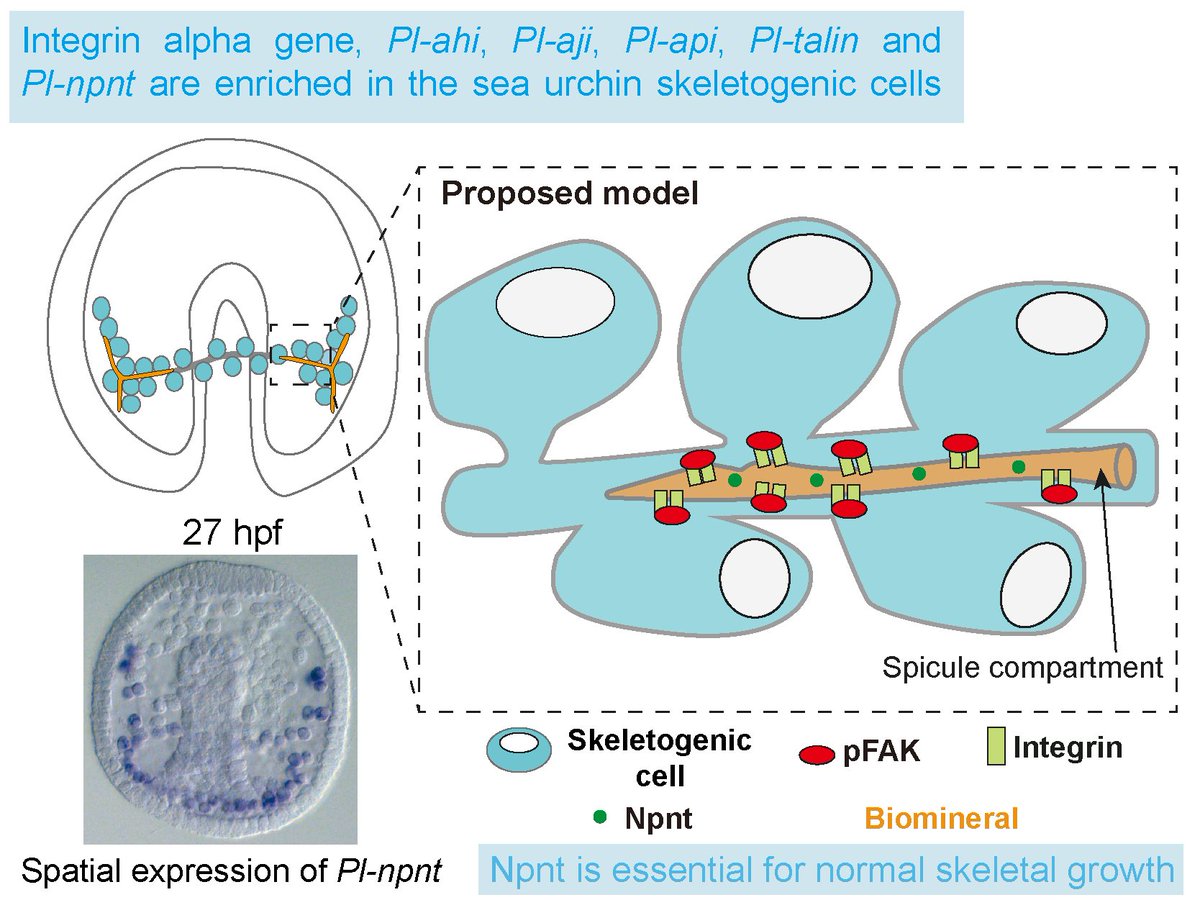
When Shanduo Chen joined my lab three years ago, he could barely speak English and had little prior experience with genes and proteins. But he was determined, hardworking, and had the rare combination of a critical mind and deep curiosity.
Over time, he learned to communicate confidently in English, dove into molecular biology and embryogenesis, and mastered all the techniques in our lab. He worked through two projects before finding the one that truly clicked, and within a year he produced this beautiful paper, “Skeletogenic Expression of Integrin Alpha, Talin and Npnt Genes and Npnt Role in Sea Urchin Skeletogenesis”, just published in JezB!
Beyond science, Shanduo is also a very talented artist, contributing illustrations to other lab papers and to my presentations.
I am very proud of Shanduo and this achievement, and I wish him the best of success in his PhD journey!
#SeaUrchin #DevelopmentalBiology #Biomineralization #MolecularBiology #ProudMentor
https://t.co/Yk23GO3WPS
Postdoc position opening! Theoretical biological physics at Institute of Physics, Academia Sinica, in Taipei, Taiwan. I am now particularly interested in some aspect of phase separation in a far-from-equilibrium condition, which can be relevant for various biological processes.
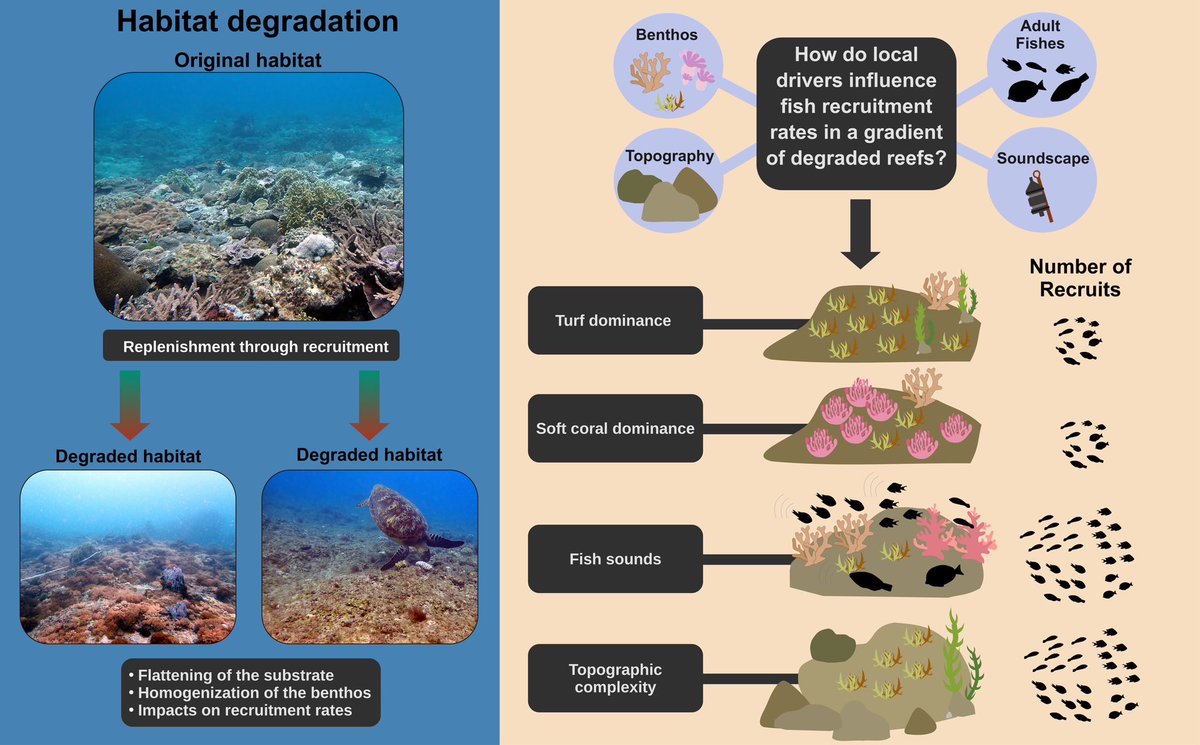
We studied how habitat structure and reef soundscapes shape fish recruitment on degraded coral reefs—finding that rugosity and healthy nighttime choruses boost recruits, while turf algae holds them back. 🐟🌊