🔒 What good security practices looks like in 2026: a short story about a laser, a chip, and a vendor that responded well.
The @DonjonLedger just published their evaluation of the @tropicsquare TROPIC01 chip, the secure chip designed by Tropic Square and used, among others, in the Trezor Safe 7. It's worth a read, not only for the technique, but for the process.
The attack, in plain words. A secure chip is the tamper-resistant chip that guards the secrets inside a hardware wallet. Before running any new firmware, its bootloader checks a cryptographic signature. That's the gate. Using laser fault injection, the Donjon fired a precisely-timed infrared pulse at the silicon, at the exact microsecond the chip was deciding "is this signature valid?". One well-placed glitch later, the chip happily accepts firmware that was never signed by the legitimate vendor. Enough to run arbitrary code.
👍Tropic Square's response was exemplary. They acknowledged the finding immediately, engaged in deep technical discussion, shipped mitigation samples, proactively dug further themselves, and aligned on a coordinated public disclosure. No defensiveness, no spin. Just engineers helping engineers make the product better. It was appreciated by the team, it's unfortunately not always the case.
Sincere thanks to Tropic Square for the collaboration and the standard they're setting, and a hat-tip to @DonjonLedger team for the research.
Full writeup: https://t.co/XI0me70eJY
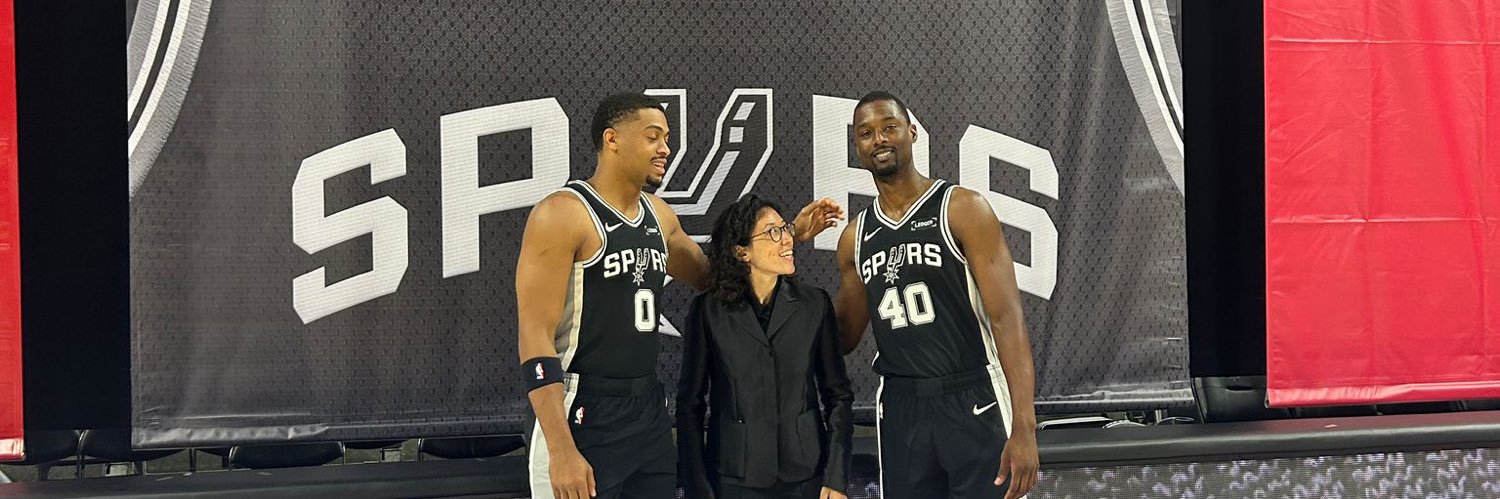
we love the partnership and this reminder is always WILD ! we are proud to be with the most determined team in the league. GSG! @spurs@Ledger@_pgauthier
🔔Post-Quantum Signatures: NIST's Second Wave
In August 2024, NIST finalized its first PQC standards: ML-KEM (key exchange), ML-DSA, and SLH-DSA (signatures). A third signature, Falcon (FN-DSA, FIPS 206), is still in draft.
Last week, NIST announced the nine candidates advancing to Round 3 of a parallel competition aimed at additional signature schemes, explicitly chosen to fill the gaps left by the first wave.
Each of the standardized signatures comes with sharp trade-offs. None of them is naturally suited to threshold signing, and all have signatures that are large compared to ECDSA's 64 bytes.
➡️ SLH-DSA (SPHINCS+, hash-based) The most conservative choice: its security rests only on the collision resistance of a hash function. The price is enormous signatures (7–50 KB !!!). It is the safest pick for very long-lived signatures (firmware, archival, some blockchains such as QRL).
➡️ML-DSA (Dilithium, lattice-based). Compact and fast, while elegant, is younger than hash-based assumptions. It is becoming the default for TLS, PKI, and most non-blockchain ecosystems (~2.4 KB signatures).
➡️Falcon (FN-DSA, lattice-based). The smallest of the three (~666 B at NIST-I), which is why Algorand and Solana selected it. Its drawback: signing relies on floating-point arithmetic, making error-prone and side-channel-resistant/ constant-time implementations notoriously hard. Its FIPS 206 standard is still in draft.
🔍Most blockchains are leaning towards customized shorter versions of SLH-DSA.
NIST is organizing a second wave of standardization. The goal is twofold: shrink signature sizes and diversify the underlying mathematics so a single cryptanalysis breakthrough cannot break everything. The nine Round 3 finalists span five families:
🔸 Isogeny: SQIsign
🔸 Lattice: HAWK
🔸 MPC-in-the-Head: MQOM, SDitH
🔸 Multivariate: MAYO, QR-UOV, SNOVA, UOV
🔸 Symmetric-based: FAEST
Notably, no code-based scheme survived. Both Round 2 candidates were eliminated: LESS and CROSS were dropped because of 2 attacks
👉 Two candidates worth watching
⏩ SQIsign produces the smallest known post-quantum signatures by a wide margin: from 148B to 292B (depending on the level of security), with sub-130-byte public keys. That is the only PQC signature scheme today that even approaches the bandwidth profile of ECDSA, extremely attractive for blockchains, certificates, and firmware. The catch: isogeny-based cryptography is still young, signing is mathematically intricate, and side-channel hardening is an active research area.
⏩HAWK is essentially "Falcon without the floating-point." It is a lattice hash-and-sign scheme producing 555 B signatures at NIST-I (smaller than Falcon's 666 B) and can be implemented purely with integer arithmetic, a major engineering win.
NIST has said the Round 3 review will last roughly two years and that any multivariate winners are unlikely to be standardized without yet another round. Realistically, the earliest a new signature standard will land alongside ML-DSA and SLH-DSA is 2028.
The urgency to migrate has grown sharply, yet the current standards still have significant drawbacks, and this last-minute selection round, while necessary, collides head-on with the migration timeline.
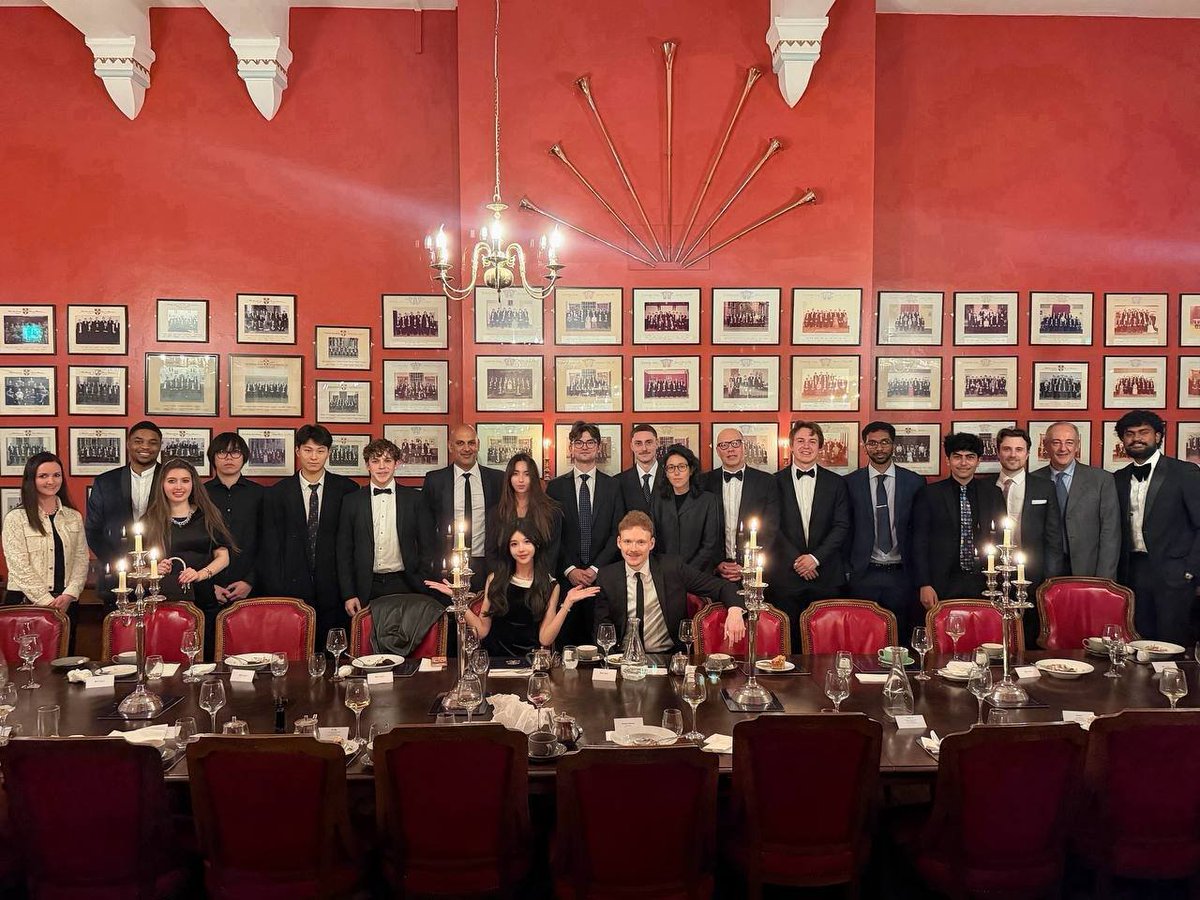
Last week @Ledger N3XT — our education program across college campuses — went to Cambridge. Honestly one of the most inspiring parts was just spending time with students who are thinking this deeply and rigorously about identity, ownership, AI, privacy, and the infrastructure being built underneath all of it.
800 years of academic history, two days of conversations about digital identity, consent, and trust.
We started with a fireside chat and Q&A. The students came prepared.
One Masters student asked whether Ledger is evolving from securing assets into infrastructure for human identity — and whether that future protects choice or concentrates control. Not a casual question.
A CS student pushed on quantum risk, identity, and why hardware matters at all in an increasingly AI-native world. His point was essentially: if intelligence becomes abundant and synthetic agents become indistinguishable from humans online, software alone stops being enough. At some point you need a physical root of trust tied to consent, identity, and verification in the real world.
Then he moved to privacy: send someone £2 for coffee on-chain and they can potentially see everything you own.
Those questions earned him a Ledger device. Most of the room got close.
Dinner at The Cambridge Union turned into conversations about decentralised infrastructure for interplanetary settlement, synthetic identity verification, and agentic systems. Less “future of tech” panel talk, more people actively trying to work through the implications.
The next day we toured Trinity’s Great Hall, the Wren Library, Newton’s apple tree. What stayed with me wasn’t the history so much as the continuity of the questions. How people establish truth. Authority. Consent. Ownership.
We met with professors and students and started laying groundwork for deeper collaboration. Cambridge has a habit of stress testing ideas until they either collapse or sharpen. That’s useful.
We’ll be back.
https://t.co/0BNG1zmsPa
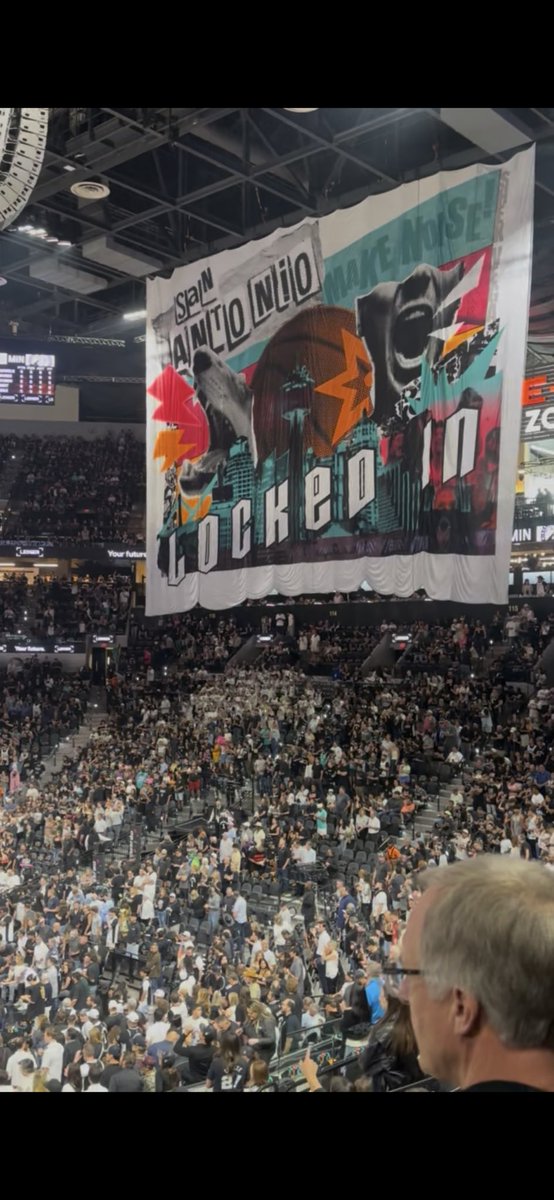
WE ARE LOCKED IN SAN ANTONIO!!! Ready to make noise, we brought out the big guns! Thank you @Ledger and the @spurs as well as artist Shek Vega for helping us unveil the largest TIFO the NBA HAS EVER SEEN!!
So proud of the @ledger team for making clear signing on Ethereum a reality. They built in the open, brought together stakeholders across the ecosystem, and created the 7730 standard as a public good for Ethereum.
🚨 A new NPM supply chain attack is currently underway, specifically targeting the AI ecosystem, including packages related to Mistral AI, OpenSearch, Guardrails AI, and others. It hooks into Claude and VS Code environments to steal user credentials, including GitHub tokens.
What makes this attack especially sneaky is its persistence mechanism. It deploys scripts that monitor whether the compromised GitHub token gets revoked. The moment revocation is detected, the malware retaliates by wiping the user’s home directory. This punitive behavior both disrupts remediation efforts and buys attackers more time to deepen the compromise.
We are entering a new era where attackers are becoming dramatically more capable, and defending against them is growing more difficult every day.
This may just be the most important game of the year… so we are pulling out all the stops…
Its time to MAKE NOISE AND LOCK IN SPURS FANS
Tomorrow, 7pm, Frost Bank Center.