First day of residency. (Well… first night. never been a fan of mornings)
The cap has changed. The responsibility is greater this time, but the purpose remains the same: to make a difference.
#AI can generate remarkable answers. The quality of those answers will always depend on the quality of the questions and the judgment used to interpret them.
@cremieuxrecueil That’s not the whole story.
While appendiceal cancer reclassification likely introduced this artefact, the rise is not entirely explained by it. You can read our paper discussing this as well.
https://t.co/VlLtGIBcQB
Our internal data shows Claude is accelerating AI development—a possible path to recursive self-improvement, or AI autonomously building a more capable successor.
It’s happening faster than we thought, and the implications deserve greater attention. https://t.co/OVVPJO7VQx
The most important paper of #ASCO26 just dropped in Nature Med! Or any other @asco or @myESMO meetings to be honest. When you hear someone present “the toxicities were acceptable”, please respond “downplaying toxicities is not acceptable”. Thank you @NatureMedicine for publishing this piece.
https://t.co/ydAfoTWVJ0
Signing off from a memorable #ASCO26.
Grateful for the learning, insightful conversations, and time with mentors and friends. The most surreal moment was the unveiling of #Daraxonrasib. It felt like a Champions League final, with your favorite team scoring in the last minute.
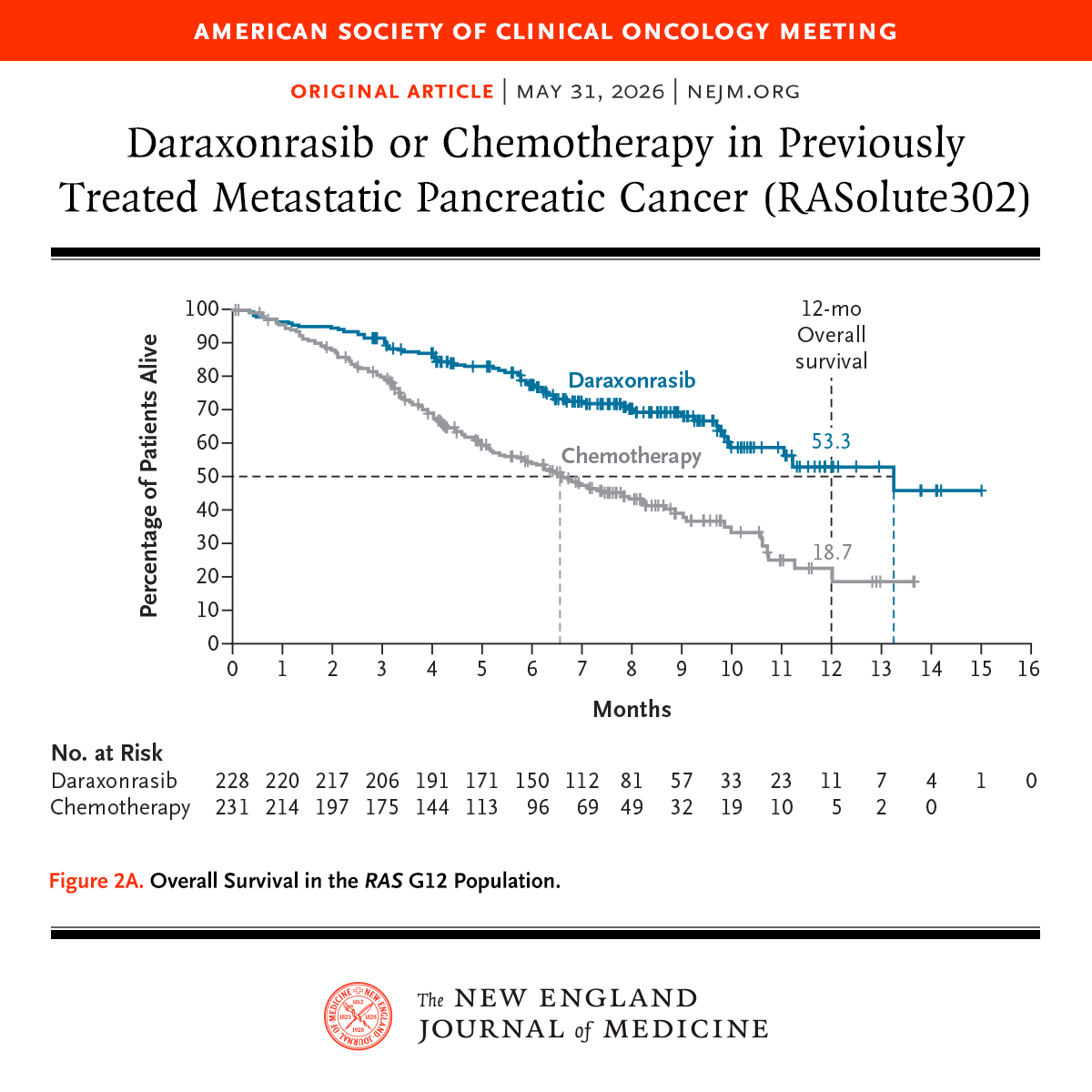
With results from the phase 3 RASolute 302 trial presented today at the #ASCO26 plenary, a new standard of care is being established in pancreatic cancer. @TGeorgeMD, our interim director, discusses the takeaways from this landmark news. @ASCO
Presented at #ASCO26:
Among patients with previously treated metastatic pancreatic ductal adenocarcinoma, the RAS(ON) inhibitor daraxonrasib led to significantly longer overall survival and progression-free survival than chemotherapy. Full phase 3 RASolute 302 trial results: https://t.co/xwLWBZYRzq
@ASCO
By capturing early molecular signatures of disease activity, this highly sensitive #liquid_biopsy may help identify early progression before it becomes overt on radiographic imaging.
#ASCO26#CtDNA
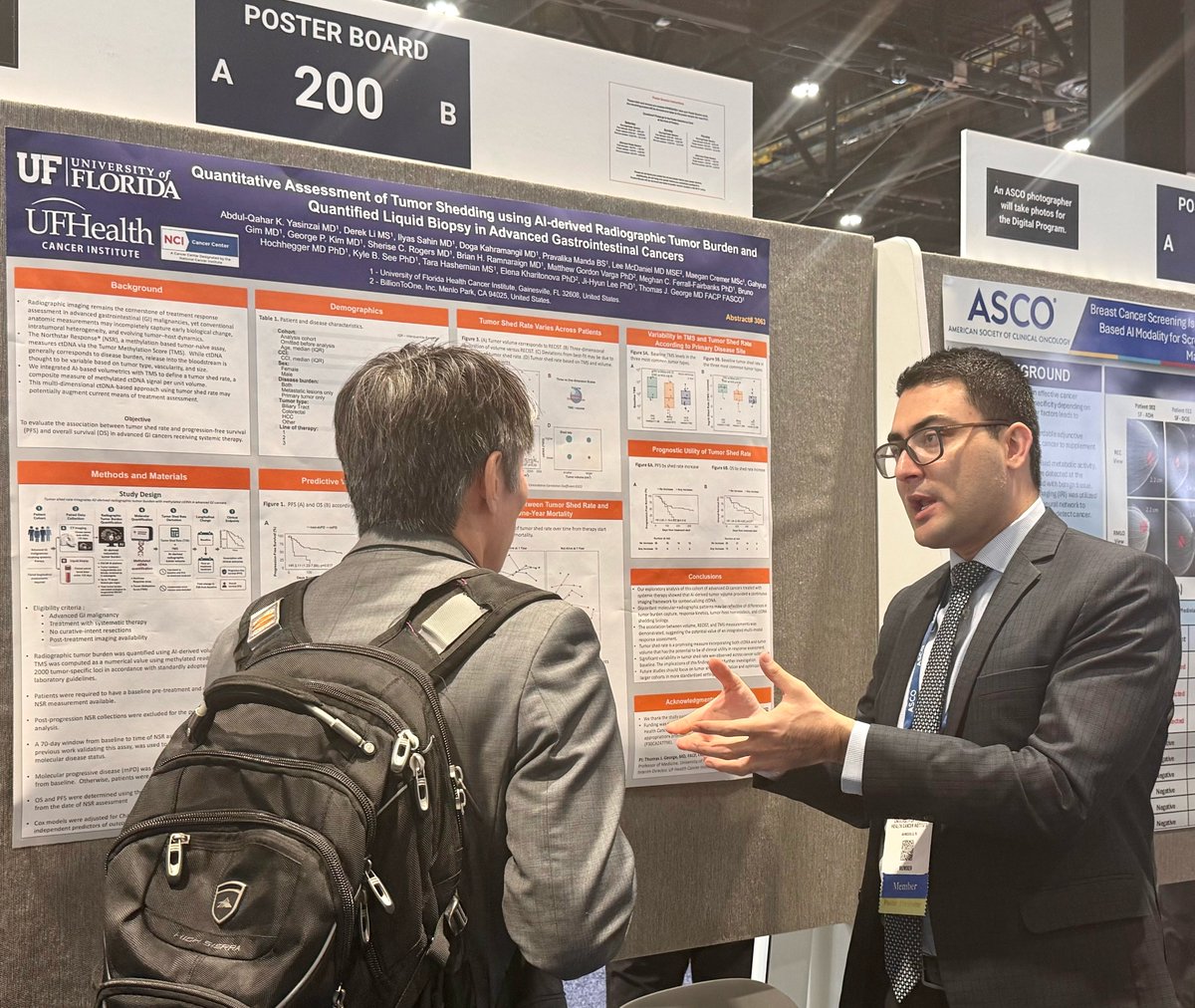
I had the opportunity to present our work on dynamic tracking of methylated #ctDNA for txt response in advanced GI cancers at #ASCO26. We adjusted methylation scores by volumetrics in a multiomic approach to identify differential tumor shed rates.
https://t.co/SzcaxxGI1g
"At the heart of this project is a clinical challenge we are trying to address: When a patient starts a new line of therapy, usually they have to wait for two to three months in order to learn whether their tumor is responding to treatment or not," said @AYasinzaiMD, a clinical research fellow at the UF Health Cancer Institute.
Yasinzai discusses how a highly sensitive methylated circulating tumor DNA (mctDNA) assay developed by @BillionToOneInc can bridge the gap with conventional imaging approaches.
He presented findings from an exploratory cohort Saturday at #ASCO26.
Read more about the study: https://t.co/zy1o2wepev
At #ASCO26, UF Health Cancer Institute member @DVAraujoMD highlights the novel technologies and assessments that are changing the landscape of cancer care.
☑️Follow him for more updates and insights as an @ASCO Annual Meeting Featured Voice.
An ultra-sensitive liquid biopsy test shows promise in improving treatment response monitoring in patients with advanced gastrointestinal cancers, UF Health Cancer Institute researchers have found. The researchers are using a methylated circulating tumor DNA (mctDNA) assay developed by @BillionToOneInc.
Read the story: https://t.co/C8jxLCv8KT
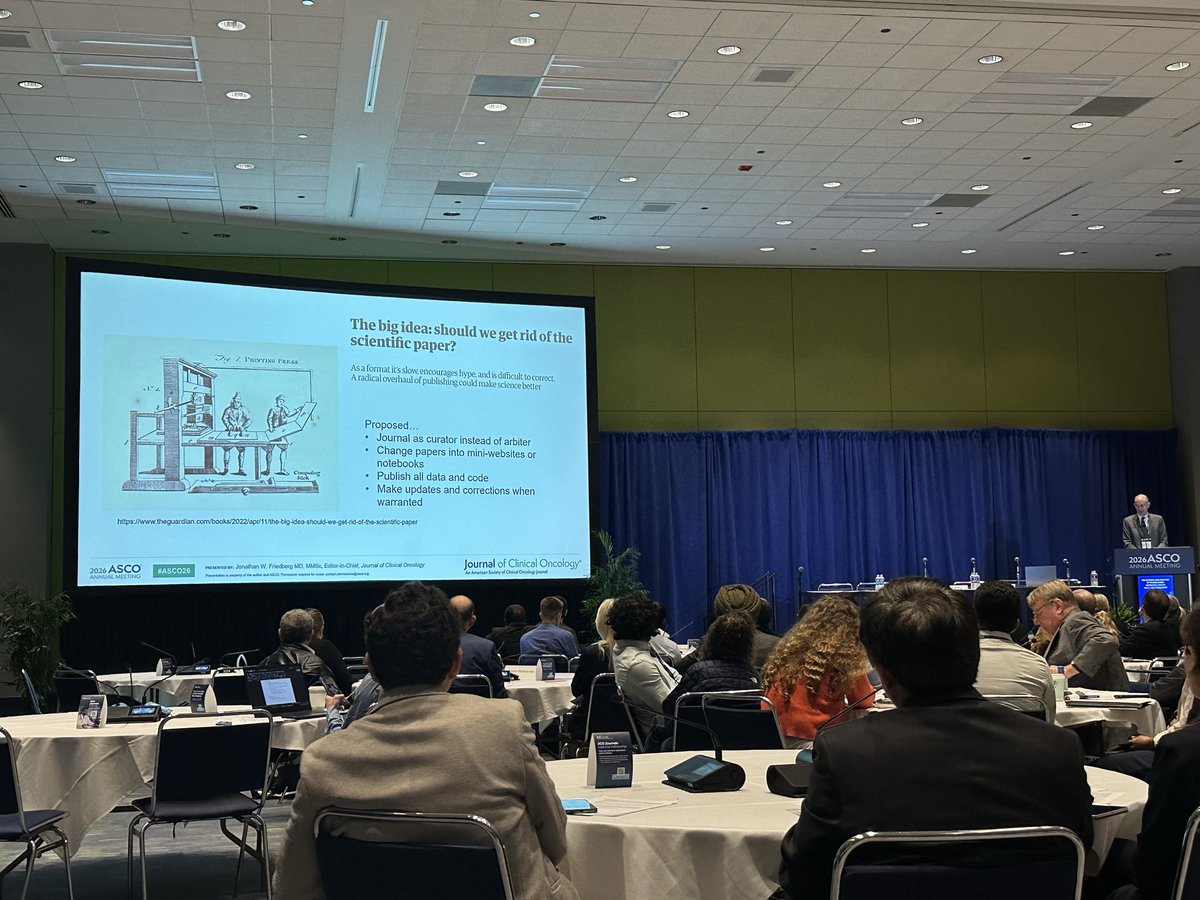
Excited to have attended the #ASCO26 workshop on manuscript review processing from the lens of JCO Editorial Leadership.
Key takeaway: strong science matters, but so does presentation and how we communicate them.