Yesterday I visited the site of the new @Jonathan_Found Academy of Science & Technology in @BugeseraDistr !
The boarding school, dedicated to STEM excellence, is due to open its gates for the 1st cohort of 100 best S4 graduates in Rwanda with full scholarship, in September 2026.
Welcome to Jerusalem @RwandaMFA FM @onduhungirehe.
Today we signed agreements to expand cooperation in development, innovation and education, strengthening the partnership between our nations.
We also discussed Israel’s security challenges and the U.S. brokered peace agreement between Rwanda and the DRC, and the importance of its implementation.
We are two nations with painful histories, remarkable resilience, and an unwavering determination to build a better future for our people. 🇮🇱🇷🇼
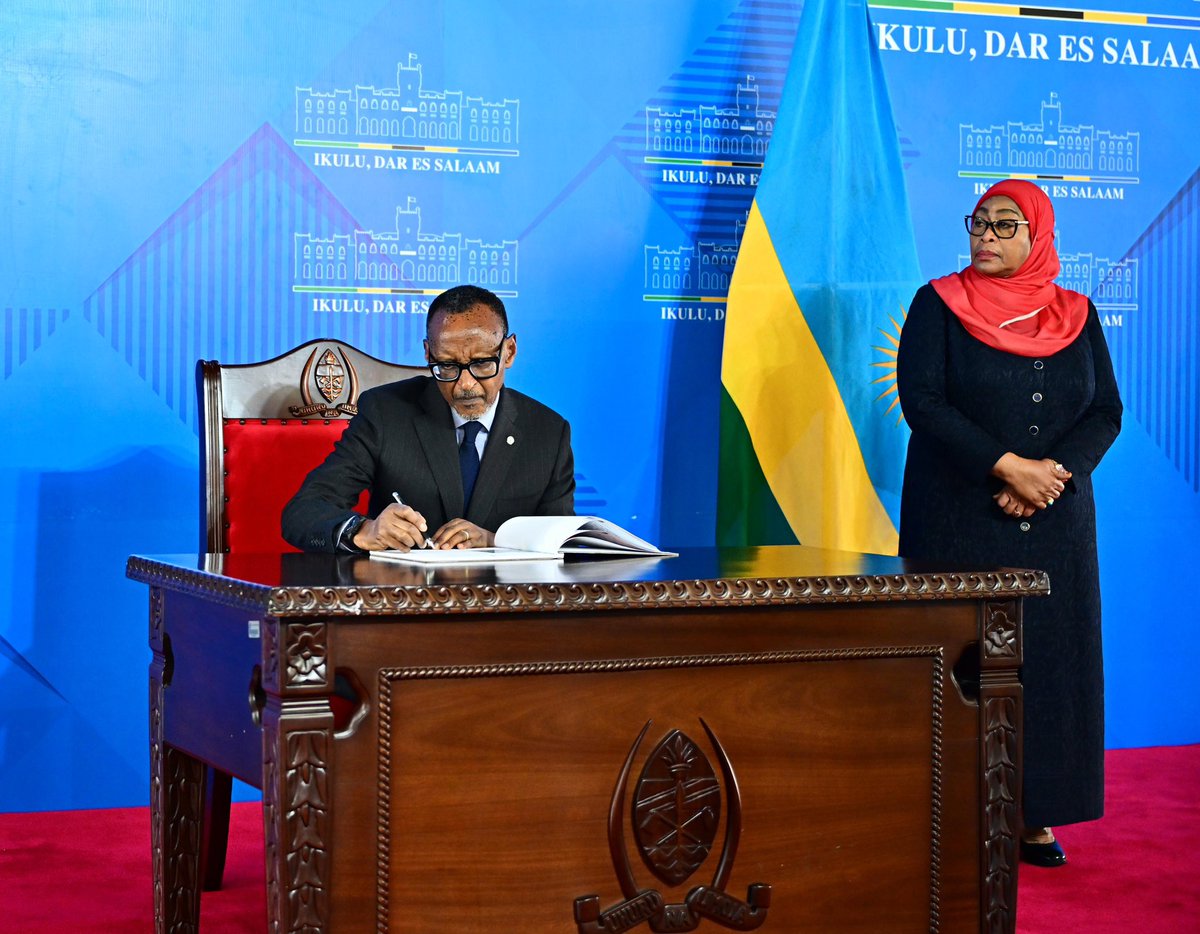
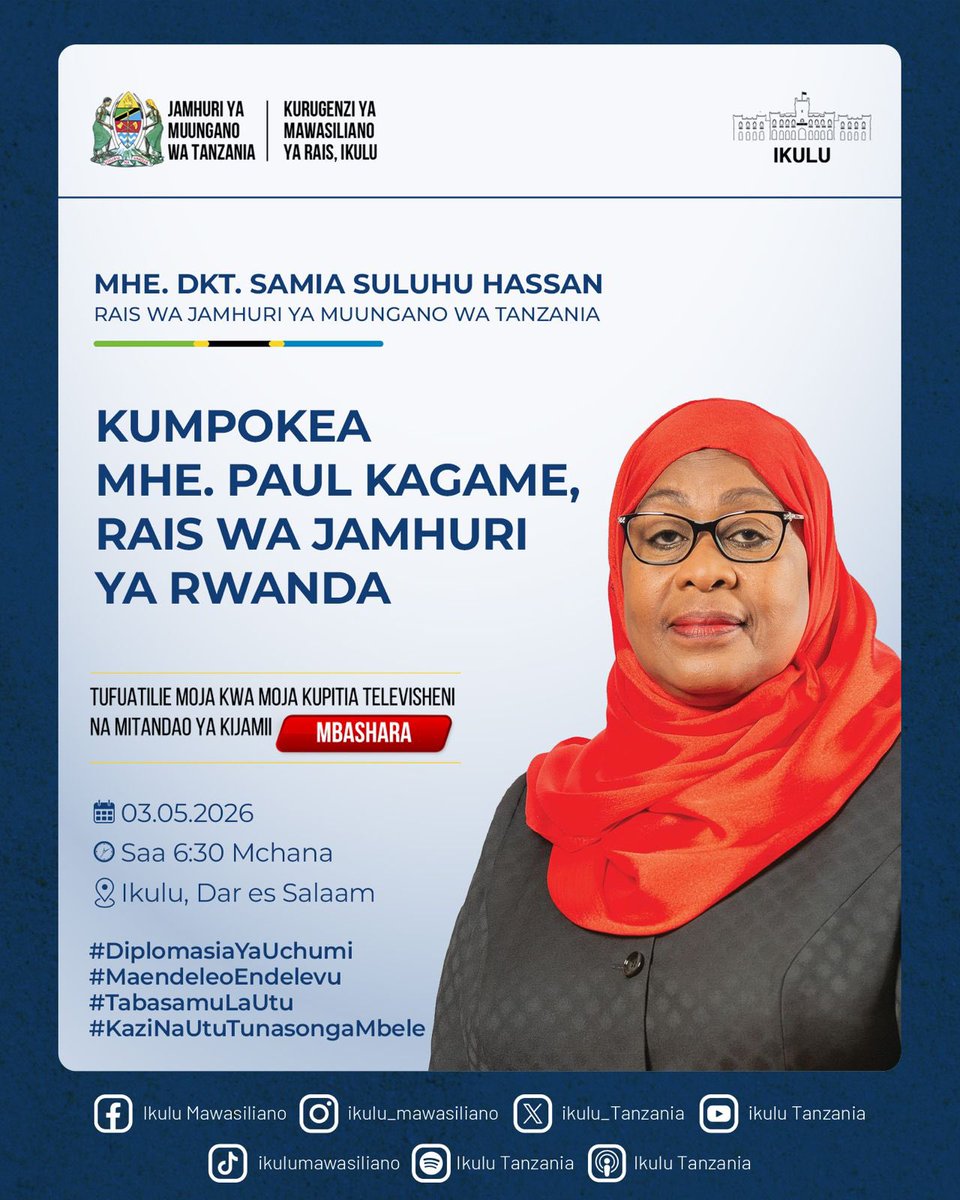
Rais wa Jamhuri ya Rwanda Mhe. Paul Kagame akisaini Kitabu cha Wageni mara baada ya kuwasili Ikulu Jijini Dar es Salaam kwa Ziara ya Kikazi, tarehe 03 Mei, 2026.
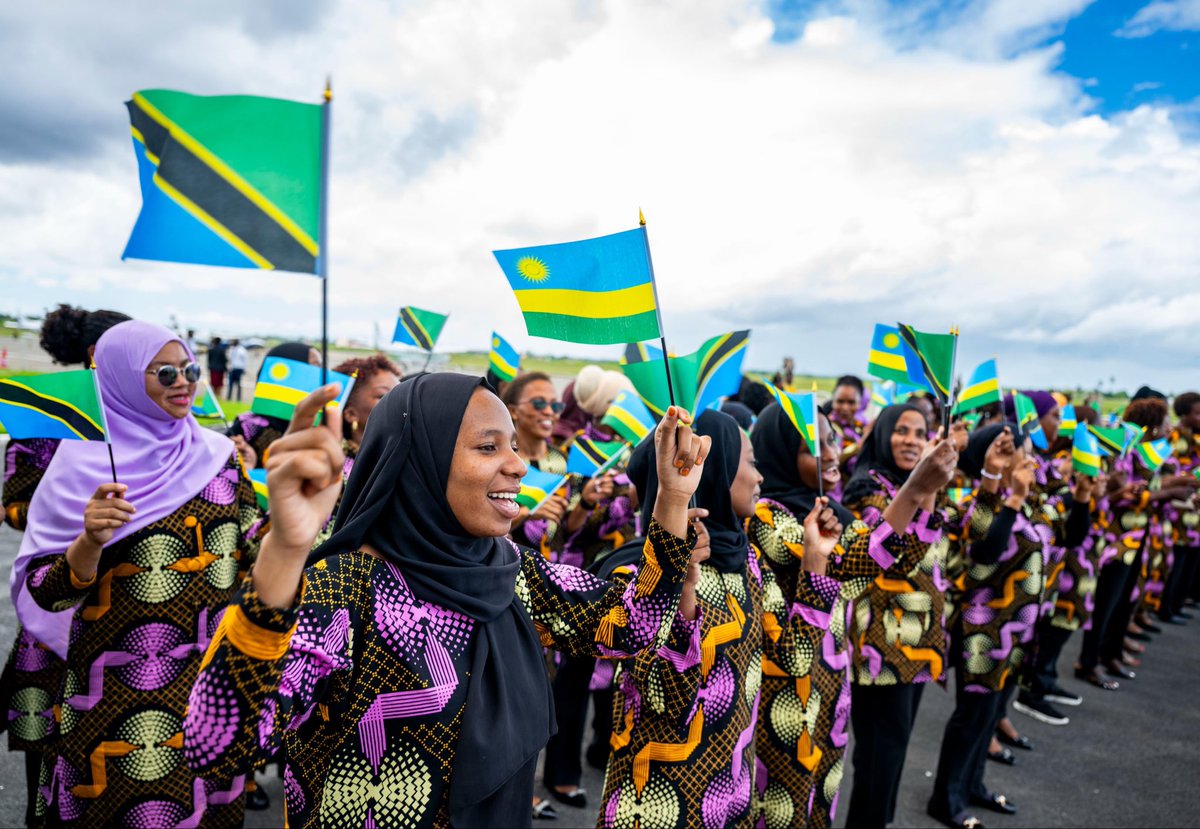
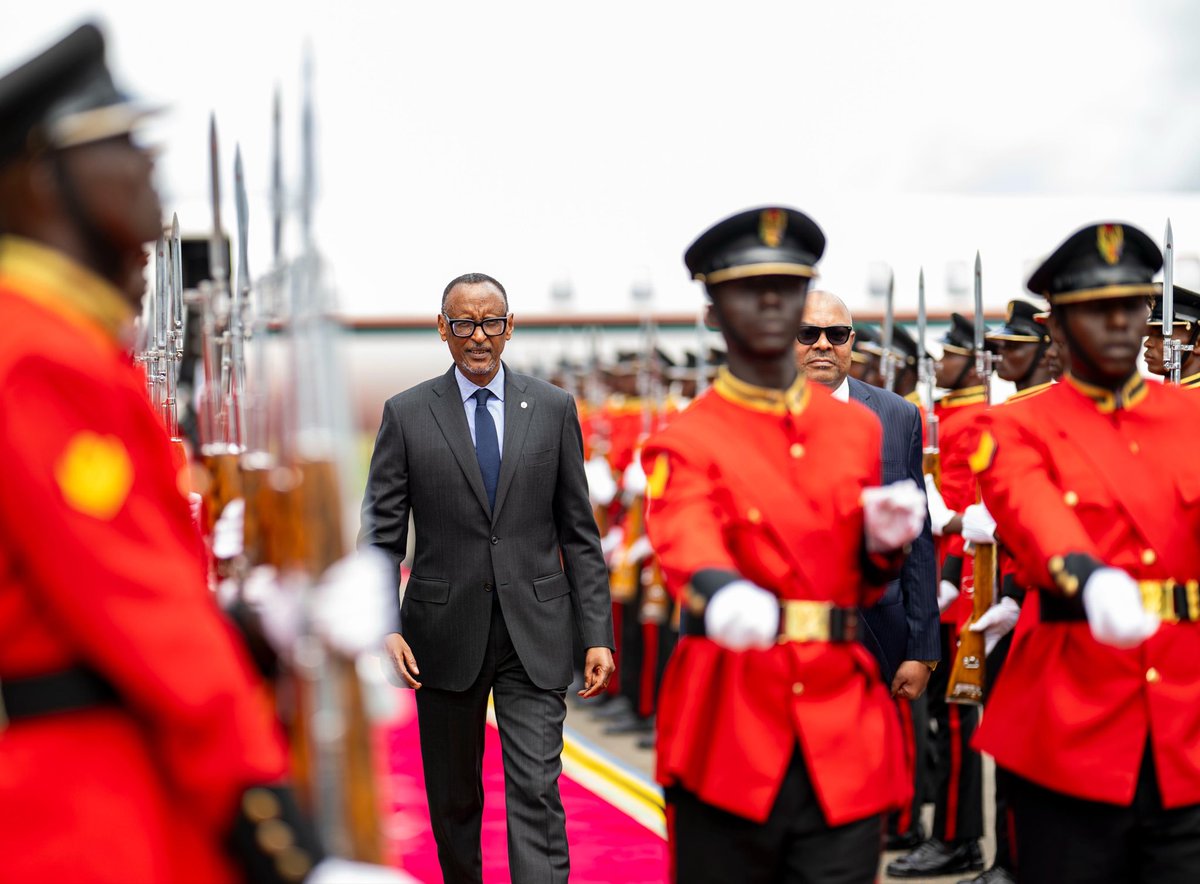
President Kagame has arrived in Dar es Salaam, Tanzania for a one-day working visit. President Kagame and his host President @SuluhuSamia of the United Republic of Tanzania are now having tête-a-tête meeting which will be followed by a joint press conference.
Fuatilia matangazo ya moja kwa moja kupitia akaunti zetu za Instagram: ikulu_mawasiliano, Facebook: Ikulu Tanzania Facebook fanpage: Ikulu Mawasiliano, Twitter: ikulu_Tanzania Youtube Channel:
Ikulu Tanzania na Tovuti: https://t.co/wmldPXYfck
#TanzaniaYetuSote#NchiYetuKwanza
#MaendeleoEndelevu
RWANDA 🇷🇼🇹🇿 TANZANIA
President Paul Kagame arrived at Ikulu State House, where he was received by President Samia Suluhu Hassan ahead of bilateral talks during his one-day working visit to neighboring Tanzania. #FactsOnRwanda
RWANDA
“THE BOOK RWIGYEMA NEVER WROTE”
– Monitor 2013
"The first commander I ever knew who was saddened about the mass killing of enemy troops." – Kevin Aliro, Journalist
“You see, Kevin, there is no good reason why so many Ugandans should continue dying even if they are rebels. I wish I could stop all this.”
“I just want to end this madness in the north. I shall then return to Kampala and ask to be released to return home.”
“I just want to be by myself with my wife and child. The only thing I want to do is to write a book, my memoirs.”
“Kevin, you see, I have done my best for Uganda. Now I want to go back home, to Rwanda.”
“I don’t want to be in power. I shall be retired after we get down to Kigali and still write the book.”
These words were shared by Major General Fred Gisa Rwigyema during Uganda’s bush war in the late 1980s. Journalist Kevin Aliro recalls a press briefing after a major NRA offensive in Northern Uganda, where hundreds of rebel fighters were killed. While others celebrated, Rwigyema quietly pulled aside and Aliro followed him, he expressed his sorrow to the journalist that he was deeply moved by the loss of life, even among enemies, and longed for peace, family, and a return to Rwanda.
#PatriotismDay #FactsOnRwanda
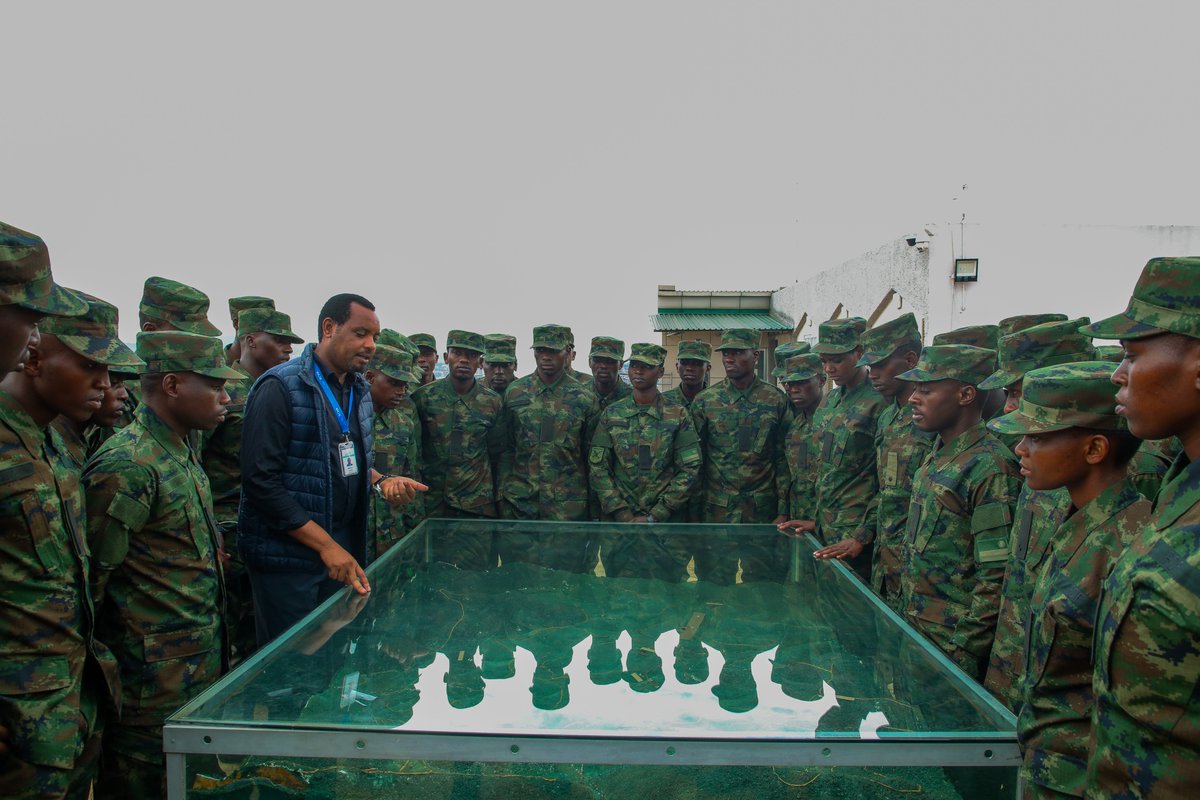
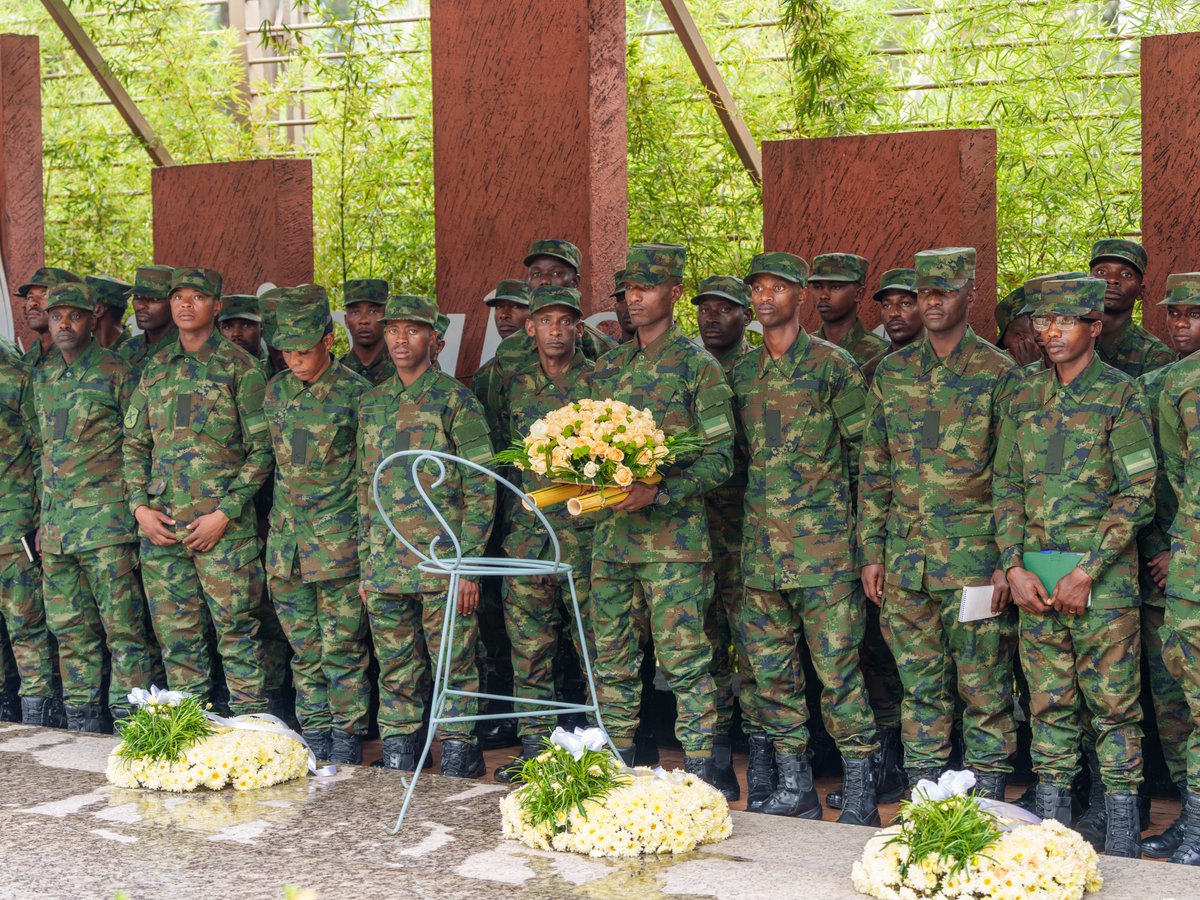
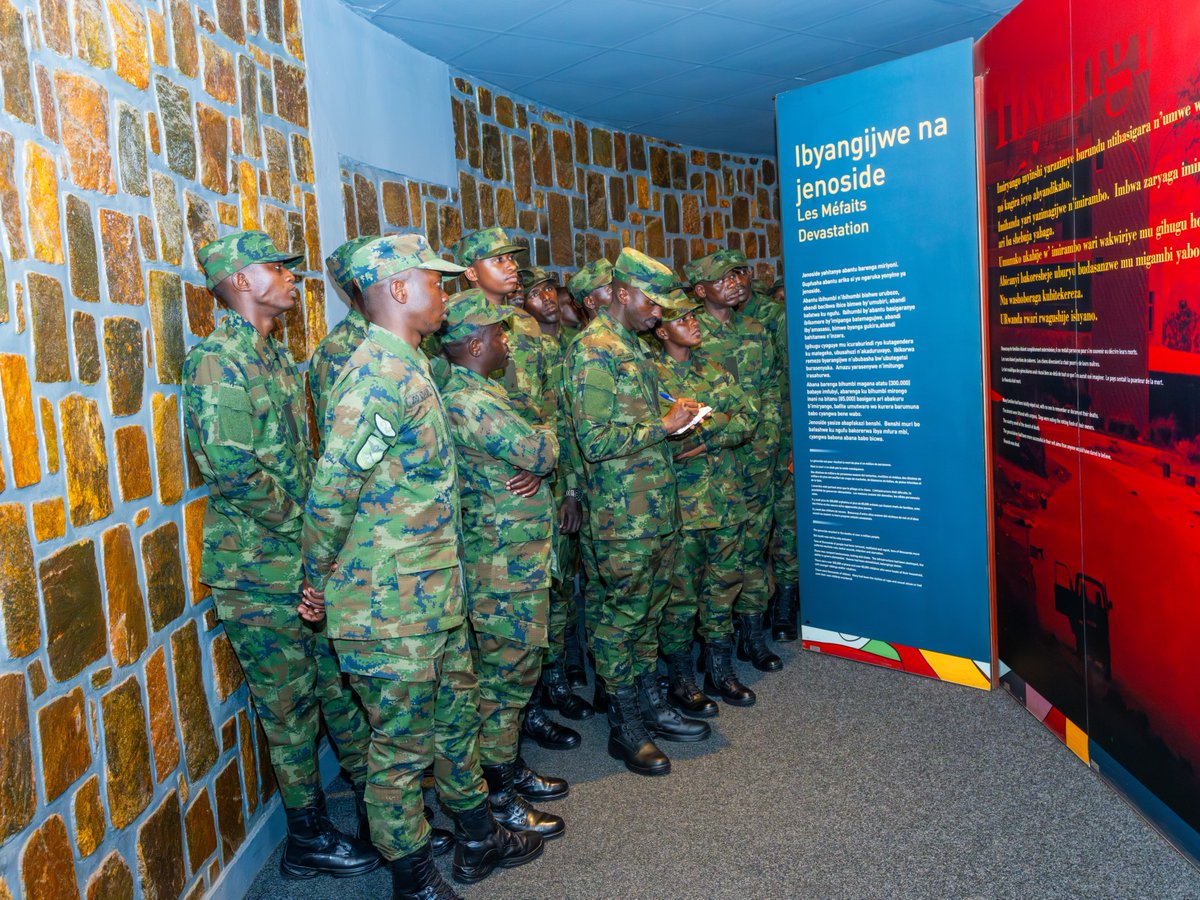
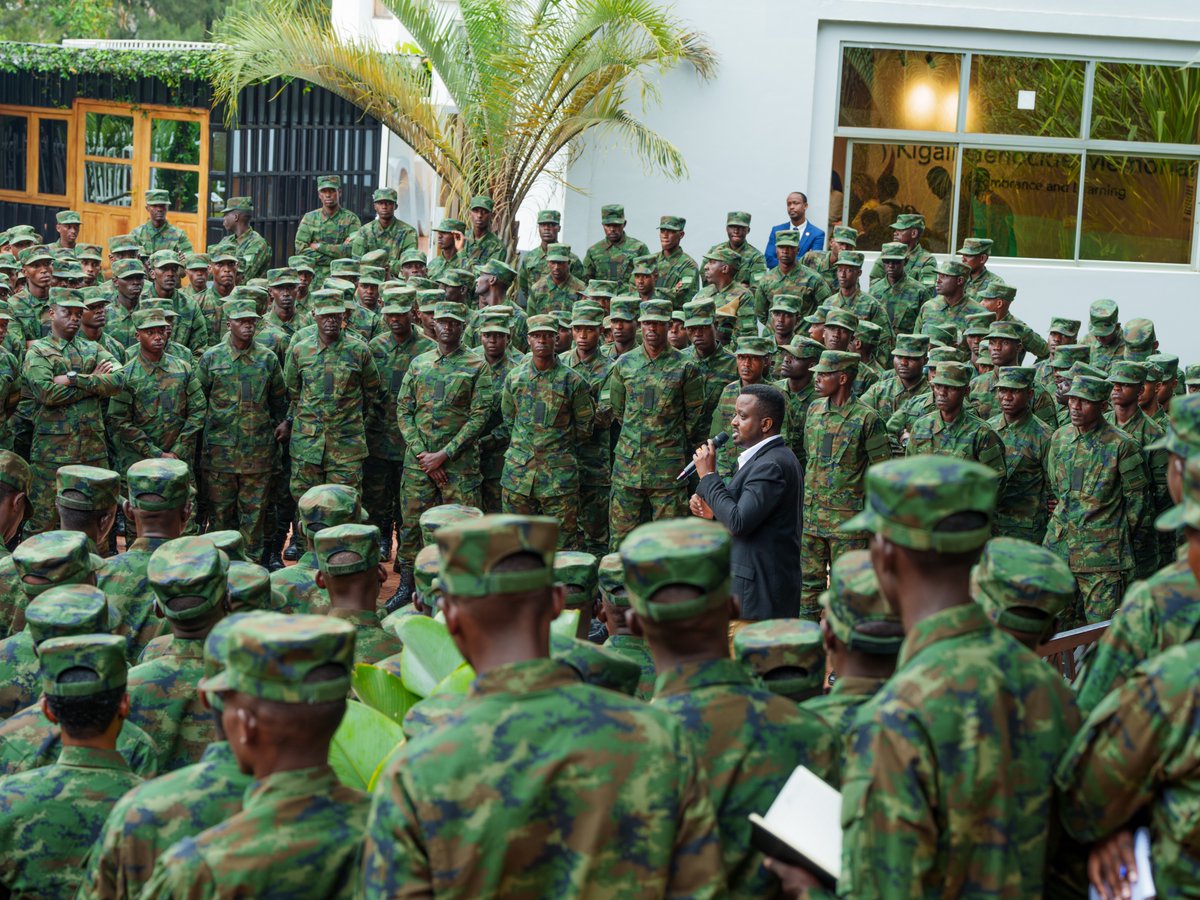
A group of officers from the Rwanda Defence Force undergoing induction course at Combat Training Centre Gabiro today, visited the Kigali Genocide Memorial, where they paid tribute to the victims of the 1994 Genocide against the Tutsi. They also toured the Campaign Against Genocide Museum as part of their study programme aimed at deepening their understanding of the country’s history.
The visit served as a poignant reminder of the importance of understanding Rwanda's history and the sacrifices made by the RPA during the liberation struggle. The experience left a lasting impression on the officers, shaping their perspective on the role of the RDF in maintaining peace and security.
What’s holding Africans back? President Kagame asked.
Prof. Murigande told Kagame that the main reason is that African leaders don’t care about their people. They seek to enrich themselves — to eat, and to eat alone. The president agreed with him, but he pressed further, asking why this problem seems peculiar to Africa.
Kagame doesn’t ask rhetorical questions. He has identified a problem and is involving Rwandans in finding a solution.
Here’s my take:
To overcome challenges like those faced by postcolonial societies, a people must rediscover a sense of collective self-worth. Usually, this comes from the memory of their past achievements— who they were as a people informs who they are and who they aspire to be.
While Africa was not the only region to experience colonization, it is one of the few where colonialism either erased the memory of past greatness or created new countries with no shared memory of such greatness.
Colonisation captured African minds. In that sense, although Africa was colonised last, it was colonised the worst.
Colonial education deepened this alienation, distorting African aspirations, turning them from collective to individual.
In the 1950s, the small group of “educated” African elites aspired to join the white world : the colonial administration. Today, with colonial education still intact and keeping African minds in chains, the elites it creates do not aspire to uplift their people; they aspire to join the global elite. They don’t seek to improve their own societies; they seek to escape from them.
Accordingly, these elites measure their self-worth by:
•how fluently they speak foreign languages,
•which foreign schools they send their children to,
•which foreign hospitals they can afford,
•how many houses they build, and how much money they invest abroad.
At the heart of this lies a quiet acceptance that Africans are somehow defective as a people, and that the only way to succeed is individually. Even those who once believed they could change things often abandon the quest for collective improvement once they grasp the scale of the effort it demands.
The kind of heavy lifting required for real transformation breeds a sense of hopelessness, one that pushes people from collective ambition toward individual greed.
So, the individual’s aspiration becomes to join the global bourgeoisie. But these are strategies of self-evacuation. They are attempts to flee backwardness by moving from the rural village to the capital, then on to the enlightened colonial metropolis, and ultimately to disappear into cosmopolitan anonymity - a form of self erasure rather than a search for self restoration.
This journey became the measure of progress. Those who remain in Africa do so with one foot already out (through dual citizenship or close connections to the representatives of their desired metropoles) for themselves, and especially for their children.
Although Kagame brings up this topic, it has been a theme he turns to whenever he notices that some ethic is creeping in amongst the leaders, only that this time he is more specific.
For example, while he has been teaching agaciro as a form of mental decolonization, most people over the years understood agaciro merely as a material pursuit.
Yet agaciro is, at its core, about retracing and reclaiming the memory of self-worth and therefore the basis for collective pursuit.
Why are Rwanda and Congo signing a “peace settlement” in Washington tomorrow?
https://t.co/4YcvuzhitY
- Unlike what President Trump says, it is not a “long term war of Rwanda with Congo”, “a bloody war, a very bloody one”, it is a 4-year long war between the DRC government and the Congolese movement M23 that has organized in self-defense against a corrupt, autocratic and genocidal DRC government. There is NO war between Rwanda and Congo.
- What there is though and what this “peace settlement” is trying “to settle” is linked to the following context:
1) Since 2018 (when Tshisekedi came to power), there were over 20 instances of cross-border shelling into Rwanda from Congo and violations of Rwandan airspace;
2) Since 2021, the DRC government, when they attacked M23 in November, started integrating FDLR (perpetrators of the 1994 genocide against the Tutsi in Rwanda who have pledged with a new generation of FDLR, that they trained with the same ideology, to go back to Rwanda and finish the genocide they had started in 1994, i.e. exterminate all Tutsi). Today, there is no distinction between the national Congolese army and the FDLR, as they wear the same uniform, and the same military ranks, fighting alongside each other against not just M23 but all Tutsi in the region based on their physical features or the language they speak.
3) Since 2022, the Congolese president Tshisekedi has declared officially his intention to “help FDLR” to “overthrow the Rwandan government”.
4) These verbal security threats have intensified for 2 years while DRC Government continued to integrate other negative forces to achieve that goal in addition to FDLR, namely Wazalendo (all the remaining Cobgolese armed groups driven by anti-Tutsi genocide ideology), 2000 white mercenaries, some of whom are former French army veterans who have trained, armed and fought alongside the army of the former Rwandan genocidal regime of Habyarimana between 1992 and 1994, the Burundian army whose Government currently promotes anti-Tutsi genocide ideology, shelters and supports FDLR, has committed acts of genocide against Congolese Tutsi in North Kivu in October 2023, and continues to kill today the Banyamulenge in South Kivu, all of them supported by the SADC force and the UN peacekeeping mission MONUSCO.
5) All of these critical and existential security threats have prompted Rwanda’s legitimate response to add security defense measures at its borders with the DRC in the east.
- So this “peace settlement” addresses two main points:
1) DRC must remove its FDLR genocidal force from its national army, disarm them and hand them over, which is comprised in the term “neutralise”. DRC must stop violating airspace and launching cross-border attacks into Rwanda. Finally, DRC state officials must stop using hate speech against Rwanda, inciting regime change and violence against the Tutsi in the region.
2) In response, Rwanda commits to ease its security defense measures at its borders with DRC, under the condition that DRC respects its own part of the agreement.
- So this “peace settlement” will, if respected by both parties, end the diplomatic tensions and security threats between the two countries, but it will not end the “bloody war” President Trump is referring to, because that war is fought by the DRC government against its own citizens who have taken up arms in self defense as the AFC/M23/Twirwaneho movement.
- Therefore, if President Trump wants an end to the “bloody war”, he needs to organize a “peace settlement” between Tshisekedi and AFC/M23.
On this International Day of Reflection on the 1994 Genocide against the Tutsi in Rwanda, let’s commit to be vigilant and to work together to build a world of justice and dignity for all – in honour of all the victims and survivors of the genocide. https://t.co/hn5kLfuito
Yvette is a medical doctor🩺 in #Rwanda &has won a Chevening scholarship to study epidemiology and biostatistics in the 🇬🇧
You could be like Yvette too!
Find out more about studying in the UK & apply before 5th November 👉https://t.co/uZB280BJt9
#UKStudy#IAmChevening