B10 Valentin parle de sa lecture du livre Pour l’intersectionnalité d'Éléonore Lépinard et Sarah Mazouz
Les autrices y défendent la pertinence de l’outil d’analyse intersectionnel en sciences sociales
https://t.co/BrIu4xRUKe
Honoured to have @sapinker as a reader of 'Conspicuous Cognition'. Here is a concise summary of my article's analysis of why and how social media fuels right-wing populism: https://t.co/fdl1Bf1zB5
Before couples were able to be broken up by one person initiating a divorce, female suicide rates were notably higher.
But with the advent of no-fault divorce, they fell.
Unfortunately, reducing poverty doesn't reduce crime in the short term. In the long term it might, but it's hard to tell since there are lots of confounding factors.
AFAICT there is no good evidence that poverty is the main cause of crime, or even a major cause of crime.
Sociology is on an island.
44 Democrats for every Republican scholar.
Almost 20% are far left — “more than quadruple the rate in economics and more than double the rate in political science or psychology.”
“On the Transparency and Openness Promotion (TOP) metric…its average score is less than one, compared to between four and six in peer disciplines.”
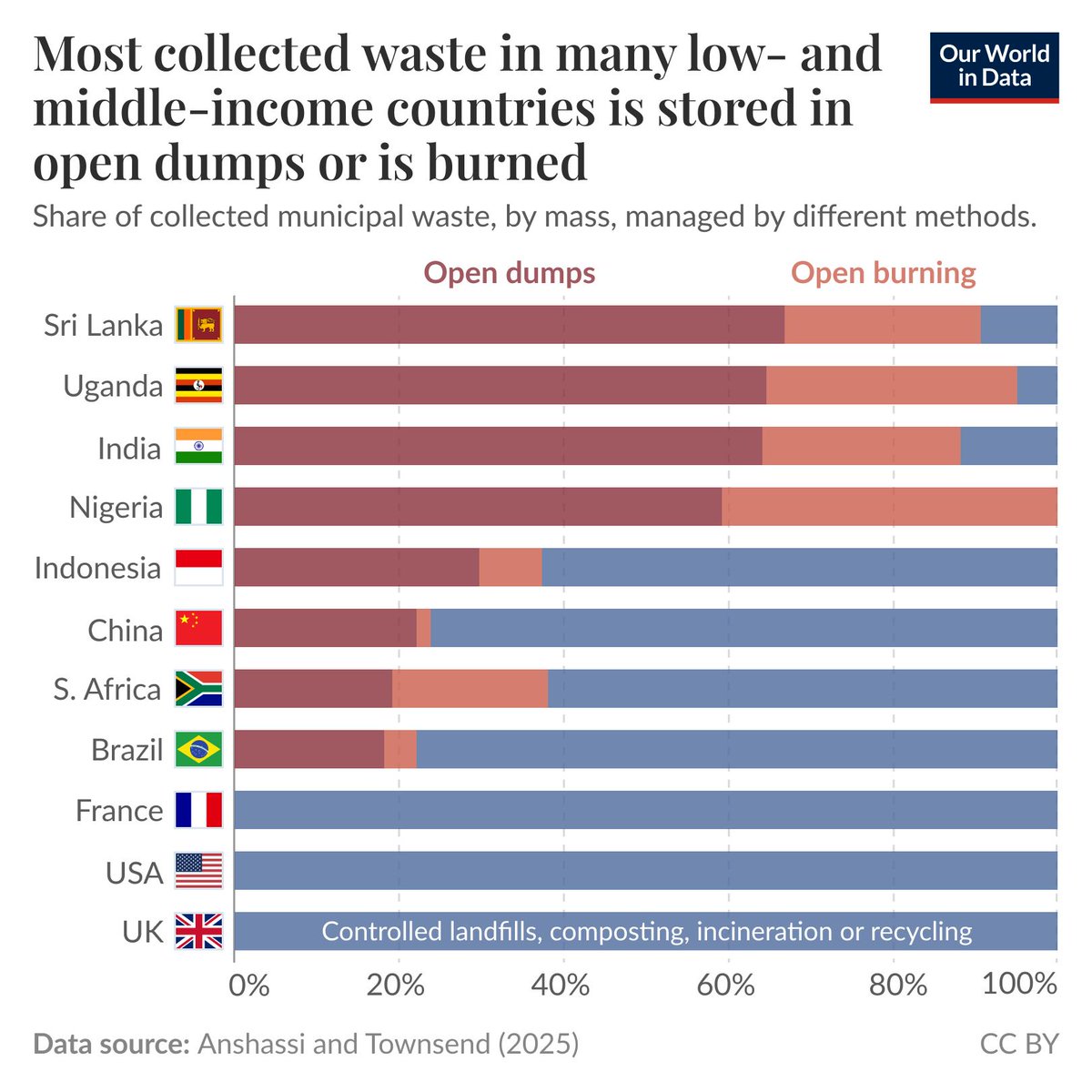
Most collected waste in many low- and middle-income countries is stored in open dumps or is burned.
Effective waste management systems are something that many of us living in high-income countries take for granted. Our waste is collected from bins in our street and taken to controlled or sanitary landfills, incinerators, or recycling centers.
But in many low- and middle-income countries, this is not the case.
In some of them, less than half of the waste (from households, shops, and other sources) is collected by management services at all.
In many countries, even when waste is collected, most of it — sometimes over 80% — is taken to open dumps or is openly burned. You can see this in the chart.
Both methods cause pollution, either through waste leaking from open dumps or toxic air pollution generated when plastics and other materials are burned.
While these numbers show that huge amounts of the world’s waste are mismanaged, they also tell a story of opportunity. Countries that invest in waste management can do so effectively, so that very little waste pollutes the environment, and the air is far cleaner.
(This Data Insight was written by @_HannahRitchie and Veronika Samborska.)
Rions un peu avec Luc Julia.
Aujourd'hui, je me suis livré à un de mes petits plaisirs coupables : j'ai pris un livre de Luc Julia et je l'ai ouvert au hasard. J'ai pas été déçu.
Suivez moi, c'est parti pour un voyage (inédit) au bout de l'absurde. 🧵
Global sales of combustion engine cars peaked in 2017—
To decarbonize road transport, the world must move away from petrol and diesel cars towards electric vehicles and other forms of low-carbon transport.
This transition has already started. In fact, global sales of combustion engine cars are well past their peak and are now falling.
As you can see in the chart, global sales peaked in 2017. This is calculated based on data from the International Energy Agency. Bloomberg New Energy Finance also estimated this peak occurred around that time.
Sales of electric cars, on the other hand, are growing quickly. They more than doubled in the three years from 2022 to 2025.
(This Data Insight was written by @_HannahRitchie.)
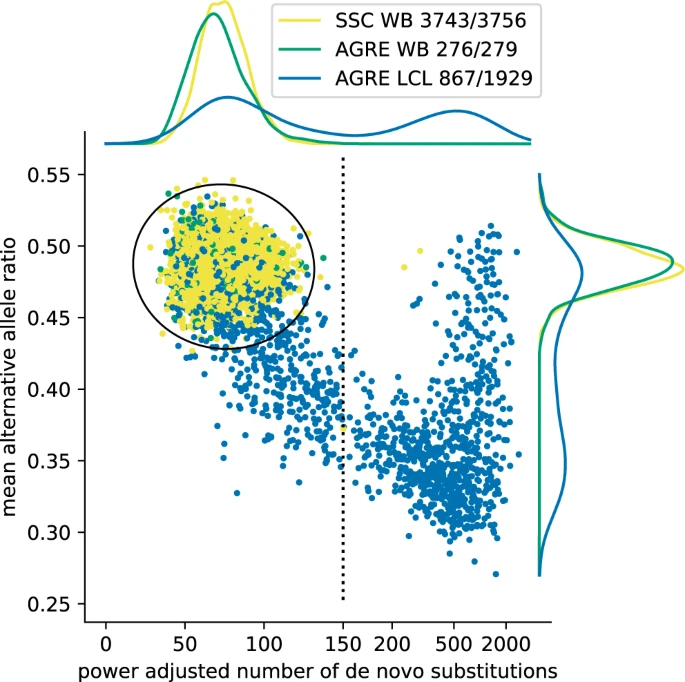
A large portion of all autism cases are due to or aggravated by de novo mutations—mutations harbored by the child, but neither of the parents.
This estimate, for example, was that ~35% of all autism cases and ~60% of all cases in low-risk families were due to de novo variants.
For much of human history, our ancestors were trapped in an economy in which incomes were determined by the size of the population.
The Industrial Revolution ended this Malthusian economy and made it possible for a country to leave abject poverty behind.
Jon Haidt @jonhaidt is one of the greatest psychologists of the 21st century, having illuminated moral cognition, the relation between emotion and intellect, the perils of politicization and viewpoint homogeneity in social science, and the roots of the youth mental health decline. That NYU students should protest this wise and brilliant man as their commencement speaker is a backhand vindication of his diagnosis of what's wrong in higher ed. Our sometimes coauthor @PamelaParesky explains: Reports of The Death of 'Woke' May Be Greatly Exaggerated https://t.co/IN2IWfdzNi
Not only have conservatives become vanishingly rare in academia, so have centrists. That’s how complete the left’s dominance is: Even moderates are now a fringe group in academia.
https://t.co/3TCZW5YzIF
Modern fatherhood would be unrecognisable to a 1950’s dad.
“Compared to their Boomer parents, childcare time among Millennial dads has more than doubled.
Compared to their Silent Generation grandparents, it’s nearly quadrupled.
You will be hard-pressed to find any part of day-to-day modern life that has changed more in the last half-century than the way today’s parents—and fathers, in particular—spend their time.
The new American dad is more present and more exhausted—but also, more satisfied with life.” — @DKThomp
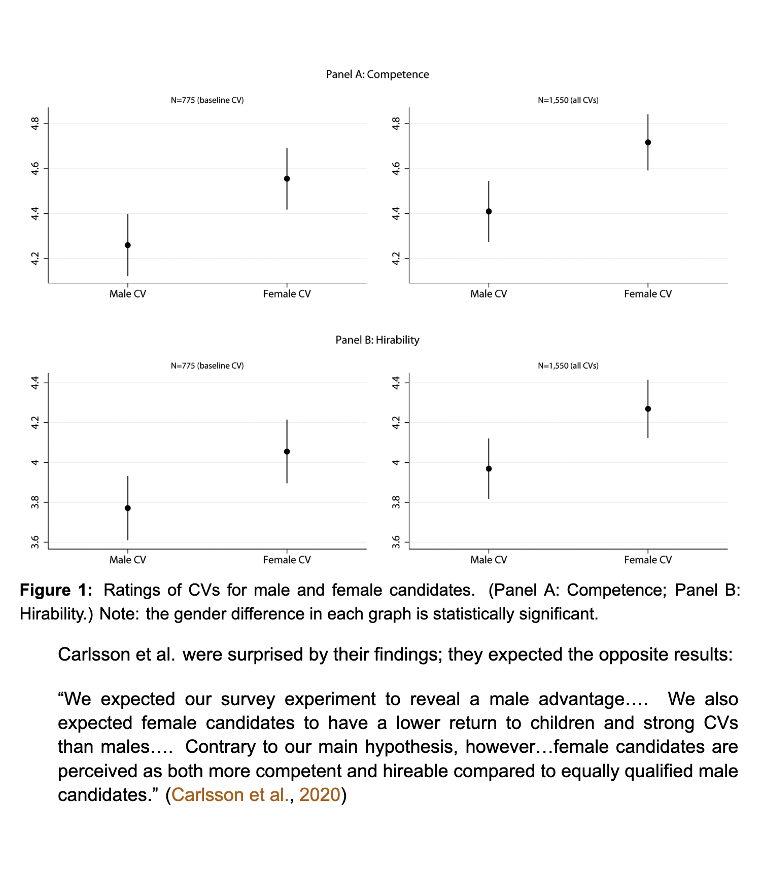
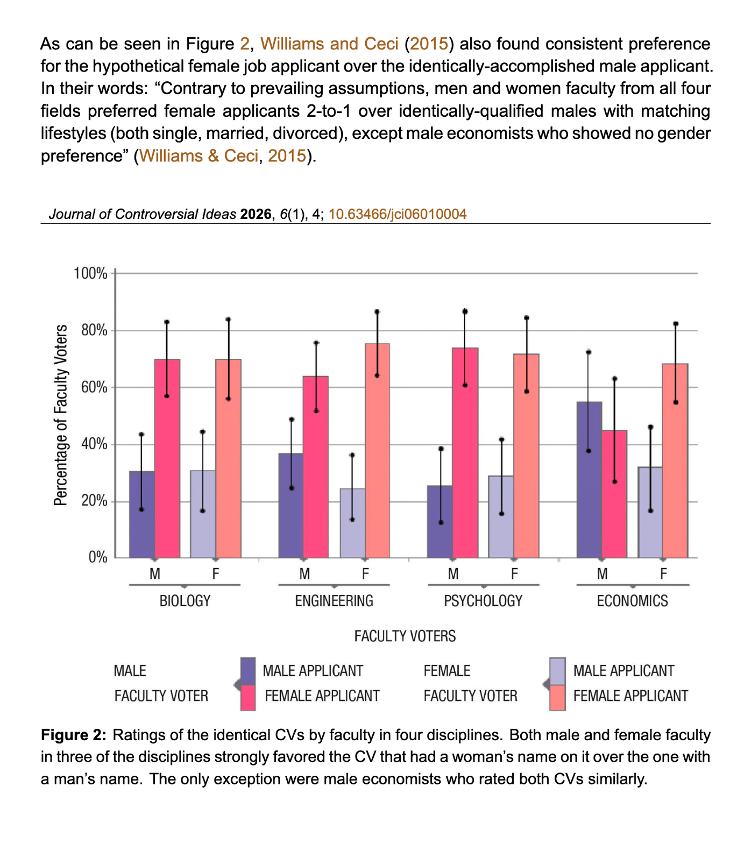
A zombie belief I frequently encounter in woke papers is that there's a tenure-track hiring bias against women in STEM.
A new paper combining all research on faculty ratings for identical CVs for men vs. women show that not only is this belief false, the opposite is true.
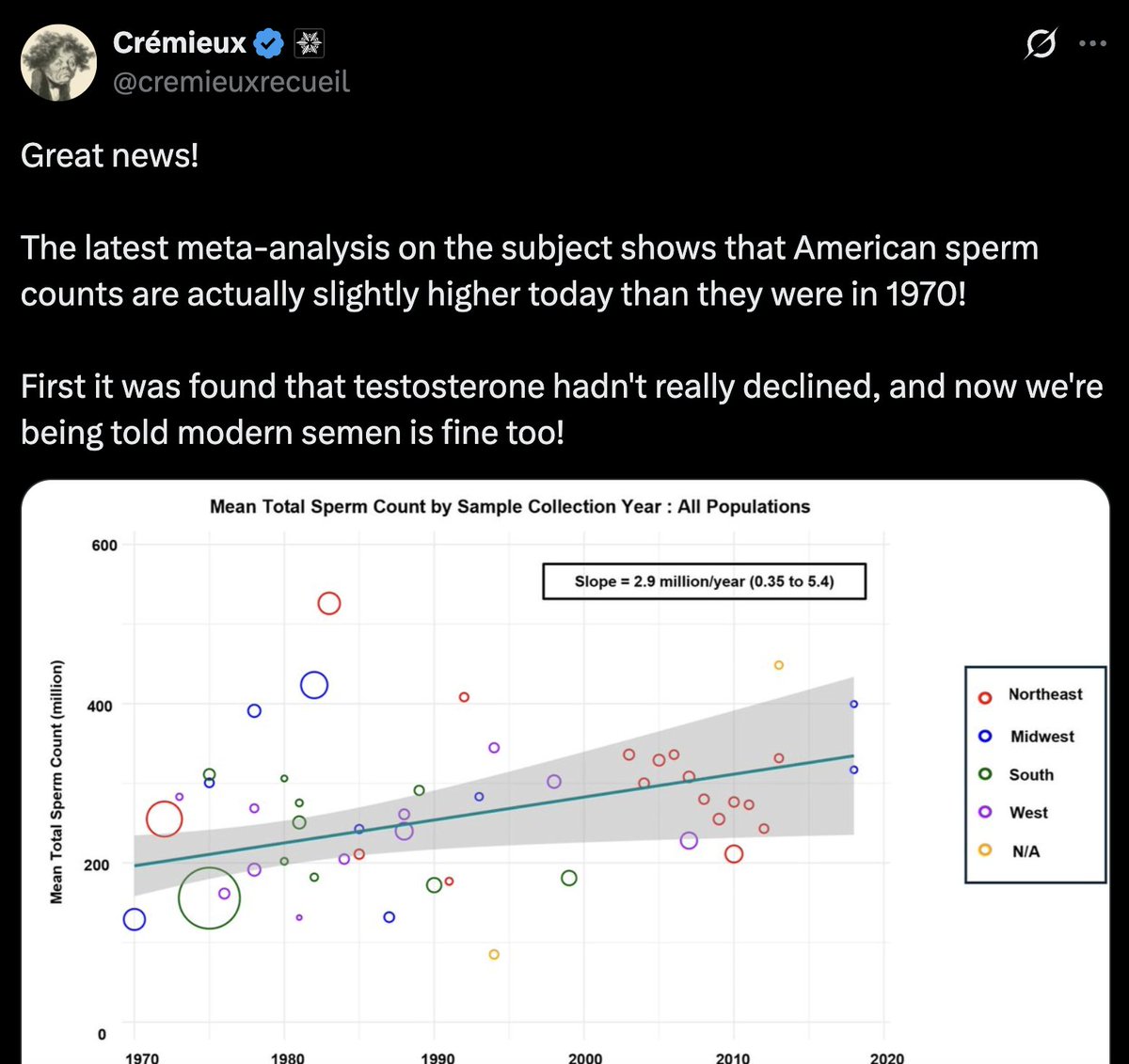
For clarity, sperm counts are not down.
Poor sampling has led to a misperception of decline that's reached the highest offices in the land.
But counts really are not down.
Physics-based weather models still beat AI when it matters most. Not on average. On the most extreme days.
This is the opposite of what we've been hearing...
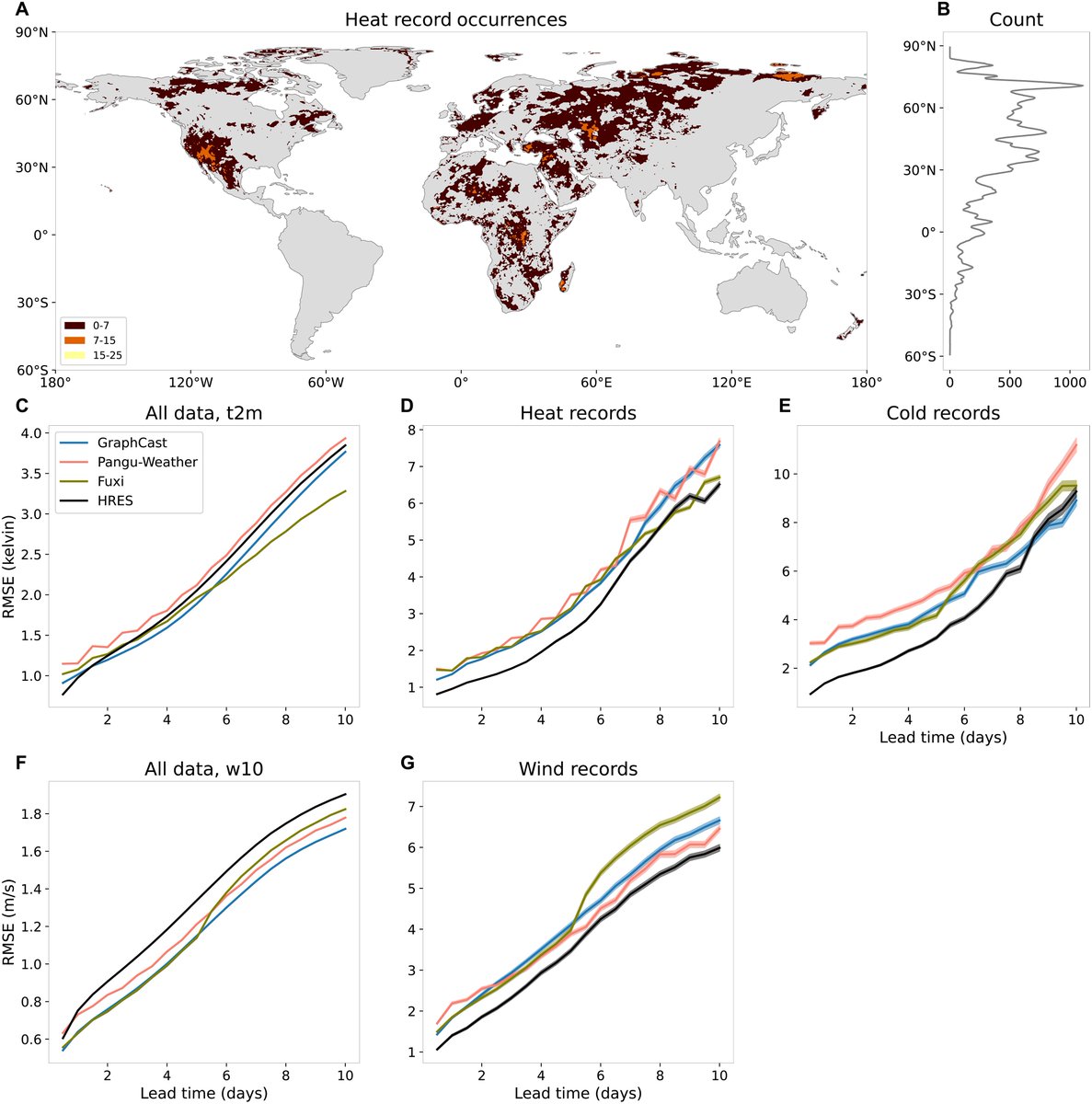
A new paper in Science Advances ran every major AI weather model: GraphCast, Pangu-Weather, Fuxi, against ECMWF's HRES across 162,751 record-breaking heat events, 32,991 cold records, and 53,345 wind records in 2020.
On average conditions, the AI models win. GraphCast, Fuxi, and the rest outperform HRES on standard temperature and wind benchmarks across most lead times. This matches what every prior benchmark study has shown. AI weather forecasting is genuinely impressive.
Then the researchers asked a different question. What happens when the event is unprecedented? Not extreme. Not the 95th percentile. Actually beyond anything in the training data.
HRES won every single category. Heat records. Cold records. Wind records. Nearly every lead time. The performance gap was largest at short lead times, where AI models should have the most information and the least uncertainty.
The bias pattern is pretty massive. The AI models systematically underestimated how extreme the events were. The bigger the record exceedance, the larger the underprediction. The researchers describe it as an implicit 'soft cap': the models behave as if they can't forecast values much beyond the most extreme thing in their training data. The bias grows almost linearly with how far the event exceeded the record. HRES showed no such pattern.
This isn't a fluke. The same result held in 2018 and 2020, which had opposite ENSO conditions. It held across the tropics, subtropics, mid-latitudes, and high latitudes. It held for all three variables. It held when the researchers ran an alternative evaluation specifically designed to avoid the forecaster's dilemma.
The mechanism is pretty straightforward. AI weather models are trained on ERA5 reanalysis data from 1979 to 2017. They learn to interpolate between historical weather patterns. When a new initial condition arrives, they find the nearest analogues in training and produce something in between. Record-breaking events, by definition, have no close analogues. The model has never seen anything quite like this, so it regresses toward the most extreme things it has.
Physics-based models like HRES don't work this way. They solve partial differential equations describing atmospheric dynamics. They don't need a historical analogue for a 48°C heatwave in Siberia. The physics doesn't care whether it's happened before.
The authors are careful about what this means. AI models remain faster, cheaper, and competitive on average conditions. Probabilistic AI forecasting is developing rapidly. Data augmentation with simulated extreme events and hybrid physics-AI architectures are plausible paths forward. This isn't a verdict on AI weather forecasting broadly.
But the policy implication is quite important. The events where AI models fail hardest are exactly the events where accurate forecasting matters most. Record-shattering heat. Unprecedented wind storms. The scenarios that overwhelm emergency response, strain infrastructure, and kill people because no one expected them to be that bad.
The authors wrote it plainly: it remains vital to fund and run physics-based NWP and AI weather models in parallel. I find it an unusually direct recommendation in a methods paper.
Climate change means record-breaking events are becoming more frequent, not less. The training distribution is shifting. AI models trained on 1979 to 2017 data will see more and more out-of-distribution events as the climate diverges from that baseline. The extrapolation problem the researchers identified isn't going away. It's getting harder.
The models that can't forecast records are being asked to forecast a world that's setting them constantly.
Link to full paper: https://t.co/KYvUreAhgt
Neat!
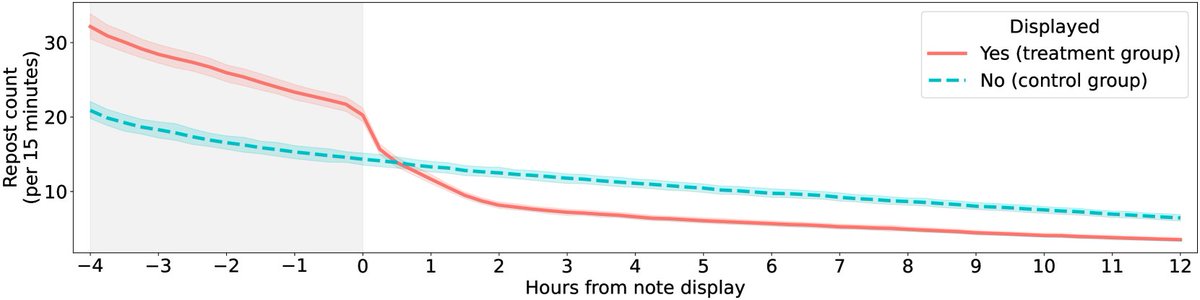
Community Notes *do* seem to work.
They reduce the number of reposts for posts that get them, cutting down on their reach and limiting the spread of misinformation!