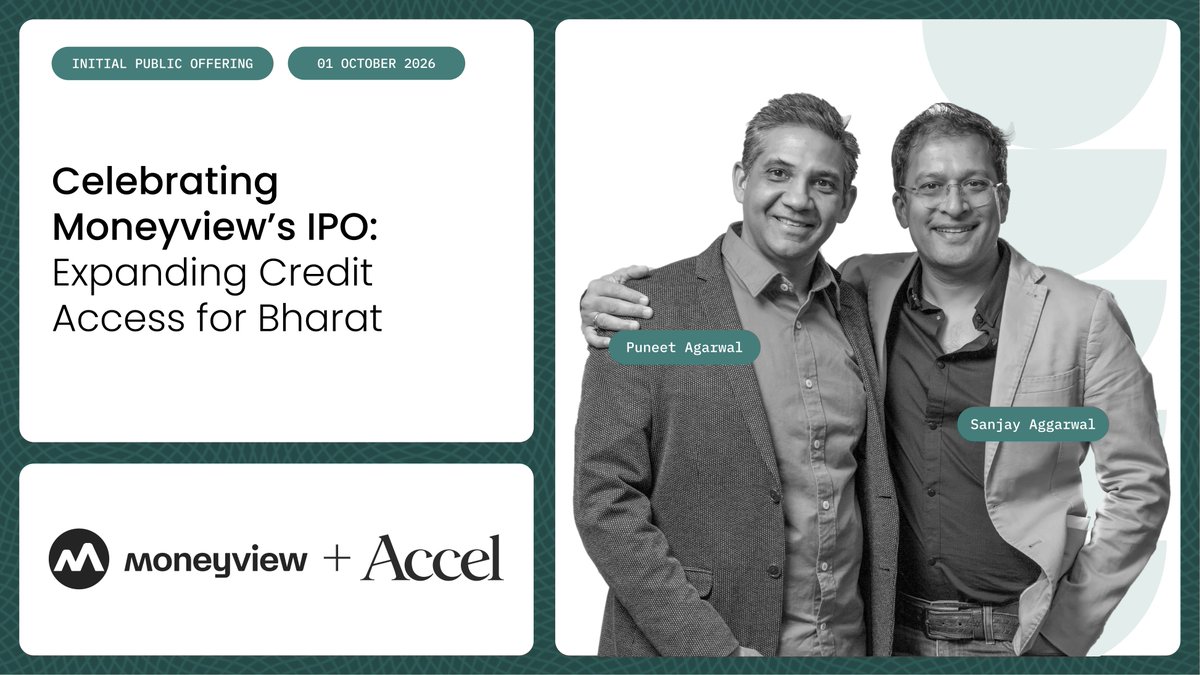
Today, Moneyview takes its place on the public markets, with twelve years of quiet, disciplined building behind it.
Thank you for making credit accessible to millions, and for turning it into homes, businesses, and second chances. 🧵
#AccelFamily • @subratamitra • @reachpuneet • @sanjayiitd
Construction is 13% of global GDP, yet its productivity has fallen behind the rest of the economy since 2000.
The industry never automated because robots need predictable conditions, and job sites don’t offer them. Every project has a different layout, different materials, and a different stage of work. Recent advances in physical AI let machines handle that variation.
We’re investing in @origin_autonomy to bring it to the built world. Origin has assembled the largest indoor construction dataset anywhere and used it to train robots that adjust to every new space. They’re already deployed across the US.
Between them, the founders cover business, AI, and hardware. @yogesh_origin built and sold his first company to Amazon, @tusharmakkar08 led core AI teams at Eightfold, and @ashishxdaga has spent a decade in robotics.
@anagh_prasad and @subratamitra explain how Origin’s model works and why we backed it: https://t.co/npffNPz9Bf
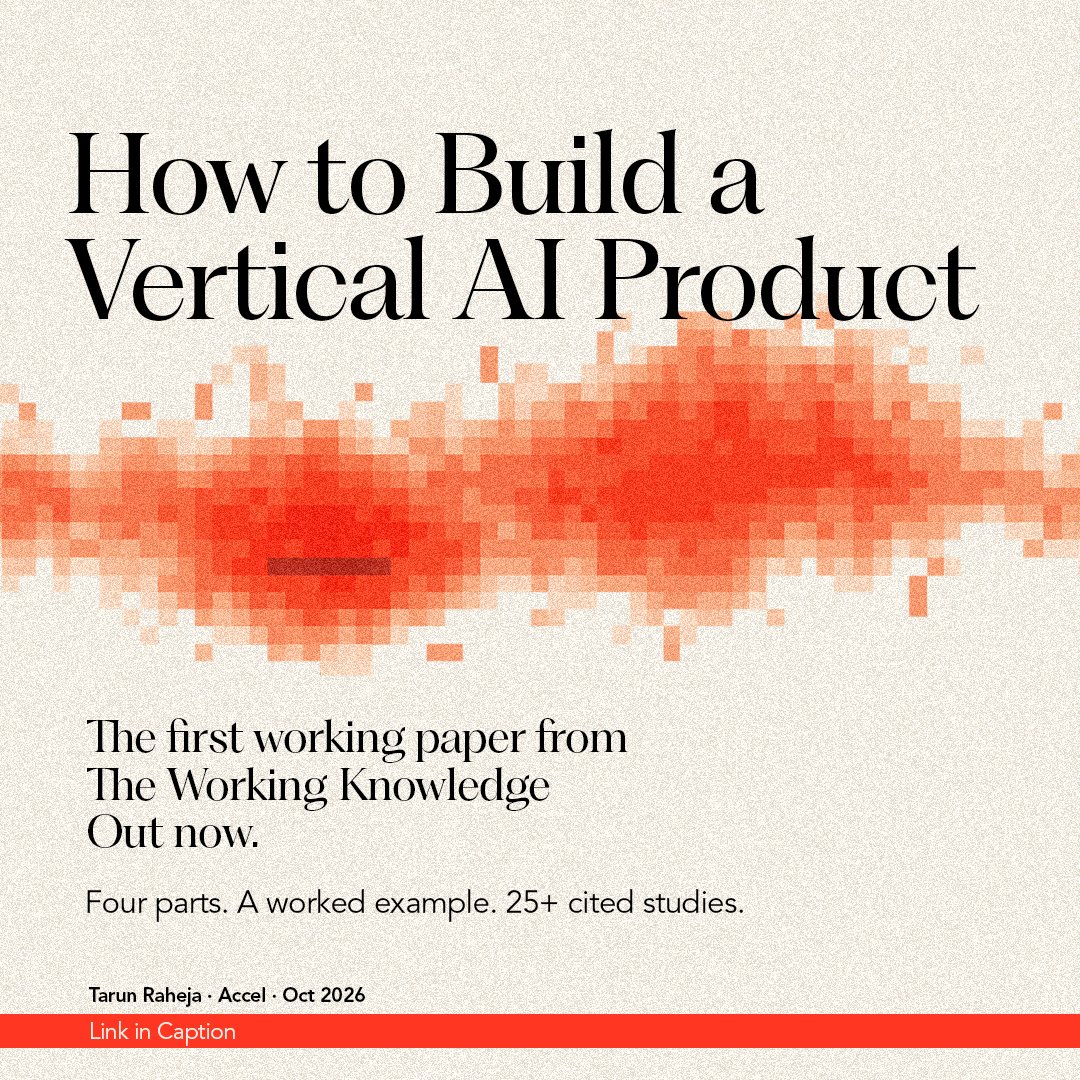
Introducing The Working Knowledge, a new technical publication from SeedToScale by Accel to help founders and technical teams make better decisions about the products they build.
It brings together AI research and lessons from practitioners in playbooks teams can put to work.
Our first, “How to Build a Vertical AI Product” by Tarun Raheja, explores how to evaluate models for your domain, build the context and tools around them, and make the product reliable in production.
With a framework and worked example, it also helps teams decide what to keep, simplify or remove as models improve.
Explore The Working Knowledge and download the playbook: https://t.co/4icyCDGXWr
For most of Bharat, some day was too far to plan for.
A little more to save. A little more to send home. A little more to begin.
Today, twelve years of those small beginnings ring the opening bell for Moneyview.
Here's to every some day that finally became today.
#AccelFamily • @subratamitra • @reachpuneet • @sanjayiitd
@subratamitra, partner at @Accel, writes on meeting Puneet and Sanjay for the first time, and watching how Moneyview built a credit platform that matches India's ambition. Read the blog here: https://t.co/VWs4S1np2Q
Today, Moneyview takes its place on the public markets, with twelve years of quiet, disciplined building behind it.
Thank you for making credit accessible to millions, and for turning it into homes, businesses, and second chances. 🧵
#AccelFamily • @subratamitra • @reachpuneet • @sanjayiitd
That insight has unlocked credit for more than 140 million people, built on underwriting that clears nearly 200,000 applications a day, and holds a loss rate below the industry average, without a single branch, reaching 99.55% of India's PIN codes.
250 million children in India share one teacher between 200 of them. Personalised coaching can provide that support, but cost and location can put it out of reach.
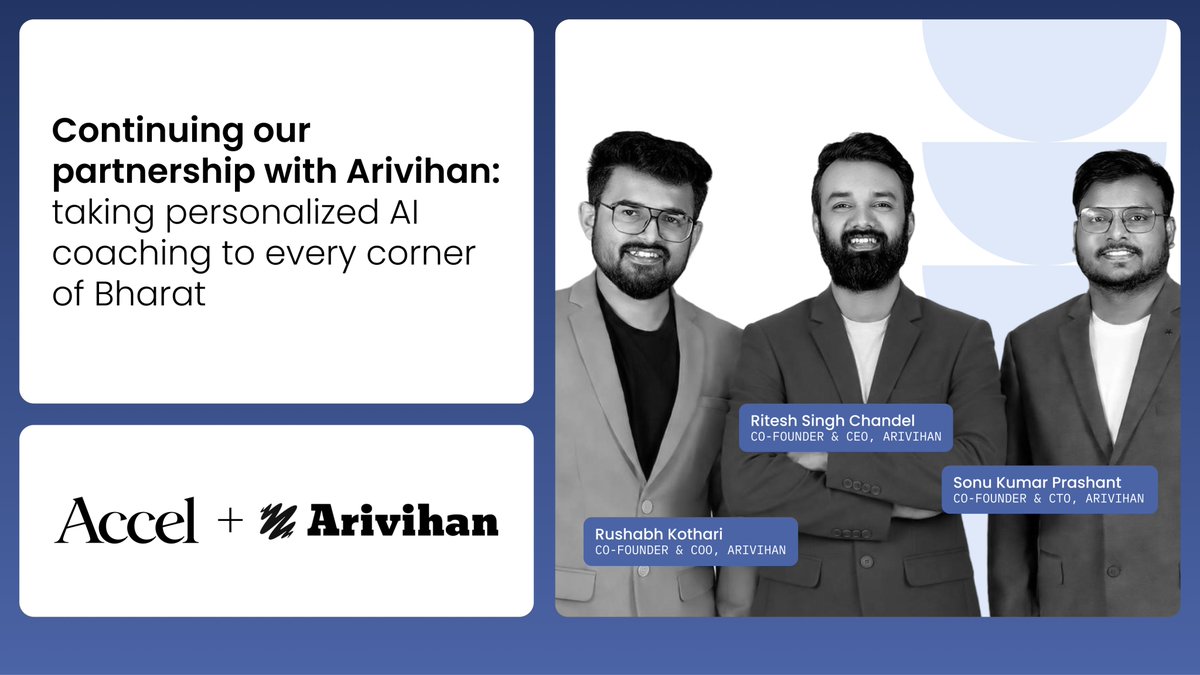
@Arivihan is building an AI tutor to make that support more accessible. Students can learn through interactive video lessons, ask questions as they study, and follow study plans tailored to their performance.
Built by Ritesh, Sonu and Rushabh, the platform focuses on students beyond India’s metros. Today, 80% of its subscribers come from Tier 4 towns and rural India.
We're thrilled to deepen our partnership with Arivihan as they take personalised learning to every corner of the country, in every language their students learn in.
@_AnandDaniel • @Anagh_Prasad • #AccelFamily
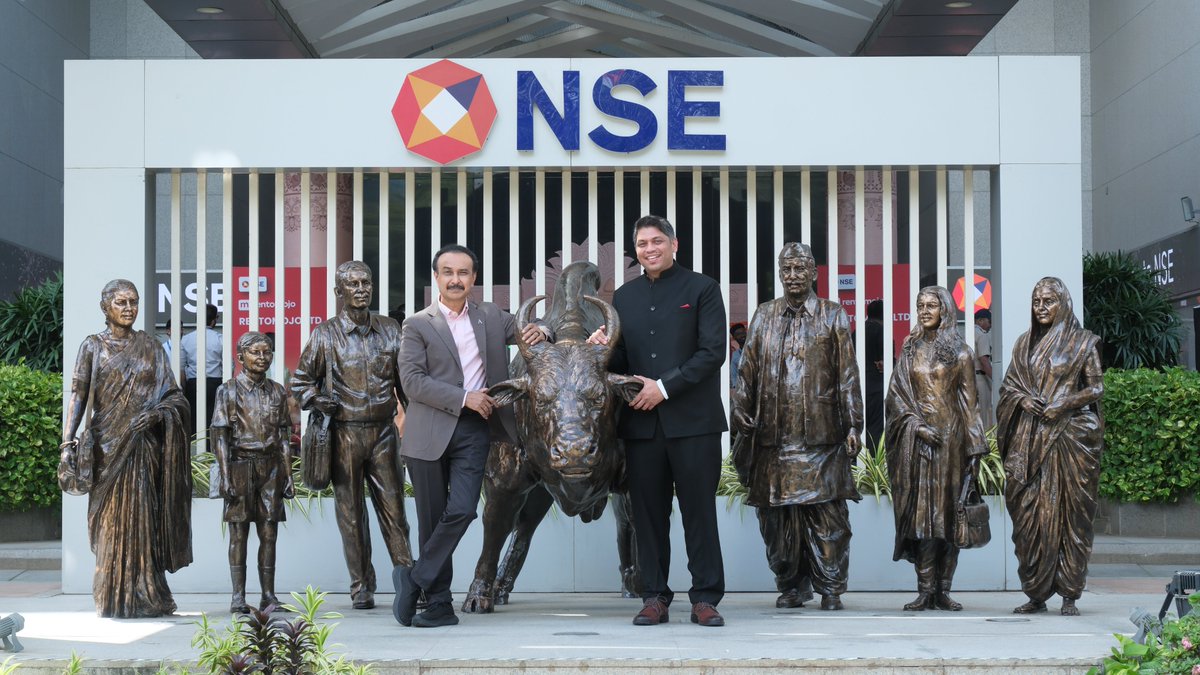
Thursday’s listing marked a special milestone for Geetansh and the @rentomojo team in their 11-year journey so far.
A fitting moment to pause, take it all in, and reflect on everything it took to get here.
We spent the evening celebrating the people behind the story: the team, families, co-investors and friends who have all played a part in shaping Rentomojo over the years. There were stories from the early days, familiar faces coming together again, and a memorable performance by Lucky Ali that made it an evening to remember.
As Rentomojo steps into its new home, we’re excited for the next chapter.
#AccelFamily • @prashanthp • @GeetanshBamania
GCCs in India are increasingly shaping how their global businesses use Al.
That creates an opportunity for founders building here to work directly with them on business problems.
To move this forward, Shekhar Kirani (@skirani), Partner at Accel, brought together 10 GCC leaders and four Accel portfolio companies - Nurix (@Nuplay_AI), Nanonets (@nanonets), Spendflo (@spendflo) and Ema (@Ema_Unlimited).
The conversations centered on co-creation: GCC leaders and founders working together to apply AI to real business priorities and deliver measurable outcomes.
Thank you to every GCC leader and founder who showed up with candour and intent. Now comes the exciting part: turning conversations into pilots and pilots into measurable impact.
Dear @Rentomojo,
Thank you for giving a generation the freedom to live a little more on its own terms.
Today, as you become India’s first listed furniture and appliance rental company, all of us at Accel are incredibly proud to celebrate your remarkable public market listing.
#AccelFamily • @prashanthp • @prayanks • @_pagarwal
Starting somewhere new takes time.
Having a place that feels like home makes it easier. You’re finding your feet at work. Getting to know people. Learning your way around a new city. It helps to come back to somewhere you can simply be yourself.
@Rentomojo helped make that possible. Somewhere to settle in, while the rest of life was still settling down.
Here’s to everything you’ve built, and all that’s still to come.
#AccelFamily • @prashanthp • @GeetanshBamania
Today, @Rentomojo goes public.
An idea about renting became a business that helped India feel at home. We look back at what it took to get here.
Congratulations to the entire team on your IPO and your own new beginning.
#AccelFamily • @prashanthp https://t.co/cGWLxKJVtp
What happens when a deeptech founder in India has a working product, but needs capital to manufacture at scale?
India has built support for the early stages of this journey. Grants and angel capital help founders get their ideas off the ground. At the other end, public markets are beginning to reward companies building Indian intellectual property. But the middle, the stretch where a company proves itself and needs serious capital to go from prototype to production, is still being built.
Prashanth Prakash (@prashanthp), Partner at Accel, argues that solving this gap could determine whether India’s deeptech boom becomes a pipeline of promising prototypes, or a compounding ecosystem of companies, capital and IP.
His take: India needs to unlock new pools of capital for the hardest, most capital-intensive part of the journey.
Read Prashanth’s perspective on financing India’s next wave of deeptech companies on Livemint (@livemint): https://t.co/bjEqTAiFX5
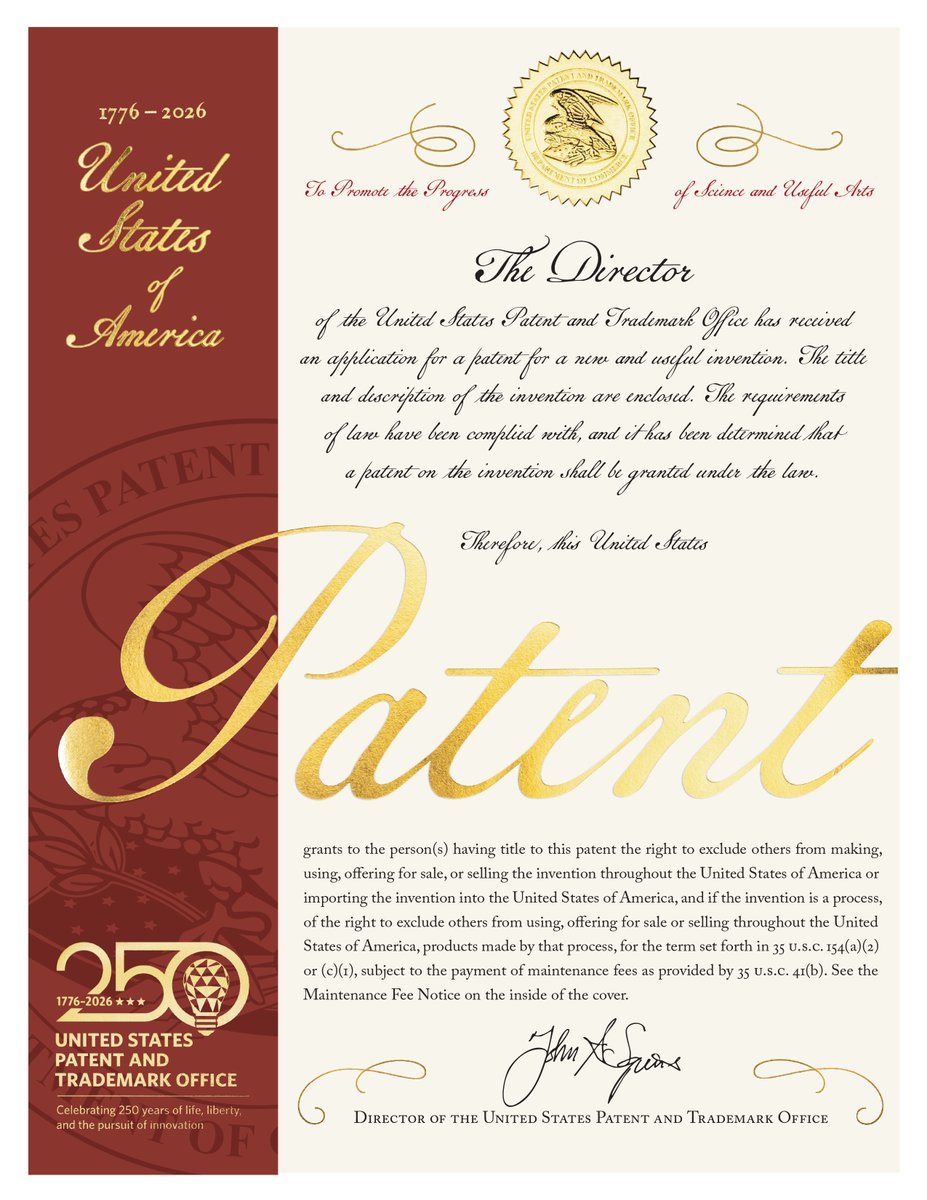
QOSMIC has been granted a US patent by the United States Patent and Trademark Office. We've been working toward this for just under a year, and it's a proud day for the whole team.
For decades, optical ground stations have been built around one assumption: if you want to collect more light from a satellite, you need a bigger telescope. Past a point, that stopped making sense.
Our optical ground station uses an array of phased telescopes acting as one aperture. It's the architecture behind ARGUS, and it turns a ground station from a fixed piece of infrastructure into something modular, that scales with the constellation it serves. Both uplink and downlink.
Why this matters now: as satellite data moves from radio to light, the ground has to keep up. The constellations going up need far more data brought down, faster and more efficiently than today's stations can manage. This patent embodies the core of how we solve that.
The ground stations of the next era won't look like the ones we have today. This is just the start, and we're moving fast.
@Jain_Shrey_@RohitKR79@aalokelab@AccelIndia@AccelAtoms@Accel@spc@artparkindia@spc_india@_pagarwal@MBalachand90142@prateekmehta42@ankitcc@adityaag@JPBrebner@nayankote
A quiet moment.
Building a company rarely allows for much of that.
So we asked for a pause.
A little room to look back at everything it took to get here.
Before facing what comes next.