@SDonziger Assuming the title is correct, which I do think is very likely, it's the settlers not the IDF (nor the civilians within the recognized Israeli border). I hope there's consequences, but I don't think it's as simple as a war crime since it's not being carried out by the military.
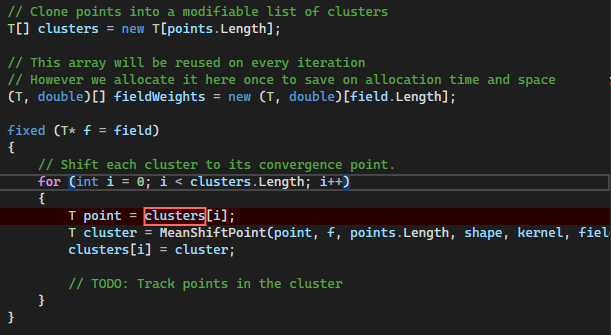
I made a YouTube video briefly talking about cluster analysis, and I've got more to come. First I'm gonna elaborate on Cluster Analysis with algorithms like K-Means, MeanShift, and DBSCAN. Then I plan on making some videos ray tracing!
https://t.co/8d4ep2gdI1
@Kurdiumov@SergioPedri This was extremely hard coded so I can no longer replicate this image. However my work on a much more dynamic engine using ComputeSharp is available here
https://t.co/V6F9yhxuVH
Working on a C# rendering engine using ComputeSharp by @SergioPedri
Here's an image from a quick project I made testing the waters (rendered in near real time)
@andrewpprice Jesus Christ.
Without context I'd fully believe this is a selfie.
With context however, the hair count is kind of low, which I think is most clear up at the scalp and by how the loose stands are too thick.
@Arlodottxt @luke_blevins1 Proof that businesses have become far too complaciant with their amount of bargoning power. (From a recent Bernie Sanders town hall)
@Arlodottxt I'm pretty sure there's no specific name for this.
However, given that it's a reversable implementation of Fisher-Yates, I recommend we call it the Yates-Fisher algorithm.
@Arlodottxt@nickchapsas Being explicit in variable declarations helps if you want the code to be readable in Github without downloading the code. For my personal projects, I like my code to be readable to uninvested people, so that's valuable to me.
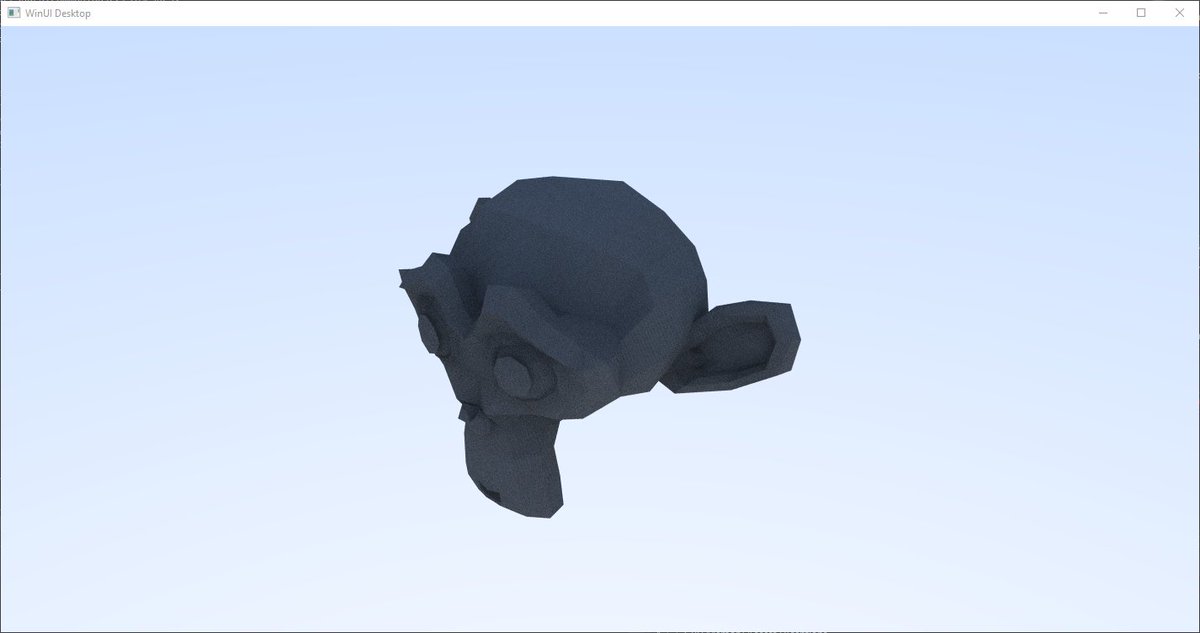
Blender's suzanne rendered in RenderSharp.
This is less visually impressive than the previous image, but it has far more triangles (still only 968) and is displayed on a more advanced image texture buffer.