@PeterObi Even if you don’t explain, sir, we already knew they were peddling https://t.co/SlbybuKc3V’s such a shame that people can have the facts and still choose to twist them.
ON THE ANAMBRA DEBT QUESTION
I have remained silent over the past few days because I have been grieving the loss of my very dear elder brother and friend, Chief Okey Ezeibe. However, the time has come for me to address some of the matters that have occupied public discussion in recent days.
I respectfully urge everyone to concentrate on the existential challenges confronting Nigeria and the hardships endured by its citizens, rather than on the needless distractions that have become widespread in our politics.
I wish to assure the public that I have no disagreement with my dear elder brother, Governor Soludo, or with any governor in Nigeria. I am not seeking the office of governor in any state, and I will not seek that position again, even if the Constitution is amended.
Accordingly, I appeal to governors to support whichever presidential candidate they choose while also permitting and assisting other presidential candidates and contenders for other offices to campaign freely and without interruption in their states. Ultimately, voters should be allowed to determine whom they wish to serve them.
Regarding the multilateral funding inaccurately described as “debt owed by Peter Obi” in Anambra State, I wish to state unequivocally:
As Governor of Anambra State, I did not approach any financial institution to borrow funds or issue a bond on behalf of the state. Indeed, at his farewell ceremony, the then Director-General of the DMO, Abraham Nwankwo, appointed me chairman and declared that, during his 10 years in office, I was the only state governor who had not approached him for a loan facility.
When I left office, the Anambra State Government owed no unpaid salaries, gratuities, or pensions. Neither did it owe any contractor or supplier who had completed work that the government had verified and certified.
Regarding development financing from the World Bank, these are concessionary development-support funds secured by the Federal Government for states selected by it to address specific needs. Repayment is spread over 25 to 30 years.
The Anambra State Government must therefore differentiate among three separate figures: the total amount approved for the multiyear development program; the amount Anambra State actually drew during my tenure; and the funding balance outstanding when I handed over on 17 March 2014.
The government has combined these distinct categories, added them together, and described the resulting US$123.77 million as “loans left by Peter Obi.” That is an incorrect application of public-sector accounting.
The eight facilities identified were primarily World Bank and IFAD development programs negotiated by the Federal Government, with participating states receiving access to the funds through subsidiary arrangements. They were not conventional commercial loans that I personally secured during my tenure.
This does not suggest that Anambra had no repayment responsibilities; rather, each facility must be examined in light of its approval, effectiveness, drawdown, and repayment record.
The clearest contradiction appears in the government’s own figures. It states that the original facilities amounted to approximately US$123.77 million and that US$92.35 million remained outstanding in June 2026. However, the DMO’s published records showed Anambra’s total external debt at approximately US$18 million when I began my tenure in March 2006, about US$30 million in March 2014, when I left office, and approximately US$45.15 million as of 31 December 2014, nine months after my departure.
The Anambra State Government must therefore clarify how a state whose recorded external debt was about US$30 million in March 2014 and US$45.15 million in December 2014 could supposedly have inherited US$123.77 million from Peter Obi, who left office in March of that same year.
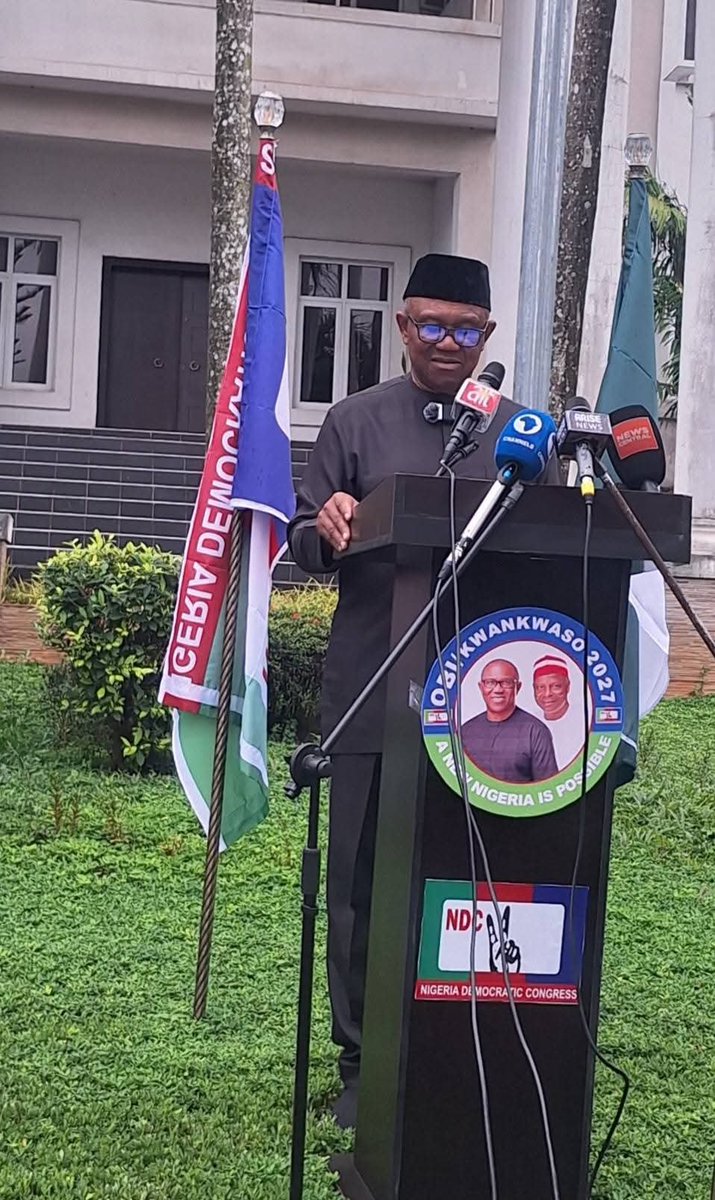
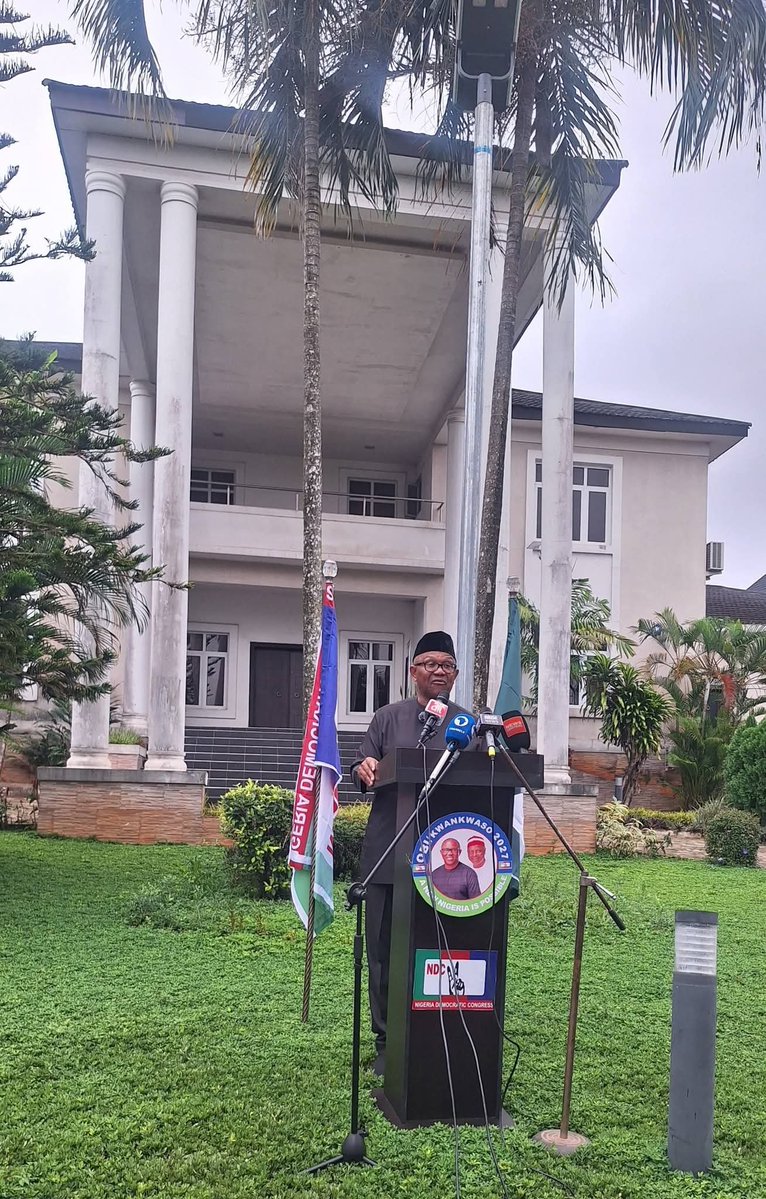
MY ADDRESS TO MARK THE COMMENCEMENT OF THE 2027 PRESIDENTIAL AND NATIONAL ASSEMBLY CAMPAIGNS
21 August 2026
Dear Compatriots,
Members of the Press,
Distinguished ladies and gentlemen,
Wednesday, 19 August 2026, marked the official start of the campaign period for the 2027 Presidential and National Assembly elections.
There is no doubt that this is a defining moment for our democracy. This moment gives Nigerians the opportunity to assess the records, ideas, and plans of those seeking their mandate to lead their country at a time of grave uncertainty in our rapidly changing world.
I consider myself quite privileged to be one of those seeking your mandate to deal with these challenges facing our country.
I enter this contest with one firm conviction: Nigeria can work, and Nigeria must work.
Nigeria faces several serious challenges. Some of them are indeed of existential proportions.
According to the IMF, 63%, or over 140 million Nigerians, live at or below the national poverty line, while humanitarian agencies estimate that 35 million people will need food assistance during the 2026 lean season. About 3.6 million Nigerians remain internally displaced, largely because of conflict and insecurity. Each year, millions of young people enter the labour market, yet too many struggle to find productive opportunities. Weak infrastructure, unreliable power, insecurity, and the excessive cost of doing business continue to burden households and constrain enterprise.
These are more than statistics. They reflect the daily realities of Nigerian families, farmers, workers, students, and businesses.
Yet I do not believe Nigeria lacks the ability to overcome these challenges. We have the people, resources, market, talent, and enterprise. What we must do now is turn these strengths into security, productivity, and shared prosperity.
LEADERSHIP MUST DELIVER RESULTS
My successful private-sector experience, studies in institutions of repute on policy and business matters, and my service as Governor of Anambra State have shaped my understanding of public leadership. Government must manage resources responsibly, set clear priorities, and measure the outcomes of its decisions. Public office is not a reward; it is a responsibility to the people.
In Anambra, I prioritised the foundations of long-term development: education, healthcare, infrastructure, fiscal discipline, and institutional capacity. I do not present that record as perfect, but as an experience from which Nigerians can draw their own conclusions.
Senator Rabiu Musa Kwankwaso brings a different but complementary governing experience.
As Governor of Kano State, he focused strongly on education, technical training, scholarships, infrastructure, and human-capital development. His administration’s investments in education and skills showed an understanding that the people are a state’s most important long-term resource.
Our experiences are different, but our conclusion is the same: Nigeria must invest in its people and manage public resources with discipline.
BUILDING AN ECONOMY THAT WORKS
Nigeria needs more than reactive reforms. We must focus on the questions that matter:
Are Nigerians better off than they were four years ago? Can they afford food, education, and healthcare? Can businesses produce, expand, and create jobs? Can young people find productive work? Can farmers work safely and get their produce to market?
FULL STATEMENT OF FACT
From official Fact Finding Mission sponsored by @renoomokri
Sleazy Omokri, a pathological liar, will go down in history as the Joseph Goebbels of the Nigerian Christian Genocide. His paid "reporters" are saying that I "debunked" claims of genocide. See the truth here.
Read the official report and sign the petition at https://t.co/1oEuUxTZKf
@PeterObi@firstladyship@ARISEtv@ruffydfire@isaelbuba@billmaher@SenTedCruz