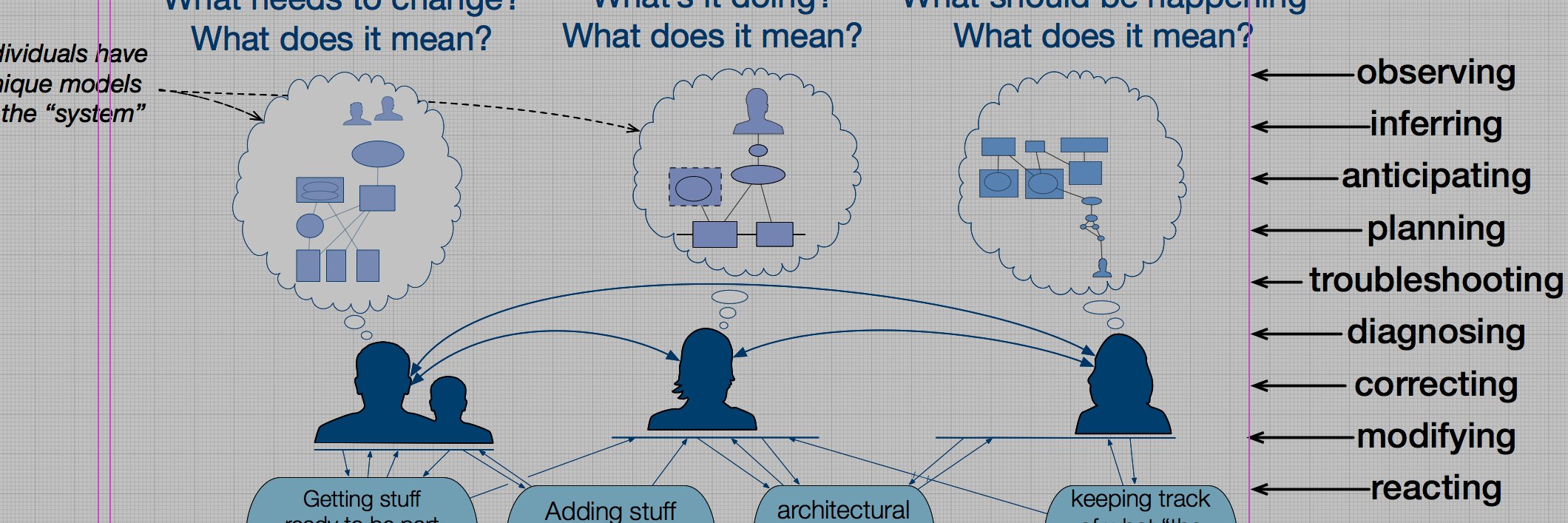
Incidents are unplanned investments for modern organizations. Think “accident investigation, but in the software world” — this is what we do and what we train.
When organizations experience an incident that gets attention from press, investors, and other external stakeholders, it can be advantageous to have a neutral and independent analysis done for the event.
This is why we do "aftermath" work: https://t.co/fWgOzrSpVX
#BookmarkThis
"It is not uncommon for high-consequence events to be handled mostly in-camera and for the open, formal incident review to take on the flavor of 'incident theater'."
https://t.co/PUWHitzBIJ
#learningfromincidents#incidentanalysis
I'll never forget our time working with Dr. Richard Cook and @allspaw at @AdaptiveCLabs, turning our worst outage into a powerful learning opportunity. What a loss to our entire software community. https://t.co/7vOOgdbR3h
@heartpunkk I see. For sure, 'second victim' phenomena and its relationship to Just Culture has been a fundamental part of all of our careers. Cook's and Woods' work in the 90s helped kickstart the patient safety movement, so the concern and focus is there, perhaps not as explicit tho. :/
@heartpunkk Clearly, we need to revisit the language/framing of what is on our site. It is certainly concerning there's a disconnect you're picking up on. Thank you!
@heartpunkk Thanks for this! This is definitely not our intention, wrt to the website copy. The core of our work is helping organizations understand how they learn from incidents and how to learn more effectively...precursors to making progress on prevention, response, and mitigation.
“We’re not used to talking about or even have vocabulary for what makes something confusing? What makes something ambiguous? And that is what makes for effective incident analysis.” - @allspaw
Have a listen: https://t.co/MRHyU2QcQY
Next time someone says there's an incident I'll tell them to stop interpreting the current system behavior as undesirable above the line https://t.co/mz3YZrZeLV @AdaptiveCLabs