Software Engineer based on 🇹🇳. Programming languages enthusiast. Scala & Haskell Enjoyer. C++ Hardcore fan.
Turns out Functional Programming isn't that hard.
Our world, human experience, and even our hardware are all asynchronous and reactive by nature. By following this nature, our software should also be reactive and asynchronous. Check out this great video by @davefarley77 on reactive systems: https://t.co/0VetmPOjFw
Attention is a lookup. Each token builds a query, compares it against every key in the sequence, and pulls value vectors weighted by the match. Stack that 96 layers deep and you get a frontier model.
Video covers the full pipeline: Q/K/V, attention scores, encoder blocks.
@leanprover What do we mean by formalizing CS? What is the equivalent of this in Mathematics? and how can one start learning Theoretical Computer Science?
Thank you for your time.
The write-ahead log (WAL) is both how databases commit fast and how they safely recover from crashes.
Outside of B-trees, it's probably the most important structure in Postgres and MySQL.
(it's called the "redo log" in MySQL-land)
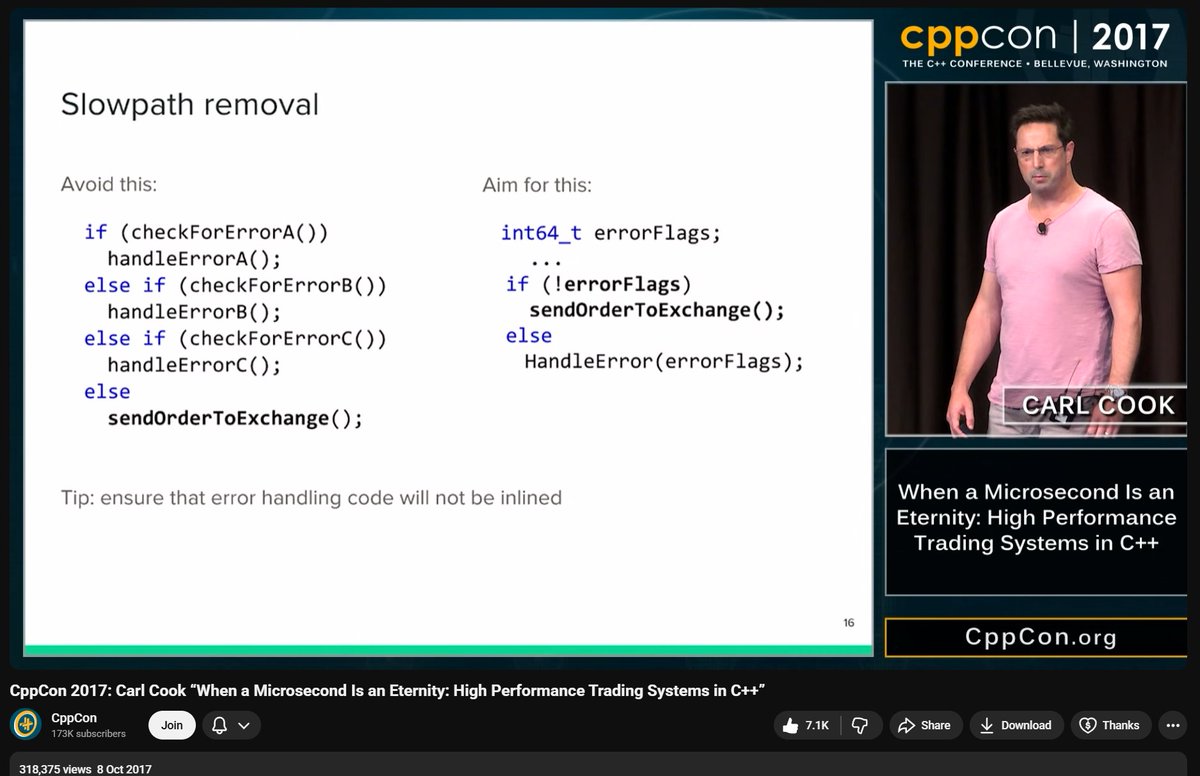
People say that it doesn't make sense to start a new project in C++ nowadays, given the existence of Rust and Zig.
Here are some modern and active open-source C++ projects:
1. Ladybird (browser)
2. Hyprland (tiling window manager)
3. ArcticDB (high-performance time-series DB)
4. ClickHouse (real-time analytics DB)
5. BlazingMQ (high-performance message queue)
I just completed "Secret Entrance" - Day 1 - Advent of Code 2025 https://t.co/0SQNgVe4es
My solution in Golang: https://t.co/WDVvTMXUTi
#AdventOfCode#Go#Golang
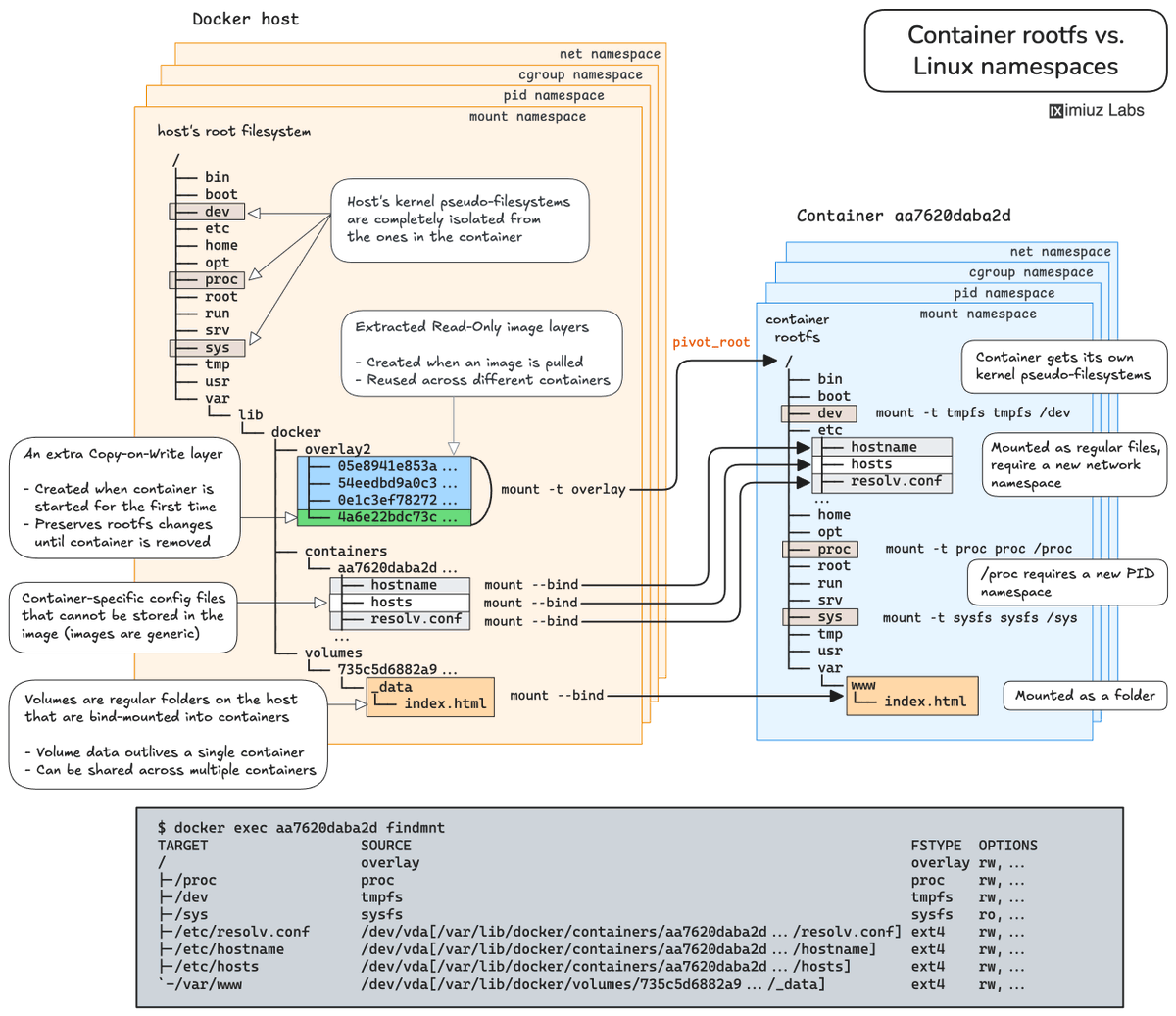
Building container images FROM scratch? Then you need to be aware of these pitfalls 👇
By default, scratch containers lack:
- Rootfs layout
- CA certificates
- Time zone info
- Shared libraries
- /etc/{passwd,group}
Learn more in my new blog post:
https://t.co/lUx7LROKL3
How Containers Work: Building a Docker-like Container From Scratch 🛠️
One of the most researched pieces on containers I've written so far. Learn how to build a realistic Docker-like container using nothing but standard Linux commands.
Learning by doing: https://t.co/6Pj2cn3a4M
I vibecoded this neural network visualization for my students and open sourced it.
It shows a simple MLP trained on MNIST handwritten digits at several training steps. The visualization is using @threejs and it comes with training code in @PyTorch .
Link + repo 👇
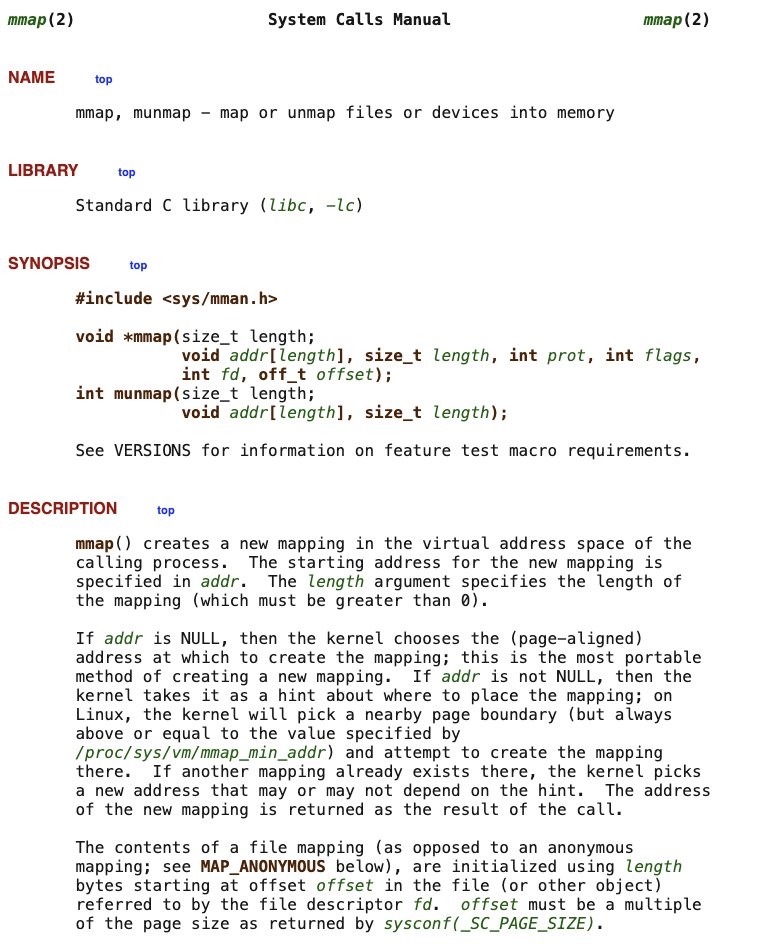
If your code to process a 10GB file looks like read(fd, buf, ...) in a loop, you're wasting memory and killing performance.
There's a better way.
mmap() lets you treat a 100GB file as if it's just a giant array in memory, even with only a few MB of RAM.
Here's why it's a cornerstone of high-performance I/O. 🧵👇