𝐓𝐡𝐞 𝐁𝐚𝐭𝐭𝐥𝐞 𝐟𝐨𝐫 𝐀𝐟𝐫𝐢𝐜𝐚𝐧 𝐀𝐠𝐫𝐢𝐜𝐮𝐥𝐭𝐮𝐫𝐞 𝐏𝐨𝐝𝐜𝐚𝐬𝐭 || 𝐄𝐩𝐢𝐬𝐨𝐝𝐞 𝟑𝟎 - 𝐖𝐢𝐭𝐡 𝐇𝐨𝐧. 𝐅𝐫𝐚𝐧𝐜̧𝐨𝐢𝐬𝐞 𝐔𝐰𝐮𝐦𝐮𝐤𝐢𝐳𝐚
In this episode of The Battle for African Agriculture, Dr. Million Belay speaks with Hon. Francoise UWUMUKIZA, a member of the East African Legislative Assembly representing Rwanda and a key voice in regional policy on agriculture, food systems, and inclusive development. Drawing from her background in women’s leadership and her own close experience of farming through her mother, she reflects on how agriculture shaped her political commitment and why she sees women as being at the heart of African food systems. She explains that her journey into regional agricultural policy came not only from public office, but also from a personal understanding that farming sustains families, livelihoods, and dignity, even when it is often dismissed as if it were not real work.
The conversation explores the current realities of food systems in East Africa, where she sees a serious disconnect between governments, parliamentarians, civil society, the private sector, and the farmers they are meant to serve. She describes how climate change is already hitting farmers hard, while laws, markets, and policy frameworks remain too weak to support them properly.
Françoise Kiza speaks strongly in favor of agroecology as an urgent response to the failures of conventional agriculture and argues that regional laws must protect farmers’ rights, local seed systems, and the value of organic and farmer managed production. She also raises concern that current policy directions, especially around commercialization and seed regulation, do not sufficiently reflect the realities and choices of small farmers, women traders, and communities on the ground.
She also addresses wider structural threats, including ultra processed foods, highly hazardous chemicals, corporate influence on policymaking, and the growing danger of external control over African data and food systems. For her, food sovereignty means far more than production alone. It means protecting African traditions, African knowledge, African seeds, and African ways of eating from external interference and quiet forms of continued colonization.
Listen to the full conversation on YouTube, Apple Podcasts, Spotify and across all our social media platforms.
Subscribe. Share. Engage.
YouTube: https://t.co/kYR2hvvxU4
Spotify: https://t.co/kRvhSKPpFf
Apple Podcast: https://t.co/NAL4RZwUzi
Exciting news! 🎓
Africa Renewal University: 40% OFF tuition for first 150 applicants.
Bachelor’s/Diploma/Cert. On-campus or online.
Deadline: 30 June 2026
👉 https://t.co/vDupOkgkYC
📞 0701598347 | 0200927735 | 0200927736
Hi darling @ToniKroos
You spent months criticizing Qatar and talking about every possible issue before and during the 2022 World Cup, yet it turned out to be one of the best-organized tournaments in history. Public transportation was free, fans could travel easily between stadiums some fans saw 4 matches in the stadium in same day, and the overall organization was praised by millions of visitors.
Now, when concerns are being raised about visa delays, strict entry procedures, and travel difficulties surrounding tournaments in the United States, we don't hear the same level of criticism from you. There have also been complaints about organizational decisions and match arrangements that many fans consider unnecessary or difficult, yet your voice is nowhere near as loud as it was when Qatar hosted the World Cup.
If your criticism is truly based on principles, then the same standards should apply to everyone. But when Qatar receives endless criticism while similar concerns elsewhere are met with silence, people are naturally going to question whether your issue was really about organization at all.
Fuck you.
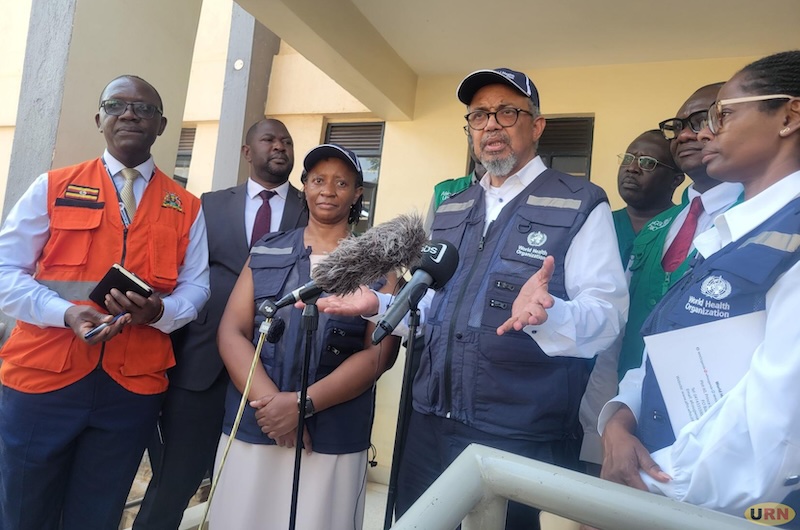
Ebola: travel restrictions on Uganda wrong, unnecessary - WHO
WHO director-general Dr Tedros Adhanom Ghebreyesus urged countries that have imposed restrictions to reconsider their decisions.
He said Uganda has continued to report Ebola cases transparently and implement appropriate public health measures, arguing that travel restrictions do little to curb the spread of the disease while causing significant economic harm.
https://t.co/PLFJFZghqQ
🌱 𝐓h𝐞 𝐍'𝐃j𝐚m𝐞n𝐚 𝐃e𝐜l𝐚r𝐚t𝐢o𝐧 | 𝐀f𝐫i𝐜a's S𝐞e𝐝s B𝐞l𝐨n𝐠 𝐭o I𝐭s P𝐞o𝐩l𝐞s
From 2 to 4 June 2026, AFSA convened the 4th Pan-African Conference on Seed Governance in N'Djamena, Chad — bringing together farmers' organizations, civil society, women and youth movements, academics, parliamentarians, and development partners from 20 African countries. Together, they adopted a landmark declaration calling for the full recognition, protection and implementation of farmers' rights and seed sovereignty across Africa.
Farmer-Managed Seed Systems provide 90% of seeds used by African farmers and are the foundation of the continent's agricultural biodiversity, climate resilience, and food sovereignty. Yet they face growing threats from restrictive laws, corporate concentration, and digital technologies that risk converting Africa's biological heritage into private assets.
The N'Djamena Declaration draws a clear line: Africa's seeds belong to its peoples — not to corporations, not to patents, not to private databases.
📄 Read and download the full declaration:
🇬🇧 English:
https://t.co/t2pdPqeCHM
🇫🇷 Français:
https://t.co/qfgWZDY4zB
#NdjamenaDeclaration #SeedIsLife #FarmersRights #SeedSovereignty #Agroecology #FoodSovereignty #FarmerManagedSeedSystems
𝐀𝐅𝐒𝐀 𝐒𝐢𝐝𝐞 𝐄𝐯𝐞𝐧𝐭 𝐚𝐭 𝐒𝐁𝟔𝟒: 𝐀𝐝𝐯𝐚𝐧𝐜𝐢𝐧𝐠 𝐀𝐠𝐫𝐨𝐞𝐜𝐨𝐥𝐨𝐠𝐲, 𝐅𝐨𝐨𝐝 𝐒𝐨𝐯𝐞𝐫𝐞𝐢𝐠𝐧𝐭𝐲, 𝐚𝐧𝐝 𝐈𝐧𝐜𝐥𝐮𝐬𝐢𝐯𝐞 𝐂𝐥𝐢𝐦𝐚𝐭𝐞 𝐀𝐜𝐭𝐢𝐨𝐧
AFSA convened a side event during SB64 to highlight the critical role of agroecology and food sovereignty in addressing the climate crisis and transforming food systems. The session provided an opportunity to share AFSA’s key climate policy demands and engage participants in discussions on inclusive and equitable approaches to climate action. The event was moderated by Bridget Mugambe, who also acknowledged and appreciated the efforts of the African Group of Negotiators (AGN) Chair for increasingly recognizing the importance of youth engagement within climate processes and negotiations.
Opening the session, Dr. @Million_Belay introduced AFSA and outlined the alliance’s broader climate agenda, which focuses on advancing agroecology and food sovereignty as effective, people-centred solutions to climate change. He emphasized the need for climate policies and investments that support locally driven food systems, strengthen community resilience, and protect the rights and livelihoods of food producers. He also reflected on the historical and structural injustices that continue to shape climate vulnerabilities and food system inequities.
@simonpbukenya highlighted the vital role of young people in driving climate action and transforming food systems. He stressed the importance of ensuring meaningful youth participation in climate decision-making processes, including ongoing and upcoming workshops and dialogues under the UNFCCC process. He called for greater recognition of youth as key actors in shaping sustainable and resilient futures.
Representing the farmers’ constituency, Musa Usman underscored the need for grant-based climate finance mechanisms that directly support small-scale food producers and agroecological transitions. He emphasized that accessible and equitable financing is essential for enabling communities to implement locally adapted solutions that strengthen resilience while contributing to climate mitigation and adaptation goals.
The session concluded with a presentation of AFSA’s key demands, reinforcing the call for climate policies that prioritize agroecology, food sovereignty, inclusive participation, and direct support to communities at the forefront of climate action.
#SB64 #Agroecology4Climate
To the Boundless Minds Corps of 2026 Congratulations! 🎓
What a journey. From those first nervous days in class to watching you lead community projects, own your ideas,
This isn’t goodbye. It's see you out there changing the world.
𝐓𝐡𝐞 𝐁𝐚𝐭𝐭𝐥𝐞 𝐟𝐨𝐫 𝐀𝐟𝐫𝐢𝐜𝐚𝐧 𝐀𝐠𝐫𝐢𝐜𝐮𝐥𝐭𝐮𝐫𝐞 𝐏𝐨𝐝𝐜𝐚𝐬𝐭 || 𝐄𝐩𝐢𝐬𝐨𝐝𝐞 𝟐𝟗 - 𝐖𝐢𝐭𝐡 𝐆𝐢𝐝𝐞𝐨𝐧 𝐆𝐚𝐭𝐩𝐚𝐧
In this episode of The Battle for African Agriculture, Dr.Million Belay speaks with Gideon Gatpan Thoar, chairperson of the Committee on Agriculture, Tourism and Natural Resources in the East African Legislative Assembly, about why agriculture policy matters so deeply at the regional level and why law must play a central role in protecting Africa’s food systems. Drawing on his background in government, humanitarian work, and regional politics, he explains that agriculture is the backbone of African economies and cannot be safeguarded without strong laws and policies. He warns that if Africans lose control over their food systems, seed systems, and policy direction, the continent could find itself entering what he describes as a new form of colonization.
The conversation explores the major challenges facing farmers in East Africa, including unequal competition between smallholders and large corporations, land grabbing, weak access to finance, poor irrigation, insufficient extension services, market barriers, and the slow implementation of regional laws. Mr. Gideon explains how the East African Legislative Assembly works to harmonize agricultural laws across member states, but also admits that implementation remains a serious weakness and that political will is often inconsistent. He speaks strongly in support of agroecology and food sovereignty, saying that East Africa must protect local seed producers, local plant breeders, and indigenous farming systems, especially as the region considers the East African Community Seed and Plant Variety Bill 2025. He also argues that the Green Revolution model has been pushed from above with powerful financial backing, even though Africa can still produce enough food without sacrificing health, safety, and control over its own systems.
Mr. Gideon also raises alarm about GMOs, biodigital technologies, and the growing struggle over data governance in Africa. He says technologies that tamper with genes or collect and control African data from outside the continent must be approached with great caution, especially when they are imposed from above or financed from outside. He argues that Africa must interrupt the chain of external data extraction, treat data as a source of power and wealth, and build systems in which local communities can shape and control the technologies that affect them.
Listen to the full conversation here
YouTube: https://t.co/KhIwHpEH3N
Spotify: https://t.co/a6nJsPa30r
ApplePodcast: https://t.co/bKckaqd6ht
As of today, we have recorded 11 cases, of which 4 are imported and 7 are local transmissions. Five of the cases are health workers. We have already discharged Case 002, and three of the patients have since tested negative - Prof. Charles Olaro
#UBCFrontBench
Happening in Chad, du 02 au 04 Juin 2025.
Ouverture de la 4 ème conférence panafricaine sur la gouvernance des Semences.
@Afsafrica#MaSemenceMaVie#SeedIsLIfe
NOTICE: Uganda remains safe, open and welcoming for tourism, business and investment amidst Ebola cases linked to the Democratic Republic of Congo.
We urge travellers and tourism practitioners to continue observing standard hygiene practices including regular handwashing while enjoying Uganda's diversity.
#ExploreUganda
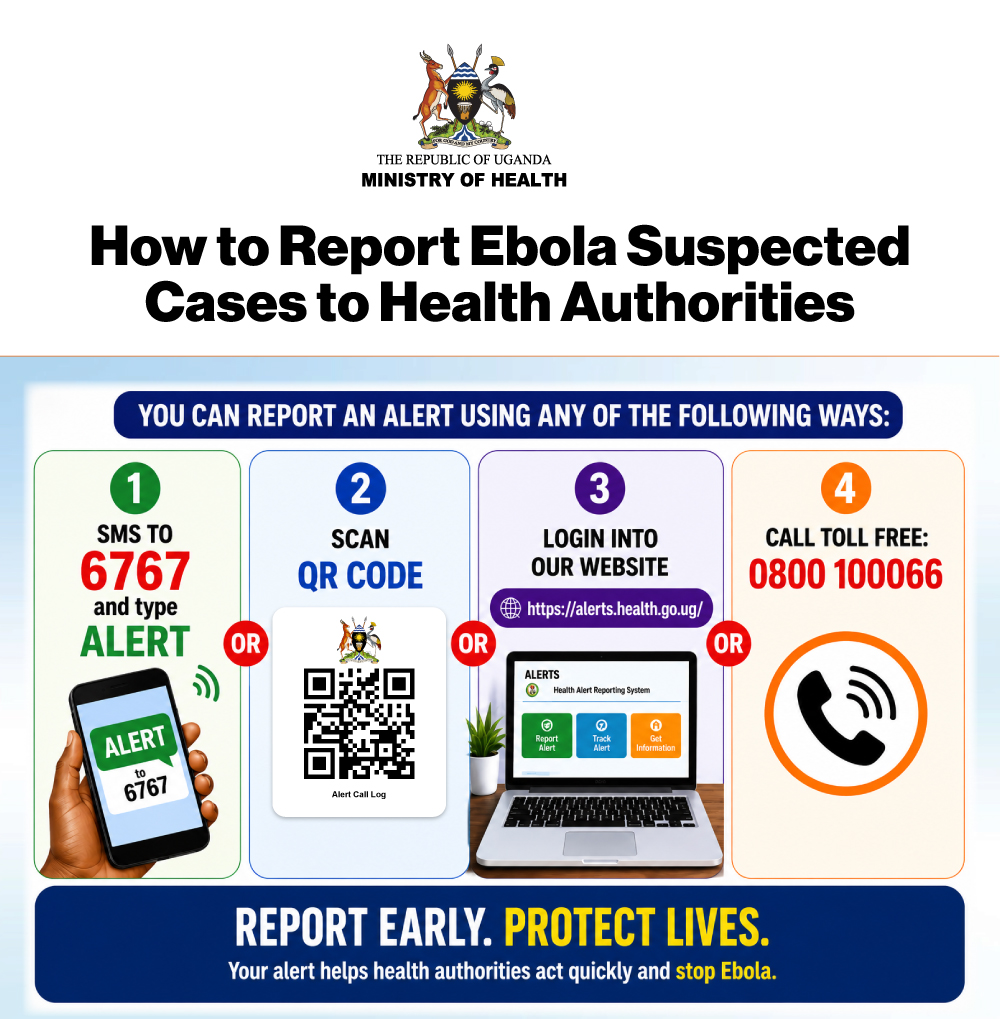
Report any suspected Ebola suspected cases via;
1. MOH toll free line: 0800-100-066
2. Scan the QR code
3. Login to: https://t.co/EHnNVRmHiU
4. Send an SMS to 6767 and type Alert
5. Send a U-Report to 8500
#MOHatWork | #FightEbolaUG26
𝗔𝗳𝗿𝗶𝗰𝗮𝗻 𝗗𝗲𝘃𝗲𝗹𝗼𝗽𝗺𝗲𝗻𝘁 𝗕𝗮𝗻𝗸: 𝗪𝗵𝗮𝘁 𝗙𝘂𝘁𝘂𝗿𝗲 𝗔𝗿𝗲 𝗪𝗲 𝗙𝗶𝗻𝗮𝗻𝗰𝗶𝗻𝗴?
As the African Development Bank convenes its 2026 Annual Meetings in Brazzaville under the theme "Mobilising Africa's Development Financing at Scale," AFSA is putting a sharper question to the Bank: finance for whom?
Three studies — two from AFSA, one from the Institute for Poverty, Land and Agrarian Studies (PLAAS) — find that the Bank has become one of Africa's most influential agricultural financiers, yet its money flows overwhelmingly to industrial agribusiness, agro-industrial zones and large value chains. Support for the diversified, farmer-led systems that actually feed the continent remains marginal.
The research challenges the very premise of the agenda: the claim that Africa holds vast "idle" land waiting to be developed. That narrative is empirically false and historically rooted in colonial "empty land" myths. Africa's smallholders manage around 80% of its farmland and supply up to 80% of sub-Saharan Africa's food.
AFSA's message is constructive: the Bank has the capacity and mandate to lead a just transition. We're calling for an Agroecology Transition Window, real ecological performance indicators, genuine transparency and community consent, and protection for local markets and farmer-managed seed.
The choice before the Bank is not whether to invest, but in which Africa. #AfDBAM2026 #FoodSovereignty #Agroecology
Read the full press release here
https://t.co/eEsIq9TZEp