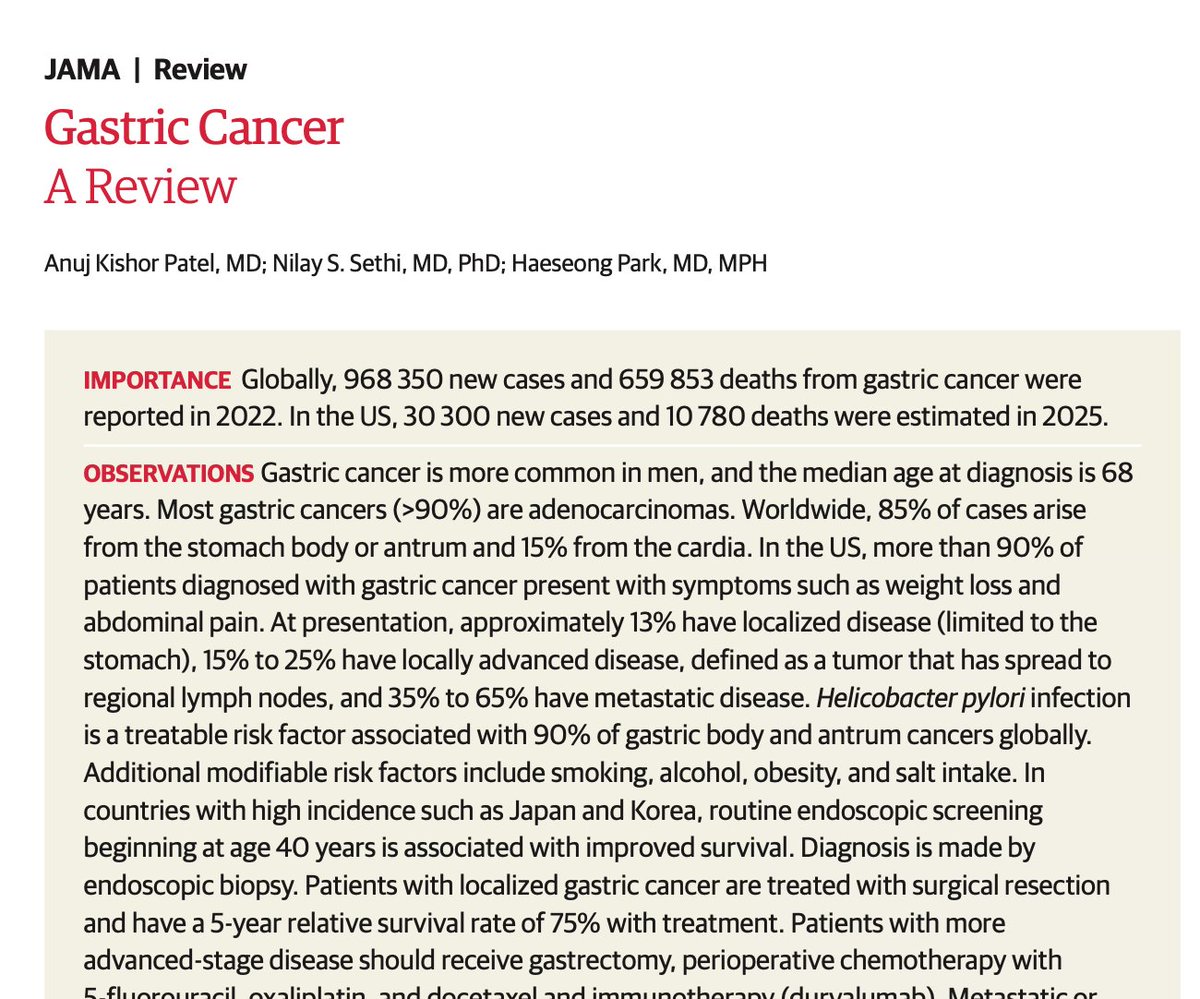
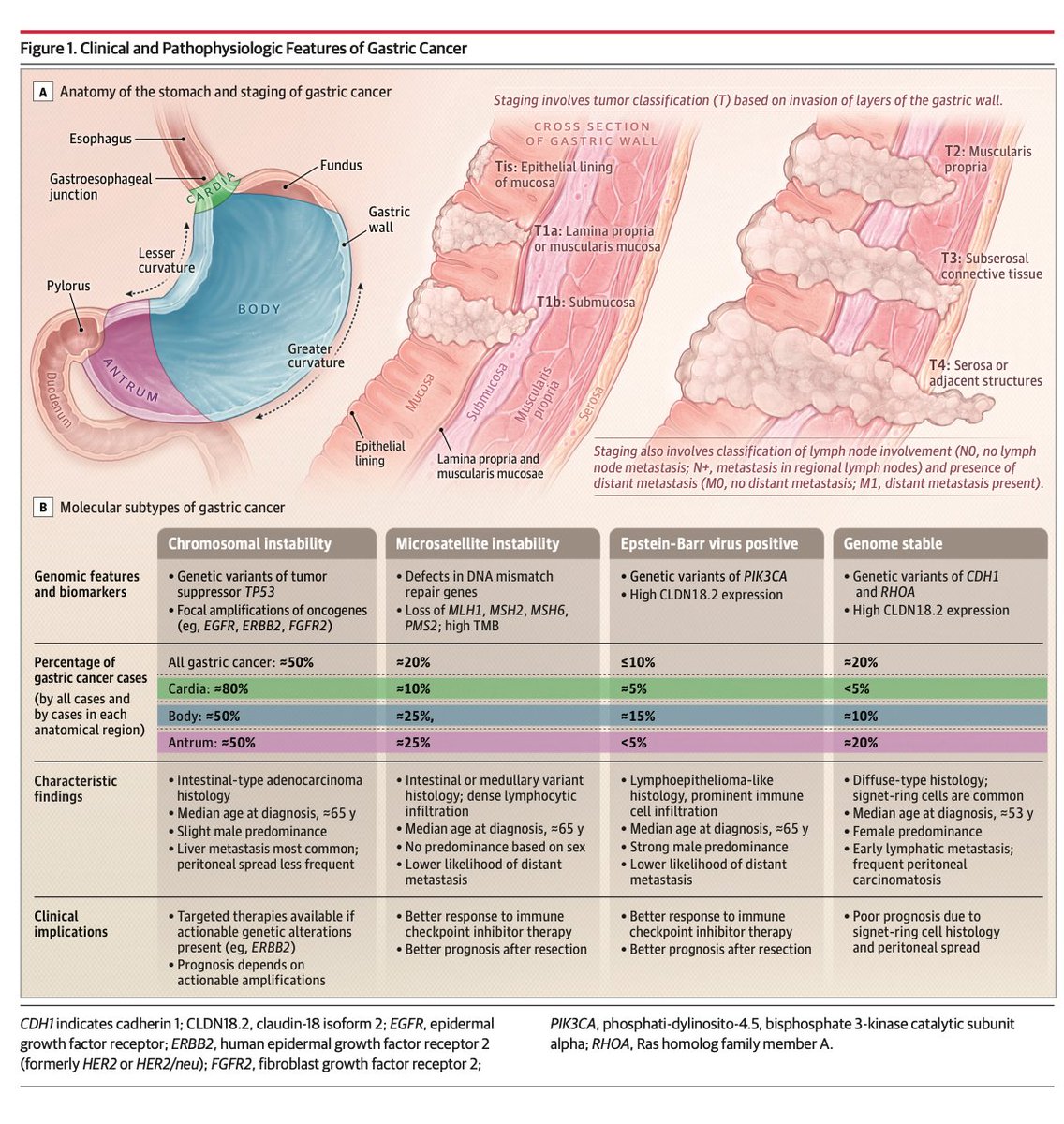
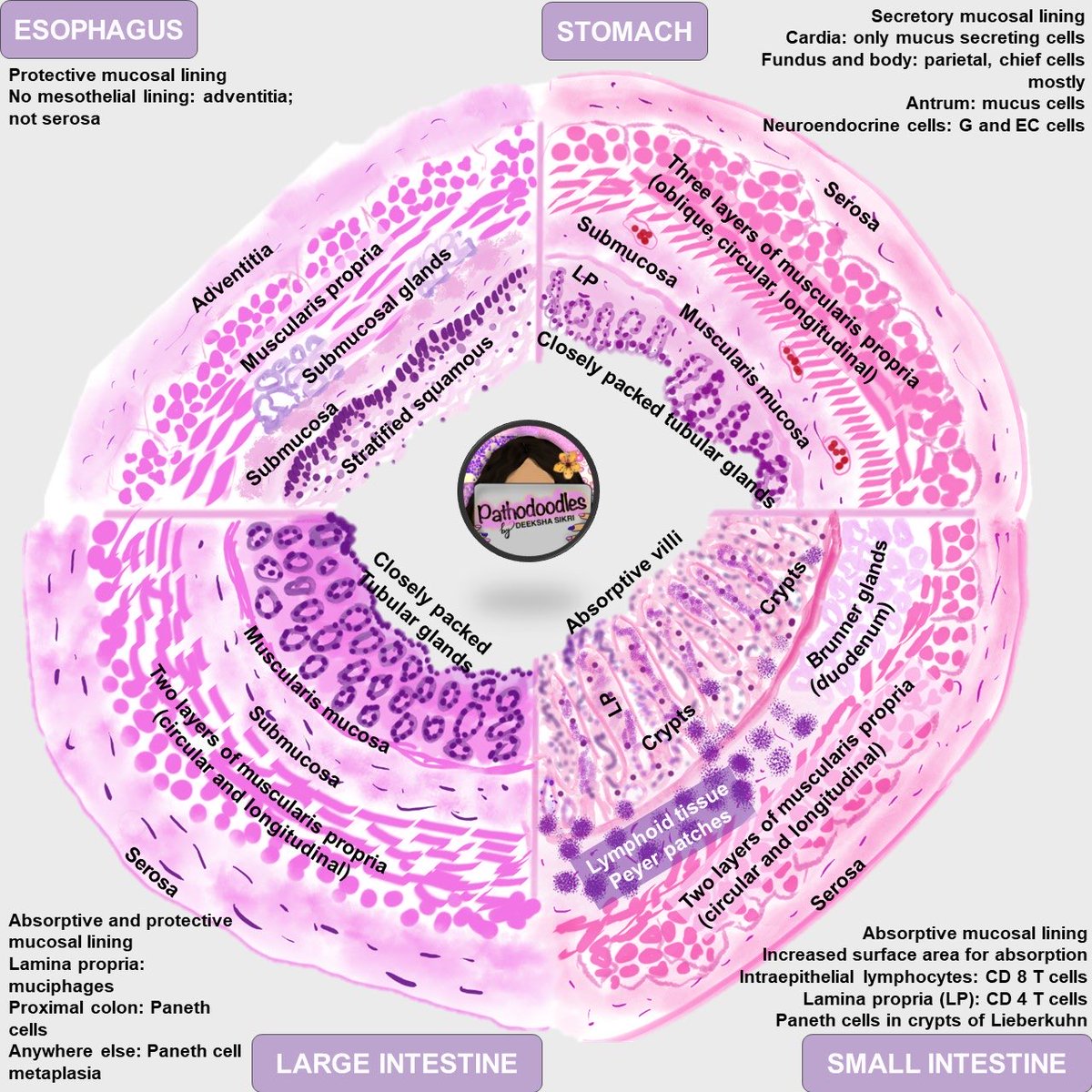
Cácer gástrico, la última revisión, en JAMA (2026). Puntos clave:
🟢 Indicar endoscopia en dispepsia >50 años o síntomas de alarma; aunque cada vez es más frecuente aún en <50 años.
🟢 Biomarcadores: buscar HER2, PD-L1, CLDN18.2 y MMR. Estos definen terapias dirigidas (ej. Zolbetuximab si CLDN18.2+, Trastuzumab si HER2+).
🟢 Manejo Perioperatorio: El esquema FLOT es estándar en estadio II/III. En deficiencia de MMR (dMMR), se sugiere inmunoterapia neoadyuvante
🟢 Estadificación: Laparoscopia diagnóstica con lavado es mandatoria pre-resección curativa; TC y PET tienen baja sensibilidad para metástasis peritoneales.
🟢 Pronóstico: Supervivencia a 5 años <10% en metastásico. La 1ª línea es Quimio + Inmunoterapia/Target según perfil molecular (ej. Nivolumab)
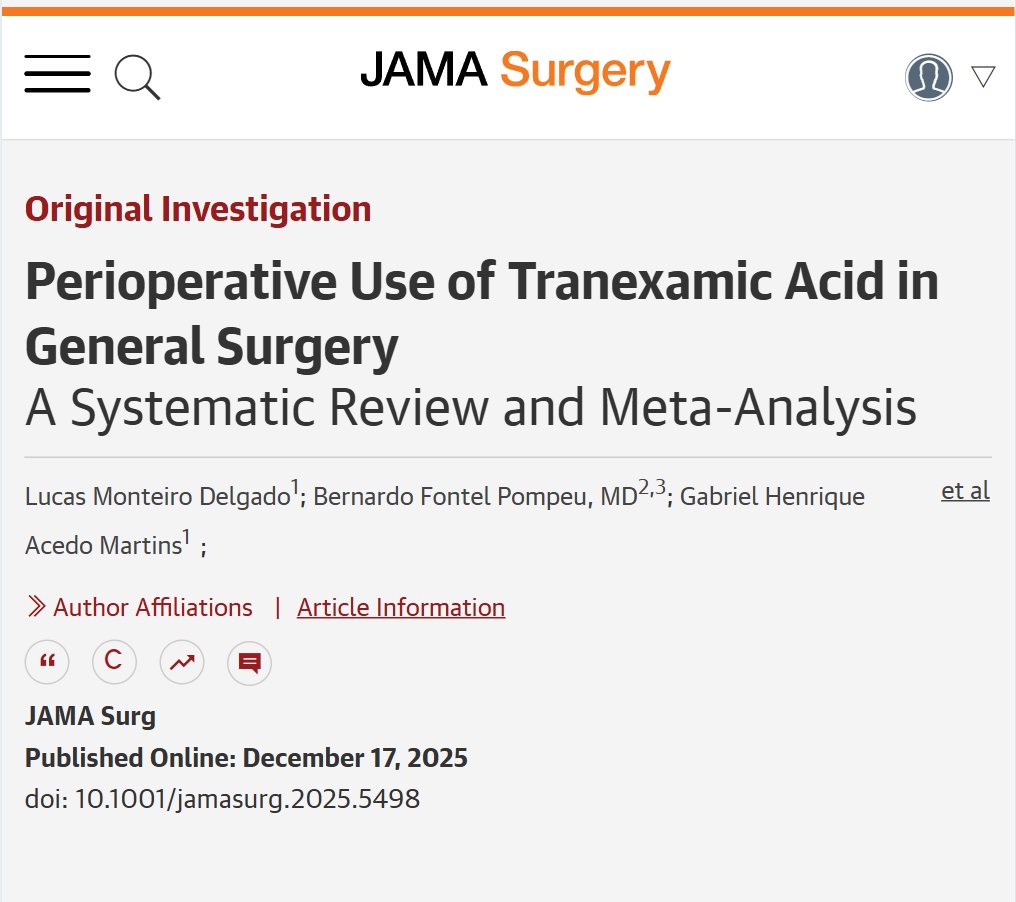
Systematic review and meta-analysis: Prophylactic TXA use was associated with lower intraoperative blood loss, transfusion requirements, and major bleeding without an observed increase in thromboembolic or mortality risk. https://t.co/BmAKCzfTJs
🙏 Ojalá Inspección de Trabajo acudiendo a un Servicio de Urgencias cualquier noche para sancionar a @sanidadgob por permitir jornadas de trabajo de 24 h ininterrumpidas en las que los médicos que están de “guardia” con suerte podrán parar unos minutos para comer, mear y cenar.
📍Tabla resumen sobre guías IDSA 2024 para el tratamiento de infecciones por Gram negativos multirresistentes:
✅Elección, alternativas y comentarios sobre tratamiento de BLEE, ampC y carbapenemasas
⏳Pendiente versión guías 2025 con nueva evidencia
🙇Elaboración propia
FIBRAS MUSCULARES Y METABOLISMO LIPÍDICO MUSCULAR EN LA OBESIDAD
Dos de los mejores trabajos de revisión que podéis leer sobre la cuestión:
https://t.co/YvLptpwumU
https://t.co/hWkZNwItGT
Vínculos activos en mi página de Facebook, Twitter y Threads.
Documento de posicionamiento de la @sepdigestiva con respecto al papel del gastroenterólogo en el manejo integral de las personas que viven con obesidad. Este es el documento https://t.co/Fc1PbOfPKV
@REEDigestivas_@AEEHLiver@aegastro
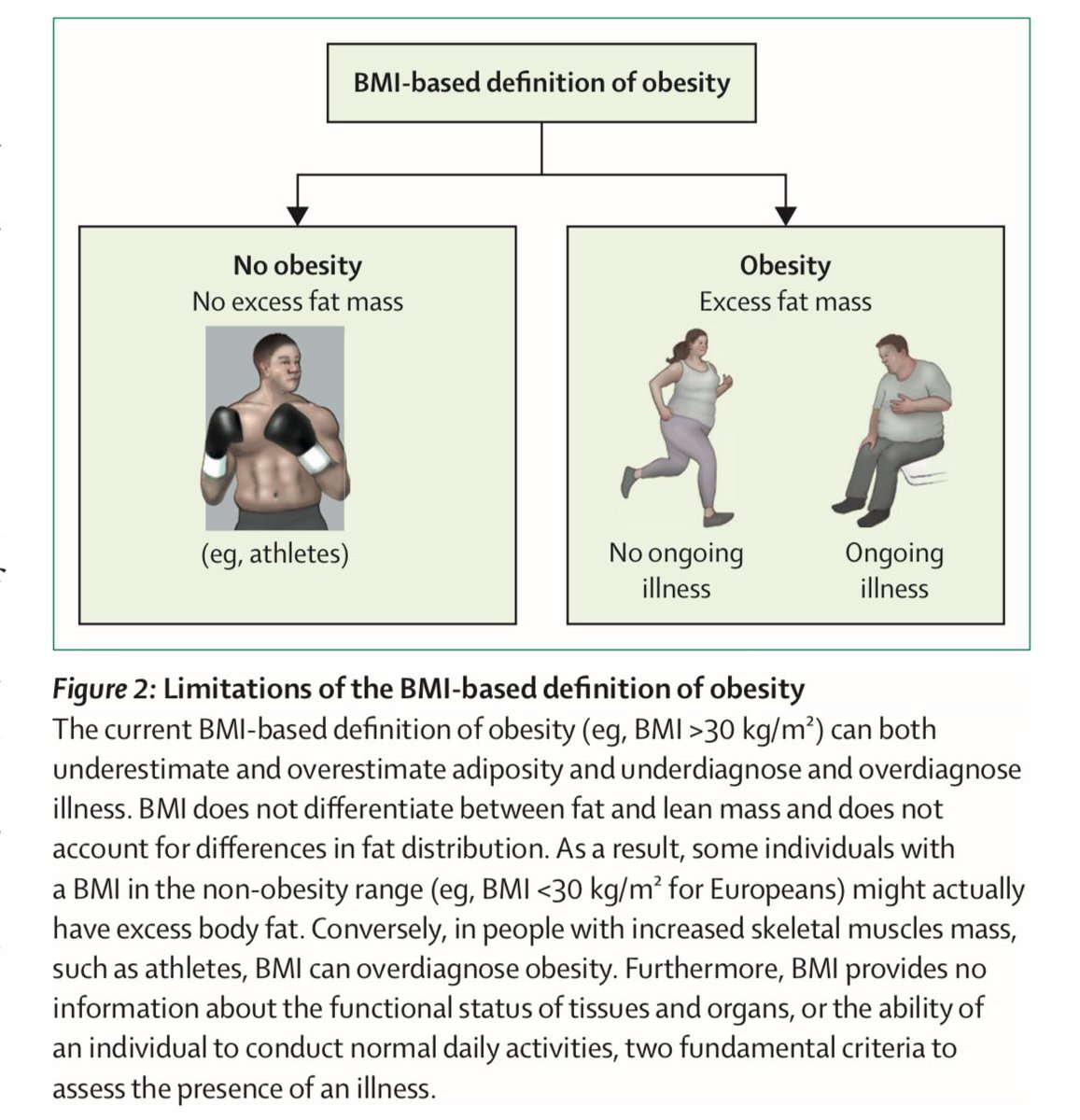
Magnífica publicación sobre OBESIDAD vía @TheLancet
Es o no una enfermedad?
Hay obesos “sanos”?
El IMC sigue haciendo el diagnóstico? (Spoiler: No)
Síntomas y signos que acompañan a la obesidad… desde dolor de cabeza recurrente, falta de aire, hipertensión, hipogonadismo, falla cardiaca, hígado graso, no dormir bien, no descansar, dolor de rodillas y muchos más…
https://t.co/oX0OIdwWz0
rt @OrlandoRPN
Meckel's Diverticulum: The Rule of 2's Explained
Understanding Meckel's diverticulum is key. Here's a quick breakdown using the "Rule of 2's":
2% of the population
2x more common in males
2 feet from the ileocecal valve
2 inches in length
2 years old at presentation (typically)
2 types of mucosa
2 types of ectopic tissue
2% symptomatic
2 main complications: obstruction & bleeding
https://t.co/0VKIpUiDL7
La colecistectomía es la cirugía abdominal más común, pero cuando se vuelve difícil, el riesgo de lesiones bilio-vasculares aumenta significativamente.
👉 El principal motivo: imposibilidad de lograr el Critical View of Safety (CVS) por inflamación o fibrosis.
This Review highlights that difficult cholecystectomies are associated with distinct patient, disease, and imaging factors, and emphasizes the need for careful assessment, advanced imaging, and adaptable surgical strategies to prevent serious injuries.
https://t.co/8Tl3ingxPu
Classification of Paraesophageal Hernias
⸻
📌 Left Section: Definition & Type I Hernia
• Definition: Paraesophageal or hiatal hernias occur when the gastroesophageal (GE) junction and/or other abdominal organs move into the thoracic cavity through the diaphragm.
• Normal anatomy is illustrated: GE junction and stomach reside below the diaphragm.
• Type I (Sliding Hernia):
• Most common type.
• The GE junction slides through the diaphragmatic hiatus into the chest.
• Illustrated with the stomach and lower esophagus displaced upward.
⸻
📌 Top Right: Diagrams of Hernia Types II–IV
• Type II: True paraesophageal hernia—the stomach herniates into the chest while the GE junction remains in place.
• Type III: Combination—both GE junction and stomach herniate into the chest.
• Type IV: Large hernia where other organs (e.g., colon, spleen) herniate into the chest alongside the stomach.
⸻
📌 Bottom Right: Clinical Example
• Endoscopic image (left): Shows abnormal orientation of the gastric folds.
• Radiographic image (right): Barium swallow with a yellow arrow pointing to the herniated stomach in the chest cavity.
• Caption: “Upside Down Stomach – This Case is Type III”
• This confirms the diagnosis of a Type III paraesophageal hernia, where both the stomach and GE junction are displaced.
⸻
📚 Citation
Baiu I and Lau J. JAMA 2019
⸻
Interpretación del Lactato como Marcador de Perfusion🧪🫀
🔰📚Intensive Care Med
https://t.co/y01v35cwF8
Enlace a Artículo Completo 👇🏼✅🆓https://t.co/rPEDXf5xvO