I open-sourced ThreeUI, my library of three.js components and landing pages.
160+ are free, and the tool is free too. It includes procedural 3D hero sections, icons, and motion designs. Copy the prompt or source, give it to your agent, then change the theme, lighting, motion or layout.
Live site: https://t.co/rtCfqeZnOP
Repo: https://t.co/B66ahgxHVl
I'm adding a lot more soon. Pro comes with 50+ extra components, MCP, and skills. Early adopters get 50% off right now.
“Is dealmaking talent innate or learned?”
An answer from a gentleman who has co-founded two private equity funds… one of them being a mega-fund with $107B+ in AUM:
Demis Hassabis:
"These days, one person who truly knows AI can outperform an entire startup team."
I've watched hundreds of AI talks, this 60-minute Cambridge lecture is the one I wish I had seen a year ago.
A Nobel Prize winner and the CEO of Google DeepMind just told you where this goes.
The person who outperforms a whole team isn't smarter, they just know their tools deeper.
Watch it, then read the full breakdown of the Claude features 99% never find below.
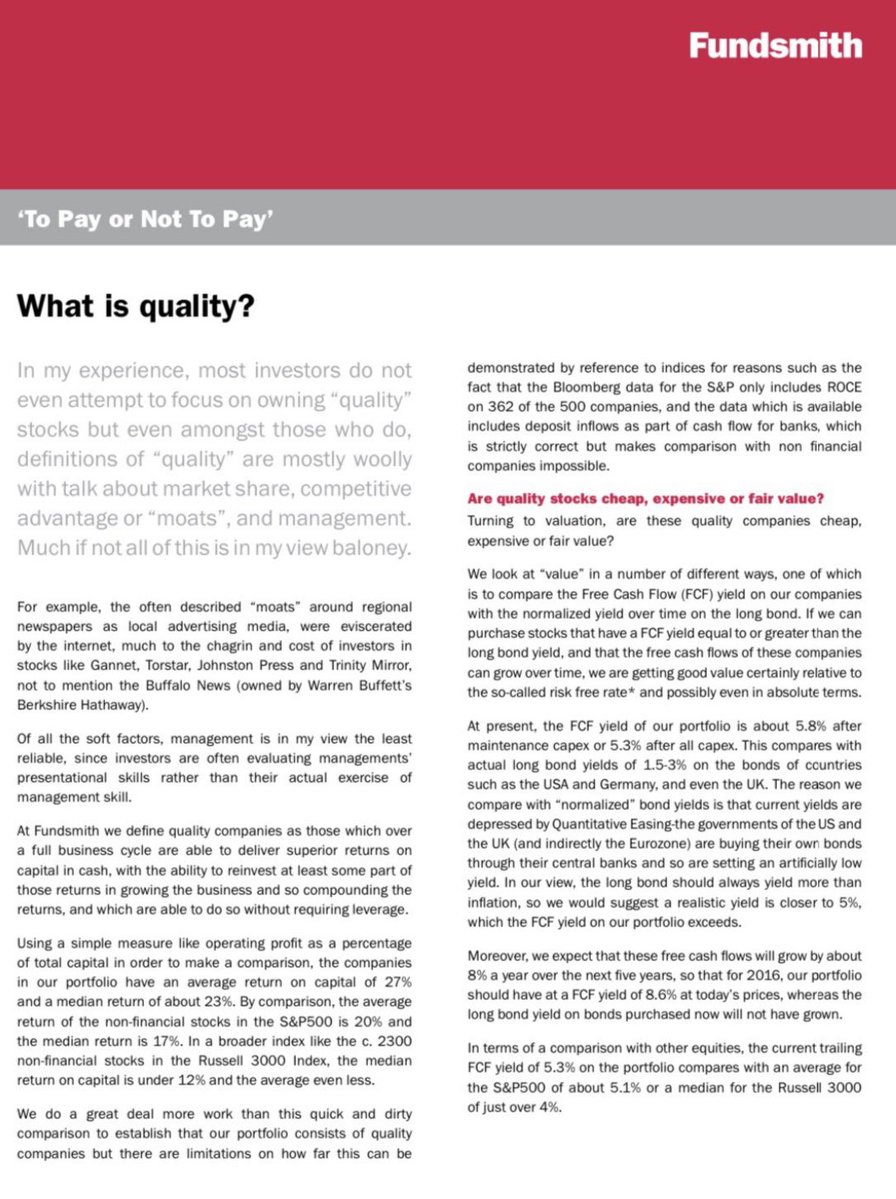
ANTHROPIC LEAKED A 6-AGENT SETUP THAT TURNS ONE PROMPT INTO A FINISHED PR
your name shows up in this process exactly once - at the very end, for 5 minutes.
spec → planner → 3 builders → critic → scribe → PR → back into the spec
the planner runs once and the whole line inherits its decisions - a bad plan executed by five perfect agents is still a bad result.
3 lanes build in parallel - and they only work because the planner cut the steps so none of them reads another's output.
tests loop until green and red goes back to the coder - the critic never sees a broken build.
the critic rejects to the plan, not the code - tests ask does it run, the critic asks should it exist.
the scribe writes the PR from the trace, not from memory - cut this seat and you get 8 PRs nobody can tell apart.
the back edge into the spec is the whole trick - today's failures become tomorrow's constraints without you typing them.
one human step in the whole thing: approve or send back - 5 minutes instead of 5 hours.
save this and read the full graph engineering course below ↓
CANCEL your weekend plans.
You NEED to:
• Build an eval harness that runs before every deploy
• Create golden datasets with 100+ test cases minimum
• Implement LLM-as-a-judge with calibrated scoring
• Add regression detection that blocks bad deploys
• Build accuracy metrics beyond simple exact match
• Track hallucination rate with factuality checks
• Measure grounding quality with citation validation
• Add safety evals for toxic/biased outputs
• Build cost-quality tradeoff curves for model selection
• Implement A/B testing framework for prompt variants
• Add human eval workflow for edge cases
• Track latency percentiles (p50, p95, p99)
• Build dashboards showing quality trends over time
• Add alerting when quality drops below threshold
• Create shadow deployment to test in production safely
• Implement canary releases with automatic rollback
• Build eval reports you can show to stakeholders
• Publish your eval methodology publicly
You have way too much to do.
Bookmark & Repost.
AI tip to cut your token costs by literally 80%:
(works in Claude, Codex - literally any harness/model)
Barbell strategy + subagents.
Here's the idea:
Most people run every part of a task through the same model.
Let's say they use Fable 5 for planning, execution, and review. This is probably the most wasteful way to use these frontier models right now.
I've been using a barbell approach that splits the work by intelligence needs.
Heavy on both ends, light in the middle
→ Planning (10%): use your smartest, most expensive model to architect the task, define the spec, and set the success criteria. This is where intelligence actually matters - use top-tier models like Fable here.
→ Execution (80%): Tell your frontier model to spin up cheaper subagents to do the actual grunt work, writing, coding, research, based on the plan already laid out.
→ Verification (10%): bring the expensive model back in at the end to check the output against the original plan to catch errors, and confirm it's actually done right.
I've shared this tip before but wanted to rehash it as it works exceptionally well with Sol + Luna Max.
Marc Andreessen: “I’m always urging founders to raise prices, raise prices, raise prices.”
“We spend a lot of time working with our companies on pricing,” a16z co-founder Marc Andreessen explains. “It’s really this magical art and science that a lot of companies don’t take seriously enough.”
Marc continues:
“A core principle of pricing is that you don’t want to price by cost if you can avoid it. You want to price by value. Especially when you’re selling to businesses, you want to price as a percentage of the business value you’re creating.”
He gives the example of building an AI that can do the job of a programmer, a lawyer, or a radiologist:
“Can you price by value and get a percentage of what otherwise would’ve literally been a person? Or equivalently can you price by marginal productivity? If you can take a human doctor and make them much more productive because you give them AI, can you price as a percentage of the productivity uplift?”
Marc argues that high prices are under-appreciated by founders:
“The naive view on pricing is the lower the pricing, the better it is for the customer. The more sophisticated way of looking at it is that higher prices are often good for the customer because the higher price means the vendor can make the product better, faster. Companies with higher prices and higher margins can actually invest more in R&D and make the product better. Most people who buy things aren’t just looking for the cheapest price. They want something that’s going to work really well.”
Marc also emphasizes this point in an interview in Elad Gil’s High Growth Handbook:
“What I hear from companies is, ‘Oh, we have an awesome moat, and we’re still going to price our product cheap, because we think that’s somehow going to maximize our business.’ I’m always urging founders to raise prices, raise prices, raise prices. I’m always urging founders to raise prices, raise prices, raise prices.
First of all, raising prices is a great way to flesh out whether you actually do have a moat. If you do have a moat, the customers will still buy, because they have to. The definition of a moat is the ability to charge more. And so number one, it’s just a good way to flesh out that topic and really expose it to sunlight.
And then number two, companies that charge more can better fund both their distribution efforts and their ongoing R&D efforts. Charging more is a key lever to be able to grow. And the companies that charge more therefore tend to grow faster.
That’s counterintuitive to a lot of engineers. A lot of engineers think there’s a one-dimensional relationship between price and value. They have this mental model of commerce like they’re selling rice or something. It’s like, “My product is magical and nobody can replicate it, and I need to price it like it’s a commodity.” No, you don’t. In fact, quite the opposite. If you price it high, then you can fund a much more expensive sales and marketing effort, which means you’re much more likely to win the market, which means you’re much more likely to be able afford to do all the R&D and acquisitions you’re going to want to do. And so we always try to snap people into a two-dimensional mindset, where higher prices equals faster growth.”
Source: @a16z (Jan 2026)
i turned Claude into an entire company
42 skills structured like a real org chart - every department has an actual function
developers:
- Superpowers
- Context7
- Skill Creator
- MCP Builder
- Webapp Testing
- Claude-Mem
designers:
- UI UX Pro Max
- Taste
- Frontend Design
-Transitions
- Web Artifacts
- Brand Guidelines
marketing - 45 skills for copywriting, SEO, lead magnets, campaigns
social media - 17 skills for posts, reels, thumbnails, content workflows
finance - 8 skills for financial statements, reconciliation, audits
small business - 31 skills for cash flow, payroll, invoicing, operations
legal - 9 skills for contracts, NDAs, compliance
this isn't prompts. isn't wrappers.
it's a full operating system for Claude - every department does what a real hire would do
if you know of other skill repos worth adding, drop them and i'll build a v2 list
Ken Griffin: “You have no idea how many hours a day I spent on the phone — like a sponge —learning about finance from those with 15, 20, 25, 30 years of experience.”
https://t.co/gosrQSmngx
Anthropic engineer:
“90% of our engineers were using self‑improving loops. Now everyone shifted to building agentic Graphs"
"No more prompting”
In 10 minutes she shows her full Claude Code setup and workflow live, from a blank terminal.
Worth more than a $500 agentic course.
Watch this video, then save the article below on how to become a graph architect👇
Ackman on the best business models: "The best business I believe is one that doesn't have to put up invested capital but earns a perpetuity growth annuity."
This video will make you an expert loop engineer in 21 minutes.
Prompting is dead. You need to be running loops.
0:51 Understanding LLMs
3:41 wtf is a loop?
6:17 Two kinds of loops
8:54 /goal versus /loop
10:44 Website audit demo
13:27 Real loop workflow ideas
19:11 Scheduling loops
You'd think a firm with 30-year funds and "permanent" in its name would be the patient, sit-back-and-wait type.
Not quite. Waiting, on its own, is just decay.
When we say patience, we mean something active (i.e., the stillness is still work). The upshot is that the way you earn a good long term is to be relentless about the few right things in front of you, every single day.
Or, as we say it, the long term is a series of short terms.
Think in decades. Be rigorous about today.
This 45 minute Stanford lecture will teach you more about building companies than every startup book combined.
Bookmark & give it 45 minutes today, no matter what.