You must realize that if you are in search of finding that new realm, you must be willing to extend yourself to the limit without any guarantee of success.
Be willing to be the one who is willing to sharpen your sword alone.
Stay hard!
After the dust settles from a major event, whether inflation was just caused by temporary supply shocks or by monetary debasement is answered by one key test:
Did aggregate prices go back to their previous level, or no?
🧵
The 2s/10s yield curve has now inverted to over -80 bps. Last time here? Try April 1981. And the double-dip recession was three months away. Different this time? Bloomberg recession model now at 100% for 2023, so I somehow doubt it.
#RosenbergResearch
100%. No "victims" here.
If only more of The People had read Economics In One Lesson by The Henry Hazlitt...
Prior to The Mother of All Bubbles collapsing
1/4
Between 2009 and 2022, central banks QE'd markets higher.
Central Banks so distorted markets that there were $17T negative by 2019.
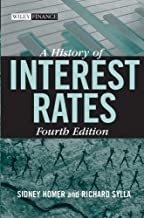
A consequence of this was 2010 to 2020 was the best TOTAL RETURN decade in 5,000 years, per this book.
https://t.co/KNP4IoDuu6
Seven charts to explain, why the U.S. is heading into a #recession (which is unlikely to be "mild"). 🧵
Let's start with the most problematic one: the yield curves. Many read these like the Bible, and they rarely have gotten it wrong. However, this time there's a problem.
1/14
MARKET EXTREMES. So, if central banks continue to hike they will create a scenario to cause a severe recession. Yet, if central banks stop hiking then it means they have already created the scenario for a severe recession. Don't fear recessions. Fear crises.
@IceCapGlobal I refinanced my mortgage early this year to variable from a 5yr 3.19% fixed rate. I understood the risks but Steve' thesis was compelling. The diff. is approx. $257/mo. So now I'm a bit more cognizant how often I eat out or travel into the city.
When will recession hit? Anywhere from Q2-Q3 looks a safe bet.
When the 10yr-3m yield curve inverts for more than 10 consecutive days, we usually see recession around 10 months later (per below via @biancoresearch).
4/n