Small change. Every destructive action taken within the Activity Editor now surfaces a toast notification with an Undo button, so you can reverse it instantly.
#AidTransparency#IATI
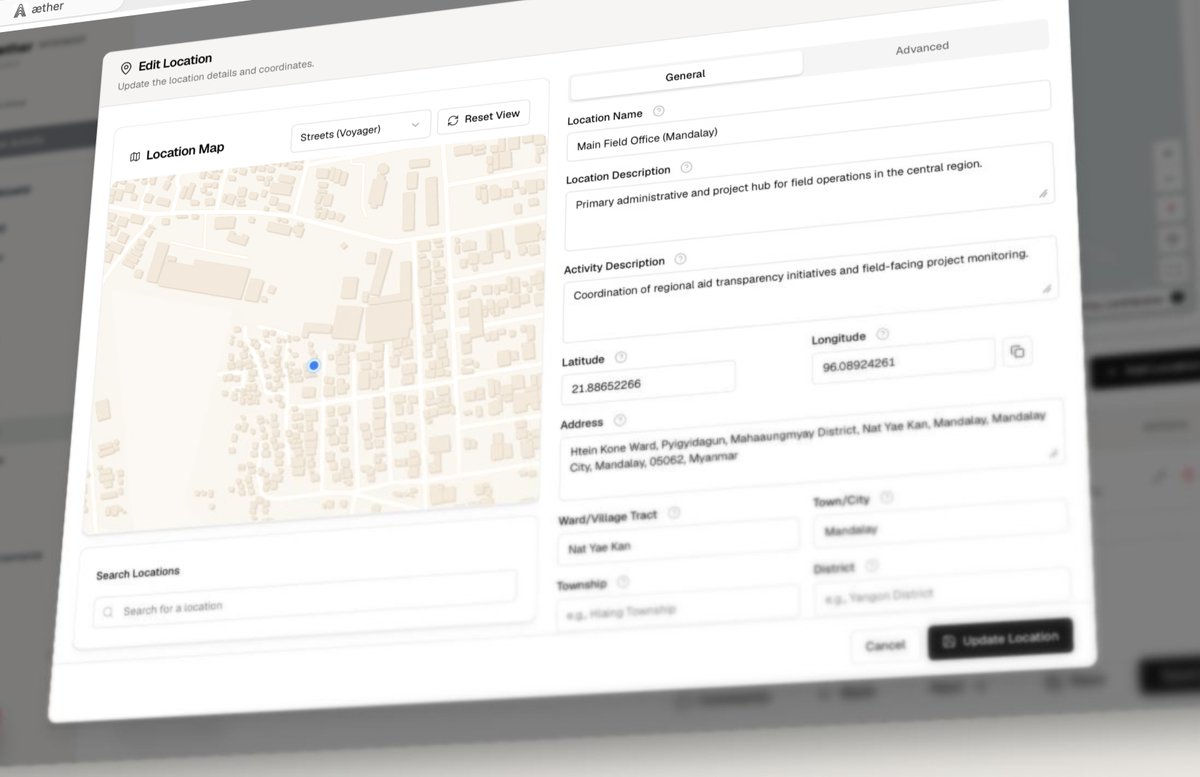
Small updates to Activity Locations:
-Required fields now marked with clear red dots
-Location descriptions display where you'd expect them, in both list and card views
- Long location names wrap instead of being cut off
- Cleaner modal headers and a subtler "Show more" style.
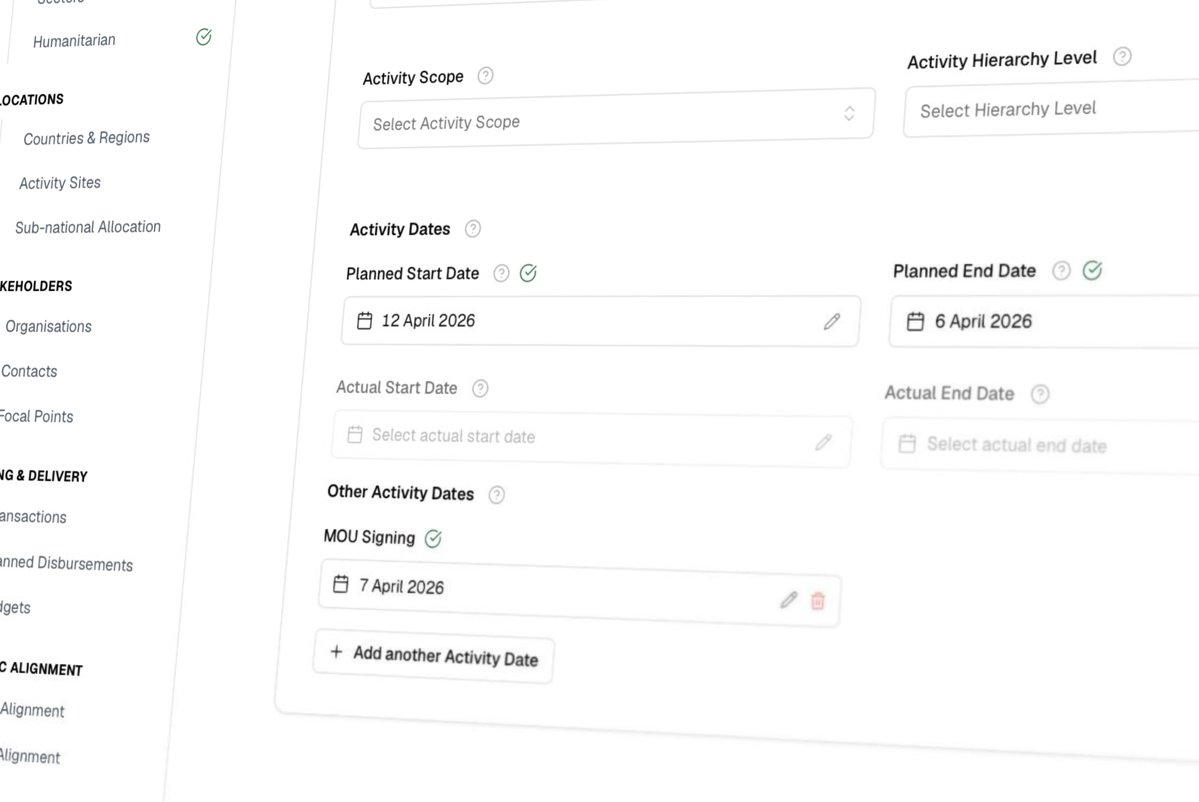
Activity Dates now all look consistent. Every date field shows a little calendar icon, so you can spot them at a glance. No more hunting for which field is a date. Tiny change, smoother flow.
#IATI#aidtransparency@IATI_aid
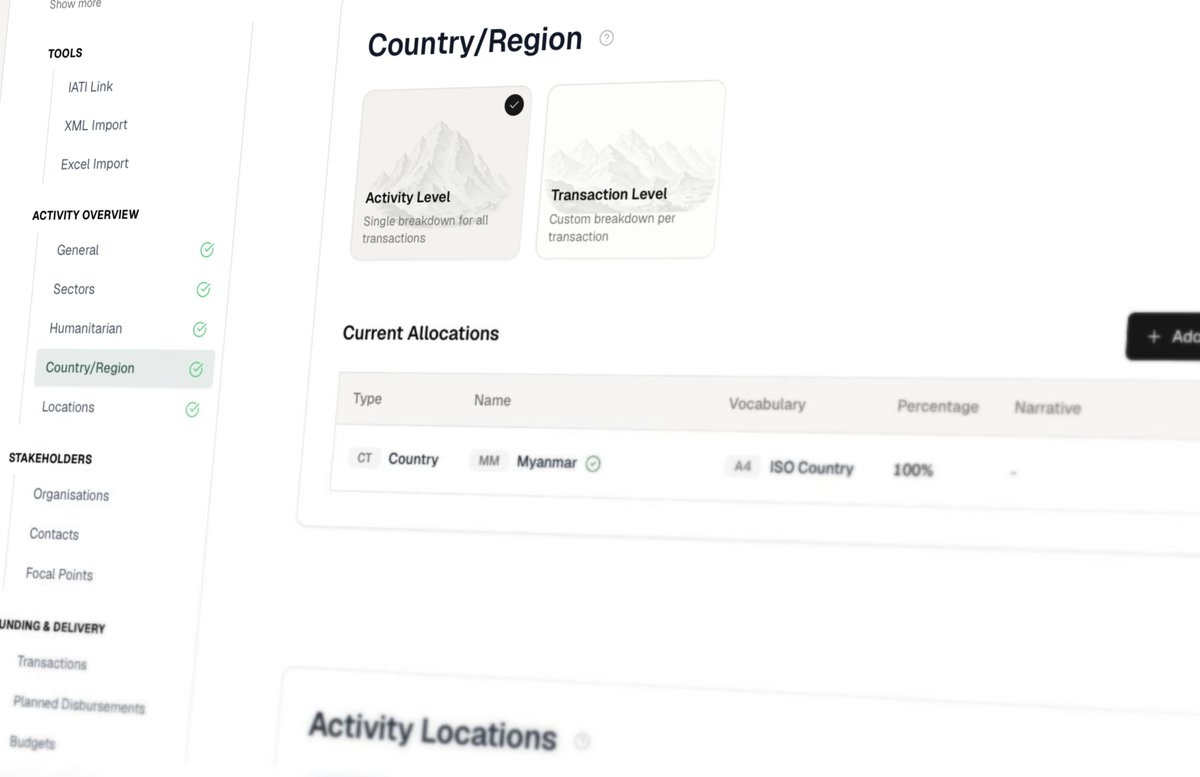
Added little (?) help icons throughout the Countries & Regions form. Hover any field and you'll get a plain-English explanation of what it means and why it matters. No need to guess what Vocabulary or Narrative means. Small change, big win for anyone new to IATI reporting.
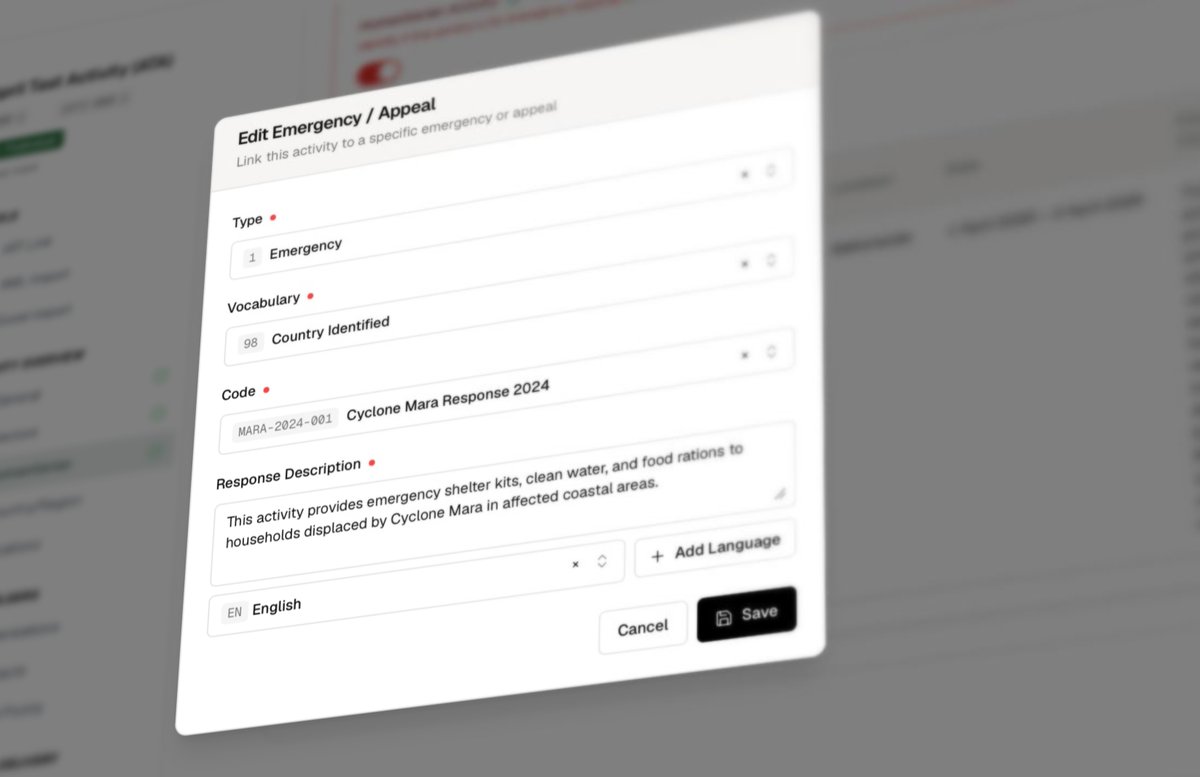
Shipped 4 small fixes to the Humanitarian tab. Now a tooltip shows the response narrative. I renamed "Response Description" → "Response Activity Description", and added (?) help icons on all modal fields, and fixed Next-button misrouting so it lands on Countries & Regions.
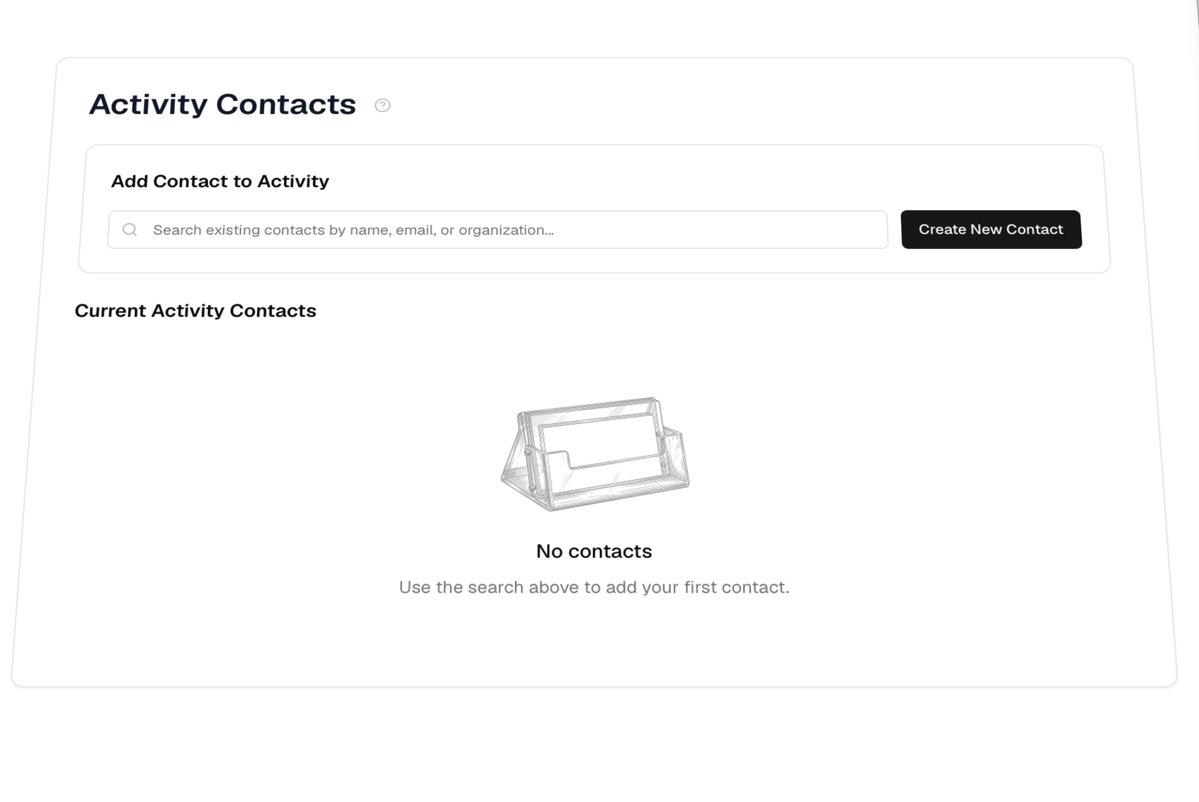
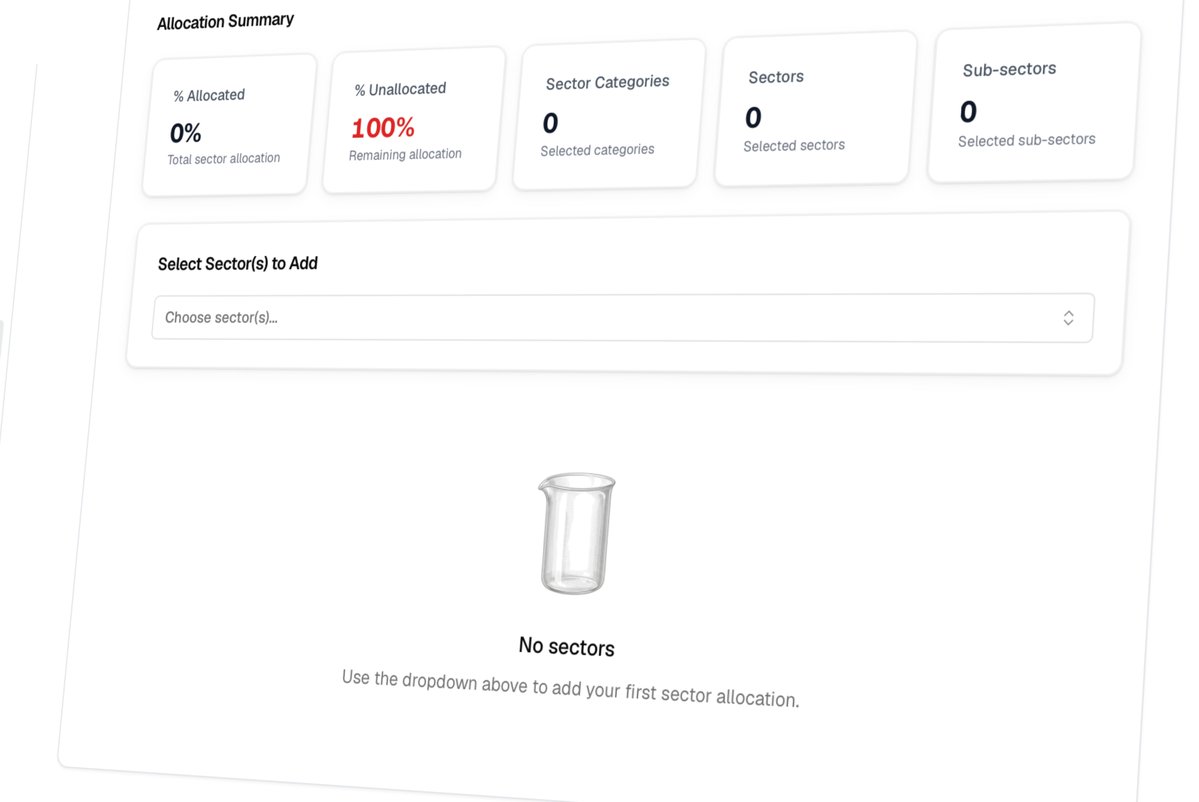
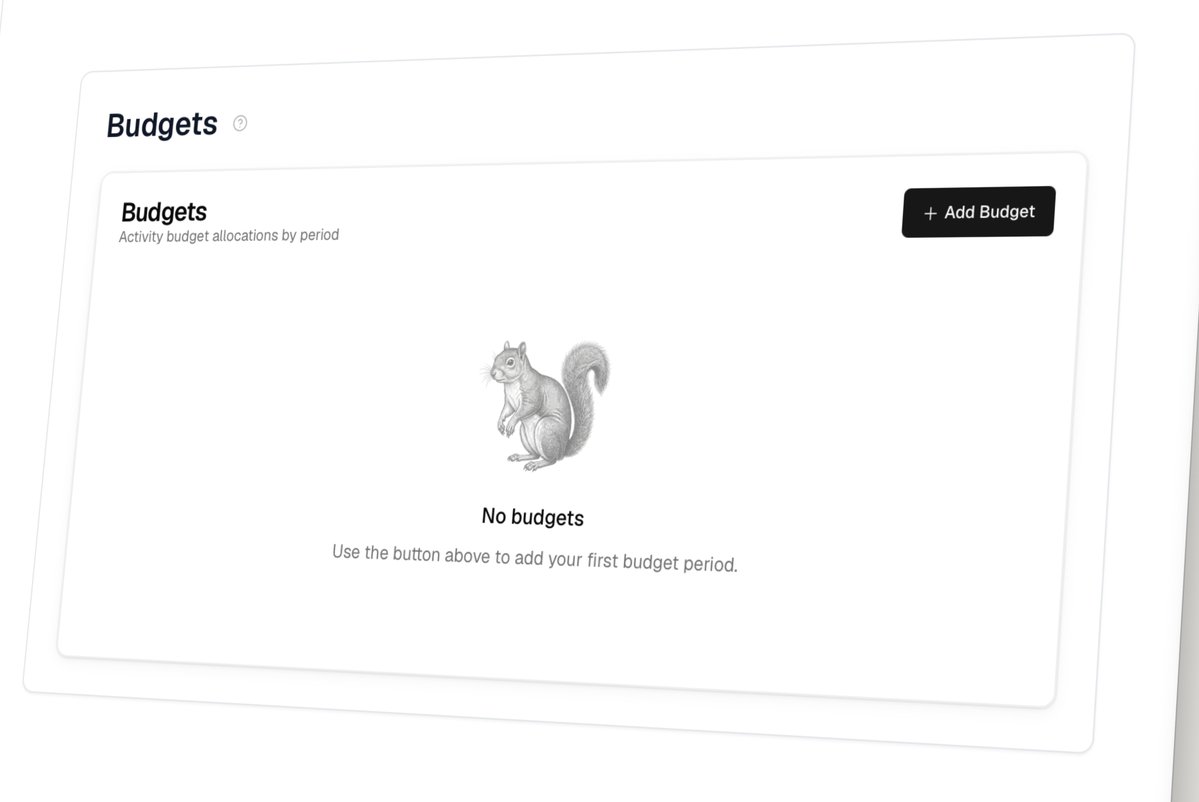
Been adding beautiful empty state illustrations throughout Aether. Some two dozen so far. Each one intended as a visual metaphor for what belongs there. A beaker for sector allocations, a shipping pallet for humanitarian emergencies, a squirrel for budgets etc...
Aid transparency needs a clear link between a project and its physical location. #Aether captures granular location data needed to move from high-level summaries to a more detailed understanding of where activities are being implemented on the ground. #aidtransparency#IATI
And this is what linking to a specific emergency looks like in Aether. Type, vocabulary, code, and a description of how the activity responds. All of it maps directly to the IATI humanitarian elements.
HT to @ultramock for the screenshots!
Aether handles humanitarian classification cleanly, within the main data entry form. Users describe the emergency response and link to the specific emergency. No need to know the #IATI structure. The right data ends up in the right place.
#IATI@aidtransparency@IATI_aid
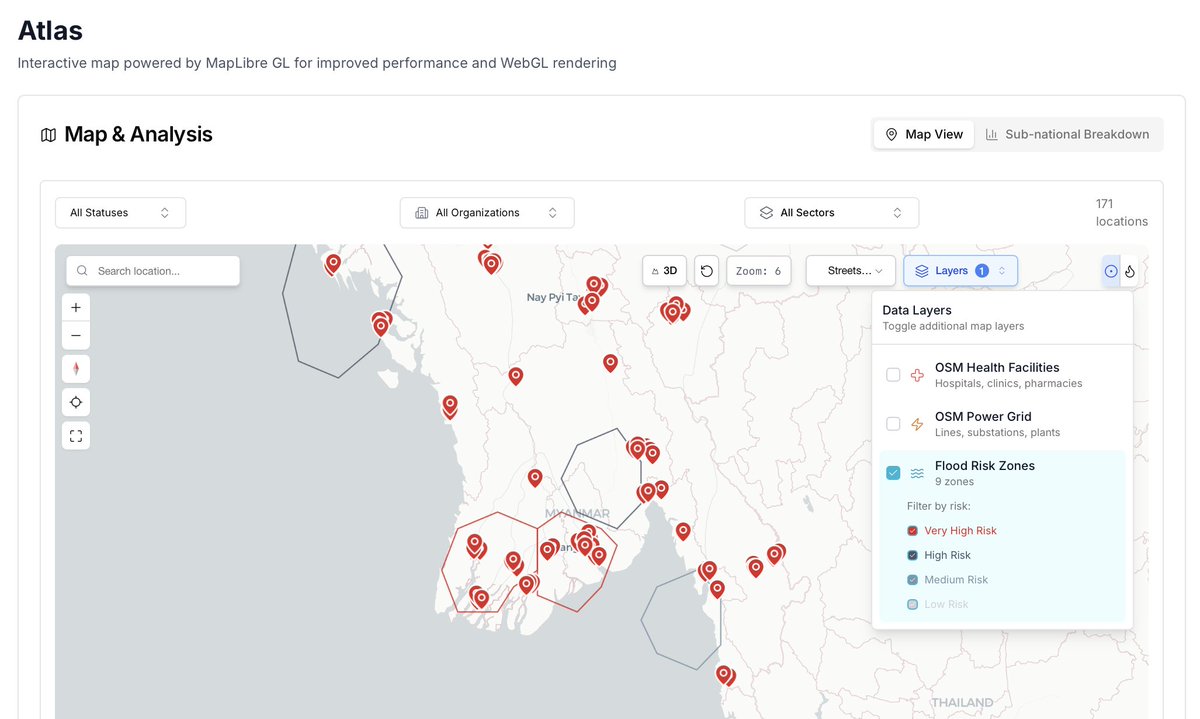
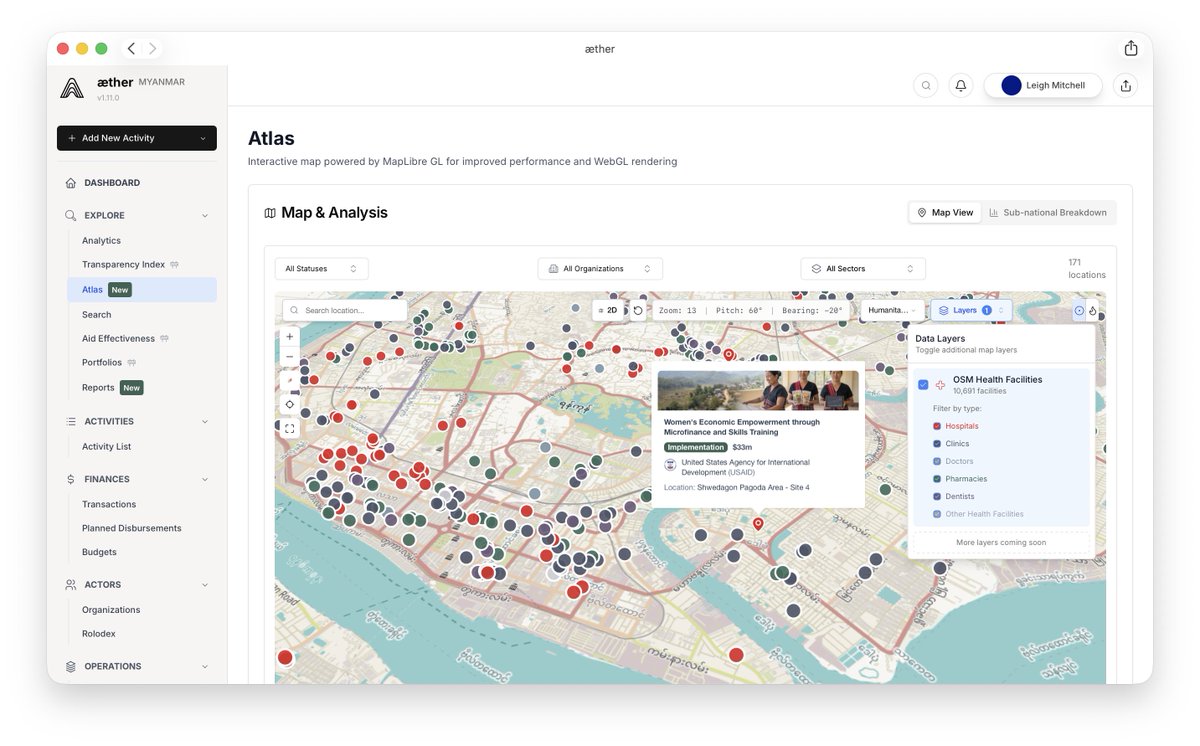
Exploring new mapping capabilities in @AetherDFMIS: integrating @hotosm Humanitarian OpenStreetMap tiles with @sharehealthdata health facility data, overlaid with @IATI_aid compliant activity locations.
Currently using dummy data, but in theory, a user should be able to import real activity locations from the #IATI Datastore and overlay with health infrastructure to visualize exactly where development activities sit in relation to health services.
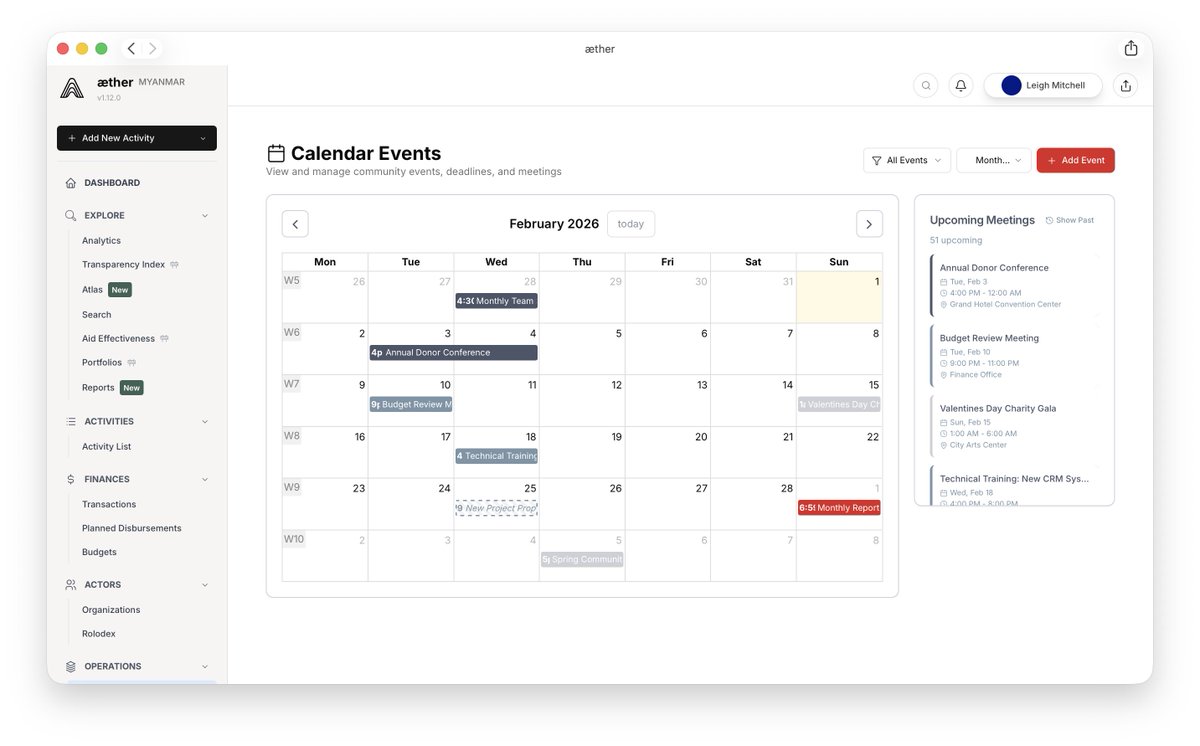
Calendar Events coming to Aether.
We're building a feature to help teams coordinate activities.
Add events, invite collaborators, upload agendas and minutes etc.
Still in development, but excited to see this taking shape.
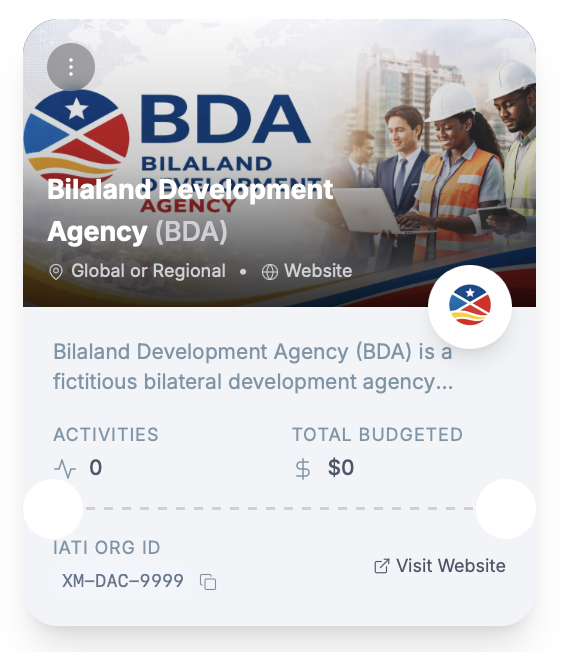
Rolled out a refreshed organisation card design within Aether. Clearer hierarchy, stronger visual identity, and key facts surfaced at a glance. The same card pattern now applies to activities as well, keeping the interface consistent wherever users browse.
#IATI#aidtransparency
Added a dual comments pattern to Aether to separate internal team discussions from public conversation. Same activity, different contexts. Defaults like nested replies, readable time stamps and simple sorting help discussions feel natural without getting in the way of the work.
Minimal when you don't need it. Powerful when you do. Aether's new expanding search starts as a simple icon, then smoothly animates to a full search bar with suggestions, filters, and results. Clean navbar → full functionality in one click.
Introducing an improved “Quick Add Activity” wizard. It guides users through a short, step-by-step flow to create new activities with only the essentials upfront, making it faster to get activities into the Aether system.
#AidTransparency#IATI@IATI_aid