The meeting between the Chinese and Iranian foreign ministers matters less for what Wang Yi says publicly than for what Beijing may be prepared to do privatel, especially with Xi Jinping preparing to meet President Trump next week.
China’s public message iregarding thw events in the ME is familiar: de-escalation, dialogue, regional stability, and the restoration of safe navigation through the Strait of Hormuz. Beijing has been making essentially the same arguments for months.
So the real question is not what China wants. That is relatively clear. The real question is whether Beijing is now willing to use its leverage over Tehran to get it.
So far, there has been little public evidence that China is prepared to translate its diplomatic language into meaningful economic pressure on Iran. Yet Beijing arguably possesses more leverage over Tehran than any other major power. China is a critical economic partner for Iran, while Tehran increasingly regards Beijing as an indispensable strategic partner in its confrontation with Washington.
That creates an interesting contradiction. China has powerful reasons to want stability in the Gulf and lower energy prices. It wants the Strait of Hormuz reopened and does not benefit from a prolonged crisis threatening global energy markets.
But Beijing also has little strategic interest in seriously weakening the Iranian government. Iran remains an important partner in China's broader competition with the United States, and Beijing has repeatedly emphasized its support for Iran's sovereignty, security and “national dignity.”
This is why today's meeting deserves attention. The key indicator will not be another Chinese statement calling for “dialogue” or “restraint.” It will be whether there are signs that Beijing's patience with Tehran is beginning to run out, and whether China is prepared to attach consequences to its demands regarding Hormuz.
There are also intriguing diplomatic signals worth watching. For example, president Pezeshkian was recently almost ignored while Xi was preparing for his visit to Egypt.
That makes the timing of Araghchi's visit particularly important. Perhaps nothing has changed. Beijing may continue trying to preserve its strategic relationship with Tehran while limiting the economic consequences of Iran's behavior, essentially diplomacy without coercion.
But there is another possibility worth watching: China's desire to stabilize energy markets, reopen Hormuz and manage its relationship with Washington may finally be creating limits to Beijing's tolerance of Tehran.
If so, the important development will not be found in Wang Yi's public remarks. It will be whether Xi Jinping arrives in Washington able to tell Trump that China is actually using its leverage over Iran, not merely calling for restraint.
#IranWar
#china
Trump’s missile defense will be met by Russia’s and China’s offensive response. Trump does not understand the “fallacy of the last move.” Moves engender countermoves. Only mutual agreement can stop the insane cycle.
A country being oriented pro or anti (American) imperialism doesn't have a moral value inherent to itself.
These are just stances different countries make at different points in time based on their ruling class's discernment of their interests.
To use a non-Iranian example, my moral view of the UAE or Saudi governments would not change if they magically decided to switch from a broadly pro-US alignment to a explicitly pro-Chinese one. It's quite possible that in the next few decades they'll make that jump. And it will probably make complete sense from their perspective.
But that won't change how I view their treatment of non-citizen workers or their stances on various proxy conflicts or their styles of development.
There may very well come a day that Israel decides it wants to be more aligned with Russia than it is with the US. That doesn't change how I view their treatment of the Palestinians.
In the aftermath of 1991, most countries on the planet chose to align with the US order. Those who didn't suffered immensely. But we don't live in that world anymore & increasingly people will choose other paths. This is a fact. This is not inherently good or bad - it simply is different.
For Iran itself or any other country, there may be periods of times in which it makes sense to be broadly pro-American & other times to be anti-American & other times to try to be neutral. That stance is not the center of my moral universe.
Now I will say that for an American, it makes sense to have a unique interest in the moral choices of the United States & be particularly outraged when it does things that are morally wrong (just like for an Iranian it makes sense to do so for the choices of Iran).
And for an Iranian, it entirely makes sense to wish for whoever Iran is aligned with at the moment to be successful. But this is a strategic preference, not a moral one.
My compass of right and wrong is independent of all of this. It is not aligned with a camp. The Americans can do wrong and so can their opponents (the same applies to Russia, China, and everyone else).
And my compass strongly believes , as Howard Zinn once wrote - There is no flag large enough to cover the shame of killing innocent people. Period. There are no exceptions.
If you want to come up with some convoluted relativistic sense of morality to get past this, by all means try. I find it to be insulting to the human soul. But you be you.
The difference between the analysis done by an Iranian and non-Iranian is more clear than the difference between night and day.
"Defeat from the jaws of victory".
Victory?
What a joke. What a bitter and delusional joke.
Everything since October 7th has been an utter humiliation and loss.
Victory would be deterrence keeping the enemy away from Iran's sacred soil, not them boldly pushing through every line of defense and then repeatedly attacking every inch of the country.
There was a time that Trump didn't dare even symbolically hit an anti air defense unit. Now he can hit Bandar Abbas and Kish and it's barely even news, not even considered major war. Sometimes we even get explosions and in our humiliation we don't know if that was a hit from the US, Israel, the UAE, or someone else ...
God knows how many hundred billion dollars of Iran's hard earned money (and trillions in opportunity cost from sanctions they brought) were spent on the enrichment facilities that now lie in ruins. That is victory?
How many dozen of Iran's top tier generals and policy makers are dead? I wasn't a particular fan of many of them, but that's victory? Pakpour dead, Bagheri dead, Mousavi dead, Larijani dead, Shamkhani dead, Nasrullah dead, Tangsiri dead, Kharrazi dead ... This is victory to you. Maghze khar khordi? We already had ghaht o rejal before this, woe on the situation now ...
Is Foolad Mobarake in ruins a victory? Is the state of the electricity grid a victory? Is the destruction of airports and a great deal of our already struggle airplane fleet a victory? Are you sick in the head?
Let's be very very clear.
This is all a bitter defeat. Victory would be not needing to resort to extreme measures after the unthinkable already happened. It would be deterrence. It would be Iranians having an increasing quality of life and purchasing power.
Having the war come to Iran's soil is nothing but failure.
No Iran did not flop over and just collapse. It pushed back. Trump's delusions didn't come to fruition.
But avoiding Qajar level collapse is not victory. Surviving while in agony is not victory.
Getting sanctions removal, having the economy improve, preventing a future attack ... and having the country get in a better state than it was before this attack, that would be the bare minimum to even start thinking about the notion of victory.
Under a new law passed by the Iranian parliament, “the transfer of money abroad, the provision of goods, services, or financial facilities, and any other form of economic, commercial, or financial interaction must be registered in the designated system and receive authorization.”
Interestingly, hardliners in #Iran’s parliament are effectively complementing the Trump administration’s efforts to maximize economic pressure on Iran and isolate the country from the global economy.
#Iran’s Growing Debate Over How to End the War
🔹The differences within Iran’s leadership over how to proceed with the war are becoming increasingly visible.
🔹Today, both President Masoud Pezeshkian and Parliament Speaker Mohammad Bagher Ghalibaf made unusually direct comments about the need to end the war and the economic costs of continuing it.
🔹Ghalibaf said that regardless of how much military power Iran possesses, “if people are hungry” and there is no economic growth, the country cannot endure. Security, he argued, cannot be sustained without a functioning economy. He then added that, as someone with a military background, “we know the value of peace better than those who talk about peace.”
🔹That last point is important. Ghalibaf has increasingly positioned himself alongside Pezeshkian in arguing for a diplomatic way out, while pushing back against hardliners who portray such an approach as capitulation.
🔹Pezeshkian was even more direct: “The war must end at some point.” His argument was that Iran should end it now, while Tehran still believes it is negotiating from a position of strength, rather than wait until its economic situation deteriorates further. He also lashed out at critics of his administration, saying those sitting “outside the ring” have little understanding of the pressures the government is actually facing.
🔹These comments come amid increasingly open acknowledgments of Iran’s economic problems. Central Bank Governor Abdolnaser Hemmati recently admitted on state television that Iran cannot sell its oil because of the blockade. Trump’s new economic pressure campaign is making the situation even more difficult.
🔹There is also a growing concern about Hormuz. Before the latest two weeks of fighting, Ghalibaf had already warned that the Strait has strategic value only as long as ships continue to use it. If traffic remains disrupted, other countries will inevitably search for alternatives.
🔹That appears to be happening. Reports that millions of barrels of oil are already being moved through alternative routes are now being cited by the more pragmatic camp as evidence that Iran cannot rely indefinitely on disruption in Hormuz as its main source of leverage. This is consistent with the broader problem I discussed earlier: Iran can impose substantial costs through Hormuz, but it cannot remain in a permanent state of confrontation with the U.S. and the GCC states.
🔹The problem is that the hardliners also have a point. According to them, even if Tehran is prepared to return to diplomacy, there is little indication that Trump wants to return to the previous terms. His new economic campaign suggests that Washington may instead use Iran’s growing difficulties to demand more.
🔹This is creating a vicious circle. The longer the confrontation continues, the stronger the economic case for diplomacy becomes. But the more Washington increases pressure, the harder it becomes for Iranian leaders to make concessions without appearing to capitulate.
🔹What is becoming clearer, however, is that an important part of Iran’s leadership now believes that the current situation is not sustainable and that the military leverage accumulated during the war needs to be translated into a diplomatic outcome sooner rather than later.
The Makkah Pact is being called an “Islamic NATO.” I think that misses the more consequential story. Türkiye, Saudi Arabia & Pakistan sit within different security ecosystems. Their cooperation is not necessarily about building another bloc but building bridges between existing architectures.
My latest for Pakistan Politico examines the rise of middle-power security, strategic portfolio diversification, and why the Pact’s real strength may lie not only in aggregated capability, but aggregated connectivity.
https://t.co/FEiBG3qBre
Iran's latest ballistic missile attacks and the continued rejection of compromise solutions on the Strait of Hormuz might seem like indications that "hardline" thinking is dominating Iran's national security strategy.
But my conversations with counterparts in Tehran suggest that something else is at play. Iranian decisionmaking is increasingly shaped by an intense pessimism about what diplomacy with the U.S. can achieve. Most senior figures, whether pragmatists or hardliners, simply do not believe a deal is possible. This pessimism has gotten worse since the MOU was signed.
Part of this is about the repeated experience of U.S. escalation during the course of negotiations, but the pessimism is no longer confined to the question of "does Trump want a deal?" Increasingly the belief is that "Trump can't do a deal, even if he thinks he wants one."
Policymakers in Tehran are looking at several things. At a technical level, the Trump administration was unable to execute even the most basic confidence building measures of the MOU. No assets were released and the oil waiver was never really operationalized. Iranian leaders are also looking to other contexts. Even in Venezuela, where the administration has complete political control and a full court press approach to economic reengagement, sanctions relief has floundered (eg. it took a whole month after the massive earthquake for FinCen to take proactive steps to try and provide banks comfort to support humanitarian transactions).
At a political level, the Iranians have seen the overblown reaction to the MOU from the full range of politicians in Washington. Democrats eager to score political points attacked provisions in the MOU that would be fundamental to *any* viable agreement with Iran. The Iranians are also watching the growing rift between the Rubio and Vance camps and are concluding that the administration is inherently dysfunctional. During the Biden years, the issue was whether the president could defend his deal from political rivals in Congress. Now, the rivals are within the cabinet itself.
At an individual level, there is also a growing sense that Trump is too erratic to stick by his own deals. Even Saudi Arabia, the country with perhaps the greatest influence in the White House after Israel, could not shield its own nuclear deal from Trump's excessive demands.
This may be an unprecedented situation. The U.S. has started a war it does not know how to end. Meanwhile, the arguments for diplomacy in Tehran have been reduced to "this has a low chance of succeeding, but we have to still try." That's not a strong, positive case for diplomatic engagement and understandably the strategic thinking is tending towards the idea that U.S. dysfunction will continue to manifest in the form of economic pressure and kinetic action against Iran for a long time to come.
به باور من، علاوه بر بازیابی قابل توجه توان نظامی، مهمترین دستاورد ایران در فاصله میان دو جنگ ۱۲ و ۴۰ روزه و وقفههای پس از جنگ ۴۰ روزه، یادگیری مداوم شیوه جنگیدن در برابر آمریکا و اسرائیل بوده است.
۱. در این بازه، ظرفیت موشکی کشور به شکل محسوسی افزایش یافت(بین ۳ تا ۵ برابر پیش از جنگ ۱۲ روزه) و همزمان کیفیت مو��کها نیز ارتقا پیدا کرد؛ از بهبود سرجنگی و مانورپذیری گرفته تا بهرهگیری از سامانههای هدایت و ناوبری پیشرفتهتر. جنگ ۱۲ روزه بزرگترین تلنگر نظامی به ایران بود تا براساس آن در فاصله ۸ ماه خود را ملزم به تحول بزرگی کند.
۲. حوزه اطلاعات و شناسایی نیز دستخوش تغییرات جدی شد. نقاط ضعف شناسایی و تا حد امکان برطرف شد و بانک اهداف در جنگ ۴۰ روزه و حتی در درگیریهای اخیر بهصورت مستمر و لحظهای بهروزرسانی شد؛ موضوعی که در هر نبردی نقش تعیینکنندهای دارد.
۳. شاید مهمتر از همه، این فواصل زمانی بین جنگ و درگیری فرصتی بود تا ایران تجربه رویارویی مستقیم با آمریکا و اسرائیل را به یک بازنگری اساسی در شیوه جنگیدن تبدیل کند. به اعتقاد من، این دوره یکی از مهمترین مقاطع تحول در دکترین امنیتی و نظامی ایران پس از پایان جنگ هشتساله محسوب میشود؛ بهویژه در حوزه عملیات آفندی که تغییر کلانی د�� آن ایجاد شد.
۴. یکی دیگر از تغییرات مهم، طراحی سازوکارهای جایگزین برای حفظ تداوم فرماندهی و مدیریت بحران بود؛ بهگونهای که در صورت وارد آمدن ضربات سنگین به فرماندهان یا مسئولان، ساختار تصمیمگیری و اجرای عملیات با کمترین اختلال ادامه پیدا کند و از شوک ساختاری جلوگیری شود. به همین جهت بود که بلافاصله پس از ترور رهبر شهید و اکثر فرماندهان نظامی، سیستم نظامی کشور با سرعت و وسعت وارد فاز تهاجمی و منطقهای کردن جنگ شد.
۵. پس از جنگ ۴۰ روزه نیز تجربههای بهدستآمده در حوزههای تهاجمی و پدافندی مبنای اصلاحات تازهای قرار گرفته است؛ اصلاحاتی که آثار واقعی آن در هر درگیری احتمالی و تعیین کننده بعدی آشکار خواهد شد.
در مجموع، وقفههای میان جنگها و حتی دورههای آتشبس و مذاکره، بیش از آنکه به سود آمریکا و اسرائیل باشد، فرصت راهبردی برای ایران فراهم کرده تا توان رزمی خود را بازسازی، نقاط ضعف را برطرف و قابلیتهای نظامی خود را ارتقا دهد.
فرصتهای بازیابی و تنفس برای بازیگری که برای حفظ بقا و موقعیت خود میجنگد، بسیار حیاتی، راهبردی و تعیینکنندهتر است.
Also a much needed disclaimer; The Pakistan Kuwait joint defence cooperation agreement as ratified by Kuwaiti Cabinet on 19th July and made public today and published in the Kuwaiti Gazette under Decree 73 of 2026 is more to do with Capacity building of Kuwaiti forces by Pakistani side.
It in NO way has any resemblance to the Saudi Pak Strategic Mutual Defence Agreement.
The Nomenclature of both the agreements make it quite clear on what these agreements mean, entail and cover.
This is still one of my favorite papers, since it takes a stand against the intellectual shortcuts that have become so popular lately. It has been far too easy for people on both the left and the right to claim that capitalism is over and that we have somehow slipped back into++
This is one of the most honest articles written about the situation in Balochistan.@KaleemImam , thank you for penning this down.
https://t.co/hz75IaF8oP
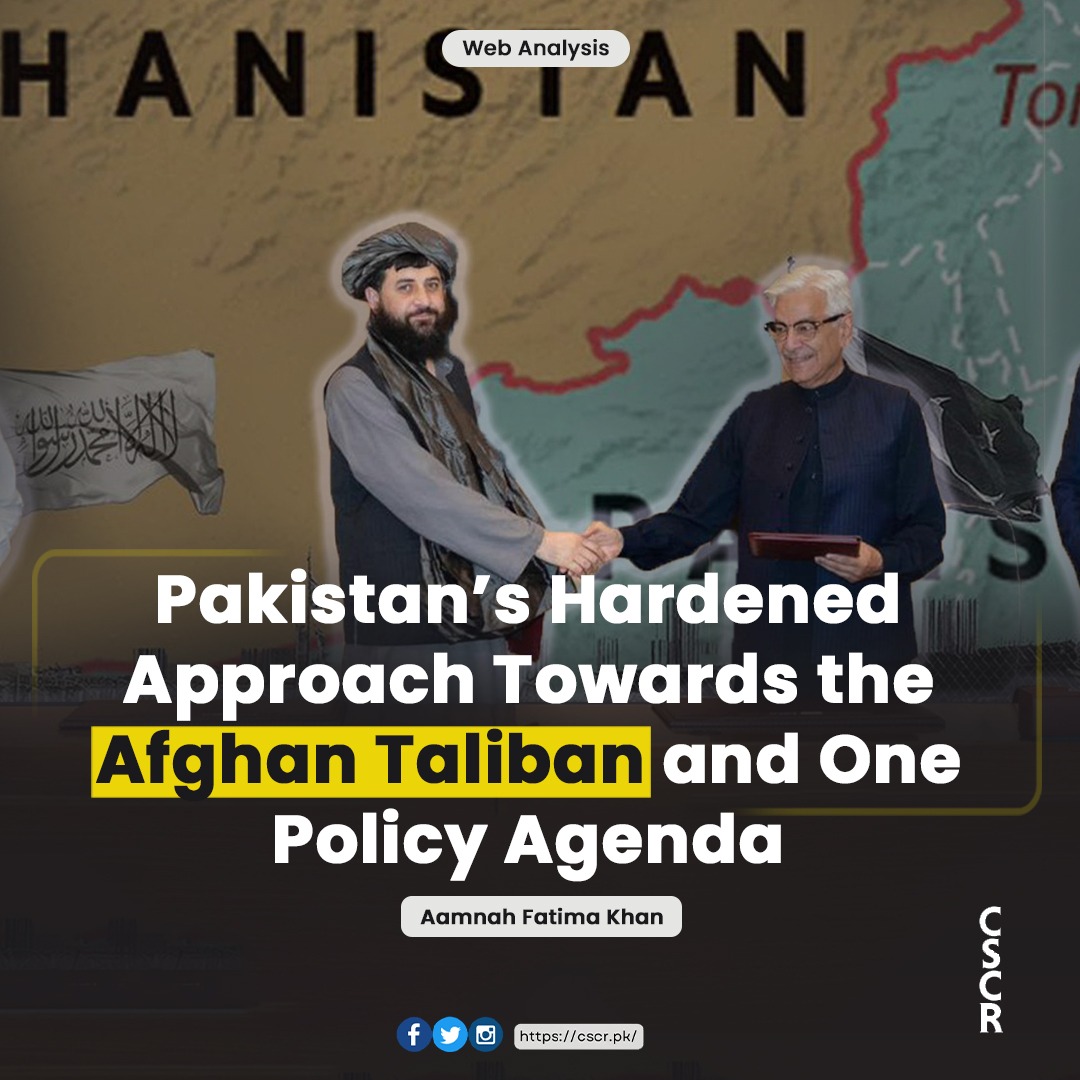
New | Pakistan has gradually shifted its approach from utilising its trade & diplomatic leverage to forceful military operations in Afghanistan. This shift stems from the perception that Afghan Taliban leverage TTP, writes Aamnah Fatima Khan. @AfKhan29
https://t.co/HdvqChStvO
Iranian Supreme Leader Mojtaba Khamenei praises Pakistan’s efforts in ending Iran–US war 🇮🇷🇵🇰
Iranian Foreign Ministry confirms:
"Supreme Leader Mojtaba Khamenei has conveyed special thanks to Pakistan for its role in making peace agreement possible."
Following intensive talks, we are pleased to announce that the Peace Deal between the United States of America and Islamic Republic of Iran has been REACHED. Both sides have declared the immediate and permanent termination of military operations on all fronts, including in Lebanon.
The official signing ceremony will be on Friday, 19 June in Switzerland.
We would like to thank the United States of America and the Islamic Republic of Iran for their commitment to finding a diplomatic solution to the conflict. We would also like to extend our sincere appreciation to our brothers in this mediation effort, the great leadership of State of Qatar, for their support in reaching this agreement. I would also especially thank the visionary leadership of Kingdom of Saudi Arabia and Republic of Türkiye for their immense contributions in this regard.
With the agreement now in place, mediators will facilitate a series of meetings this week. These pre-implementation discussions will lay the foundation for the technical talks and the official signing ceremony.
@realDonaldTrump@JDVance@SecRubio@SteveWitkoff@SEPeaceMissions@drpezeshkian@mb_ghalibaf@araghchi