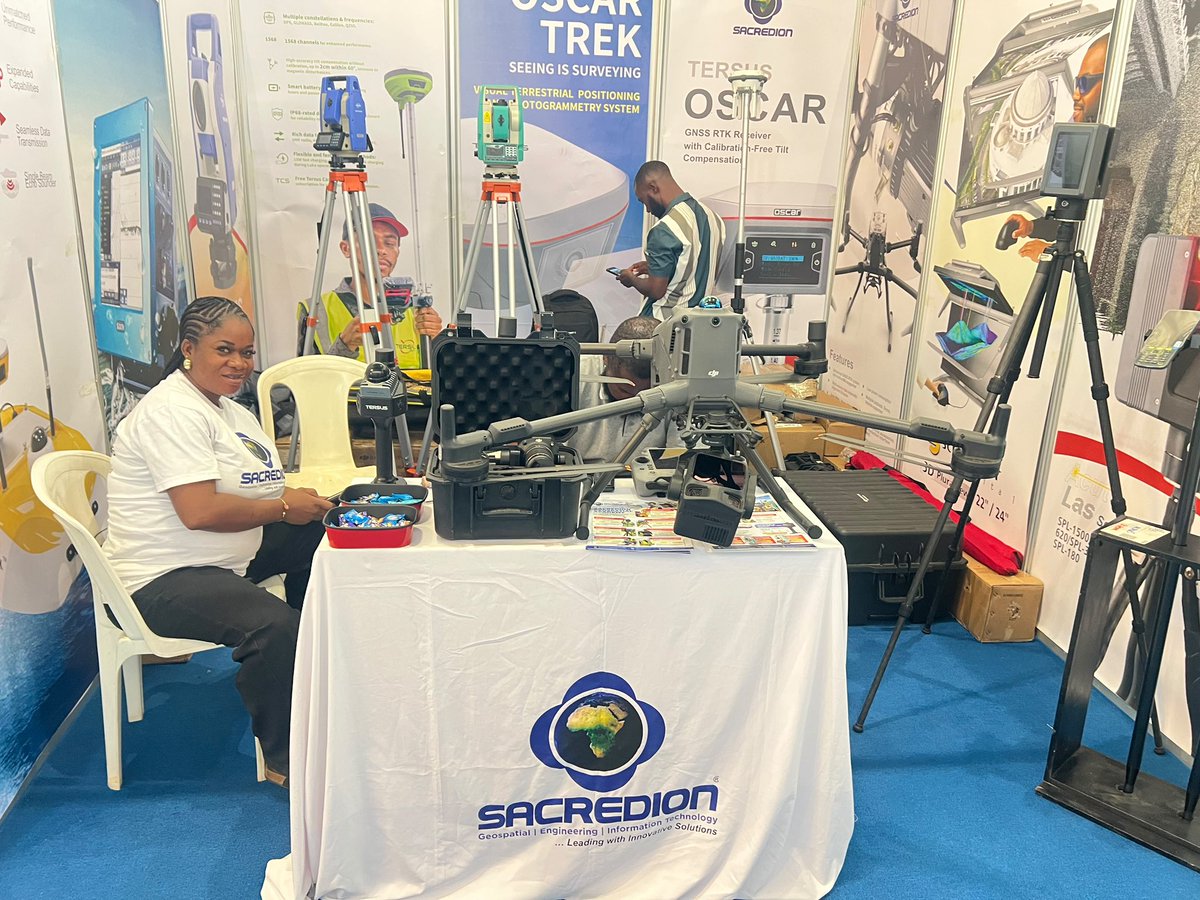
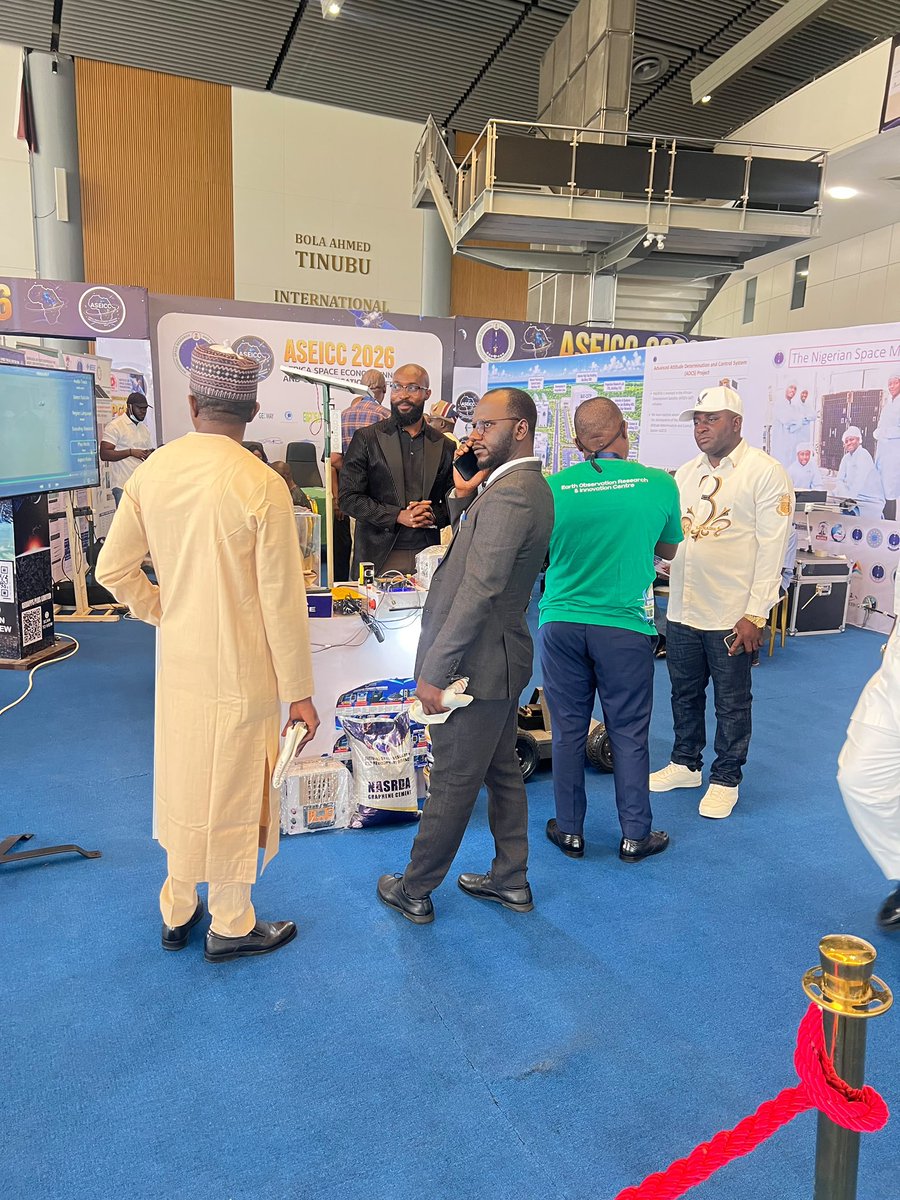
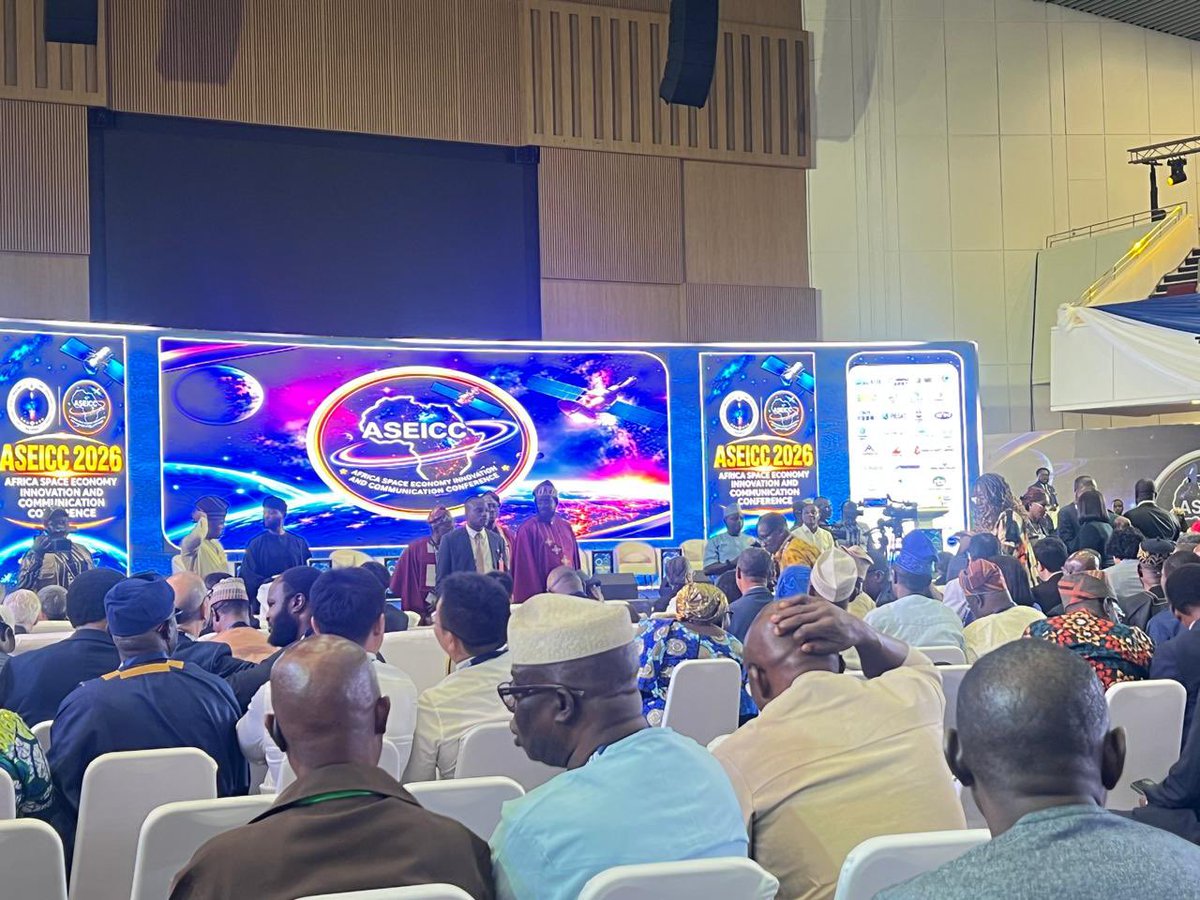
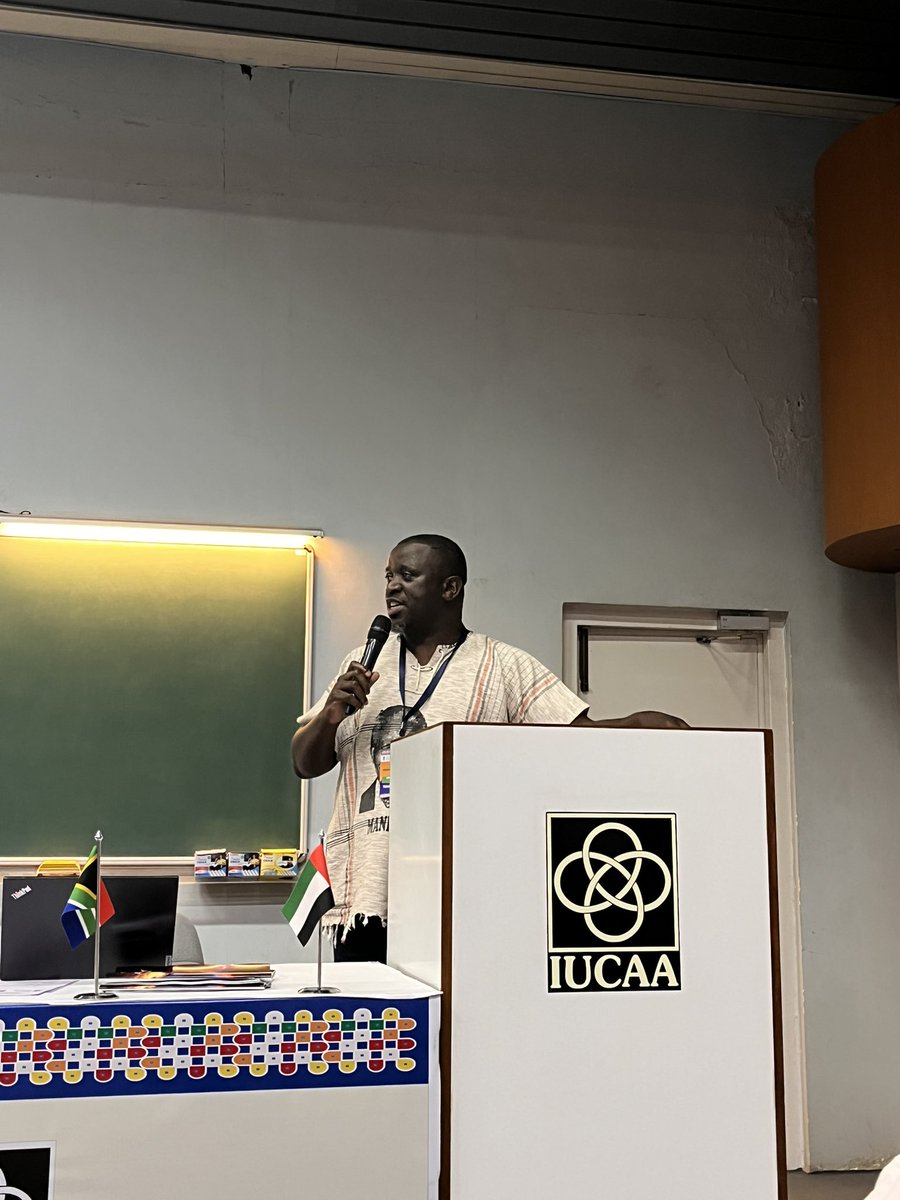
🚀 Day 2 of #ASEICC2026 is underway in Abuja, Nigeria!
African space agencies and industry leaders from across the continent and beyond are coming together to showcase innovation and shape the future of Africa’s space economy. 🌍✨
#AfricaSpace#AfricanScienceStars
🚀 Day 1 at ASEICC 2026 in Nigeria!
Connecting, sharing ideas and celebrating African science. 🌍
Attending? Visit the SANSA South African Pavilion stand to get your copy of African Science Stars magazine!
A pleasure to be part of the 14th Ifrane Astronomy Festival! Grateful for the collaboration, inspiring connections, and opportunity to celebrate astronomy, science, and heritage. Special thanks to Dr Hassane Darhmaoui! ✨🔭
#Astronomy#Science#IfraneAstronomyFestival
☀️ Did you spot the solar halo in South Africa today?
This beautiful ring around the Sun forms when sunlight bends through tiny ice crystals in high-altitude clouds, creating a stunning atmospheric phenomenon. 🌈
#africansciencestars#solarhalo
🌌 South Africa’s MeerKAT telescope revealed hundreds of mysterious radio filaments at the heart of the Milky Way, showing us just how much remains hidden in our Galaxy!
📡 #AfricanScienceStars#MeerKAT#RadioAstronomy#Astrophysics
Stars form inside clouds of gas called nebulae. As gravity pulls it together, the core becomes hotter and denser until nuclear fusion begins. Small stars can eventually become white dwarfs, big stars may explode as supernovae, leaving behind neutron stars or black holes! 💥
Our Solar System is full of fascinating planetary facts! 🌌 Each of our eight planets has unique characteristics that make our Solar System an incredible place to explore.
How many of these facts did you know? 🔭
#AfricanScienceStars#SolarSystem#PlanetFacts#Astronomy#Space
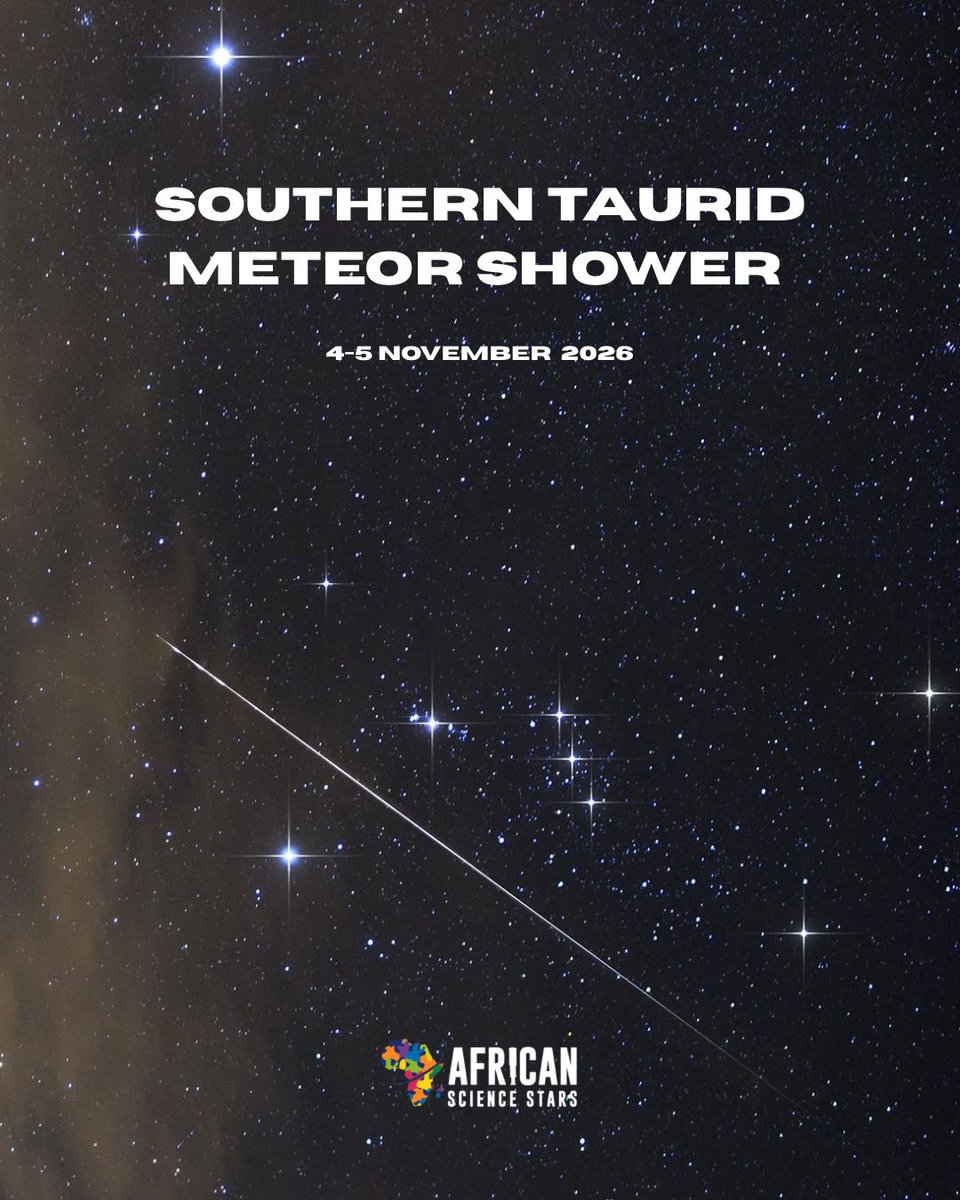
Look up! The Southern Taurid Meteor Shower is expected to peak on 4-5 November! ☄️
Known for producing bright meteors and occasional fireballs, the Southern Taurids offer skywatchers an opportunity to catch some spectacular sights.
#AfricanScienceStars#Astronomy#MeteorShower
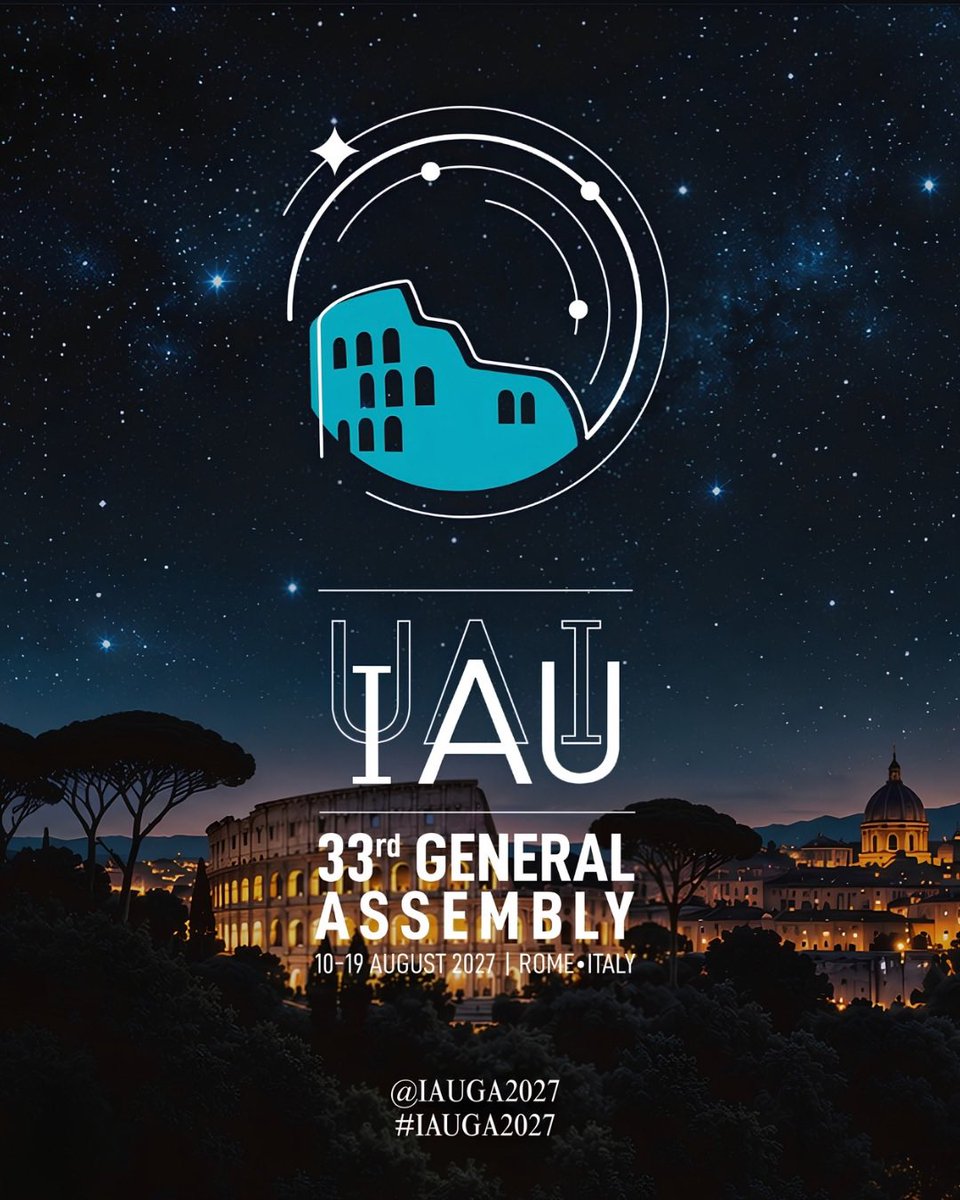
Save the date: 10–19 August 2027 ✨
The 33rd IAU General Assembly will take place in Rome, at the Auditorium Parco della Musica Ennio Morricone, bringing together researchers and astronomy professionals for eight days of scientific exchange.
#TheWorldMeetsUnderOneSky#IAUGA2027
☄️ The Orionid meteor shower is lighting up October’s night skies! Peaking around 21–22 October, the Orionids are created by tiny pieces of debris left behind by Halley’s Comet as Earth passes through its trail.
#AfricanScienceStars#Orionids#MeteorShower#Astronomy
Jedi vibes on the left, Sith energy on the right ⚔️
@NASAWebb captured the duality seen in nebula NGC 7129. Separating the left & right gas cavities lies a star 5-8x the mass of our Sun. When it was younger it ejected hot outflows that carved the molecular cloud on the left.
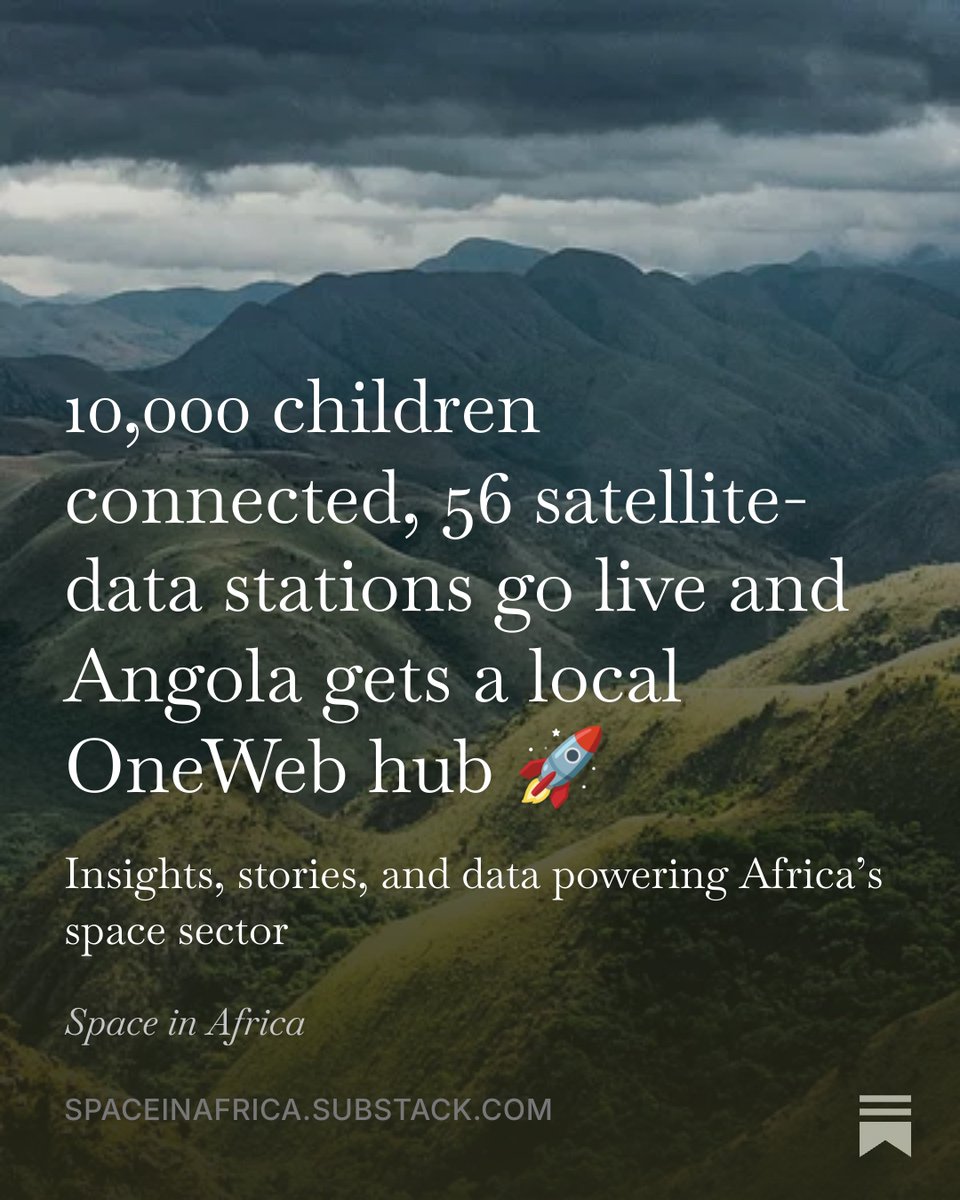
@eumetsat has completed its 56-station satellite data reception network across Africa, Q-KON and SISTEC Launch Sovereign Satellite Point of Presence in Angola. More than 10,000 children in Zambia now have reliable internet access.
https://t.co/Pw2SoXA29d
Look Up! Join ESSS & @ssgi2022 for our first public stargazing event of the year.
Oct 24 | 6 PM EAT
Entoto Observatory and Research Center
Dress warmly. Arrange your own transport.
Register: https://t.co/0jQX9jhlQJ
#Stargazing#Ethiopia
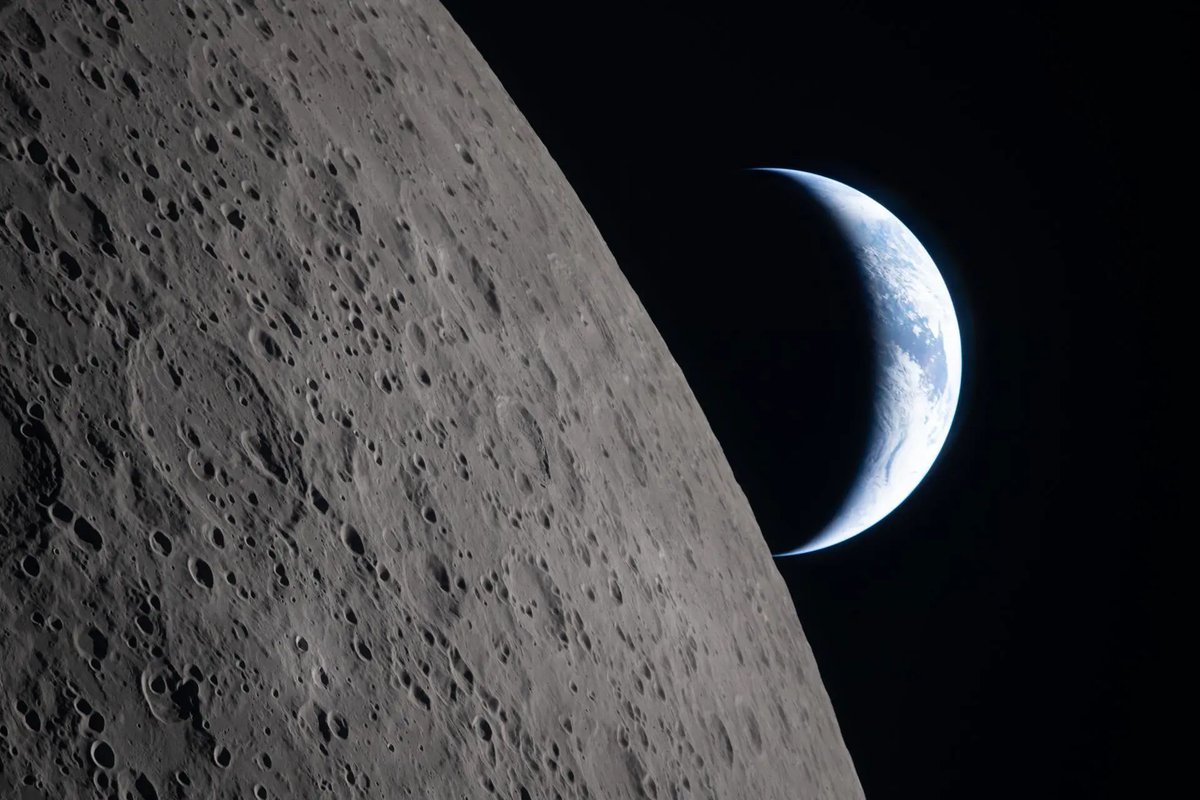
Join us on Oct. 23 for an update on our plans to return American astronauts to the Moon by 2028. NASA leadership will also give details on the upcoming Artemis III mission to test critical systems needed for future Moon landings. https://t.co/m8VK2JC6n3
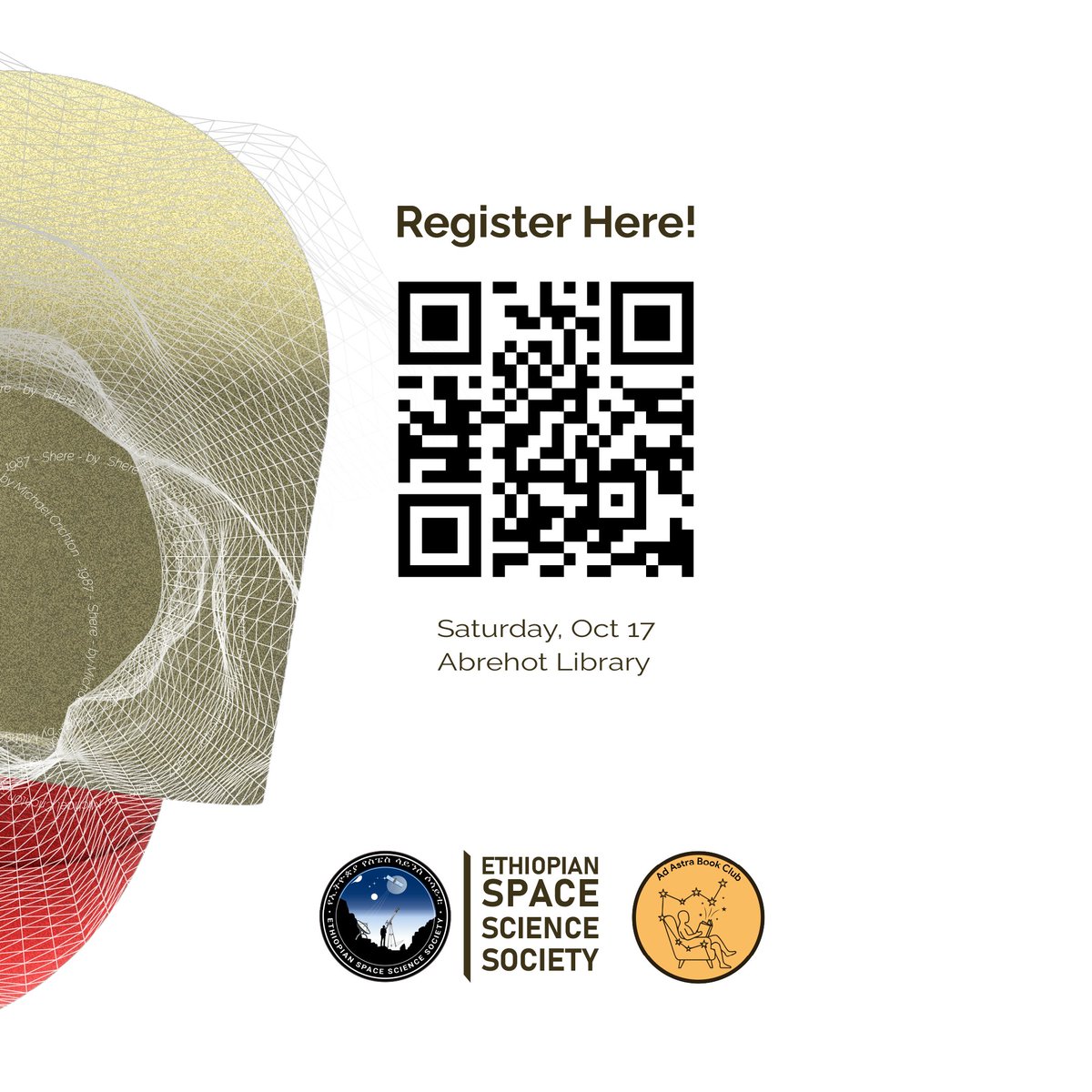
Join the ESSS Ad Astra Book Club for a deep dive into Michael Crichton’s psychological sci-fi thriller, Sphere.
Date: October 17
Time: 2:00 PM
Location: Abrehot Library
Host: ESSS Ad Astra Book Club
Register here: https://t.co/5e07ps8zX9
#ESSS#AdAstraBookClub
Not everything in the Universe glows…
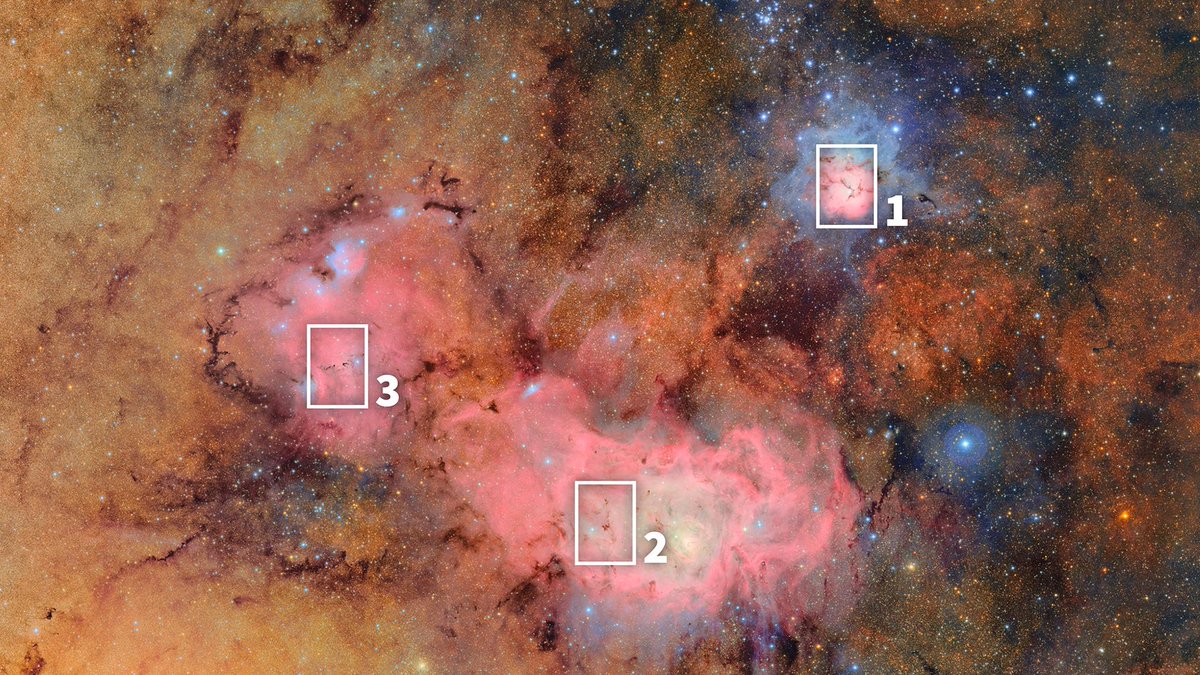
This spooky season, we're exploring the darker corners of NSF–DOE Rubin's Observatory's view of the Trifid and Lagoon Nebulae. 🌌
Dark nebulae are dense clouds of gas and dust that block the light from behind, creating inky silhouettes
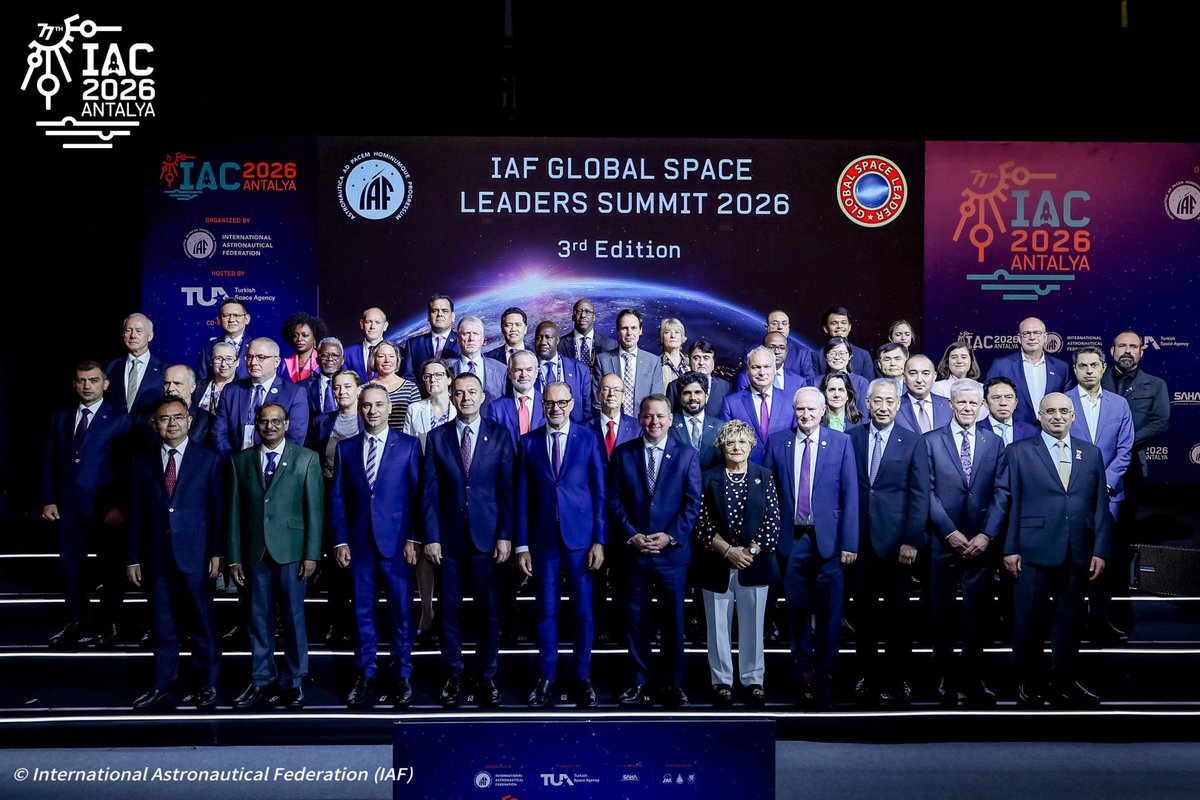
African space agencies, companies and young professionals made their mark at IAC 2026 in Antalya. Here's what Africa’s presence at the global congress tells us about the sector’s progress and what needs to happen next.
https://t.co/fXoLePZJl4
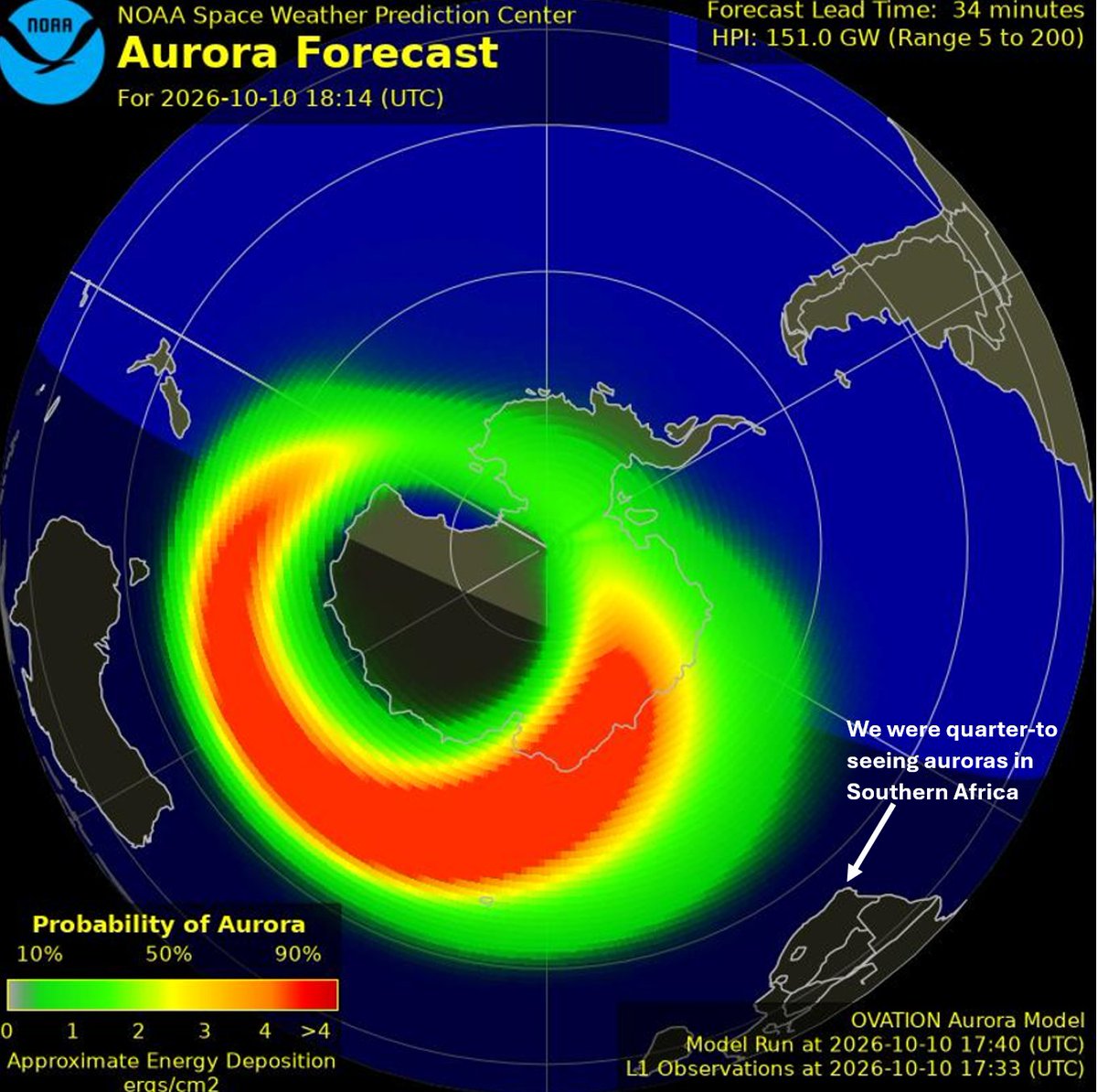
A coronal mass ejection (CME) has struck Earth!! Arriving at approximately 16:49 SAST, it is causing geomagnetic storm levels reaching G1/Minor (Kp 5) and solar wind speeds of up to 850 km/s. Stay tuned for more storm activity!
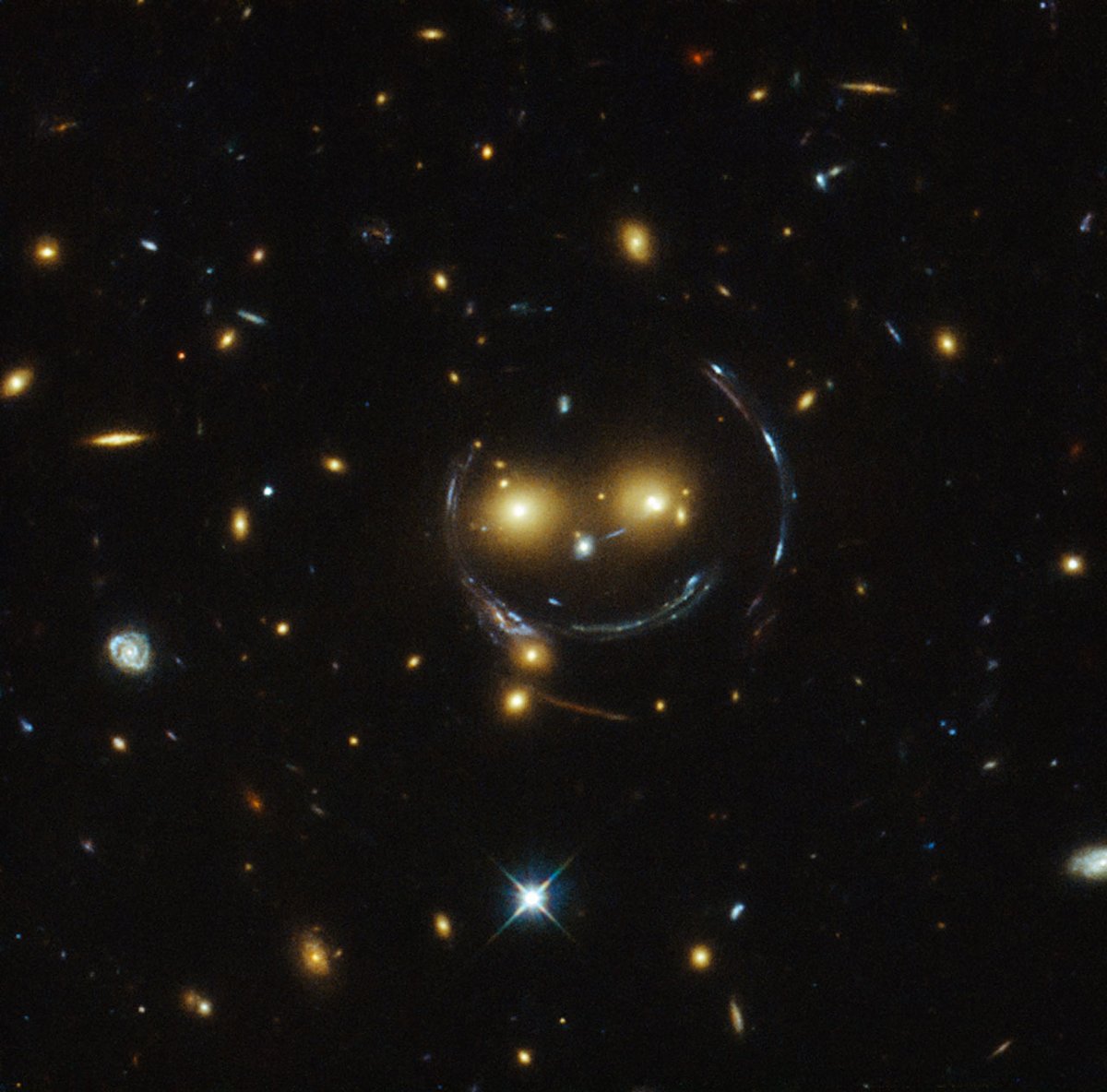
While observing the universe, @NASAHubble caught a galaxy cluster smiling for the camera. 😊
The smile lines are arcs caused by an effect known as gravitational lensing, where massive structures warp spacetime with their powerful gravitational forces and act as a cosmic lens.