When you invest in people’s beliefs about their own capabilities and in their sense of belonging and adequacy — what happens?
In 2024, the third year of our journey, The Agency Fund has continued to explore this core question, motivated by evidence that activating human agency can unlock remarkable outcomes for individuals and communities.
We’re a team of psychologists, economists, data scientists, and software engineers. Together with our network of grantees and partners, we’ve developed, tested, and scaled approaches that empower individuals to navigate towards the futures they want.
As we look ahead to 2025, we’re optimistic about the potential of our approach—and we’re always looking for partners to join us on this journey.
Watch the film and join the movement⬇️
The Agency Fund operates on the thesis that social and psychological supports can unlock remarkable outcomes for individuals and their communities.
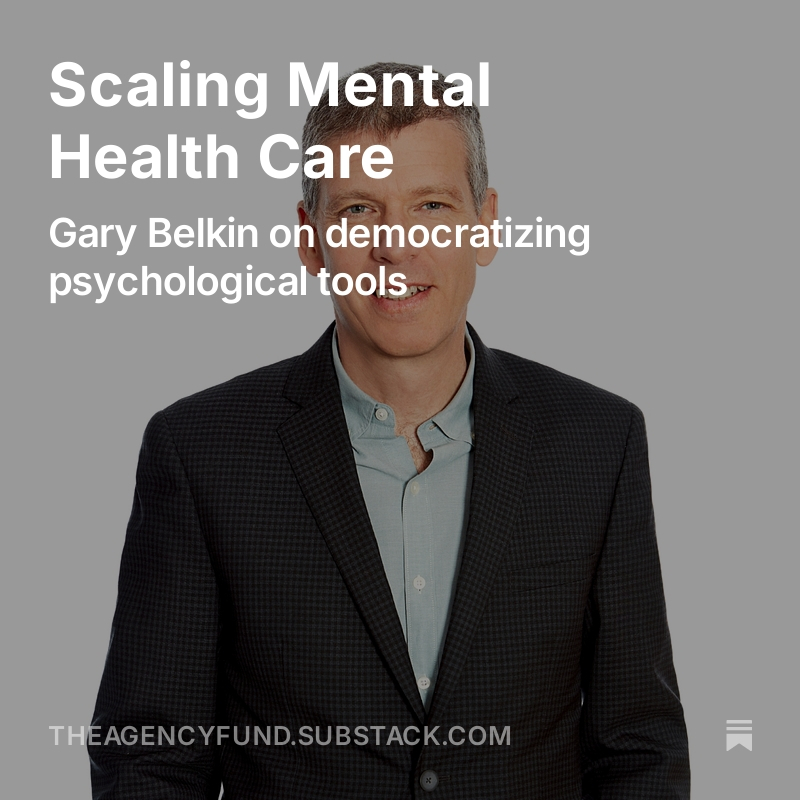
But around the world, societies are struggling to deliver mental health support at the scale required. In our latest blog, @DrGaryBelkin , a psychiatrist and former Deputy Health Commissioner for New York City, reflects on his efforts to close this gap.
A central component of Gary’s programs has been task sharing—training non-specialists like teachers, pastors, and other community leaders to deliver evidence-based mental health interventions. The goal is to make care more accessible, scalable, and better integrated into community networks.
From introducing mental health tools in NYC daycare centers and housing communities to working with youth leaders in climate-vulnerable informal settlements, Gary discusses how different approaches to building psychological resilience and agency can mitigate social challenges.
Read the full blog here: https://t.co/fxUx9ZmXd9
Modern development economics is based on a model in which the intervention stays fixed. You build an intervention, rigorously test to see if it works, then try to scale it. This can be thought of as a “nail it, then scale it” approach.
As a model it has well understood virtues, in that it generates solid evidence of impact. But it can create brittle and inflexible solutions.
At the Agency Fund, we invest in organizations that provide inputs like coaching support, where flexibility is key. In our view of development, the best organizations are constantly learning and adapting. They pilot new ideas, they sandbox, they A/B test, which means that their interventions are constantly evolving and improving.
We find this approach incredibly exciting. We think it’s time to stop fixating on fidelity, and for organizations to build interventions that shed their skin.
Read more from Richard Sedlmayr and @pwprojects on our blog: https://t.co/xaKPb52NJu
🤝 How do we foster open source mindsets in social sector tech?
At The Agency Fund, our strategy for building the development tech stack is rooted in openness and collaboration. When we accelerate promising deployments of LLMs, user engagement solutions or back-end automations in individual organizations, our ultimate goal is to share those innovations and catalyze progress across the entire sector.
Sprints are an important part of this mission, an opportunity to bring developers together from different NGOs, to surface common challenges and co-create solutions.
Hear more from Project Tech4Dev on how sprints and community meet ups inspire change⬇
We often see agency framed as freedom—freedom from constraints. But this view misses how agency actually develops. Here's why👇
For socially privileged people, it's easy to take a sense of agency for granted. If you've always had access to role models and opportunities, if people have always been willing to give you the benefit of the doubt and trust you to succeed, you may see your good choices—and your ability to make them—as privately produced.
From this perspective, government intervention to support agency might seem unnecessary, or even like overreach.
But many people face invisible deprivations that limit their ability to set goals, navigate towards them, or even to imagine a better future in the first place. For example, in a community where no one has moved beyond subsistence farming, it’s exceptionally difficult for any individual to envision alternatives for themselves without specific support.
While agency is manifested in individual choices, it’s always situated in social context. This, we argue, is the paradox of agency.
In a recent article, The Brookings Institution, James Walsh and Karla Hoff take on the Agency Paradox, arguing that while policymakers shouldn’t manipulate choices, they can and should intervene to expand people’s capacity to make choices and envision better futures.
📖 Read the full piece here and share your thoughts on this thread: https://t.co/DRCenj4QX8
💡Our friends at @youthimpactorg have produced an excellent guide to using A/B testing for social sector impact!
In the last few decades, growing use of RCTs has helped steer investment towards interventions with the greatest social return. But while RCTs establish broad evidence on what works, they often take years. Adding A/B testing to the toolbox allows for real-time, iterative refinements within program cycles and specific contexts.
For example, as part of one of its remedial education programmes in Botswana, Youth Impact experimented with refining student groupings by adding an additional level based on digit recognition. This small tweak caused a 0.2 standard deviation in learning within a single school term, with only a slight increase in cost.
This example highlights the potential of A/B testing to drive continuous, cost-effective improvements in program delivery, enhancing interventions as they scale. It’s an important growth area for social sector organizations and a major focus of our work with grantees.
Have you been tapping into the potential of A/B testing for social impact?
🔗 Read the full review and share your thoughts in the comments: https://t.co/xbK5EV0DxG
Authors: @angrist_noam , Amanda Beatty, @ccullen_1 and @TshepiMatsheng
Read more about the gender health gap from Kelle Molley: https://t.co/So1k3WGQ6D
The full McKinsey/WEF report on closing the gap is available here: https://t.co/VyrTBXgftA
📢Funding Opportunity in Women's Health
Analysis of the global disease burden published this year suggests that, on average, women spend about nine years of their lives in poor health—25% more than men.
The report, published by @McKinsey and the @wef attributes the so-called gender health gap to inequities in care delivery, but also to disparities in science, data analysis, and R&D investment.
Historically, the medicines and therapies used to treat women’s health concerns have not been based on adequate scientific understanding of women’s bodies or outcomes, with serious implications for many health issues, from cardiovascular disease to pain, and from psychiatric conditions to sports injuries.
To help close the gap, Melinda French Gates and Pivotal Ventures have announced a $250 million global open call, which will fund organizations working to improve women’s mental and physical health.
Applications are invited from organizations that:
➡ Serve women and have a record of improving women’s mental or physical health
➡ Center equity in their approach
➡ Are poised to scale their work to strengthen the health of more women.
More details here: https://t.co/62AFO2SOfo
Know any organizations that fit the bill? Tag them in the comments.
Can life skills training increase girls’ agency, even in contexts of deeply entrenched gender disadvantage?
Between 2016 and 2018 researchers Eric Edmonds, Benjamin Feigenberg, and @leightjessica ran a randomized trial with 2,459 girls in Rajasthan’s Ajmer district, where women's participation in education and work is persistently low. Only 1 in 5 of the girls’ mothers reported any post-primary education or participation in waged work and, among the girls themselves, 17% were already married by age 11.
The Girls’ Education Program (GEP) was implemented across 119 schools, targeting girls in grades 6 and 7 with twice-monthly sessions during school hours. Led by trained local women, these sessions taught decision-making, communication, and future planning, aiming to support the girls as they navigated both school and home life.
The results? A 31% reduction in school dropout rates among the treatment group at the end of grade 7, which persisted at around 25% through the transition to high school.
The team also created indices to quantify shifts in agency and social attitudes. They surveyed girls on future planning, empowerment, and decision-making control���asking them about their autonomy over school attendance and marriage, for example—as well as gender norms and social-emotional support. The study found that, after training, girls in the program reported gains in future planning, empowerment, and social support from friends.
The researchers argue that the finding strengthens the case for offering life skills training as part of multifaceted intervention programs.
Working paper (open access): https://t.co/trwlPIO033
Published paper: https://t.co/2X3SqGaVLq
In both policy and research, agency tends to be understood in terms of personal freedom: the absence of social constraints.
The problem with this view is that it misses perhaps the most important aspect of human agency, which is that it is built socially.
This presents us with a challenging paradox: Though agency manifests in the personal choices that people make, those choices are made possible by social inputs.
Even in the face of oppressive social norms, violent institutions, and subjugating inequality, our best hope for building agency may still be the social institutions we can draw on: a peer who provides company, a mentor that provides protection, a coach who helps navigate a challenging path.
In a new article in @BrookingsInst , @j_sonam_walsh from The Agency Fund and Karla Hoff, Adjunct professor - Department of Economics, @Columbia , explore this paradox.
🔗Read the full blog here: https://t.co/DRCenj4QX8
📢CLOSING SOON: Funding Opportunity in from the WAM Foundation 📢
The WAM Foundation’s current funding call will close on 22 November. The Foundation is accepting applications for two exciting Requests for Proposals (RFPS):
🔹 Targeted Funding RFP: Focuses on three underfunded priority areas – mental road safety, mental health, and nutrition.
🔹 Open Call RFP: Welcomes innovative projects that cost-effectively reduce human suffering.
All proposals should align with the WAM Foundation’s mission of alleviating human suffering globally through cost-effective philanthropy, supporting organizations with a strong evidence base, or research that builds this evidence for promising interventions in low- and middle-income countries. They’re particularly interested in initiatives that demonstrate potential for cost-effective scaling.
💡Grants range from $500,000 to $1.5 million. Apply now or tag organizations and researchers who could be interested.
Full details at: https://t.co/sx1J3FTqRL
#fundingopportunity #mentalhealth #roadsafety #nutrition
Riza Santoyo, an informal waste collector in Quezon City, Philippines, used to work almost 24 hours a day to feed her children. Not able to afford her own work tools, she relied on a rented bike and cart to transport waste to the junk shop.
Things began to shift when Riza joined a program that provided not only business skills support and funding, but also training focused on agency, self-worth, and overcoming limiting beliefs. Now, she works half the time and earns double, allowing her to save and spend quality time with her family.
In our latest blog, we spotlight two expert practitioners of agency-based training. Anna de Chavez leads the Women in Waste Economic Empowerment (WWEE) program, which supports women like Riza, while @philipmkm directs the livelihood program at India’s @MagicBusIndia .
In a wide-ranging discussion, Anna and Phillip highlight the essential components of effective agency-focused training:
➡️Recruiting trainers who are hungry for change and willing to engage in self-reflection, so they can guide others in doing the same.
➡️Ensuring accessibility by offering stipends to replace lost income and providing amenities like childcare and nursing rooms.
➡️Tailoring training to the specific context of different communities.
➡️Fostering collective agency by creating a strong support network among participants that can endure beyond the training.
🔗Read the full blog here: https://t.co/oSndHPX2sT
Have you ever completed training that expanded your agency or self-knowledge? What components made the difference to you? Share your reflections on this thread👇
@JohnsHopkinsSPH @USAIDAsia @USAID
Attending the Society for Personality and Social Psychology (@SPSPnews) conference next year? Join the Intervention Science Preconference.
The event will dig into the theory and evidence behind groundbreaking interventions, highlight new data, and create opportunities to workshop some of the common challenges affecting intervention research.
And in partnership with the organizers, we're delighted to announce a $10k research award for psychological scientists developing innovative research and interventions to expand human agency, particularly for the most marginalized.
Applications for the award will open in November, with the winner announced at the pre-conference in Denver.
🔎Find out more: https://t.co/csEEOLa1KG
To develop approaches that work in complex contexts, organizations need to continuously test, learn, and adapt.
In our latest blog, Strategy Fellow Ishaan Bansal dives into the "test-and-learn" approach that powers user-centered innovation. By centering beneficiaries’ experiences and iterating based on real-time feedback, social sector organizations can make informed decisions that reflect the needs of the communities they support.
Using tools like A/B testing, user personas, and journey mapping, plenty of organizations are already uncovering insights that drive real impact—whether it’s improving user engagement, enhancing program retention, or tailoring services to better meet community needs. And as data technology continues to develop, we have the opportunity to do even more.
By embedding experimentation and continuous learning, organizations can refine and scale their programs, meeting complex challenges with agility. Testing isn’t just a step in the process; it’s how we achieve some immediate impact while preparing to be even more impactful in future.
How are you using “test-and-learn” methods in your work? Read the blog and share your thoughts in the comments.
Read more: https://t.co/Yq0Eth46XC
Where Can AI Add Value in Career Development Coaching? 🚀
A new white paper by Sarah Shaw and Abby Lupi evaluates Coach, an AI-powered career tool from @CareerVillage . While not an RCT, the study offers valuable early signals on how AI can enhance career readiness.
✅ Most learners reported their CVs, cover letters, and interview skills were employment-ready after using Coach.
🧑🎓 In a pilot with https://t.co/WQbYG06iVn, 81% found the tool effective for employability coaching.
🤝 90% of participants preferred a mix of AI and human coaching, showing that AI works best alongside mentors—saving time on tasks like resumé writing and freeing mentors to focus on personalized support.
Here are some of our takeaways:
1️⃣ AI for Workforce Efficiency: Coach demonstrates that automating tasks like resumé building allows mentors to focus on personalized guidance. This points to AI’s potential to optimize resources and make workforce interventions scalable.
2️⃣ Blended Support as the Future Standard: Learners’ preference for hybrid coaching reflects a trend where AI augments human support, rather than replacing it, positioning AI as a key enabler of deeper, more impactful mentoring.
3️⃣ Adaptive Coaching Through Data: The ability to track mindset changes over time highlights how AI can deliver real-time feedback, refining interventions continuously and tailoring support to individual learners' journeys.
4️⃣ Democratizing Access to Guidance: AI tools like Coach show promise in reducing barriers for underrepresented learners, making career development support more accessible at scale and fostering more equitable workforce outcomes.
The insights from Coach offer exciting new directions for AI in career development. To learn more, explore the full paper and join the conversation on the future of career readiness!
🔗 Full paper here: https://t.co/wFYNetwvLu
There's a ton of psychological research that tells us people respond better to stories than to raw statistics.
When information is presented to us through role models — people like us navigating contexts like ours — we're more likely to take it onboard when we make decisions. But how do we operationalize that knowledge? @supKaur , Assistant Professor, @berkeleyecon is testing an approach that uses locally-sourced media content in the State of Punjab to boost the efficacy of public health interventions on drug use.
Learn more ⬇
In the social sector, we often talk about putting people at the center of development. But how do we design processes that deliver on that promise?
In our latest blog, Strategy Fellow Ishaan Bansal explores how user-centered design can fuel successful innovation, by ensuring beneficiaries' needs, experiences and feedback shape key decisions. This drives organizations to grow in ways that genuinely respond to the communities they support.
At our recent sprint in Bangalore, we heard from partners who are applying these processes and achieving results, using tools like user personas, journey maps, and A/B testing to drive growth. For instance, when @learning_rocket tweaked their naming conventions through A/B testing, they boosted user retention by 26%.
By embedding user-centered innovation and continued learning, organizations can improve programming as they scale, adapting and iterating to reflect complex real-world needs. Experimentation isn't a box to check—it's how we achieve some impact today while learning to be even more impactful tomorrow.
How are you integrating user-focused innovation into your work?
Read the full blog here and share your thoughts on this thread: https://t.co/n0e4X9REHT
CLOSING SOON: The Agency Fund open call for grant funding
There’s just one week left to respond to our latest open call for applications for grant funding. The closing date is Thursday, October 31st at 11.59PM Pacific Time.
We anticipate having at least $1 million in awards available in this round to support exciting and innovative projects that align with our mission and values.
We want to hear from you, if you have a project that:
➡ will engage more than 1,000 users
➡ will help people update their beliefs, perspectives, or mental models; and have a way to demonstrate this
➡ will measure outcomes for users, and a comparison group of non-users, to estimate impact
➡ will work to reach over 1 million people by 2030
🔗 Apply here by October 31st: https://t.co/Cgr3BwwWAE
Know any organizations that should apply? Tag them in the comments.
#FundingOpportunity