New footage obtained by B’Tselem uncovers the moments when the Abu Haikal family was shot. Seven-month-old Sam Abu Haikal was killed in the shooting, and both his parents were injured. The footage clearly shows that the Israeli soldier fired at the car as it was slowing to a stop. The car was far from the soldiers and posed no danger to them whatsoever.
Moments later, in another video obtained by B’Tselem, seven-month-old Sam’s father, Fahed, is seen just after his son was shot. Fahed is holding baby Sam in his arms, trying to stop the bleeding from his head with his hands, while Sam’s mother, Daniyah, who was also injured by the gunfire while holding her son, is seen sitting on the ground, next to the car.
Last Friday, 5 June, an Israeli soldier fired at a Palestinian family driving home from a family visit, as they sat in their car in the Tel Rumeidah neighborhood in Hebron. The family was shot as the car was slowing to a stop at the soldier’s command. Sam, a seven‑month‑old baby who was in his mother’s arms in the back seat, was struck in the head and pronounced dead shortly afterward. Sam’s parents were also injured by the gunfire; his mother is still in the hospital. After the shooting, the soldier who fired and another soldier who was with him left the scene without checking the car or offering any assistance to the critically wounded baby or to his mother.
In the past two and a half years, Israel has killed tens of thousands of children in Gaza and the West Bank. The immunity it gets from the international community has led to a reality where, under Israeli rule, Palestinian lives are entirely disposable – even a seven‑month‑old baby.
Israel appears to be resisting the regional ceasefire encompassed in the pending US-Iran deal. But even if Trump forces Israel to comply, Israel will likely wiggle itself out of the agreement and start attacking Lebanon, citing self-defense.
At that point, Iran would face a painful dilemma. Tehran would almost certainly pressure Trump to intervene and might even threaten to abandon the agreement altogether.
But if Washington failed to act, would Iran truly sacrifice sanctions relief, economic recovery, and an end to open warfare merely to register its objections? Moreover, walking away from the deal might not compel Trump to restrain Israel. Iran could end up with neither an agreement nor a ceasefire in Lebanon. In fact, it would be an outcome Israel would welcome.
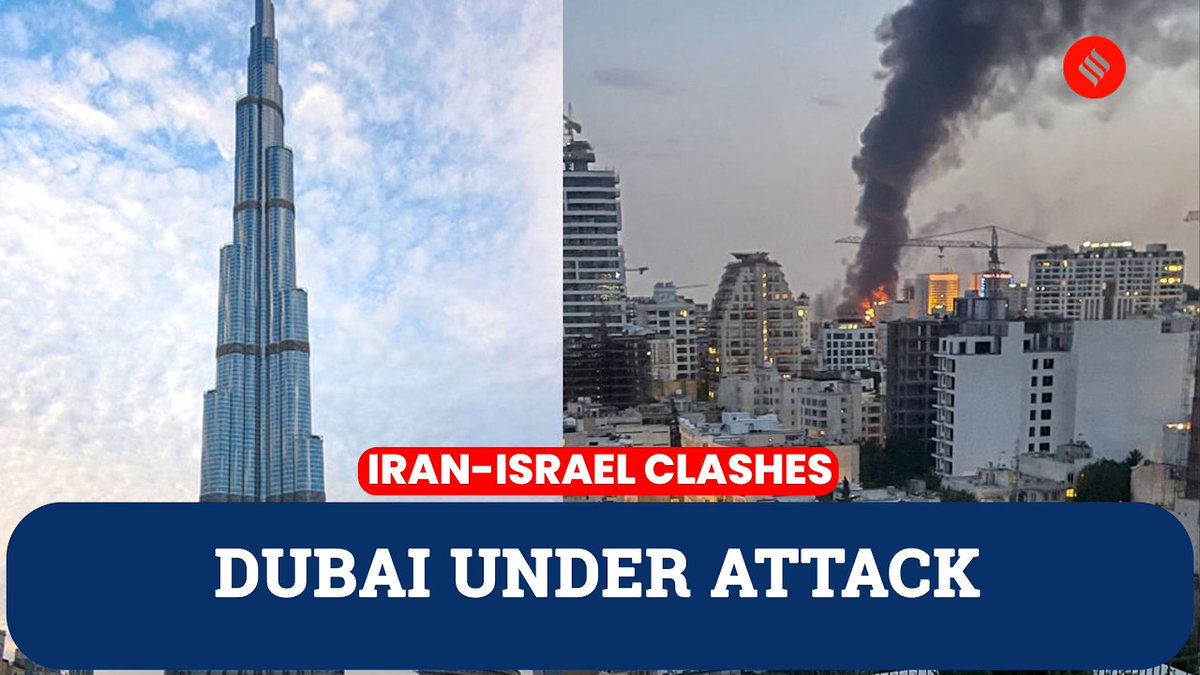
One option increasingly discussed within segments of Iran’s security establishment is more ominous still: remaining within the agreement while imposing costs elsewhere — namely on the United Arab Emirates, one of Israel’s closest regional partners.
The logic is brutally simple. If the broader US-Iran arrangement tolerates Israel attacking an Iranian ally in Lebanon, then Tehran may conclude that the same arrangement can tolerate Iran targeting an Israeli ally in the Persian Gulf.
Under such a scenario, Iran could retaliate against Emirati territory or Israeli operatives based there for every Israeli strike conducted in Lebanon. Rather than collapsing the agreement outright, Tehran would seek to exact a calibrated price for Israeli noncompliance.
Read the full analysis here:
https://t.co/1tpxvwHAC2
78 years since the Nakba: “Survival is about insisting, against the odds, that there is still a future in which a Palestinian grandfather can take his granddaughter to see a house that no longer exists, in a country that is not allowed to exist, and still call that visit home”
Nakba survivor Antoine Raffoul (@antoineraffoul) and Holocaust survivor Stephen Kapos (@stephen_kapos) sit side by side and talk not about reconciliation or abstract “coexistence”, but about genocide, return, and what it would mean to build one democratic state in all of historic Palestine.
Their stories begin in 1940s Europe and 1948 Palestine – but every sentence keeps circling back to Gaza.
The two spoke at an event at London’s Palestine House (@palhouseldn) to mark the 78th anniversary of the Palestinian Nakba – “catastrophe” in Arabic – the mass displacement of Palestinians that accompanied the creation of the state of Israel.
The New Arab asked them why they chose to spend the later part of their lives speaking about their own experiences in the context of Palestine – to which they said they felt it “a duty” to speak up.
https://t.co/W7RJ7iQ3Zg
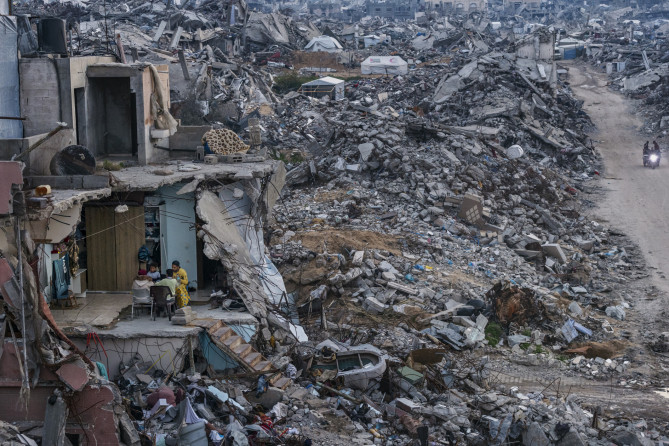
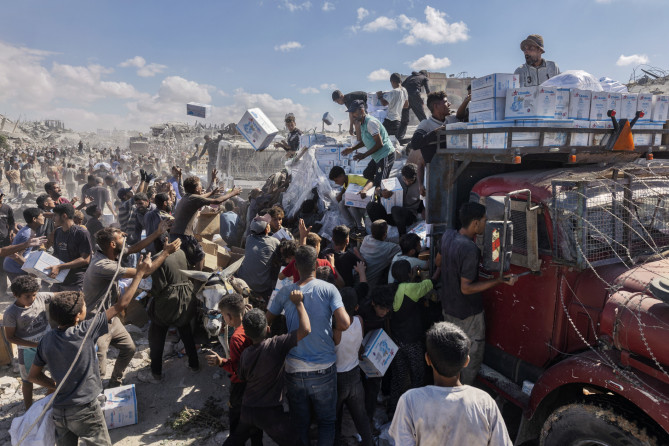
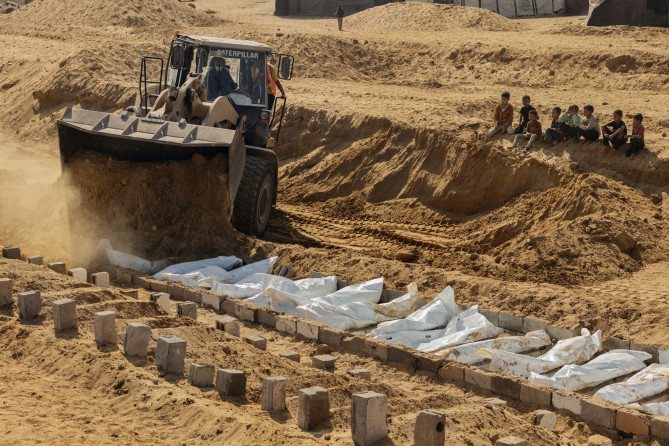
Saher Alghorra (NYT) has won the Pulitzer Prize for Breaking News Photography for "his haunting, sensitive series showing the devastation and starvation in Gaza"
🟡Israel’s Yellow Line in Gaza has shifted. Israel now controls 59% of the territory, up from 53% in October when the “ceasefire” came into effect. The IDF is entrenching its presence in the area, so the Yellow Line could become a new de facto permanent border 🧵
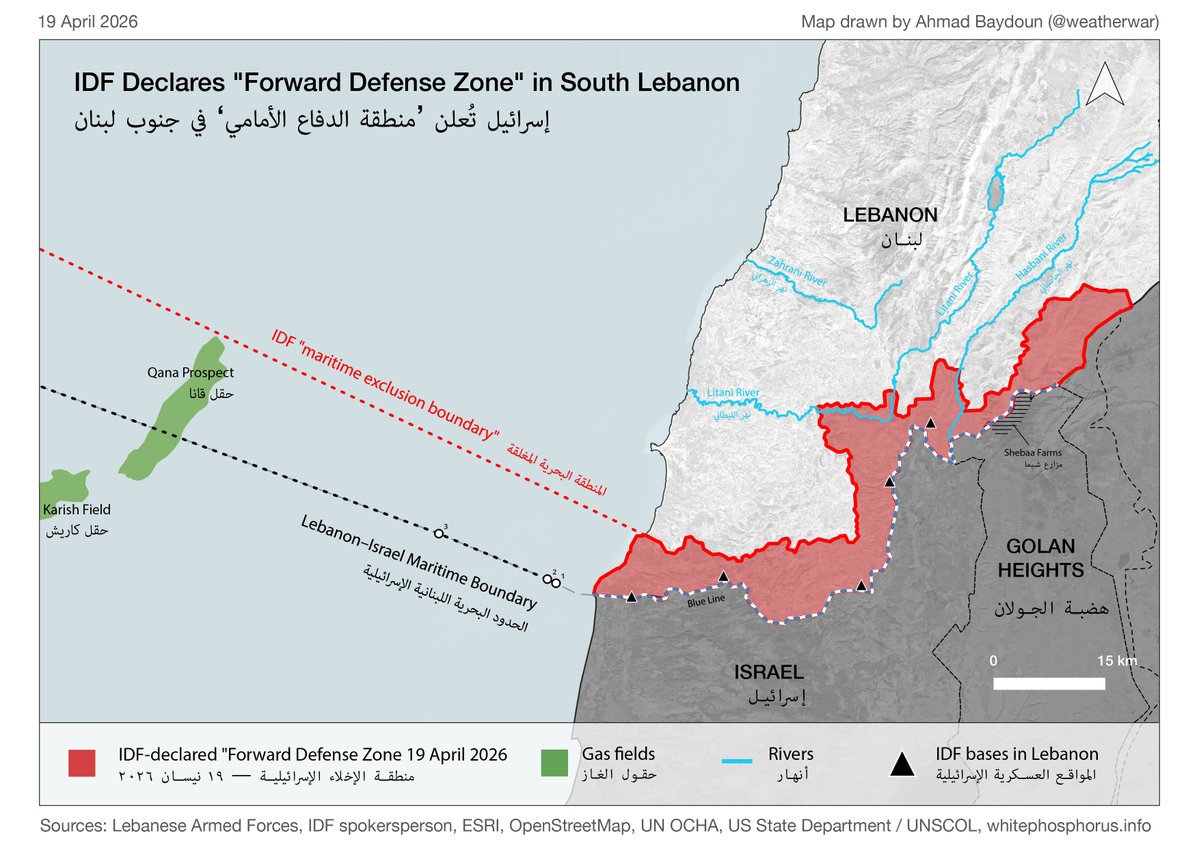
Mapped the IDF's newly declared "Forward Defense Zone" in south Lebanon. Its maritime boundary fully absorbs Lebanon's Qana gas field, whose exploration rights were explicitly guaranteed under the 2022 US-brokered maritime border agreement.
More maps in this thread 🧵
Social media users have accused the tech giant of deliberately erasing the names of southern Lebanese towns, although fact checkers have cast doubt on this https://t.co/V9CJQh1Any
I spoke with @NadimNashif on @7amleh's latest report documenting how Meta’s monetisation policies create a two-tier system: rewarding settler violence while excluding Palestinians.
A new report by the digital rights group 7amleh says Meta monetises Israeli settler content while locking Palestinians out of monetisation entirely https://t.co/SBP2TMDbKP
L'annessione della Cisgiordania, con i soldati complici dei coloni. Gaza annientata. L'avanzata in Libano. Il confine violato in Siria. La guerra all'Iran. Pulizia etnica e massacri. Così la destra sionista dà forma al Grande Israele
Il numero de L’Espresso, in edicola e su app
From heavy industrial losses in Iran to shattered infrastructure across the Gulf and Lebanon’s mass displacement, the toll has been staggering https://t.co/st4NqhjlTO
So if you're keeping score at home, the ceasefire includes Lebanon but also doesn't include Lebanon, America has agreed to all of Iran's demands and Iran has agreed to all of America's demands, America will recognize Iran's right to enrichment and also insist on zero enrichment, Hormuz is completely open but also Hormuz is subject to unclear limitations...
There are a lot of confident predictions about a deal that is still unclear and unfinished
Both sides are scrambling to portray this as a war-ending victory when there's a decent chance that the war hasn't even ended
How is Iran interpreting the U.S. rescue operation?
🔹Reactions inside Iran have been mixed. State media have framed the operation as a clear U.S. failure, pointing to reported losses of aircraft and helicopters and questioning whether the second airman was actually rescued. In this narrative, Washington is seen as concealing both material damage and possible casualties.
🔹Particular attention has focused on Donald Trump’s public messaging. Iranian commentators argue that the absence of any acknowledgment of losses reflects an attempt to construct a narrative of success and distract public attention from the material costs of the operation.
🔹At the same time, reports suggest that clashes did occur during the mission. Individuals on the Iranian side – particularly local people involved in search efforts – were reportedly targeted. This complicates the picture and suggests the operation was not as clean as presented by U.S. officials.
🔹Beyond the information war, some Iranian analysts have focused on what the operation reveals about Iran’s defenses. The fact that large transport aircrafts and accompanying helicopters were able to penetrate deep into Iranian territory raises concerns about gaps in airspace security.
🔹The depth of penetration – reaching areas south of Isfahan – is seen as particularly significant. It suggests that under certain conditions, the United States can insert forces far inside Iran, even if only temporarily.
🔹From a military perspective, analysts emphasize that countering such operations requires rapid detection and response. However, the presence of U.S. (and possibly Israeli) air cover complicates direct engagement and raises the risks of casualties.
🔹As a result, some experts are calling for expanded use of drones for surveillance and portable missile systems for targeting. The argument is that more flexible, distributed capabilities are needed to address the vulnerabilities exposed by the operation.
🔹There is also a strategic concern. Even if the U.S. incurred losses, the successful extraction of an airman could reinforce perceptions of American effectiveness. In a highly curated information environment, that may incentivize further high-risk operations.
🔹These could go beyond rescue missions. Some analysts warn that such precedents might increase the likelihood of more ambitious actions, including strikes on sensitive facilities or even attempts to secure high-value assets like the stockpile of highly-enriched uranium inside Iran.
🔹At the same time, a counterargument exists. Some analysts believe that the costs – particularly aircraft losses – may have been acceptable for Washington in this case, but could limit the feasibility of repeating similar operations under more contested conditions.
🔹This has fed into a broader debate: does this operation increase or decrease the likelihood of a future U.S. ground operation in Iran? There is no clear consensus yet.
🔹Some Iranian experts frame the episode as part of a learning process. Despite setbacks, they point out that Iranian forces have previously managed to target advanced U.S. platforms and inflict damage, including during this operation.
🔹From this perspective, Iran’s failure to capture the airmen is a setback, but also a source of operational lessons that could improve Iran’s response in future scenarios.
🔹Others urge a more cautious assessment. They note that, compared to other cases where the U.S. has rapidly extracted targets with minimal resistance – particularly in Venezuela – this operation took nearly 48 hours and involved significant friction and losses.
🔹In that sense, they argue, the episode reinforces the idea that Iran is not an easy operational environment. Any similar mission would likely involve complexity, resistance, and real risk.
🔹Finally, some commentators draw parallels with the Operation Eagle Claw. In Iranian discourse, such comparisons are often used to reinforce the narrative that U.S. military operations against Iran are repeatedly frustrated.
🔹For more ideological voices, these parallels are framed in symbolic or even religious terms, presented as evidence that Iran has historically resisted external intervention and that there’s divine support for Iran.
🔹Overall, the episode is being interpreted in two ways at once: as both a sign of vulnerability and a demonstration of resilience. That tension will likely shape how Iran adapts its defenses and how it anticipates future U.S. actions.
⚠️ Update: #Iran's internet blackout is now the longest nation-scale internet shutdown on record in any country, exceeding all other comparable incidents in severity having entered its 37th consecutive day after 864 hours.
American freelance journalist Shelly Kittleson has been abducted by unidentified gunmen in Baghdad on Tuesday, Iraq's interior ministry said, with a search underway to find the purpetrators https://t.co/S62xCKNaZC
Israel's conviction rate of Palestinians (in military courts) is 99.74%
Israel's conviction rate of reported settler attacks on Palestinians is 1.8%
Israel's death sentence will only apply against Palestinians not Israeli Jews
It's not complicated. It's Apartheid!