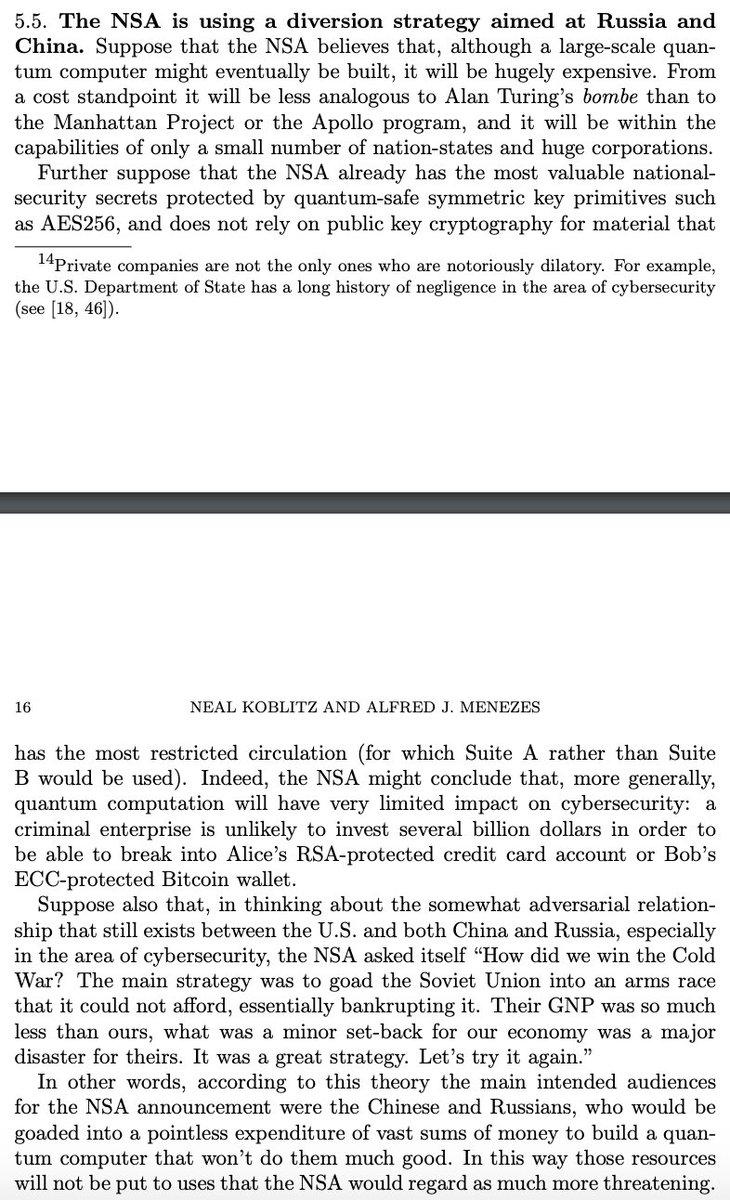
@LarkDavis Wrong!
ECC256 on bitcoin is the ONLY-ONE most quantum-vulnerable general algo.
RSA2048 often applied on banks are a little bit more stronger, just a little bit.
Banks are centralized, hard to be q-safe, still get possibility.
Bitcoin gets ZERO chance. ethical, tech, temporal.
Andreas Antonopoulos is widely considered as one of the best-ever Bitcoin educators.
This week, he announced he will stop making content due to ongoing health issues.
But @aantonop stopped being active on X a while back - @lopp explains why it's a huge loss to Bitcoin 👇
I've been seeing guys like @Vladcostea talk a lot about Bitcoin 'post maximalism' and it's a concept I agree with.
It's not a crime to explore the world around Bitcoin. Bitcoin is cut from a different cloth, but it doesn't mean that there aren't meaningful, innovative protocols being built using the same technology.
Antonopoulos stopped appearing at conferences and largely moved to Patreon to continue his education content. Bitcoin needs someone of his calibre once again.
@SurmountSystems Huge congratulations!
SQIsign gets very small signature size, public key size plus, the sum of signature and public key will be very swift.
Meanwhile, SQIsign gets a slow verification, it probably will lead to scale-up limitation, depends on the detailed situation.
Hopefully!
From 1988 to 2016, the maker of Sriracha sauce, Huy Fong Foods, sourced all their peppers from a single supplier based solely on a verbal agreement, sealed with a nod and a handshake, not contracts or lawyers.
Bitcoin's whitepaper was just a starting point; it is by no means a complete description of the system. In fact, it contains several errors and misunderstandings that were fixed later. They are cataloged here: https://t.co/JoqeF0coCs
Ok so tldr of @SuccinctJT ‘s post: starks are post quantum secure but they actually don’t run with parameters high enough to even withstand attacks against classical computers + they are often used with plonk+kzg so bam, trusted setup, and no pq security anyway
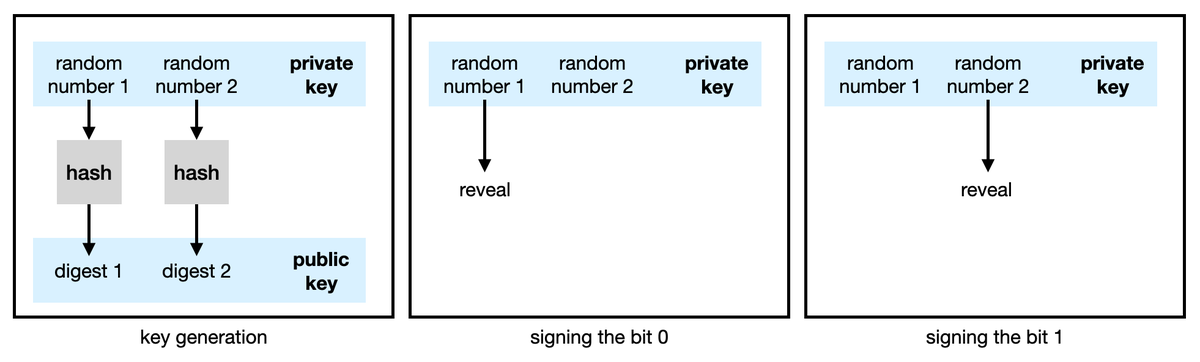
Post-quantum cryptography is complicated, but hash-based signatures are pretty simple. Take a look at this diagram on Lamport signatures, do you understand how they work now? Taken from chapter 14 on post-quantum cryptography.
If I tell you next generation cryptography. You think fully homomorphic encryption, you think functional encryption, you think multi-party computations, you think zksnarks, and you think post-quantum crypto. What else?