Frankly speaking, neutrality is a morally bankrupt concept.
Having studied sanctions evasion and wartime supply chains, I’ve found some facts particularly striking: neutral Switzerland is the leading European supplier of microelectronics that end up in Russian weapons, while another neutral European country, Ireland, is the leading supplier of aluminum for Russia’s war machine.
So that’s what “neutrality” often means in practice.
@graphiurus83 Ambulances in Kharkiv have been donated by so many different cities and countries that they come in all colors and languages. The same is true for buses and firefighting vehicles. This is also the case for Kherson, Zaporizhzhia, Sumy, Dnipro, and many other cities.
🇪🇺 gatavo jaunu sankciju paketi Krievijai, un šo sankciju galvenais mērķis būs ēnu flote, kas Maskavai palīdz apiet naftas eksportam noteiktos ierobežojumus, vēsta @POLITICOEurope.
Šī būs jau 21. sankciju pakete, tā varētu stāties spēkā jūnija beigās vai jūlijā. @lasilvportals
A thousand Russians are being killed and injured every day in Ukraine, mostly by drone attacks. This is what it looks like on the ground, as seen by a Russian soldier who angrily denounces Putin while standing amongst the corpses of his unit, of which he is the last survivor.
Vai Tu dzirdēji trauksmes sirēnas šodien? Iedzīvotāju sniegtā informācija palīdzēs izveidot trauksmes sirēnu dzirdamības karti un identificēt teritorijas, kurās nepieciešami uzlabojumi agrīnās brīdināšanas sistēmā. Tās aizpildīšana aizņems aptuveni vienu minūti. Anketu varēs aizpildīt pēc trauksmes sirēnu atskaņošanas līdz 2. jūnija plkst. 23.59. Aptauja: https://t.co/KphhfkSest
⚠️📲Sabiedrības kritikas devu saņēmusi interneta vietnes "https://t.co/fkgLARp8KP" lēndarbība brīdī, kad izsūtīti šūnu apraides paziņojumi par dronu radīto apdraudējumu. Latvijas Atvērto tehnoloģiju asociācijas valdes priekšsēdētājs Pēteris Jurčenko norāda uz sistēmas izstrādātāju saistību ar neseno IT iepirkumu korupcijas skandālu, kā arī vairākām tehniskām nepilnībām, kas mājaslapas darbību var sabremzēt.
Skaties raidījumu #SpriedArDelfi: https://t.co/9wt2Iptzvh
🚨 Valsts ugunsdzēsības un glābšanas dienests aicina piedalīties pētījumā, aizpildot aptauju “Trauksmes sirēnu dzirdamība Latvijā”.
Kāpēc tas ir svarīgi? 🤔
o Lai noskaidrotu, cik labi trauksmes sirēnas ir dzirdamas dažādās vietās un apstākļos.
o Lai identificētu teritorijas, kur dzirdamība ir nepietiekama.
o Lai uzlabotu civilās aizsardzības sistēmu.
Aptaujas aizpildīšana aizņem tikai vienu minūti un ir anonīma.
Aptaujas rezultātā iegūtie dati tiks izmantoti apkopotā veidā.
Kā piedalīties aptaujā? 🤔
1. Skenē QR kodu vai atver saiti 👉🏻 https://t.co/bD6m1YDdeg
2. Atļauj piekļuvi savai atrašanās vietai (ieteicams). Ja karte atrašanās vietu nenosaka automātiski, pietuvini karti un noklikšķini uz savas atrašanās vietas. Pēc tam to apstiprini, uzspiešot uz "Ok" | Labi".
3. Sniedz atbildes uz visiem uzdotajiem jautājumiem.
4. Iesniedz aptaujas anketu, noklikšķinot uz izvēlnes "Iesniegt".
📌 Lūdzam ņemt vērā!
Aptauju būs iespējams aizpildīt pēc trauksmes sirēnu atskaņošanas 2026. gada 2. jūnijā no plkst. 10.00 līdz plkst. 23.59.
Paldies, atbildes var palīdzēt uzlabot Latvijas agrīnās brīdināšanas sistēmu! 🤝🏻
@petite_michelle@Eisgnom2 I remember chicken in our flat in spring before they got moved out to shed for summer. We had to grow them to be sure we will get meat. Older people remember more harsh things. (Latvia)
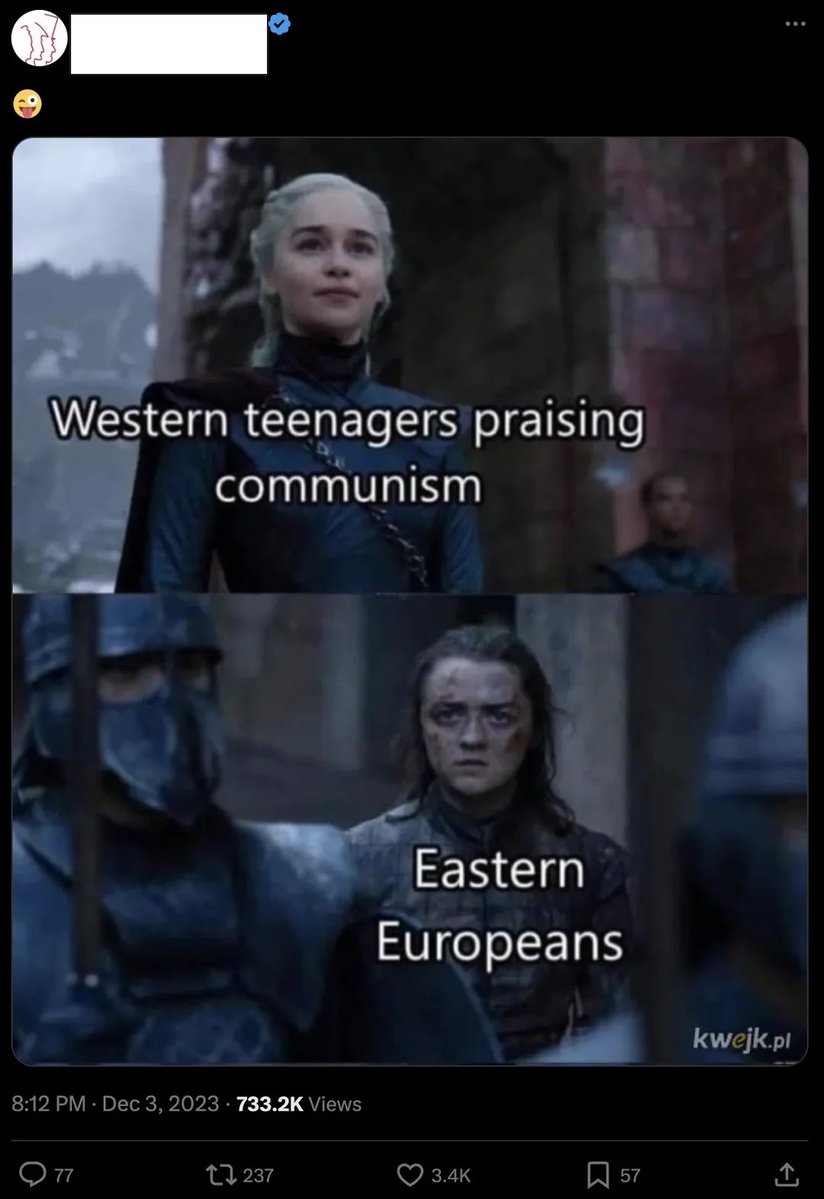
Hey, western commie!
Nothing makes me laugh harder than a guy or a girl tweeting about "great communism" from a $1,400 phone, in a 3-bedroom suburban house, with a fridge full of food.
Comrade.
You would not survive week one.
And here is why.
In the USSR you couldn't just quit your job to "find yourself." Not working was a crime. Literally. They called it "social parasitism." They put the future Nobel laureate Joseph Brodsky on trial for it. Your podcast about late-stage capitalism would've gotten you five years.
You picture yourself as a commissar. You'd be in a queue. Three hours. For maybe bread. The commissars were a tiny elite with their own shops, their own hospitals, their own everything. You weren't invited. You'd be the guy informing on his neighbor for an extra ration.
That brave political take you posted today? In 1949 USSR deported 20,000+ people to Siberia in three days for a lot less - for just being LOCALS. Whole families. Children. Cattle cars. You'd have lasted until your first "actually Stalin was misunderstood" reply landed in front of the wrong person.
The gulag wasn't an edgy metaphor. Roughly 18 million people passed through it. Unpaid labor, -40°C, digging canals nobody needed. But please, tell me more about how you'd "organize the workers" from the group chat.
Things get bad and you want to leave? You can't. There's a wall. There are dogs. There are guards who shoot. The whole design was that you couldn't go.
The people romanticizing it from a comfortable suburb can always book a flight home. People in the USSR couldn't even move to the neighbouring city without permission.
So wear the Che shirt. Read rge Red Book by Mao. Enjoy the iPhone he'd have confiscated, the internet he'd have banned, and the free speech that lets you praise the exact system that would have shot you for using it.
Some of us actually remember how it went.
Страшні, жахливі кадри, як росіяни вбивають наших дітей щодня! Це-Херсон сьогодні. Дитячий майданчик. Родини гуляли з дітьми. Вдарили спеціально по цивільним...Не буде вам прощення. Горіть в пеклі, нелюди! Світ, до тебе купа питань.
Russia killed over a dozen civilians and injured hundreds this past weekend in Ukraine. Told us to pull our diplomats out of Kiev so they could bomb it again.
The response from Trump? Crickets.
Putin has never had a better friend.
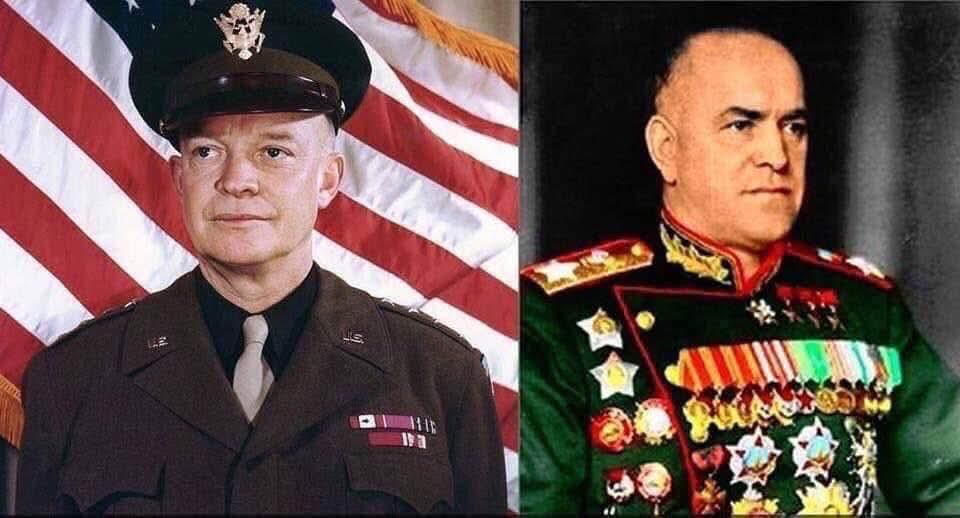
Interesting excerpts from the memoirs of Supreme Allied Commander General Dwight D. Eisenhower (later President of the United States from 1953–1961) about Marshal Georgy Zhukov:
“During the several hours we spent together in the airplane, Marshal Zhukov and I often discussed military operations... A great revelation to me was his description of the Russian method of attacking through minefields. German minefields, covered by enemy defensive fire, were tactical obstacles that caused us heavy casualties and many delays. Breaking through them was always difficult, despite the fact that our engineers had invented every imaginable mechanical device for the safe clearing of mines.
Marshal Zhukov casually remarked to me: ‘There are two kinds of mines: antipersonnel and antitank. When we encounter a minefield, our infantry continues the attack as though it were not there at all. We consider the losses from antipersonnel mines to be equal to the losses we would have suffered had the Germans defended that sector with concentrated manpower instead of minefields. Advancing infantry does not detonate antitank mines, so once they have crossed the minefield and secured the opposite side, the engineers then come forward and clear lanes through which vehicles can pass...’
I could vividly picture what would have happened to any American or British commander who attempted to use such tactics, and an even clearer picture of what the men in any of our divisions would have said if we had tried to make such practices part of our tactical doctrine...
Americans measure the cost of war in human lives, while the Russians measure it in the total expenditures of the nation.
As far as I could see, Zhukov cared little for the methods we considered essential to maintaining the morale of American troops: systematic rotation of units, opportunities for rest and recreation, short leaves, and above all the development of methods designed to avoid exposing men to combat risks that were not absolutely necessary. All of this, common practice in our army, was largely unknown in his army.
...The fundamental difference between American and Russian attitudes toward the treatment of people was illustrated in another incident. In a conversation with a Russian general, I mentioned the difficult problem of caring for large numbers of German prisoners of war — a problem we faced at various stages of the war. I noted that we gave German prisoners the same food ration as our own soldiers.
‘Why would you do that?’ Zhukov exclaimed in astonishment.
I replied that, first of all, my country was bound to do so under the Geneva Conventions. Secondly, thousands of American and British servicemen were prisoners in German camps, and I did not want to give Hitler any excuse to treat them even worse than he already did.
Zhukov was even more astonished by this answer and exclaimed: ‘But why should you care about soldiers captured by the Germans?! They were prisoners already and could no longer fight anyway!’
The excerpts are quoted from Dwight D. Eisenhower, Crusade in Europe, The Johns Hopkins University Press, 1997 (first published in 1948), pp. 468–470.
Interestingly, in the Russian translation of Eisenhower’s memoirs (2000 edition), these passages — seemingly of particular interest to Russian readers — were removed.
Everyone shouting “we can do it again” should remember that they would be sent to fight using Zhukov’s methods and traditions.
Tehnika, droni, LKI, KŠ, apmācība utt - viss notiek, un daudz nopietnāk nekā no malas redzams, bet nē, valsti ir parāvis #vissslikti sindroms, kur nodirst citu ir svēta lieta, bet reāli iesaistīties valsts aizsardzībā spēj tikai daži desmiti tūkstošu 2/