Don’t code alone. Slack Code is live.
Humans and agents. Same channel. Same work.
Launching today with agents from @AnthropicAI, @github, @Cognition, and @vercel. This is real multiplayer coding. See it at @Dreamforce#DF26
Previewing Ultrafast mode: GPT-5.6 Sol at up to 14x the speed.
Launching first in the OpenAI API to a select group of customers with expanded access to more businesses as capacity grows.
We hid dangerous commands in real coding sessions and watched 1,053 professional devs review them.
Humans caught 13.6%
Auto mode caught 89%
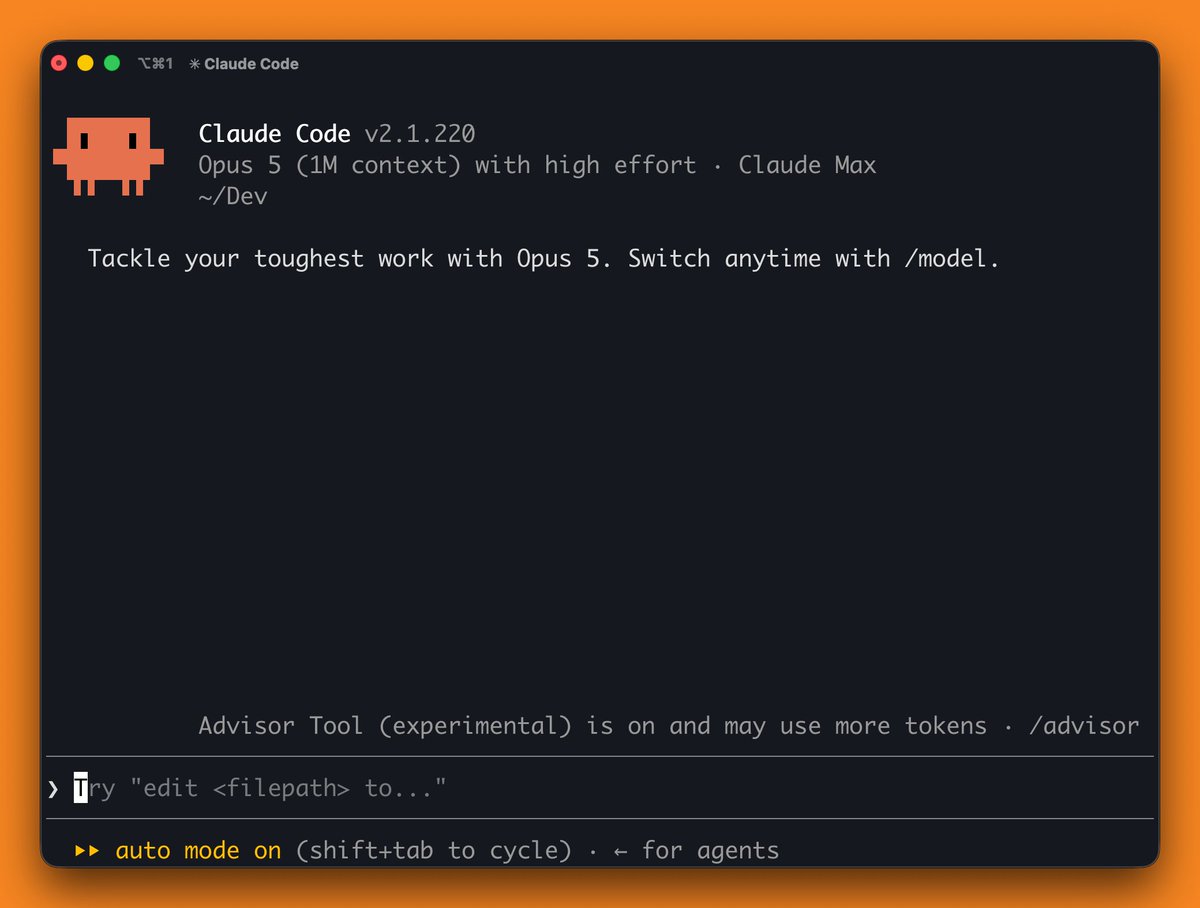
"▶▶ auto mode on" is becoming the default permission mode in Claude Code for Pro, Max, and Team plans starting tomorrow.
The model race is noisy; shipping an open harness where tools, sandboxes, and loops are all plugins is the part that actually changes how teams run agents.
🧩 DeepSeek Harness v0.1 is now available in Developer Preview!
🔹 We’re opening it up to developers building agent harnesses worldwide and open-sourcing the codebase in MIT license.
🔹 Powered by the Cordis meta-framework, DeepSeek Harness is an agent harness built around one core idea: Everything is a plugin. Models, tools, skills, sessions, sandboxes, filesystems, loops, orchestration, and UI are ALL implemented as plugins, and can be mixed, matched, replaced, and extended.
Try it now!
https://t.co/2YWSvJHhKA
@Tony_Stef_ That’s the split that actually holds in production: the engine fires, the model judges, and a dead schedule should show up as an incident, not a green light.
@calcsam Letting an agent write the workflow is the easy part. The production question is whether validation catches loops, missing stop conditions, and anything that still needs a human gate.
@kaleighf The missing job isn’t another AEO tool. It’s a named owner who rechecks what models still cite, and who can stop a post that never earned a citation.
The BEST prompt for AI agents I've heard over the last 12 months is ONLY 3 words, and it comes from someone who managed multi-billion dollar P&Ls in AI, led a 100 person org at AWS, and now runs a brilliant AI workforce of 34 agents:
1. Her best prompt is just "do smart things"
She gives the agents all her context first, her calendar, email, Stripe, goals, and transcripts, then lets them decide what's worth doing. She realized every task still started as a thought in her own head, which meant the company could only ever be as good as what she remembered to ask for.
2. Her human team talks to her agents in Slack. She has a channel where a teammate can ask "did that financial services client reply to Ali's email," and the agents answer directly, so people stop waiting hours for her to get back to them.
3. Since an AI agent costs almost nothing, she hired the person she'd never put on payroll.
One does nothing but ask how to make everything ten times better. Another just watches the other agents work and flags where they get stuck.
4. She avoids old job titles, because the second you call one your CMO, you've rebuilt a 2015 company with robots. Most of her sub-agents run on cheaper, smaller models and do the job fine.
5. Run an AI watchdog instead of a dashboard. Point one at your Slack to catch two people doing the same work, at your calendar to flag conflicts, at your analytics to tell you what to post tomorrow. Almost nobody does this yet.
6. She keeps a daily "brain dump" that feeds the agents.
At the end of each day she dictates what's in her head that isn't written down anywhere, the stuff that only lived in a meeting or a Slack thread, and it goes into a wiki the agents read. That's how they get the context that email and calendar miss.
7. She uses a "last 30 days" research skill to spin up on anything fast. Before running a workshop for 200 execs in an industry she doesn't know, she fans out agents to scan and synthesize the last month of news, then walks in sounding like she's followed it for years.
That's my convo with @alliekmiller on @startupideaspod . Pretty much her biggest tips for using AI agents.
Full episode below.
https://t.co/CukuBOXt9G
Happy building, I'm rooting for you.
We built a software factory for AI SDK.
Each step is an agent, and humans merge changes. Four weeks in:
▪️ The factory authors up to 35% of merged PRs
▪️ It closed 70% of issues in July
▪️ Open bugs are down 25%
https://t.co/UNGeeQJdAu