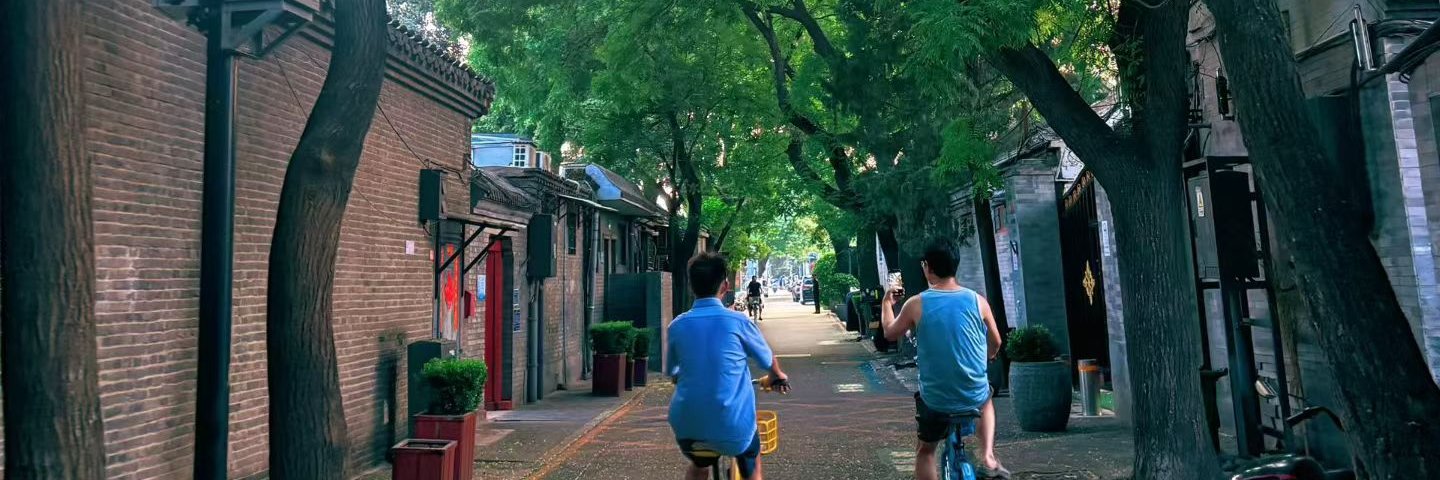
If you could give your past self one piece of career advice, what would it be? See what last summer's Google interns had to say, then apply to kick off your own internship journey ➡️ https://t.co/9ie4PfZ015
What is the role of academic computer vision research in the age of increasingly powerful large models? Is GPT-6 Astra a step change? How can a researcher have an impact today in academia?
These are the questions I ask myself as I head off to ECCV 2026, a conference I’ve attended since 1992. One of my papers this year is VIGA, a method that takes an image as input and outputs a 3D Blender scene that represents that image. This is a classical inverse-graphics task and VIGA was the first method to solve it using an agentic approach.
The idea is now several years old and the first version of the paper was rejected. This delayed publication significantly. After it was accepted at ECCV, it was quickly surpassed by people using Claude Code for the same purpose. Today GPT-6 Astra blows away all previous results. But we still head off to ECCV to tell the community about our invention that is now fully out of date.
The way academic work often progresses is that one reads recent papers, notices that they have limitations, comes up with a new idea, explores this, publishes it, etc. Any published paper I read today is based on ideas that are at least a year old. And those ideas were based on the literature of the time, which was also a year old. That means that any paper I see at ECCV is likely two years out of date. In AI today, two years means your work is likely irrelevant.
At CVPR this summer I noticed that many authors have not gotten the message. They continue to work on “old” problems that have a long history. This history is based on assumptions about how the “vision problem” will be “solved”. The truth is that it is being solved in a very different way and many of these problems are no longer relevant. Another group of papers focuses on very niche problems where large models likely fail because of insufficient data or lack of business interest. The impactful papers were largely from industry and had long author lists and massive data+compute behind them. These papers were also out of data, describing systems that had been released months before, but at least they served to provide the community with more complete documentation and analysis of commercial systems.
So what should academics do? First, we need to put aside the tools we’ve used for years and start from scratch. Every project should start by trying really hard to solve the problem with existing tools. I would like to see every paper begin with a detailed experimental analysis of how existing models perform and why they fail (if they do). This gives the kind of insight we need today. Then, assuming current models fail, the solution should provide some fundamental insight that will outlive the next release of such models.
Reviewers today still focus on technical novelty. This pushes people to focus on tweaking architectures rather than clearly moving the field forward. Papers need to be judged based on their novel insight and not their novel technical contribution. This is a real shift in thinking but it focuses us on what matters - progress of the field.
If we want there to be a “field” of computer vision, then it can’t become a marginal backwater, focusing on esoteric problems. If you haven’t tried using Astra (or whatever comes next) to solve your problem, then you have not done your homework. This omission should be seen as negatively as not having a previous work section.
Concretely, I think papers should include a new section analogous to “Related Work” where that related work is current models and how they perform on the task. Reviewers should start asking for this and expecting authors to be able to articulate their insights about the limitations of existing large models.
I'm interested in your thoughts.
in 2022 HRT was probably the best place to do research out of undergrad, and we debated when (if ever) average CS grads would do research at HRT quant level. that future is now. so far few understand the implications, but if 2022-me were on 2026 job market i would say to join @quadrillionlabs (and you should too)
If you want to know whether a system is being driven or at equilibrium, you need its probability current.
Getting this from actual dynamical trajectory data has been the hard part.
To help solve this I've been developing a
Delaunay-Voronoi Fokker-Planck (DVFP) instrument.
DVFP turns scattered, irregular, time-ordered phase-space observations into an empirical Fokker-Planck description.
The distinction is simple:
Geometry tells us what is nearby. Time tells us what happens next, and these are handled properly in this construction.
From here we obtain density, drift, diffusion, and probability current, which is what detailed balance and entropy production are built from.
Paper and DOI: https://t.co/2zkcOs7sWZ
Animation: As the underlying dynamics evolve, the DVFP instrument adapts its local weighting while preserving the temporal ordering of the observations.
166,700 neurons in a fruit fly now guide a robot cat across a table - a project called "LUNA"
In September 2026, Google Research and HHMI Janelia mapped every neuron and every connection in an adult male fruit fly's full nervous system, brain, optic lobes, and ventral nerve cord together, and published it in Cell. The number is staggering on its own: 166,700 neurons, roughly 125 million synapses, the most complete nervous system map of any animal ever built.
Now that exact wiring is running live, simulated neuron for neuron, inside a small robotic quadruped equipped with a camera and motion sensors. Movement comes in through the sensors, the biological circuitry fires the way it always did, and the output drives the robot's legs directly. No one wrote the balance logic. No one coded the gait. The insect's own nervous system does that job, just on legs it never had.
To be clear about what this is and isn't: nothing biological is alive in this loop. It's a full computational reconstruction of real neural wiring, controlling hardware instead of an insect body. The brain is real. The body is borrowed.
This is the only CA of the project: 6dtVrGrMkhxFTb5Cm1572LjgWwFbvnBgEbXobnEgpump
What If Computer Vision Could Measure How Well You Move?
This vision-demos repo shows some really interesting ways to turn computer vision into practical tools.
One example uses ViTPose+ Large to estimate body poses and compare dancers frame by frame, turning movement into a measurable pose similarity signal.
It is a great example of how pose estimation with simple metrics can turn a camera into a tool for analyzing movement, fitness and sports.
Credits: Jeremy Park
Every sports tracking demo you see is rendered after the game and costs $$$. THIS ONE is happening live and free!!!
Our real-time AI model can:
-detect players, refs, and teams
-draw a 2D map of the game
-track 3D ball position
-measure ball and player speed
-read attacking and defending direction
-detect key events like goals
-create heatmaps
On a youth game, from a single camera on the sideline, not pristine broadcast footage. Endless possibilities for youth and amateur sports entertainment!
Sample livestream footage below 👇
166,700 fruit fly neurons are piloting a drone through Spike's bedroom.
A single camera tracking his open hand is the only input the system receives.
The center panel displays the live simulation of 166,700 neurons and 25 million connections taken from the fully reconstructed male fruit-fly CNS.
The camera sees the hand, the network spikes, and those spikes become throttle commands.
Open palm makes it climb, a fist holds position, dropping the hand brings it down.
Four coin-sized propellers now hang from a nervous system that once belonged to an insect.
The honest part: this is a computational model, not a resurrected fly. The wiring is biological; the drone and the bridge between them are his.
He wrote no flight logic, no PID loops, no gesture presets. He simply gave the neurons an output path and they found the ceiling.
Eleven seconds in, it holds altitude on its own.
The fly is dead and it is still flying.
I made a computer vision tool for rock climbing holds analysis!
As someone who is newer to climbing and wants to improve, I've noticed more and more recently how everyone solves the route differently. As I said to my friends the other day, "Everyone has to find their own way." 🤣
So I extended my last rock climbing demo with new analytics that I'm really excited about. I added what percentage of the total time your hands and feet are on a hold, as well as which holds each hand and foot is using.
This data can be used in a few ways. For example, I know that I should use my feet and legs more when climbing. This tool can show me how much I use my feet, so I can use that as a baseline to improve.
What I'm most excited about is how it enables comparing climbing sequences on the same route. You can compare against your friends' sequences: maybe you use 1, 3, 5, 7, and another friend uses 1, 2, 6, 7. Or you can compare against your own historical data, like I show here at the end.
I used ViTPose+ Large for pose estimation and SAM 3.1 to segment the holds, both models accessed through the @vlmrun Gateway. I also use SAM 3.1 to segment the gray floor, so we know when the feet leave the ground to help with starting the route timer.
Would love to hear what you think!
The code is open-source on GitHub: https://t.co/IJP6QKpgnY
We built high-throughput materials labs in Menlo Park to create a loop between experiments and models. The labs generate fresh data, the models learn from it, and then help us decide what to try next.
Using only 1,300 H200s, plus months of our experimental data, we mid-trained and RL’d an open-source model to surpass GPT-6 Astra on our analysis benchmark. We call it Neon.
This is real footage from our lab. We’re focusing first on hard problems in materials science, including superconductors, magnets, and semiconductor materials.
Read our blog posts below.