Claude Code is not AGI, but it is the single biggest advance in AI since the LLM.
But the thing is, Claude Code is NOT a pure LLM. And it’s not pure deep learning. Not even close.
And that changes everything.
The source code leak proves it. Tucked away at its center is a 3,167 line kernel called print.ts.
print.ts is a pattern matching. And pattern matching is supposed to be the *strength* of LLMs.
But Anthropic figured out that if you really need to get your patterns right, you can’t trust a pure LLM. They are too probabilistic. And too erratic.
Instead, the way Anthropic built that kernel is straight out of classical symbolic AI. For example, it is in large part a big IF-THEN conditional, with 486 branch points and 12 levels of nesting — all inside a deterministic, symbolic loop that the real godfathers of AI, people like John McCarthy and Marvin Minsky and Herb Simon, would have instantly recognized.*
Putting things differently, Anthropic, when push came to shove, went exactly where I long said the field needed to go (and where @geoffreyhinton said we didn’t need to go): to Neurosymbolic AI.
That’s right, the biggest advance since the LLM was neurosymbolic. AlphaFold, AlphaEvolve, AlphaProof, and AlphaGeometry are all neurosymbolic, too; so is Code Interpreter; when you are calling code, you are asking symbolic AI do an important part of the work.
Claude Code isn’t better because of scaling.
It’s better because Anthropic accepted the importance of using classical AI techniques alongside neural networks — precisely marriage I have long advocated.
It’s *massive* vindication for me (go see my 2019 debate with Bengio for context, or to my 2001 book, The Algebraic Mind), but it still ain’t perfect, or even close.
What we really need to do to get trustworthy AI rather than the current unpredictable “jagged” mess, is to go in the knowledge-, reasoning-, and world-model driven direction I laid out in 2020, in an article called the Next Decade in AI, in which neurosymbolic AI is just the *starting point* in a longer journey.*
Read that article if you want to know what else we need to do next.
The first part has already come to pass. In time, other three will, too.
Meanwhile, the implications for the allocation of capital are pretty massive: smartly adding in bits of symbolic AI can do a lot more than scaling alone, and even Anthropic as now discovered (though they won’t say) scaling is no longer the essence of innovation.
The paradigm has changed.
—
*Claude Code is plainly neurosymbolic but the code part is a mess; as Ernie Davis and I argued in Rebooting AI in 2019, we also need major advances in software engineering. But that’s a story for another day.
@ai_for_success GPT–5 high IQ low EQ, looks like a machine Answerer,
it's not AGI bro, it's not AI.
just machine.
GPT–6 will have more real intelligence
We made ChatGPT pretty restrictive to make sure we were being careful with mental health issues. We realize this made it less useful/enjoyable to many users who had no mental health problems, but given the seriousness of the issue we wanted to get this right.
Now that we have been able to mitigate the serious mental health issues and have new tools, we are going to be able to safely relax the restrictions in most cases.
In a few weeks, we plan to put out a new version of ChatGPT that allows people to have a personality that behaves more like what people liked about 4o (we hope it will be better!). If you want your ChatGPT to respond in a very human-like way, or use a ton of emoji, or act like a friend, ChatGPT should do it (but only if you want it, not because we are usage-maxxing).
In December, as we roll out age-gating more fully and as part of our “treat adult users like adults” principle, we will allow even more, like erotica for verified adults.
Gemini Flash 2.5 Nano banana
Google AI Studio.
{
"scene": "mirror_selfie_otaku_pc_corner_blue",
"subject": {
"gender_presentation": "female",
"age_bracket": "mid_20s",
"ethnicity": "East Asian.
"build": "slim with defined waist; natural proportions",
"skin_tone": "light neutral",
"hair": { "length": "very long", "style": "straight with slight wave ends", "color": "medium brown" },
"pose": {
"stance": "standing, slight contrapposto",
"right_hand": "holding phone in front of face (identity obscured)",
"left_arm": "relaxed alongside torso",
"torso": "subtle arch; midriff visible"
},
"wardrobe": {
"top": "baby-blue cropped knit cardigan, two buttons fastened; blue bralette subtly visible",
"bottom": "denim micro-shorts with blue satin ribbon bows at both hips",
"socks": "thigh-high blue-and-white horizontal stripes",
"accessories": { "phone_case": "blue cute mascot case" }
}
},
"environment": {
"description": "bedroom PC corner seen in a wall mirror",
"furnishings": [
"white desk",
"single monitor with pastel blue wallpaper (no readable text)",
"mechanical keyboard with white keycaps on blue desk mat",
"mouse on small blue mousepad",
"PC tower to the right with blue case lighting",
"three anime figures on/near the PC",
"pagoda poster on wall",
"cat-shaped desk lamp with blue accent",
"clear glass of water",
"tall leafy plant by window (camera-left)"
],
"color_swap": "replace all former pink accents in wardrobe and room with blue (baby blue → sky/periwinkle)."
},
"lighting": {
"source": "daylight from large window camera-left through sheer curtain",
"quality": "soft diffused",
"white_balance_K": 5200
},
"camera": {
"mode": "smartphone rear camera via mirror (no portrait/bokeh mode)",
"focal_length_eq_mm": 26,
"distance_m": { "subject_to_mirror": 0.6, "camera_to_mirror": 0.5 },
"exposure": { "aperture_f": 1.8, "iso": 100, "shutter_s": 0.01, "ev_comp": -0.3 },
"focus": "torso and shorts in reflection",
"depth_of_field": "natural smartphone DOF (deep); background readable, no artificial blur",
"framing": {
"aspect_ratio": "1:1",
"crop": "top of head to mid-thigh; include desk, monitor, PC, and plant",
"angle": "slight downward tilt from mirror viewpoint",
"composition_notes": "keep subject centered; avoid wide-edge stretching by stepping back and cropping square"
}
},
"negatives": [
"pink/magenta accents anywhere",
"beauty-filter/airbrushed skin; poreless look",
"exaggerated or distorted anatomy",
"NSFW, see-through fabric, wardrobe malfunction",
"logos, brand names, readable UI text",
"fake portrait-mode blur, CGI/illustration look"
]
}
New data insight: How does OpenAI allocate its compute?
OpenAI spent ~$7 billion on compute last year. Most of this went to R&D, meaning all research, experiments, and training.
Only a minority of this R&D compute went to the final training runs of released models.
I’m turning 41, but I don’t feel like celebrating.
Our generation is running out of time to save the free Internet built for us by our fathers.
What was once the promise of the free exchange of information is being turned into the ultimate tool of control.
Once-free countries are introducing dystopian measures such as digital IDs (UK), online age checks (Australia), and mass scanning of private messages (EU).
Germany is persecuting anyone who dares to criticize officials on the Internet. The UK is imprisoning thousands for their tweets. France is criminally investigating tech leaders who defend freedom and privacy.
A dark, dystopian world is approaching fast — while we’re asleep. Our generation risks going down in history as the last one that had freedoms — and allowed them to be taken away.
We’ve been fed a lie.
We’ve been made to believe that the greatest fight of our generation is to destroy everything our forefathers left us: tradition, privacy, sovereignty, the free market, and free speech.
By betraying the legacy of our ancestors, we’ve set ourselves on a path toward self-destruction — moral, intellectual, economic, and ultimately biological.
So no, I’m not going to celebrate today. I’m running out of time. WE are running out of time.
🚀 KAT-Dev-72B-Exp becomes the top-1 open-source model to achieve 74.6% on SWE-Bench Verified ⚡ (evaluated strictly with the SWE-agent scaffold).
✨ Try our strongest model KAT Coder directly on StreamLake → https://t.co/T0FGpVFPl9
⏳ FREE ACCESS every day! Don’t miss out.
🫶🏻 We’re thrilled to announce the release of KAT-Dev-72B-Exp — our latest open-source model!
KAT-Dev-72B-Exp showcases the power of large-scale RL with a redesigned training engine for shared prefix trajectories and entropy-shaped advantages to prevent exploration collapse.
Note: KAT-Dev-72B-Exp is the reinforcement-learning preview of our KAT-Coder.
📦 Research-only release — advancing the state of LLM research.
🤗 Also available on Hugging Face: https://t.co/1Vh8ltMRkn
💬 We’d love to hear your feedback and see what you can achieve with KAT-Dev-72B-Exp.
👉 Join our community to exchange insights & ideas: https://t.co/xgZy5HJszt
OpenAI is trying to convince investors that they’re definitely part of some "grand narrative"—and end up being "too big to fail."
If they win, they take all the rewards; if they fail, the government and taxpayers foot the bill for the losses of this financial game.
TRVTHNVKE
You are going after absolute power and control
The “most popular company” “700m users” “nvidia 100B funding” “plans to IPO”
Who are you fooling Scam?
You are doing this to please investors
Not science. You don’t need to brainzap people to raise money
You are tapped out.
Basically going down the "too big too fail" path
Too much VC and PE money tied to markets with OAI
Scam Altman
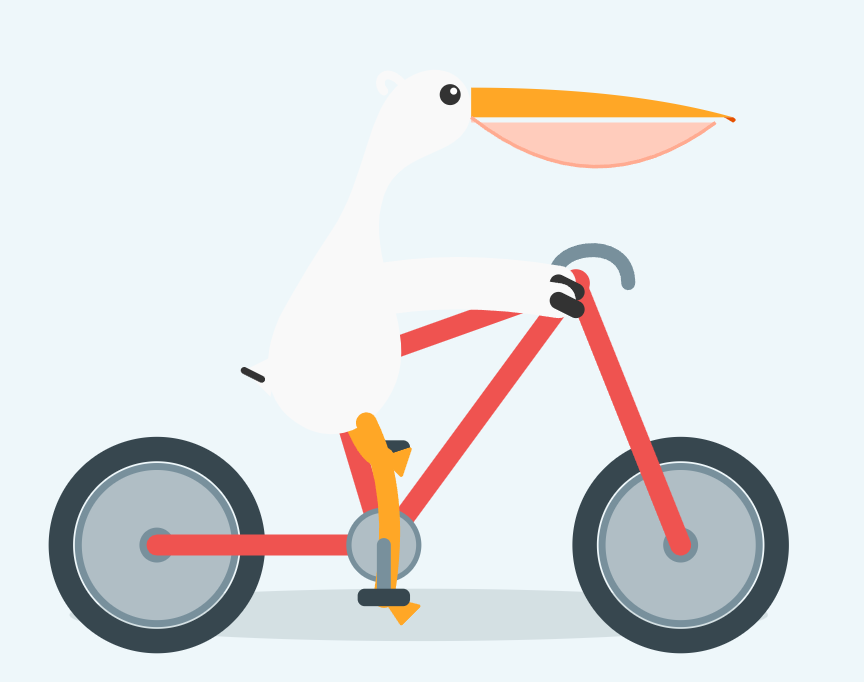
🚨 FIRST GEMINI 3.0 PRO OUTPUT 👀
Finally we are seeing the much expected model in AI Studio as AB testing, and it seems to be better than any previous model. Yes, better than Zenith.
Prompt: Create code for an SVG of a pelican riding a bicycle as nicely as you can
HLE’s no help at all for real work. You can crush the hardest questions and make the dumbest mistakes—both at the same time.
Quit testing if the model’s “smart”; test if it’s actually useful.
For a model, being smart and being useful don’t have squat to do with each other.