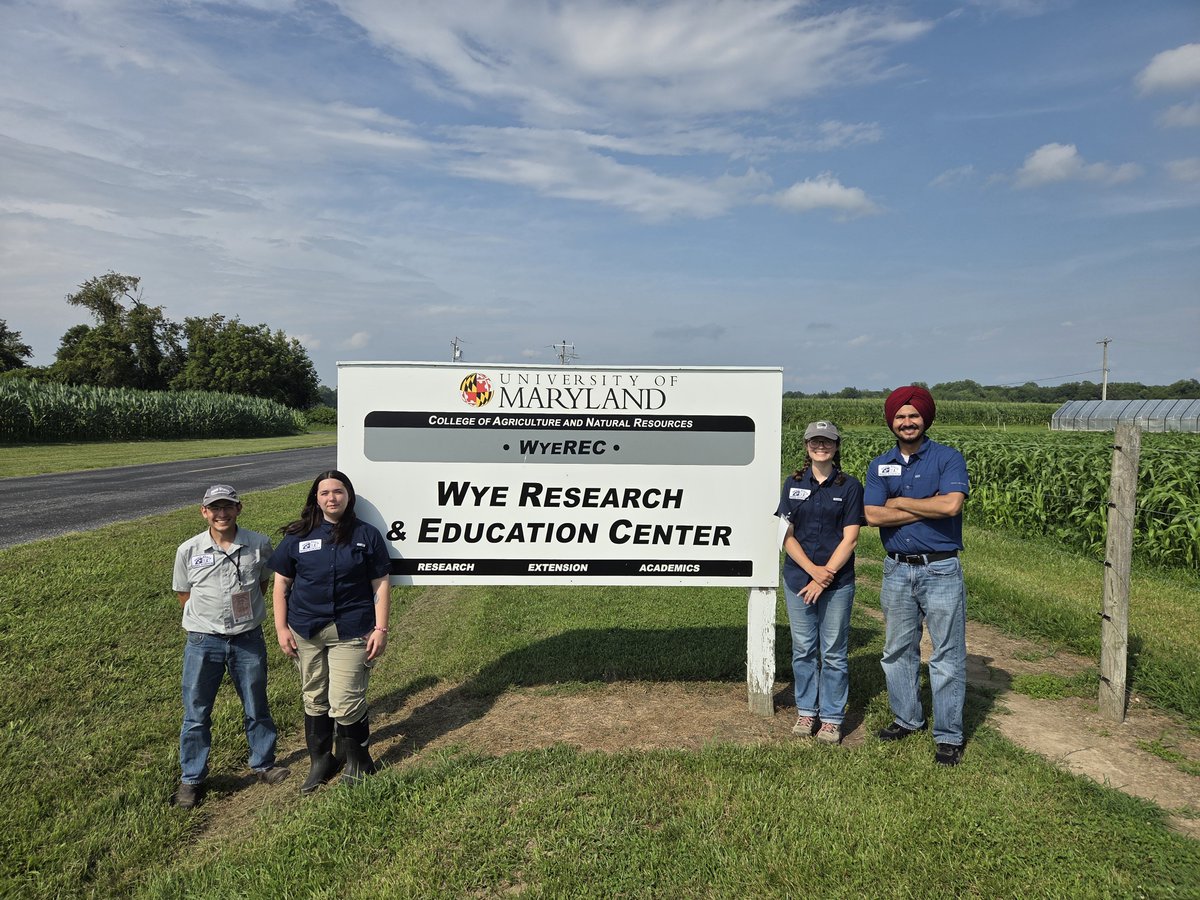
Excited to share that I’ve successfully defended my Master’s thesis! I am grateful to my advisor, Dr.
@Maity_Weed, co-advisor Dr. @D_Russell2 and other committee memebers for their guidance, support and encouragement throughout this journey!
#WarEagle 🦅 @AuburnAg
Lots of interest in #Convintro following our video posted earlier this year! One recurring question I’ve received from growers and crop advisors is about soybean crop safety.
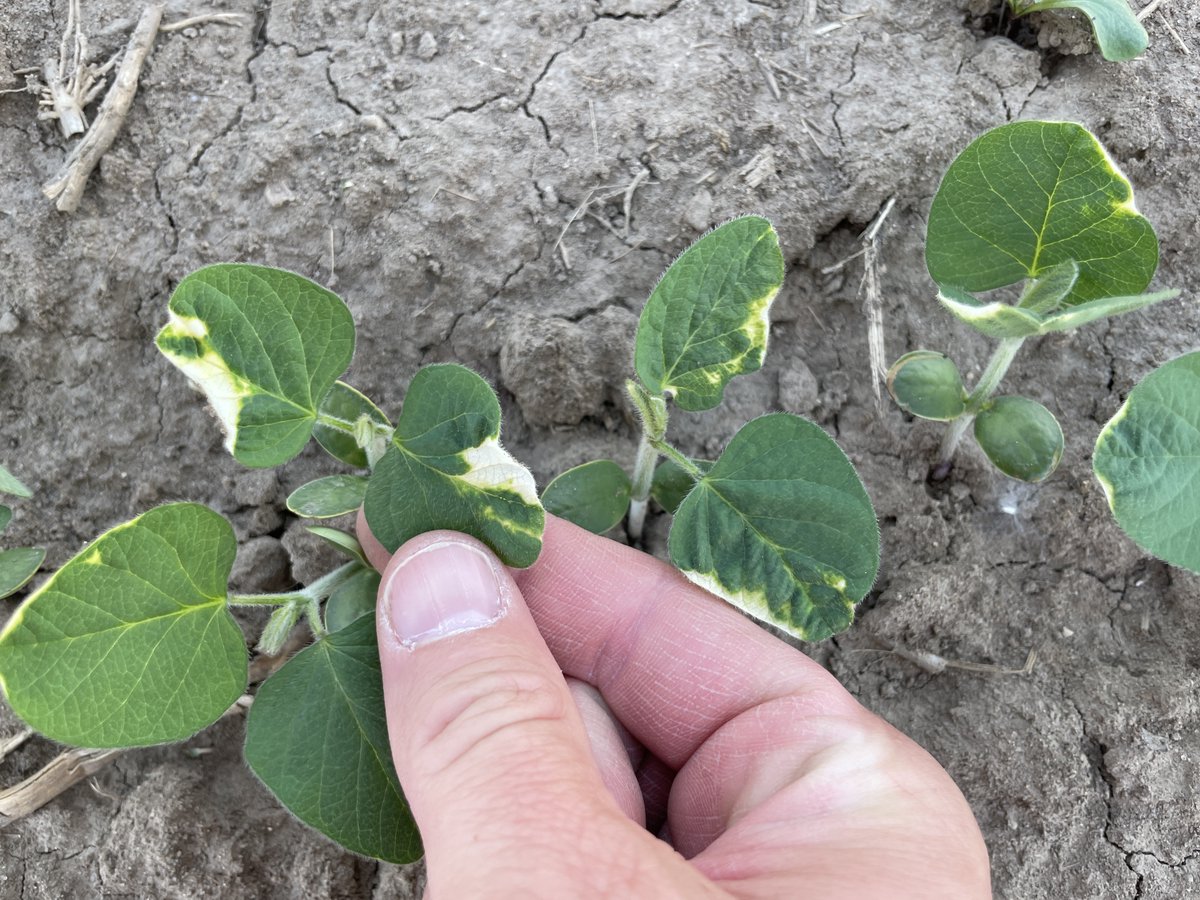
The active ingredient in Convintro is #diflufenican (Group 12), a phytoene desaturase (PDS) inhibitor that disrupts carotenoid biosynthesis, resulting in bleaching of susceptible plants.
Over the years, our #WiscWeeds research has occasionally documented temporary soybean leaf bleaching (see photo), particularly following heavy rainfall after crop emergence.
The good news? In trials where we observed this early-season injury, we did not detect soybean yield reductions.
Sharing this photo so growers and crop advisors considering Convintro for 2027 are aware of this potential early-season response and aren’t caught by surprise if they observe it in their fields.
Product formulation matters!
Our ongoing #WiscWeeds research, conducted in collaboration with agricultural cooperatives across Wisconsin, shows that several generic #glufosinate products evaluated thus far have underperformed compared to brand-name products, despite equivalent active ingredient rates.
Formulation and built-in adjuvants can make a BIG difference! More research underway. Stay tuned!
Six hundred sorghum plants. Each a genetically unique line from a different part of the globe. Moving around and being weighed watered and photographed on conveyor belts.
⚠️ HPPD resistance is one to watch closely.
These photos from Dr. Luma Loureiro show a #waterhemp (Amaranthus tuberculatus) population confirmed resistant to mesotrione applied POST (left) and PRE (right).
HPPD-inhibitors (Group 27 herbicides) are critical tools in #corn, and their importance will only grow as new #soybean traits expand opportunities for HPPD use.
More use = more selection pressure!
We need to be good stewards of HPPD-inhibitors and protect their utility across cropping systems.
Great experience at the 2026 NEWSS Weed Contest!
Team: 2nd Place Overall
Individual: 3rd Overall
1st in Herbicide Symptomology
1st in a Farmer Problem section
Thank you @caiobrunharo and Dwight Lingenfelter for the opportunity, guidance, and support.
@NE_WeedSci@WSSA_GSO
It may sound like common sense to some, but many #glufosinate applications still go out without AMS (ammonium sulfate).
Watch the difference it makes on velvetleaf control ⬇️
I am excited to share that I have been awarded Milton E. Mohr scholarship for 2025-26 by Nebraska center for biotechnology. I am thankful to Drs. @AmitUNL and Mamo for their continued support!
@unlagrohort
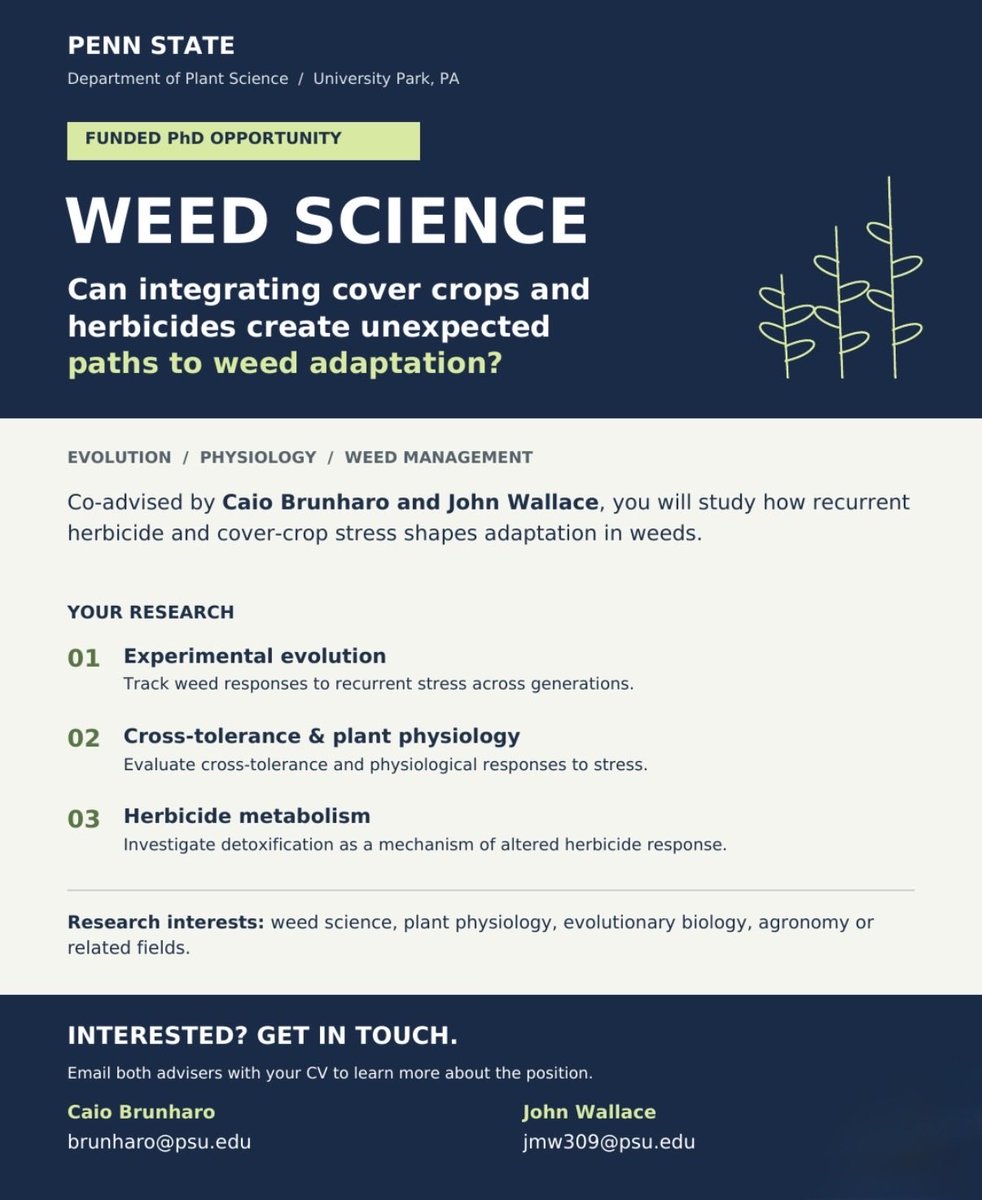
I am co-hiring a postdoc w/ Buanafina Lab. Projects related to herbicide resistance diagnostics and functional characterization of cell wall-related genes. PD here: https://t.co/tPDVQdGS1G
**Do reach out w/ Qs!**
Apply by April 30. Start ASAP!
@PSUPlantScience@agsciences
An invasive mullein patch spotted in #Yosemite is a reminder of how quickly #invasiveplants can colonize disturbed sites. Even “benign” species can outcompete natives & alter ecosystem function.
https://t.co/TjAH4zXkcQ
#WSWS#weedscience#EDRR
Another study from my master’s has been published in Scientific Reports!
We explored a quick lab method to predict Palmer amaranth seed longevity: a step toward better weed management.
https://t.co/1327VkQgto
Thank you Dr. Maity for your constant support and guidance!
Excited to share the second chapter of my MS thesis, which focuses on non-chemical methods of weed control in peanut. It is now published in the Agronomy journal. Grateful to my advisory committee and reviewers. https://t.co/1D3RCH046F
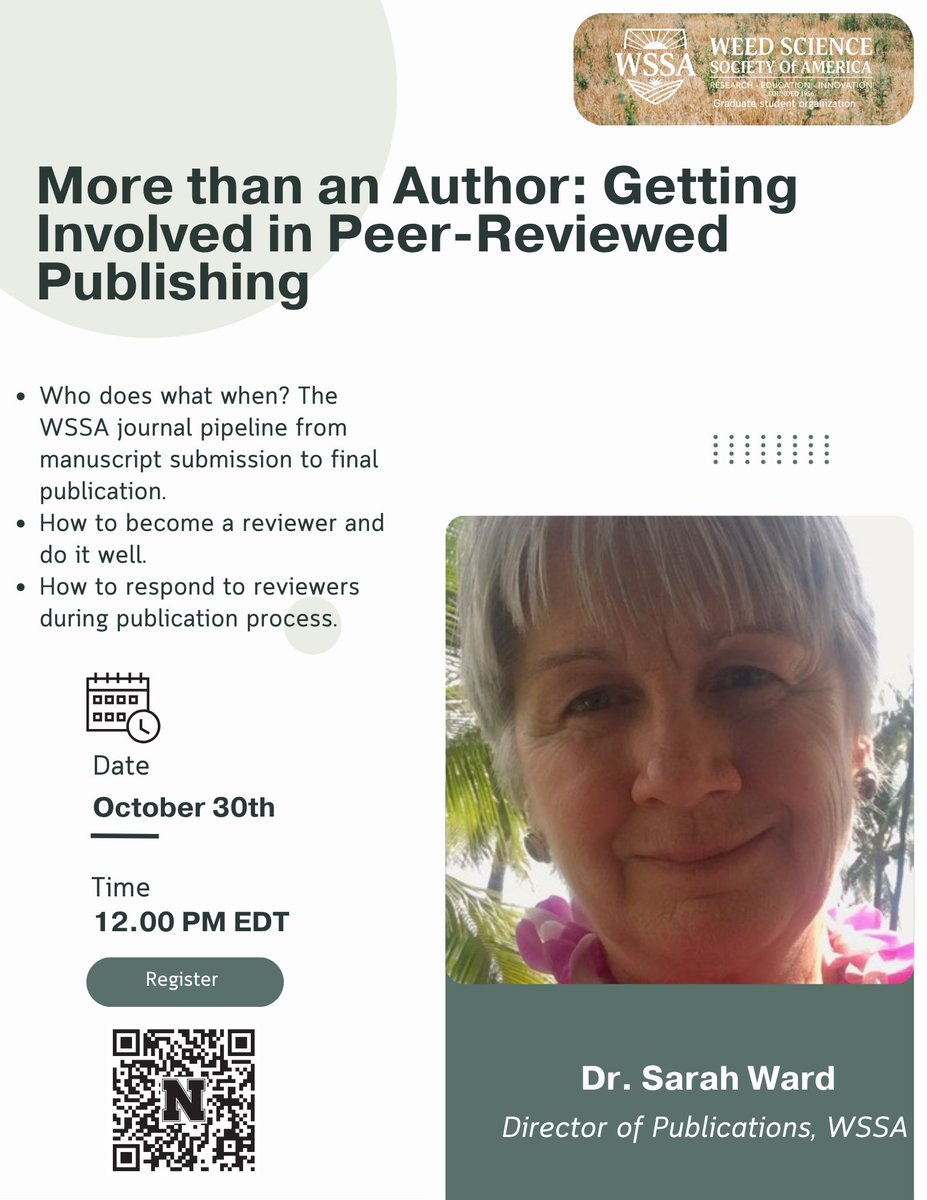
Join WSSA GSO for “More than an Author: Getting Involved in Peer-Reviewed Publishing.” Webinar by Dr. Sarah Ward.
Register by Monday, October 27! https://t.co/W9IlovvRtm
Most R users know it as a statistics and visualization tool. But did you know you can also process and analyze images directly in R?
The imager package turns R into a lightweight image processing toolkit. You can load photos, apply filters, detect edges, segment regions, and even prototype computer vision workflows without leaving R.
Some things you can do with imager:
🔹 Read and write image files
🔹 Apply blurring, sharpening, and transformations
🔹 Run edge detection and feature extraction
🔹 Work with color channels and pixel-level data
🔹 Visualize results interactively inside R
The figure below shows several examples from the package website: detecting objects in a star field, applying abstract transformations, filtering a sailboat image, and highlighting motion differences between video frames.
You can find the package website here: https://t.co/NWDdMYBzNs
If you’d like more tips and resources on R, Python, statistics, and data science, you might enjoy my newsletter. Check out this link for more details: https://t.co/X93SeCe0rb
#Python #Python3 #database #RStats #RStudio #DataAnalytics
We are looking for qualified and interested students for a few PhD positions in our Precision Ag program to work on planting and spraying technologies, including spray/seeding drones. Please see the GRA position details below. @AU_PrecisionAg@bsen_au