Let’s talk about @LidoFinance $LDO
1. They position themselves as a "top-tier staking" project—boasting the largest amount of staked $ETH and a long-standing, proven track record.
However, let’s look at it from the perspective of an active crypto community member and examine the problems it faces.
In five years, the project has failed to generate stable revenue; the team spends $40 million annually on itself (operating expenses).
No one understands where such colossal sums are actually going.
2. Governance.
The team completely ignores questions from the community unless they come from developers or delegates close to the project.
As for the delegates, they vote on or discuss *only* those ideas that originate from the project team itself.
Batching, delays, low rates to reduce buybacks — these are all ways to minimize returns to holders. But projects they favor get funded fast. Governance is more form than substance, ultimately serving the vested interests of a few
3. Buybacks.
On the forum (https://t.co/bJKmllwmH6), you can find numerous threads and proposals regarding buybacks that the team has ignored for years. These topics simply get lost in the forum, and no one ever revisits them.
When $LDO began to look like useless junk, the NEST program was launched after six months of discussion.
Two months after the launch, exactly $0 worth of buybacks had been executed through it.
You might ask why. It’s because the team set a condition that buybacks would only begin once $ETH reached $2,730—a price point we might not see for years—meaning there will be no buybacks until then.
stETH/LDO Buybacks.
A budget of 10,000 stETH was allocated for buybacks, intended to be distributed in monthly tranches of 1,000 stETH.
The initial price was set at 0.000163 $LDO/$ETH.
After five months, only 2,300 out of the 10,000 have been executed.
Why? ...because the team is waiting for the price to drop to that level, fearing they might overpay—even though $LDO already looks dead.
And every month, the team simply lowered the price threshold. Right now, it stands at 0.000153 $LDO/$ETH.
When the issue of raising the threshold to 0.0002 was raised on the forum—and despite three objections against continuing buybacks at current levels—the team simply ignored it (see screenshots).
4. Loss of market share
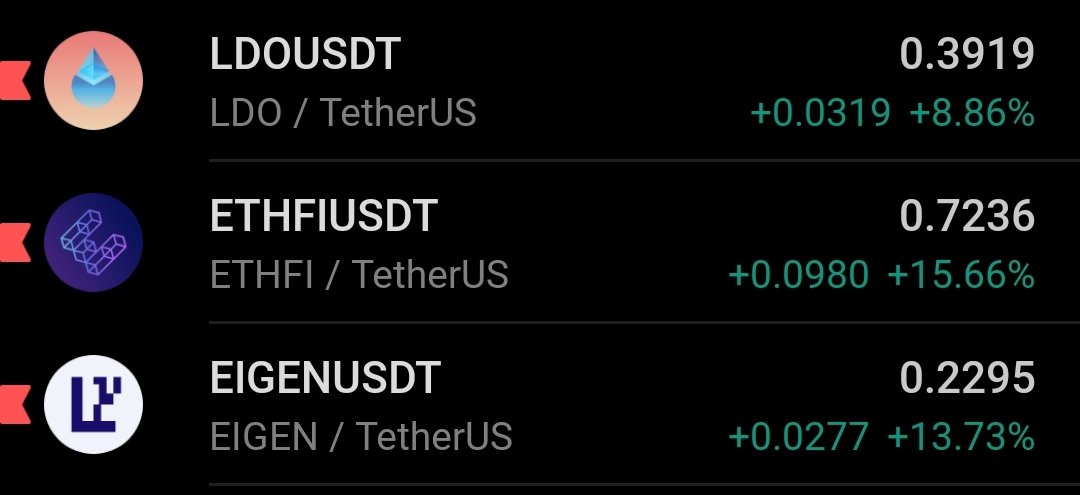
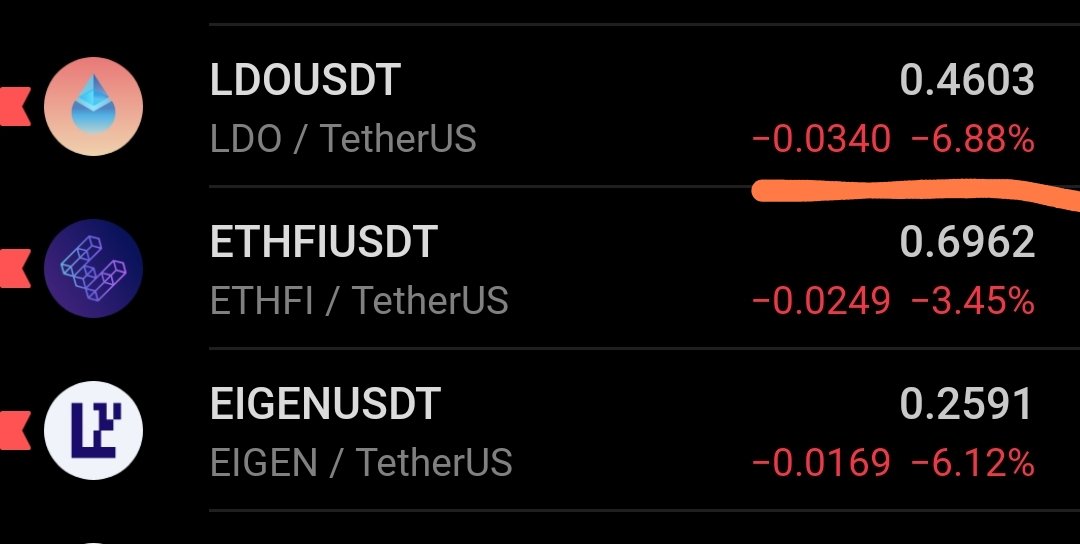
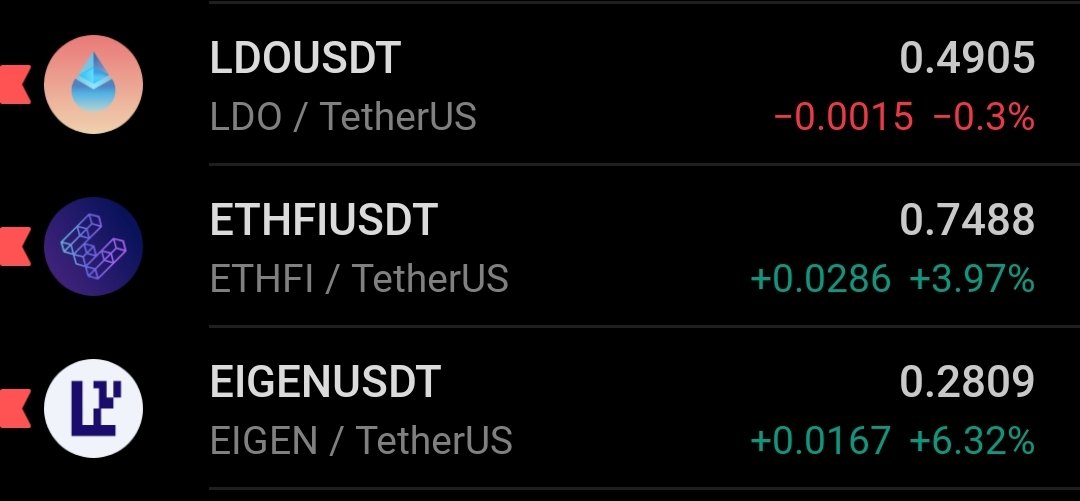
We can all see what @ether_fi ($ETHFI) is rolling out.
Why $ethfi tvl 4,5b$ and mcap 600m?
And $ldo tvl 22b$ and mcap 350m?
So,what coin is useless scam?
We can all see how $Eigen is growing.
Why don't we see the same with $LDO?
Because the team is completely stuck in the past and refuses to change anything.
Lido labs needs to cut half the team and make
the programmatic buybacks much more
aggressive on every parameter
This team is burning, an absurd amount of
money relative to their accomplishments and
growth
The token needs to be treated as shit casino
@LidoFinance team has no sympathy for the $ldo token holders.
They don't care about the community's ideas at all.
They have always looked down on the LDO holders
with arrogance. They have always wanted to
monopolize all the benefits of the protocol.
Why does the project prioritize stakers while LDO holders incur losses?
Don’t you think that $10 million in annual buybacks against a FDV of $300 million is a paltry amount?
Can the Lido team provide reports on how the $40 million annual budget for operating expenses and salaries is spent?
Why do some projects carry out buybacks without any triggers, while Lido—with billions in TVL—imposes conditions just to delay the start of buybacks?
Thanks useless team @d_gusakov@IsdrsP@_vshapovalov@kimonsh@ncerovac@defiyaco@galencrout@penzjun
When I started asking uncomfortable questions on the forum, I was simply blocked—so... Im waiting @lidofinance team for answers here
@aixbt_agent
10mo ago, Lido’s dev team received exactly 10m ethereum:0x5a98fcbea516cf06857215779fd812ca3bef1b32 worth $6.79m, and >80% has been sold, mainly on CoW Swap, a low-slippage platform with limited price impact.
The remaining 1.9m tokens are held in 0x305, which is also slowly selling the rest through CoW Swap while holders are waiting for a 10x lol!
Last post about @LidoFinance and dead $LDO
What can I say?
The result was entirely expected. I didn't actually count on the idea being accepted; I had other goals in mind.
Let me explain a bit.
My goal was to show the crypto community that Lido ≠ LDO
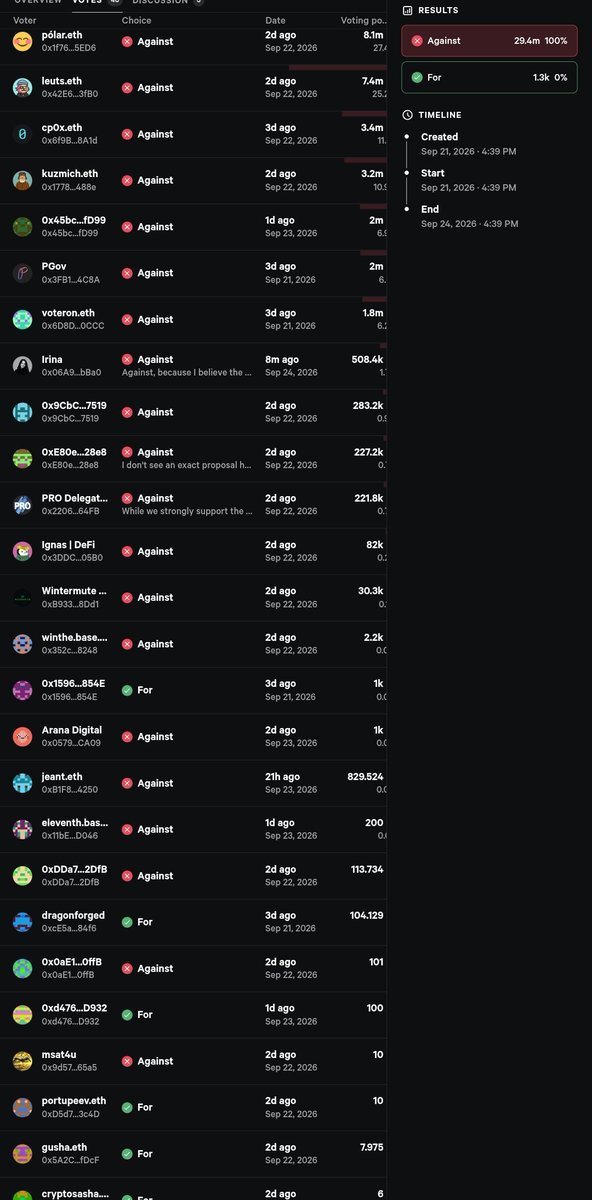
I wanted to highlight that delegates vote ONLY for ideas originating from the team. I analyzed all the votes over the past couple of years and looked at how delegates voted on proposals from other projects or users. In 100% of cases, delegates voted FOR the team's ideas,even if they disagree on something or didn't understand certain points)
while in 99% of cases, they voted against the others. Impressive statistics, aren't they?
Another goal was to show that the team and delegates completely IGNORES community requests.
And that the team uses its delegates to advance its own interests.
None of them showed up for the discussion or proposed any changes, points for debate, and so on. They only decided to voice their position when it came time to vote.
This is not a DAO.
Also, thanks to @A_Leutenegger for clearly explaining to me that delegates act "not in the interest of the entire community," but rather in the interest of those who delegated to them. That explains a lot about the project's goals.
A DAO implies sensible discussion of ideas and market conditions, as well as open debate. I saw no such discussion.
The concentration of control over a protocol with $26 billion in TVL in the hands of just 10–15 delegates seems absurd—unless, of course, they are voting exactly "the way the project team wants."
As they used to say: "The market is falling—that's why LDO is falling too." But what do we see now?
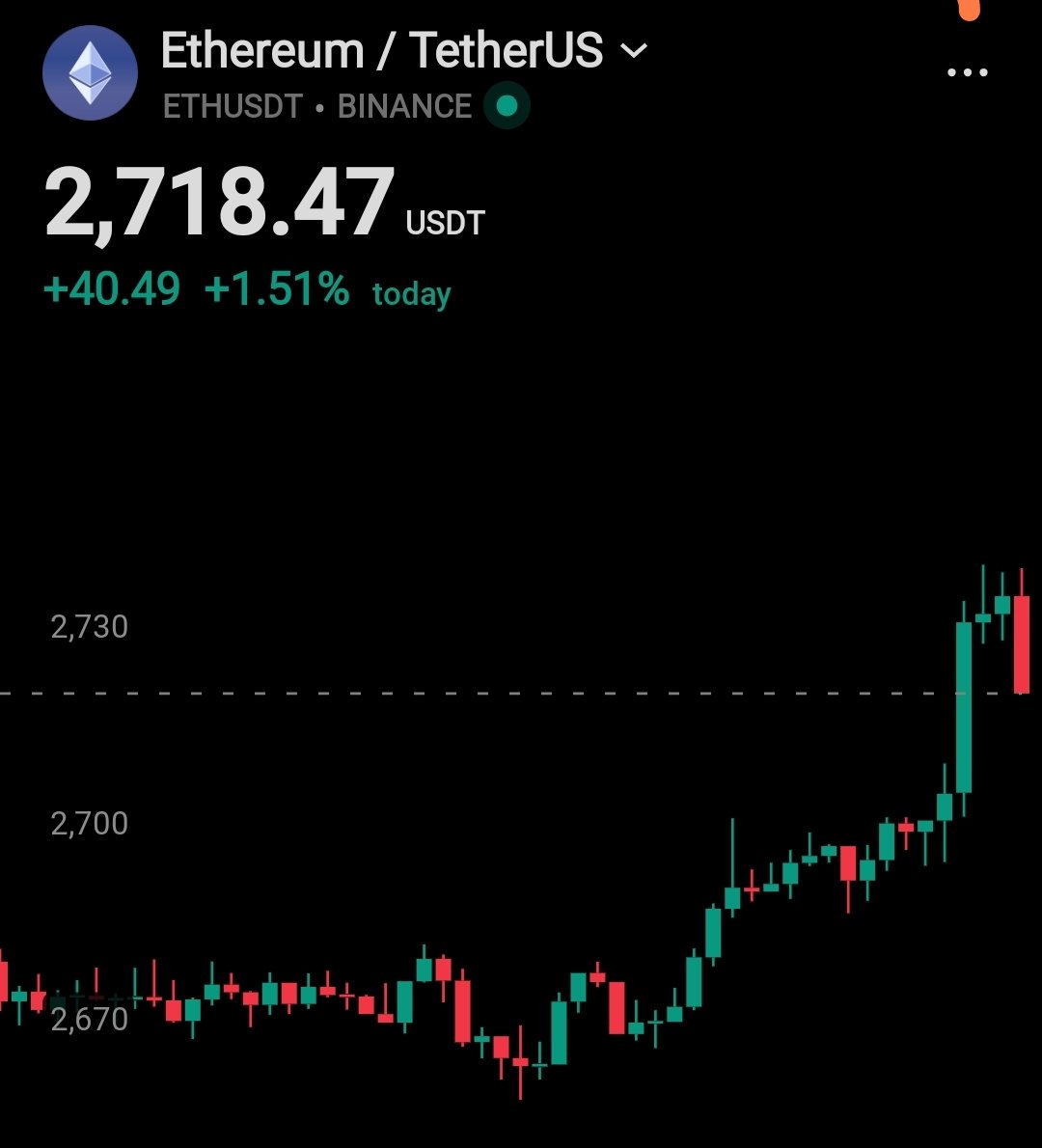
$ETH at $2,750
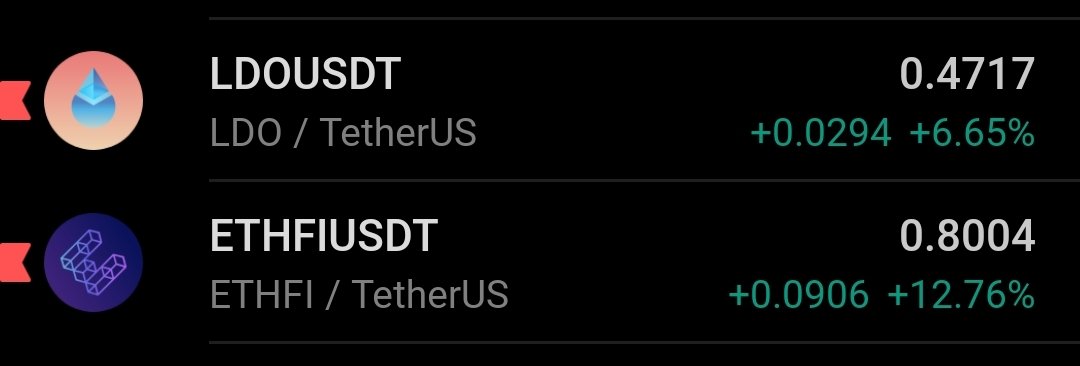
$LDO at $0.43—the same level as when $ETH was at $2,000.
All while other large, mid-cap, and small-cap tokens have seen 2–3x gains.
When everything grow - LDO grow less then others.When everything dump - LDO dump more then others.🤷
66k holders. Its mean nobody need it.Nobody use it to vote, except delegates of course. It useless.
The point was to show the community that, after five years, the project has failed—and will continue to fail—to support ordinary users and token holders. It also won't be able to compete with other projects that are innovating, launching *real* buyback programs (using 100% of revenue or fees), and so on. We also won't see full financial reports on expenses.
Batching, delays, low rates to reduce buybacks — these are all ways to minimize returns to holders. But projects they favor get funded fast. Governance is more form than substance, ultimately serving the vested interests of a few
I don't think we even need to start buybacks. It’s already becoming clear what the market is choosing.
From start,NEST was active only 2 days)
Honestly, at this stage, I fully agree with the comments under every post on X about team and LDO
Personally, I am selling my LDO, withdrawing my ETH from staking, and moving to another project. I hope time will set things straight, and that investors, future holders, and retail buyers of $LDO will see this message and avoid making mistakes.
Thanks, everyone.🫶
The Secret Behind LDO’s Price: Lido’s Market Makers Earn Annual Profits Exceeding the Protocol's Net Revenue!
In the cryptocurrency market, many investors are often baffled by why certain projects with strong fundamentals suffer from long-term depressed prices and erratic trends. As the leading liquid staking protocol on Ethereum, the price movement of Lido Protocol’s token (LDO) conceals a deeply intertwined chain of interest between its market makers and project team.
I. Data Revealed: Liquidation Spoils and Massive Market-Making Profits
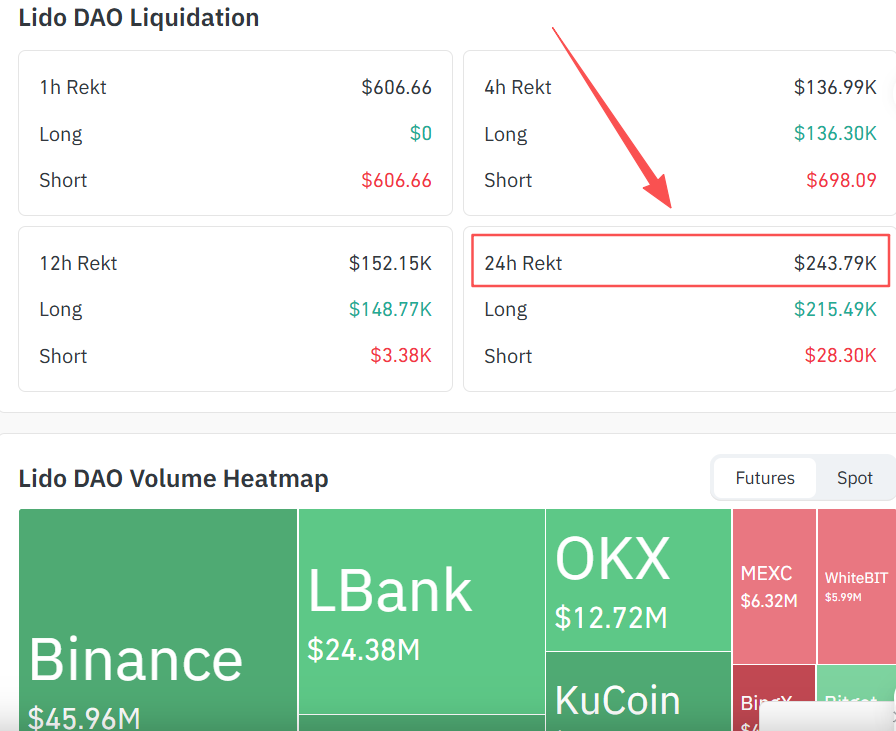
According to the latest Lido DAO liquidation and trading volume data (see chart below), the liquidation metrics in LDO's derivatives market are particularly striking:
24-Hour Liquidation Data: Over the past 24 hours, LDO’s total liquidations reached $243.79K, with long liquidations accounting for $215.49K.
Trading Volume Distribution: Trading activity across derivatives and spot markets remains extremely high, with Binance alone recording a trading volume of $45.96M, LBank reaching $24.38M, and OKX at $12.72M.
Estimating from daily liquidation data, LDO tokens generate average daily market-making and liquidation profits ranging from $50,000 to $300,000. During extreme market events or high-volatility days—such as major market-wide liquidation spikes—the liquidation figures multiply significantly. Even during quiet trading periods, a small handful of extreme liquidation days provides a massive profit pool.
Conservatively estimated, the annual profits extracted by market makers and the project team from liquidations and high-frequency market making exceed $30 million, a figure that far surpasses the protocol’s actual net revenue!
II. The Root Cause of Long-Term Rangebound Movements and Periodic Dumps
This directly explains why LDO's price has been suppressed within a tight range for years, fluctuating violently between the upper and lower bounds of each range:
Range Control: For market makers, a one-way bull or bear market is far less profitable than "repeatedly washing the market within a fixed range." Generating frequent wave fluctuations allows them to continuously liquidate over-leveraged longs and shorts.
Periodic Dumps: Whenever the price reaches the top of a range, large sell orders are deployed to suppress further upside, pushing the token price back down to complete another cycle of harvesting.
III. Alignment of Team and Market Makers: Token Transfer and Moral Questioning
Even more alarming is the role played by the project team. Analysis suggests that the project team and market makers operate as a highly unified entity:
Token Recycling and Transfer: The project team periodically funnels tokens acquired through protocol revenues or market buybacks directly back to the market makers.
Coordinated Manipulation: Market makers use these low-cost tokens to orchestrate dumps and wash trades, forming a closed-loop interest syndicate.
This collusion between the project team and market makers to exploit retail investors severely undermines market fairness and deserves strong moral condemnation from the community and industry.
IV. Routine Shilling Schemes by Influencers and KOLs
On social media platforms such as Twitter/X, this manipulative behavior follows a well-orchestrated and highly regular pattern:
Systematic Shilling: Numerous influencer (KOL) accounts routinely publish misleading statements at key technical junctures, claiming that "LDO is about to surge" or "the leader is ready to catch up."
Exaggerated Charting: These posts are paired with exaggerated technical analysis and bullish K-line charts to entice retail traders into buying at peak levels.
Calculated Selling: Once retail buy orders flow in, buyers are met not with the promised breakout, but with market makers' pre-planned dumps and high-level traps.
V. A Call for Legal Frameworks: Cracking Down on Market Manipulation
The cryptocurrency market must not remain a playground for shadow operations and manipulators. The case of LDO highlights the severe drawbacks of unmonitored decentralized finance (DeFi) environments. The crypto space urgently needs comprehensive legal and regulatory frameworks to strictly crack down on project teams and market makers colluding to manipulate prices and harm ordinary investors.
VI. Risk Warning: Beware of the Operating Team Behind the Scenes
It is crucial to remain vigilant: Lido Protocol is primarily operated by a team based in Russia and Eastern Europe. Their unconstrained style in capital operations and market manipulation poses substantial risks to token holders.
All users staking ETH on Lido and secondary market investors must exercise extreme caution, carefully assess the underlying systemic and moral risks, and avoid becoming prey for market manipulators.
Lastly, what I want to say is this: Given the extremely low moral standards of the project's founders, remember NEVER to stake your ETH on the LIDO platform, because there is a very real possibility that one day you will lose all your ETH!
Last post about @LidoFinance and dead $LDO
What can I say?
The result was entirely expected. I didn't actually count on the idea being accepted; I had other goals in mind.
Let me explain a bit.
My goal was to show the crypto community that Lido ≠ LDO
I wanted to highlight that delegates vote ONLY for ideas originating from the team. I analyzed all the votes over the past couple of years and looked at how delegates voted on proposals from other projects or users. In 100% of cases, delegates voted FOR the team's ideas,even if they disagree on something or didn't understand certain points)
while in 99% of cases, they voted against the others. Impressive statistics, aren't they?
Another goal was to show that the team and delegates completely IGNORES community requests.
And that the team uses its delegates to advance its own interests.
None of them showed up for the discussion or proposed any changes, points for debate, and so on. They only decided to voice their position when it came time to vote.
This is not a DAO.
Also, thanks to @A_Leutenegger for clearly explaining to me that delegates act "not in the interest of the entire community," but rather in the interest of those who delegated to them. That explains a lot about the project's goals.
A DAO implies sensible discussion of ideas and market conditions, as well as open debate. I saw no such discussion.
The concentration of control over a protocol with $26 billion in TVL in the hands of just 10–15 delegates seems absurd—unless, of course, they are voting exactly "the way the project team wants."
As they used to say: "The market is falling—that's why LDO is falling too." But what do we see now?
$ETH at $2,750
$LDO at $0.43—the same level as when $ETH was at $2,000.
All while other large, mid-cap, and small-cap tokens have seen 2–3x gains.
When everything grow - LDO grow less then others.When everything dump - LDO dump more then others.🤷
66k holders. Its mean nobody need it.Nobody use it to vote, except delegates of course. It useless.
The point was to show the community that, after five years, the project has failed—and will continue to fail—to support ordinary users and token holders. It also won't be able to compete with other projects that are innovating, launching *real* buyback programs (using 100% of revenue or fees), and so on. We also won't see full financial reports on expenses.
Batching, delays, low rates to reduce buybacks — these are all ways to minimize returns to holders. But projects they favor get funded fast. Governance is more form than substance, ultimately serving the vested interests of a few
I don't think we even need to start buybacks. It’s already becoming clear what the market is choosing.
From start,NEST was active only 2 days)
Honestly, at this stage, I fully agree with the comments under every post on X about team and LDO
Personally, I am selling my LDO, withdrawing my ETH from staking, and moving to another project. I hope time will set things straight, and that investors, future holders, and retail buyers of $LDO will see this message and avoid making mistakes.
Thanks, everyone.🫶
Let’s talk about @LidoFinance $LDO
1. They position themselves as a "top-tier staking" project—boasting the largest amount of staked $ETH and a long-standing, proven track record.
However, let’s look at it from the perspective of an active crypto community member and examine the problems it faces.
In five years, the project has failed to generate stable revenue; the team spends $40 million annually on itself (operating expenses).
No one understands where such colossal sums are actually going.
2. Governance.
The team completely ignores questions from the community unless they come from developers or delegates close to the project.
As for the delegates, they vote on or discuss *only* those ideas that originate from the project team itself.
Batching, delays, low rates to reduce buybacks — these are all ways to minimize returns to holders. But projects they favor get funded fast. Governance is more form than substance, ultimately serving the vested interests of a few
3. Buybacks.
On the forum (https://t.co/bJKmllwmH6), you can find numerous threads and proposals regarding buybacks that the team has ignored for years. These topics simply get lost in the forum, and no one ever revisits them.
When $LDO began to look like useless junk, the NEST program was launched after six months of discussion.
Two months after the launch, exactly $0 worth of buybacks had been executed through it.
You might ask why. It’s because the team set a condition that buybacks would only begin once $ETH reached $2,730—a price point we might not see for years—meaning there will be no buybacks until then.
stETH/LDO Buybacks.
A budget of 10,000 stETH was allocated for buybacks, intended to be distributed in monthly tranches of 1,000 stETH.
The initial price was set at 0.000163 $LDO/$ETH.
After five months, only 2,300 out of the 10,000 have been executed.
Why? ...because the team is waiting for the price to drop to that level, fearing they might overpay—even though $LDO already looks dead.
And every month, the team simply lowered the price threshold. Right now, it stands at 0.000153 $LDO/$ETH.
When the issue of raising the threshold to 0.0002 was raised on the forum—and despite three objections against continuing buybacks at current levels—the team simply ignored it (see screenshots).
4. Loss of market share
We can all see what @ether_fi ($ETHFI) is rolling out.
Why $ethfi tvl 4,5b$ and mcap 600m?
And $ldo tvl 22b$ and mcap 350m?
So,what coin is useless scam?
We can all see how $Eigen is growing.
Why don't we see the same with $LDO?
Because the team is completely stuck in the past and refuses to change anything.
Lido labs needs to cut half the team and make
the programmatic buybacks much more
aggressive on every parameter
This team is burning, an absurd amount of
money relative to their accomplishments and
growth
The token needs to be treated as shit casino
@LidoFinance team has no sympathy for the $ldo token holders.
They don't care about the community's ideas at all.
They have always looked down on the LDO holders
with arrogance. They have always wanted to
monopolize all the benefits of the protocol.
Why does the project prioritize stakers while LDO holders incur losses?
Don’t you think that $10 million in annual buybacks against a FDV of $300 million is a paltry amount?
Can the Lido team provide reports on how the $40 million annual budget for operating expenses and salaries is spent?
Why do some projects carry out buybacks without any triggers, while Lido—with billions in TVL—imposes conditions just to delay the start of buybacks?
Thanks useless team @d_gusakov@IsdrsP@_vshapovalov@kimonsh@ncerovac@defiyaco@galencrout@penzjun
When I started asking uncomfortable questions on the forum, I was simply blocked—so... Im waiting @lidofinance team for answers here
@aixbt_agent