There's so much value out there, but I don't have the TIME to consume all of it.
And I know I'm not the only one.
So we built something to fix it.
It pulls the best podcasts each week across whatever topics you follow, strips out the noise, and gives you the actual ideas, arguments, and takeaways in a few minutes of reading.
No fluff. No filler. Just straight to the point.
It's free right now. I'm sharing it because I genuinely think it's useful - and I want feedback from people who care about their time as much as I do.
Join today and save 40h+ per month:
https://t.co/RLsDhCcSI9
Micron hit an ALL-TIME HIGH of $471 eight days ago.
It's down over 20% since.
A few weeks ago I literally told you to STAY AWAY from semiconductor stocks. That the "it's different this time" crowd was dead wrong. That Micron's price-to-book was the most expensive in the stock's history, dressed up in a low PE because earnings were wildly above trend.
The oldest trap in cyclical investing.
And what happened this week? Google dropped TurboQuant - a compression algorithm that cuts AI memory requirements by 6x. One research paper from Alphabet and Micron lost $90 per share in a week.
THIS is exactly what I warned about.
When any industry generates obscene profits, innovation floods in to compete those profits away. That's how capitalism works. And semiconductors are not exempt from the laws of economics no matter how many times CNBC tells you AI demand is "permanent."
Micron just posted a phenomenal quarter. Revenue nearly tripled. Margins at 75%. Earnings crushed estimates.
And the stock FELL every single day after reporting.
Because the market is a forward-looking machine. And forward-looking machines eventually do the math on what happens when $650 billion in AI capex meets algorithmic efficiency that slashes memory needs overnight.
The cycle always turns. Always.
Meanwhile, the rotation I've been calling continues. Gold above $4,600. Energy ripping.
The playbook hasn't changed: avoid what's overpriced and own what's cheap.
I don't want you to believe I'm doing this to brag.
I just want every single one of you to MAKE MONEY.
For years they told you stock picking was dead.
"Just buy the index. Don't bother with research. The passive bid will carry you."
I'm here to tell you that era is OVER. And the people who don't adjust are going to pay for it.
The S&P 500 just broke below its 200 day moving average for the first time in 214 sessions. It's on pace for its fourth consecutive losing week.
The Mag 7 which carried the entire market for 3 years are getting dismantled.
Microsoft down 18% year to date. Amazon down 10%. The Roundhill Magnificent Seven ETF down 6% while the equal-weight S&P is outperforming.
The rotation I've been calling for is here. R is for Rotation, not Recession.
But here's what most people don't understand about passive investing, and why this unwind could be SAVAGE:
The machine that drove prices up without caring about fundamentals is going to drive them down the same way. There's been no real price discovery in large-cap US equities for years.
Money flowed in because money was flowing in. That's NOT investing.
I saw the exact same dynamic in Japan in the 1980s. I ran the Fidelity Overseas Fund during that bubble.
The Japanese market got to two-thirds of the entire non US equity index. Banks traded at 100x earnings, 10x book.
The float was so tight you couldn't buy or sell ANYTHING in size without moving the market 20%.
Jeremy Grantham, John Templeton - all the greats were screaming about it.
They were early. But once the worm turned, it was fast. And the beautiful part was you didn't need to be a genius. You just had to avoid Japan and index everything else. Hit them where they ain't.
That's where we are with US mega-cap tech right now.
You don't need to make complicated bets. Just stop being concentrated in the same 7 stocks that everyone else owns.
Step 1: switch your cap-weighted S&P into the equal-weight RSP. Overnight you cut your Mag 7 exposure from 35% to 0.2% per name. The equal weight has been winning all year. I think that continues.
Step 2: look overseas. International markets have been outperforming the US in 2026. European equities, Japanese stocks, emerging markets - all cheaper, all under-owned, all benefiting from the capital rotation out of US tech.
Step 3: get into real assets. Gold. Energy. Commodities. These are the sectors that perform when inflation is the dominant risk, which it is. Oil at $96 with a war in the Persian Gulf isn't going back to $50 regardless of what any politician promises.
And step 4: if you have the stomach for it, there's a portfolio of overvalued garbage out there that's going to get cut in half. Companies with no earnings, no moat, and no reason to exist at current prices. The short side hasn't been this attractive since 2000.
After years of the index crushing active managers, the tables have TURNED.
Dispersion is widening. Fundamentals are starting to matter again.
Stock picking isn't dead.
IT WAS JUST SLEEPING
IRANIAN MEDIA SAYS THERE WAS NO DIRECT OR INDIRECT CONTACT WITH TRUMP AND CLAIMS HE WITHDREW AFTER THREATENING TO ATTACK WEST ASIA ENERGY FACILITIES: RTRS
BREAKING. Thirty-six hours ago President Donald Trump said “obliterate.” This morning he said “productive conversations.” The question every trader, diplomat, and general is asking: what broke between Saturday night and Monday morning?
Six things broke simultaneously. Not one of them was Iranian.
First. The bill arrived. The Pentagon requested over $200 billion in supplemental funding. The war cost $11.3 billion in six days, $16.5 billion in twelve. At $1.38 billion per day and accelerating, congressional resistance to the supplemental is real. The money that was supposed to fund “days not weeks” now needs a vote that may not pass.
Second. The Fed killed the rate-cut thesis. On March 18, the Federal Reserve held rates at 3.5 to 3.75 percent and revised its 2026 PCE inflation forecast to 2.7 percent from 2.4, citing the Iran war energy shock. The dot plot shows one cut in all of 2026, down from two. Every basis point of delayed easing is pain for housing, credit, and the Magnificent Seven. The war that was supposed to demonstrate strength is demonstrating inflation.
Third. The allies revolted politely. Twenty-two countries signed up to coordinate on Hormuz. Zero committed a warship during combat. Japan is releasing strategic reserves. South Korea’s Kospi has fallen 12 percent. Europe’s gas surged 35 percent after Qatar’s LNG was knocked offline & declared force majeure up to 5 years. Trump called NATO “cowards” and got a press release. The coalition of the willing is a coalition of the waiting.
Fourth. TSMC sent the signal. Taiwan imports nearly 97 percent of its energy. Its LNG reserves cover 11 days. Qatar supplies a third of global helium, which TSMC needs for chip fabrication. The helium is bottled behind a closed strait. Every Nvidia GPU, every Apple chip, every AI cluster depends on a fab in Hsinchu counting its gas in single-digit days. The Magnificent Seven have shed hundreds of billions as energy rotation crushes tech.
Fifth. Birol named the damage. The IEA chief told Australia this morning that 40 energy assets across nine countries are severely damaged, global oil supply has fallen 11 million barrels per day, the crisis exceeds both 1970s shocks combined, and no country is immune. He named fertilisers and helium as interrupted flows. The man who runs global energy security called the war Trump started the worst energy crisis in modern history.
Sixth. The midterms. Gas prices are up 93 cents per gallon. Sixty-six percent of Americans call this a war of choice. Sixty percent disapprove. Fifty-seven percent say it is going badly. The numbers that matter in Washington are not barrels per day. They are approval ratings in swing states where voters fill their tanks every Tuesday.
Six pressures. One post. President Trump did not discover diplomacy. He discovered arithmetic. The 48-hour ultimatum was a threat. The 5-day pause is a confession that the threat’s consequences were worse than its target. Destroying power plants would have sealed the strait permanently, triggered Ghalibaf’s promise to “irreversibly destroy” Gulf desalination and energy infrastructure, crashed TSMC’s supply chain, spiked inflation past 3 percent, and handed the midterms to the opposition on a platter of $7 gasoline.
The pause is real. The relief is not. The strait is still closed. The 40 assets are still damaged. The fertiliser is still blocked. The planting window is still closing. The five-day clock is already ticking.
The molecules do not negotiate. The molecules wait.
Full deep dive analysis:
https://t.co/iFmUcarGdV
As the world comes to terms with the entirely predictable fallout of the closure of the Strait of Hormuz, a thought.
This is a fraction of the turmoil the world would experience if China and the U.S + Japan went to war over Taiwan.
Building resilient supply chains and frankly a resilient civilization is costly and hard, but the choice is rely on China and potentially get bushwhacked by a major crisis or spend big on being self reliant.
Busting the cholesterol myth!
Unless it’s ridiculously high (over 300) LDL cholesterol is not a major risk factor for heart disease.
Dr Aseem Malhotra’s work shows there is no clear correlation between lowering LDL and preventing heart attacks.
In the high risk groups over five years, Statins give a median increase in life expectancy of 4 days.
Any government scientific body who say there is NO EVIDENCE that covid vaccines may cause cancer are either in my view ignorant of the accumulating evidence, incompetent, or lying.
Scientist and author Gregg Braden: "Climate change is a fact... It's also a fact that humans are not causing it."
"Is there more CO₂ in the atmosphere now than there was 10 years, 20, 50, 100 years ago? The answer is absolutely yes. Is it a bad thing?
The answer is no."
"Is it the most we've ever had? We're right about 440 parts per million right now. In geologic history... the Jurassic [had] over a thousand parts per million. Triassic, 2,000 parts per million."
"The Earth was lush. The Earth was green. Life was abundant during that time."
Credit: @GreggBraden@missmayim
🔥Florida Surgeon General: "They shouldn't be [getting COVID mRNA shots] because they are NOT FIT FOR HUMAN USE."
"Literally almost every single person knows someone who's had a bad reaction for them."
"They are TERRIBLE vaccines."
@FLSurgeonGen#MFPolicy
🚨RFK Jr. just said NO to new WHO rules.
Global lockdowns, vaccine passports, digital health IDs—this was a blueprint for medical totalitarianism.
And RFK just shut it down.
Here’s everything you need to know:🧵
Reporter: Do you have plans or are you considering firing Powell? What is your justification?
Trump: I was surprised he was appointed— surprised frankly that Biden put him in and extended him. We’re not planning on doing anything
AI And The Industrial Revolution
When threshing machines (which separates grain seeds from stalks and husks) began to propagate in 1820s Britain, it caused a major backlash among farm workers (the single biggest employment class by far) and it eventually prompted riots in 1830 and concerns about a wider working class revolt.
In time, the urbanization of the populace and the rise of factory work would see concerns around industrialisation left assuaged.
Given the fact that we are largely talking about a society defined by early steam trains and mostly livestock driven transportation, the spread and propagation of this new technology was generally relatively gradually over time.
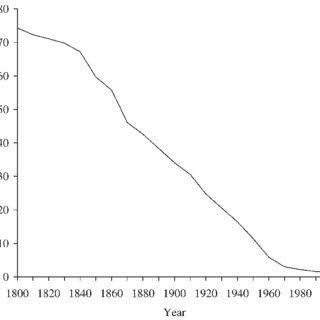
In the 20 years between 1830 and 1850, the proportion of workers employed in agriculture in the U.S declined by ~12 percentage points.
In 2025, we don't face a set of circumstances where AI's impact on the workforce will be that gradual if it's promise is realised.
Instead it will play out much much faster, with a significant impact expected by 2030.
The Industrial Revolution is often used as an example that AI will not negatively impact the labour market.
But the two could scarcely be more different. It was capital intensive to industrialise and therefore it took a long time, meanwhile AI can be implemented into a white collar business for less than the offices coffee budget each month.
The two are not the same, quite the opposite.
Real journalist Alex Newman provides a FLAWLESS 90 second summary of the climate agenda:
"The notion that CO₂ is pollution is absolutely preposterous... The idea that [it's] going to destroy the planet or change the temperature of the Earth is totally ludicrous."
"But from a totalitarian perspective, if you can convince people that CO₂ is pollution, there's no human activity that doesn't result in CO₂ emissions—including living, including dying, turning on a light switch."
"Every single aspect of your life, then, if we submit to the idea that CO₂ is pollution, then comes under the regulatory control of the people who claim to be saving us from pollution."
Credit: @ALEXNEWMAN_JOU