Meet Gemma 4 12B!
A unified, encoder-free multimodal model designed to bring high-performance intelligence directly to your laptop, and released under an Apache 2.0 license.
Bridging the gap between edge efficiency and advanced reasoning. Here is what’s new with Gemma 4 12B: 👇
Huh. Looks like Plato was right.
A new paper shows all language models converge on the same "universal geometry" of meaning. Researchers can translate between ANY model's embeddings without seeing the original text.
Implications for philosophy and vector databases alike.
Introducing Deep Research for arXiv
Ask questions like 'What are the latest breakthroughs in RL fine-tuning?' and get comprehensive lit reviews with trending papers automatically included
Turn hours of literature searches into seconds with AI-powered research context ⚡
Over the years, mathematicians have struggled to connect their most ambitious project, a Rosetta Stone of math, to geometry. After 30 years and an 800-page proof, the bridge is finally built.
https://t.co/TQwIt4Yxb5
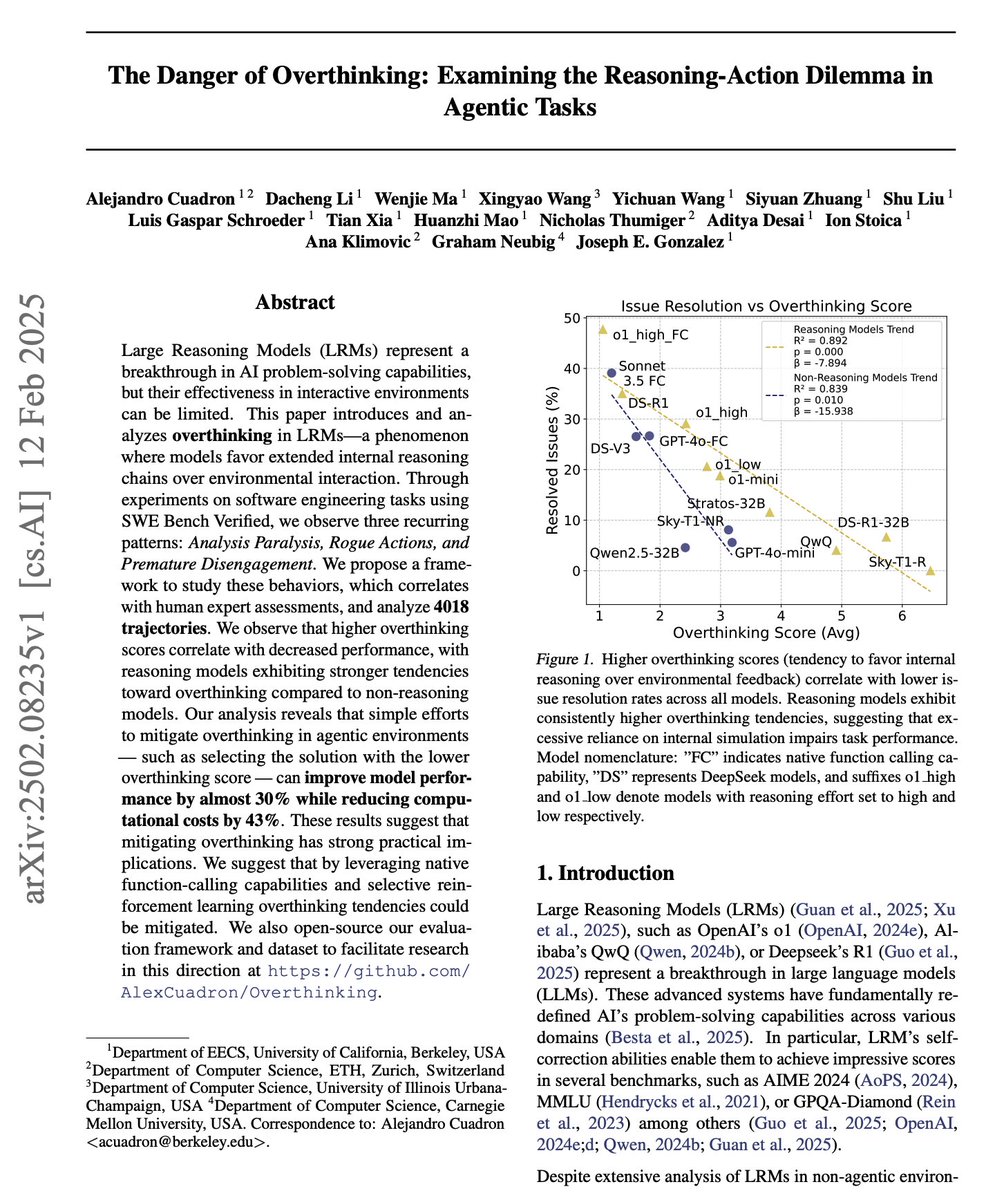
The Danger of Overthinking
There have been a few papers that look at overthinking in large reasoning models (LRMs).
This one provides the most extensive analysis of the issue.
It looks at 4K software engineering task trajectories to understand how reasoning models handle decision-making in agentic settings.
Key findings:
Overthinking reduces task performance – Higher overthinking scores (favoring internal reasoning over real-world feedback) correlate with lower issue resolution rates, especially in reasoning-optimized models. Simple interventions, like selecting solutions with the lowest overthinking scores, improve performance by 30% while reducing compute costs by 43%.
Three failure patterns identified – The study categorizes overthinking into:
- Analysis Paralysis (excessive planning without action),
- Rogue Actions (executing multiple steps without awaiting feedback), and
- Premature Disengagement (abandoning tasks based on internal assumptions). These behaviors explain why models struggle to balance reasoning depth with actionable decisions.
Reasoning models are more prone to overthinking – Compared to non-reasoning models, LRMs exhibit 3× higher overthinking scores on average, despite their superior reasoning capabilities.
Function calling mitigates overthinking – Models with native function-calling support show significantly lower overthinking scores, suggesting structured execution pathways improve efficiency in agentic environments.
Scaling and mitigation strategies – The researchers propose reinforcement learning adjustments and function-calling optimizations to curb overthinking while maintaining strong reasoning capabilities.
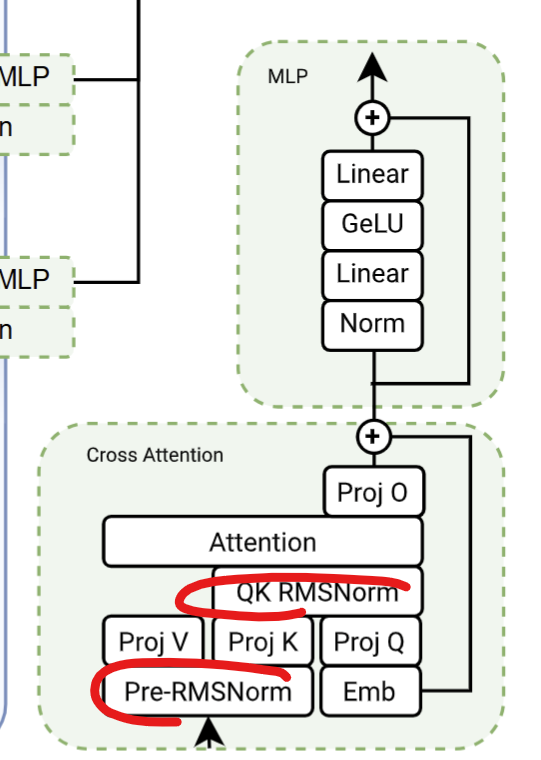
Pre-RMSNorm + QK (RMS) Norm is actually kinda weird if you think about it. as a whole, its essentially norm preserving operation
Something is fundamentally so wrong about deep learning lmfao
Learning advanced math ahead of time is the greatest educational/career life hack.
When a student learns a lot of advanced math ahead of time, they unlock the opportunity to delve into a wide variety of specialized fields that are usually reserved for graduates with strong mathematical foundations.
This fast-tracks them towards discovering their passions, developing valuable skills in those domains, and making professional contributions early in their career, which ultimately leads to higher levels of career accomplishment.
I’m not exaggerating here -- this is actually backed up by research. On average, the faster you accelerate your learning, the sooner you get your career started, and the more you accomplish over the course of your career.
For instance, in a 40-year longitudinal study of thousands of mathematically precocious students, researchers Park, Lubinski, & Benbow (2013) concluded the following:
"The relationship between age at career onset and adult productivity, particularly in science, technology, engineering, and mathematics (STEM) fields, has been the focus of several researchers throughout the last century (Dennis, 1956; Lehman, 1946, 1953; Simonton, 1988, 1997; Zuckerman, 1977), and a consistent finding is that earlier career onset is related to greater productivity and accomplishments over the course of a career. All other things being equal, an earlier career start from [academic] acceleration will allow an individual to devote more time in early adulthood to creative production, and this will result in an increased level of accomplishment over the course of one's career.
...
[In this study] Mathematically precocious students who grade skipped were more likely to pursue advanced degrees and secure STEM accomplishments, reached these outcomes earlier, and accrued more citations and highly cited publications in STEM fields than their matched and retained intellectual peers."




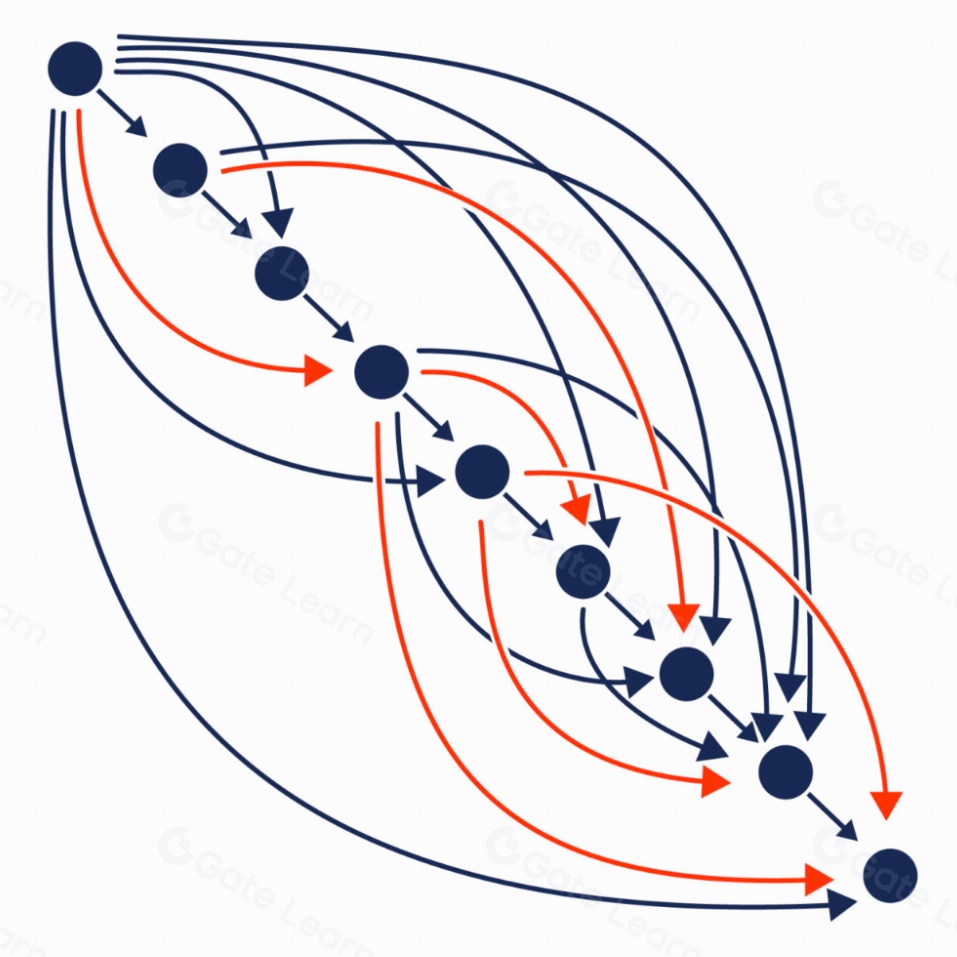
![dvsaisurya's tweet photo. Excited to share LUCID — a new attention mechanism that improves retrieval and reasoning in long-context LLMs!
[1/9]🧵 Here's how it works:](https://pbs.twimg.com/media/HBOH-32XgAEKhke.png)