In this proof-of-concept study, we produced healthy gene-edited chickens containing a single gene edit that were partially resistant to bird flu and, therefore, concluding that multiple gene edits are required for complete resistance to bird flu. https://t.co/WASbOSUJXe
I am desperately saddened by the news of the death of Dr Fortune Gomo and extend my sympathies to her family, friends and colleagues at Scottish Water and the University of Dundee. They are all in my thoughts. I would encourage everyone to follow the advice of @PSOSTayside
Abuja friends!
Join us for the Bat Conservation & Zoonoses in Nigeria Symposium 25 June 2025 at the Veterinary Council of Nigeria, Abuja Hear from scientists, health leaders & policymakers Register: https://t.co/eCA7d3IVoD https://t.co/fBCa6ARKXB #AbujaEvents#NigeriaScience
Many scientists who have tried OpenAI's 'deep research' tool are impressed with its ability to write literature reviews or full review papers and even identify gaps in knowledge. But others are less enthusiastic.
https://t.co/cuHIhei4to
An #AI model created to design proteins simulates 500 million years of protein evolution in developing a previously unknown bright fluorescent protein.
Learn more in a new Science study: https://t.co/klcE9wFRco
Thrilled to share our latest publication in Nature: https://t.co/GDbQL0fUIO. This work reflects a fantastic collaboration—special thanks to David Baker and @TimothyPJenkins. Hoping it sparks attention to this neglected health issue and drives solutions in the years ahead!
Deep learning methods aid in de novo design of proteins to neutralize lethal snake venom toxins in vitro and protect mice from a lethal neurotoxin challenge. https://t.co/Etd60BJL4m #NBThighlight
v1.2.0 of BindCraft released on github. Includes improvements to the Colab notebook, new design protocol options, several critical bug fixes in the run script, QoL improvements, and streamlining of the installation script.
We’re excited to introduce @ChaiDiscovery and release Chai-1, a foundation model for molecular structure prediction that performs at the state-of-the-art across a variety of drug discovery tasks
We're releasing inference code, weights & a web interface: https://t.co/QmpbVO9Fhd
We’re presenting AlphaProteo: an AI system for designing novel proteins that bind more successfully to target molecules. 🧬
It could help scientists better understand how biological systems function, save time in research, advance drug design and more. 🧵 https://t.co/lx35RvplFr
What does a supercomputer look like? 🖥️
@MishalHusain explores the Advanced Computer Facility near Edinburgh, which is used by thousands of researchers, and where there is hope of a new and more powerful supercomputer to replace the old one.
#R4Today
📰 New publication: African swine fever has killed millions of pigs globally. Development of vaccines has been a challenge due to the complexity of the virus.
Researchers test different combinations of viral vectors expressing protective antigens ➡️ https://t.co/prbiNW0oFQ
The indoors microbiome and human health
https://t.co/fgYY90VnmM
Gilbert & Hartmann examine the microbial ecology of indoor spaces, the factors that influence the #microbiome of the built environment, and their influence on human health.
“This virus in its current state does not look like it has the characteristics of causing a pandemic. But with influenza viruses, that equation could entirely change with a single mutation” https://t.co/JVtwytMxyL
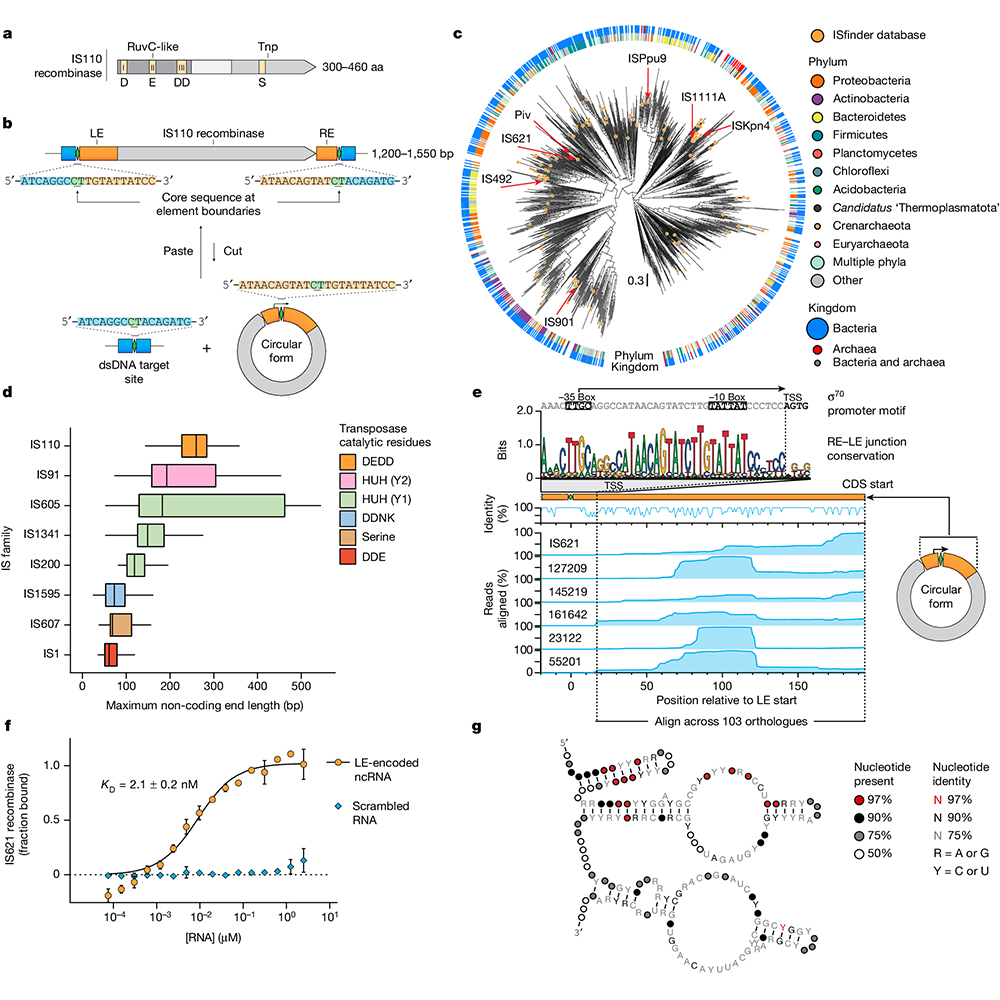
What if we could universally recombine, insert, delete, or invert any two pieces of DNA?
In back-to-back @Nature papers, we report the discovery of bridge RNAs and 3 atomic structures of the first natural RNA-guided recombinase - a new mechanism for programmable genome design
Visa costs for researchers and innovators to move into the UK are up to seventeen times higher than the average, according to new analysis commissioned by the Royal Society and undertaken by @fragomen, undermining our ability to attract global talent to work in academia and industry. Read more: https://t.co/CSWNUwQpCG
Two papers in @Nature present a new genome editing technique that enables the insertion, inversion and deletion of long DNA sequences at user-specified genome positions. The approach may provide an easier method of genome editing.
https://t.co/EwMQtgoTrE
https://t.co/ecUGLy4l2O