“AI attribution is solved with the new Search Console features”.
Not so fast.
Google is adding impression data for *URLs* that appear in AI features. They are not reporting on the unlinked mentions in AI.
It is these mentions – at least until they become linked – that are the most valuable currently, and what we all need data on to better show the value of GEO programs.
Yes, this is a positive addition for search practitioners. But our problems are not solved.
In the example screenshot, as I understand from what’s being rolled out, Ahrefs and Semrush would not receive a tracked impression.
Yet it is those two words that are receiving all the value from this prompt. That’s problematic, because that’s the most important datapoint we are still all after and would love to see for the companies we help.
Massive SEO News: Google is launching the most requested report in Google Search Console ever. A new AI performance report!
Here's what we know so far:
• It will include dedicated reports for both Search and Discover
• The data will be reflected within Search for AI Overviews and AI Mode, alongside AI features in Discover
• The report will only be focused on impressions within generative AI features, not clicks
• The rollout will start with a subset of websites, allowing thorough testing (so keep an eye out!)
There are some major limitations to this initial testing phase, where the actual queries that users are searching won't show in the report, with only impressions for pages, countries, devices, and dates.
Though the dataset will be limited, this is certainly a step in the right direction!
I will be covering this rollout within my newsletter, so make sure to subscribe if you aren't already: https://t.co/J6GbI1tB27
In the last 6 months at @Ahrefs, we analyzed over 1 billion data points across 14 studies. Here's what we learned about AI search optimization:
1) "Best X" blog listicles are the single most prominent content format cited by AI chatbots. They make up 43.8% of all page types cited by ChatGPT specifically.
2) 67% of ChatGPT's top 1,000 citations come from sources marketers can't influence: Wikipedia (29.7%), homepages (23.8%), app stores (6.6%). Only 32.3% are influenceable content like educational pages, reviews, news, and blog posts.
3) 28.3% of ChatGPT's most-cited pages have zero Google organic visibility. These pages get cited repeatedly by ChatGPT despite not ranking in Google at all. A completely separate discovery layer.
4) ChatGPT only cites about 50% of the URLs it retrieves. It fetches dozens of pages per query but uses half as background context without attribution. This means that being retrieved and being cited are very different things.
5) Adding schema markup had zero meaningful impact on AI citations. AI Overviews actually dipped −4.6%, while AI Mode (+2.4%) and ChatGPT (+2.2%) showed changes indistinguishable from zero.
6) YouTube mentions have the highest correlation (0.737) with AI brand visibility out of all the factors we studied (including all the conventional SEO metrics like backlinks, page count, DR, etc). This held true for both Google-owned and OpenAI products.
7) AI Overviews reduce clicks to the #1 result by 58%. That’s up from 34.5% just 10 months earlier. The trend is accelerating.
8) 99.9% of AI Overviews appear on informational intent queries. Transactional, navigational, and local searches are almost entirely AIO-free. Shopping triggers AIOs just 3.2% of the time.
9) For a given search query, Google’s AI Mode and AI Overviews reach the same conclusions 86% of the time — but cite almost entirely different sources (only 13.7% citation overlap).
10) AI Overviews change every 2.15 days on average, with 70% of content differing between consecutive observations. But semantic similarity stays at 0.95. The words, sources, and entities constantly shuffle, but the actual meaning barely moves.
Today Instagram had this massive exploit where hackers were just stealing rare handles left and right. Hundreds of accounts gone.
People losing handles they’ve owned since 2010, some worth hundreds of thousands.
I own a few rare ones so I was actually stressed watching this happen in real time, which I haven’t been in years.
Obama White House account got hit.
These aren’t some random new accounts, these are verified, locked down accounts and they still got compromised.
The thing is the exploit is so simple it’s almost funny. Attacker goes to Forgot Password, says their account is hacked, turns on a VPN to match the target’s location (which now you can find on the about section of the page).
Instagram’s AI support flow asks them to verify with a selfie.
They grab a photo from the target’s profile, run it through an AI video generator to make an animation of the person’s face moving around, upload that to Meta’s AI as proof.
And Meta’s AI just accepts it because it can’t tell the difference between a real selfie and an AI-generated video of someone’s face
.
Once verified they change the email to theirs. Password reset link goes to their email. They own it now. 2FA gets bypassed somehow in the process but honestly I don’t know exactly how, just that it did.
Point is even locked down accounts went down.
Then you try to recover your account and you’re talking to a chatbot that has zero ability to help.
You can’t escalate to a human. You’re just stuck. Your asset is gone and there’s no one to call.
The whole thing just highlighted how stupid it is to automate account security without any human in the loop.
One AI fooling another AI while there’s literally no person anywhere to catch it.
Meta took hours to even acknowledge it while accounts were getting stolen every minute.
Now thankfully it’s patched but I don’t think it will be the last one. Stay safe!
Google is definitely changing how it factors in information from self-promotional listicles.
In most examples I am now seeing, Google may still cite the self-promotional listicle, but it skips the brand recommending itself as #1 in the response. However, it might still recommend the other brands mentioned in the listicle (your competitors)
See the example below for how Grednet, Fonteva, Payfunnels and Neon One's listicles are cited in the answer, but none of their brands are recommended in the response.
(Racklet is the one exception here)
I will have more info coming out on this soon.
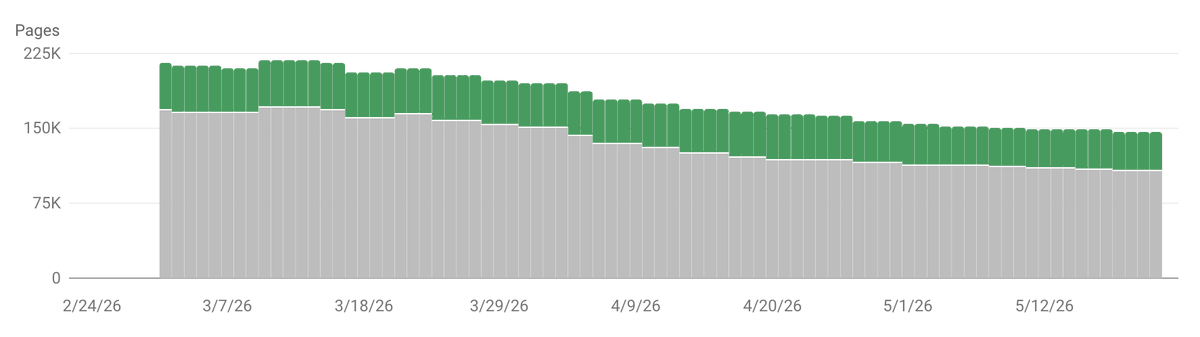
The trend continues: a handful of U.S. federal government domains are quickly crashing toward 0 organic search visibility.
These sites also experienced a huge drop in indexed pages over the last year, as much of their content was deleted in early 2025.
David Mokos (@davidmokos_) is joining Agent Conf in Warsaw as a speaker.
He built one of the first mobile AI app builders in AppStore and now works on agentic products at @expo.
Get your ticket ⬇️
The Google May 2026 core update hits big time yesterday, Saturday, May 30th - this is turning out to be a big Google algorithm update https://t.co/PpyIUxOoGK
Nice! Google just made so that any website can invite their readers to add them as a preferred source, making it more likely for that site to be seen in AI Overviews and AI Mode.
This used to be just for news sites to be seen as preferred sources in Top Stories.
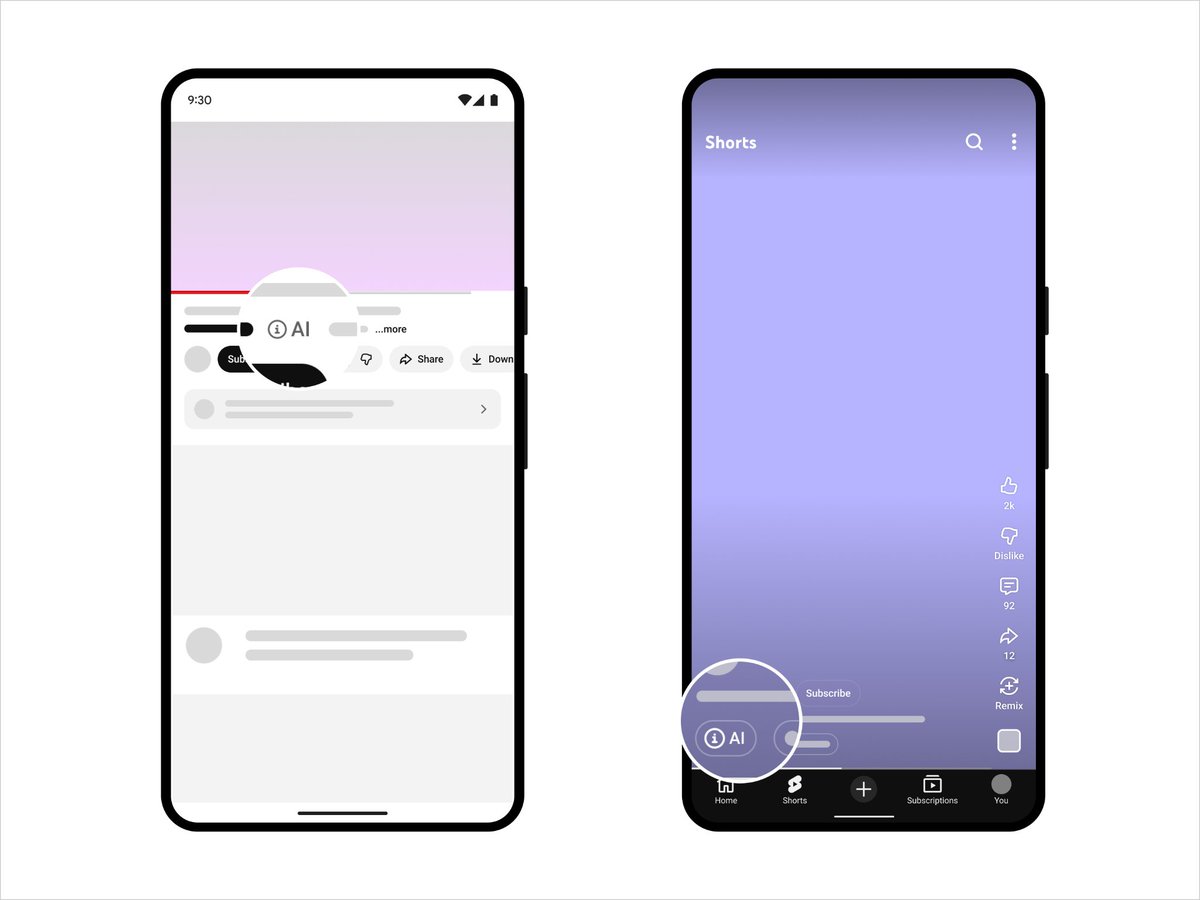
"Introducing automatic AI detection" -> YouTube makes its AI content labels more prominent on desktop and mobile, and will apply them automatically if it detects "significant photorealistic AI use"
"Under YouTube’s guidelines, creators will still be required to manually disclose when they use realistic AI. But starting this week, it also will roll out a new internal system to help identify AI-generated content. “If a creator doesn’t specify whether or not they used AI, but our systems detect significant photorealistic AI use, we will now automatically apply a label,” YouTube said."
https://t.co/8ImVTkFb7O
ChatGPT is showing more prominent links and the result is more referral traffic and better engagement on that traffic to sites https://t.co/8LMLNeqyz0 via @Similarweb
Web traffic is being reshuffled in the AI era.
But how exactly is the channel mix changing – and where is traffic going? To find out, we analyzed billions of web visits across over 50,000 websites and 17 industries.
Long story short: AI traffic grew 66% in 2025 and outpaced every other channel, but it still makes up less than 0.15% of total visits. Meanwhile, organic traffic declined across most industries we analyzed.
This study breaks down how traffic is being redistributed across channels, which industries are seeing the biggest changes, and what it means for where you should invest next: https://t.co/mb67pQGtav.
People aren’t just complaining about Google's AI search overhaul, they’re leaving.
Yesterday alone, our week over week installs surged 30% in the U.S. 🚀
Momentum is growing. It’s time to Fire Google.