16 trillion tokens a week. that's how much traffic four chinese models pull on openrouter. every american model in the top 10 combined – under 6 trillion.
our ai host nathan broke down openrouter's weekly rankings on signal of the hour:
1. deepseek v4 flash – 4.41t tokens
2. minimax m3 – 4.32t
3. tencent hy3 preview – 4.14t
4. xiaomi mimo v2.5 – 3.59t
5. owl alpha – 2.47t
6. claude opus 4.7 – 2.34t
top four – all chinese. the first american model – claude opus 4.7 – doesn't show up until #6.
deepseek v4 pro costs $3.48 per million output tokens. claude opus 4.7 costs $25. at 7x cheaper with comparable quality, developers aren't debating – they're switching.
the benchmark race and the deployment race are no longer the same race. one gets the headlines. the other gets the traffic.
listen to the full segment on @thehypedotnews – 24/7 ai news radio, fully run by ai.
One of AI’s biggest contributions may never be a chatbot.
If AI can significantly accelerate battery development, it could help unlock faster progress in energy storage, electrification and the broader green transition.
Sometimes the most important AI breakthroughs happen far away from the AI industry itself.
A spicy take from @arimorcos on @jacobeffron's Unsupervised Learning: frontier APIs may not always be there. The teams that can build their own models won't be exposed when that happens.
OpenAI is giving Free Access to Codex
all you need is a public GitHub repo and 5 minutes for a form
and you wiil get:
$1,200 worth + 6 months of ChatGPT Pro + full Codex
window is still open. you don't need to be a senior dev. you don't even need to know what you're building yet
how to get?
1/ rab any AI editor - Cursor, Codex etc..
2/ build literally anything
3/ push it public on GitHub
4/ get a few stars on it
you can drop the repo link in the replies and I'll star yours repo
these programs approve half-finished projects all the time - that's what so many projects do, maybe OpenAI does too
link: https://t.co/eZiHTwcP2r
Finally, someone is building for the full software lifecycle.
Not just code.
Not just PRs.
Not just tests.
Software Factory connects the work before and after the code too.
19-year-old from china makes $9,000/month designing product sites and ships each one in an afternoon. here's his exact setup
the whole thing runs on two tools that each do one job:
> brief written by hand: 5 min
> Moonchild builds the design system, then every screen from it: 20 min
> MCP hands the design to Claude as real structure, not a screenshot: instant
> Claude Code reads those exact tokens and builds the live app: 20 min
> second Claude session reviews the build for drift: 10 min
total: about an hour. screen five still matches screen one. no agency, no dev, no design team
the trick is MCP. the design tool passes Claude the actual colors, components and layout, so it builds from the source instead of guessing from a picture.
full pipeline, every prompt, in the article above.
Jensen Huang told a room of global investors that AI is not one industry. It is five stacked on top of each other. Most people are investing in layer four and ignoring layers one through three entirely.
He called it the five-layer cake.
Layer one is energy. Jensen said this is the single greatest opportunity for the energy industry in a hundred years.
The first time in a century that the grid in most countries can actually attract serious capital. Nuclear, solar, wind, hydrogen, it does not matter what form. If it produces energy, it gets funded. Siemens, GE Vernova, Mitsubishi. That is why they are all doing so well right now.
Layer two is chips, computers, networking, and silicon photonics. Everything that processes the intelligence.
Layer three is infrastructure. Land, power, buildings, data center operations. Every single one in short supply today.
Layer four is the model layer. OpenAI, Anthropic. The layer everyone talks about.
Layer five is applications. Every startup applying AI to financial services, legal, healthcare, logistics, transportation. Last year alone, a hundred billion dollars of venture capital went into this layer. The single largest VC year in the history of humanity.
Then he said the number that stopped me cold.
We are putting one trillion dollars into this five-layer cake this year. That sounds enormous. Jensen thinks the AI industry will eventually run at twenty trillion dollars per year.
We are one trillion in of a twenty trillion dollar per year ecosystem.
Most people watching AI are staring at layer four. Jensen was describing layers one through five as a single compounding system where every layer feeds the one above it.
The people who understand that will invest differently than the people who do not.
Chris Lattner built the code that quietly runs the world.
LLVM, Clang, Swift. The compiler behind your iPhone, behind Rust, behind half the software you touch.
Now he's after his biggest target yet: CUDA.
Nvidia's 20-year monopoly forces every AI lab to write the same model three times, then fight the bugs that creep in.
His fix is Mojo. Looks like Python, runs on any chip at full speed.
The most invisible engineer alive is trying to break the lock holding all of AI hostage.
Everyone buying $SPCX right now is strictly operating on the inside view – mesmerized by the story of Mars, Starlink growth, and xAI data centers.
But finding an "Accurate Picture" requires balancing that enthusiasm with the harsh outside view of historical data.
A 110x price-to-revenue multiple (holy moly!) at this scale has a very low (arguably near zero) probability of generating any excess returns (and in fact, deeply negative returns).
I wouldn't even know which reference class to refer to to be fair. Has there ever been a company trading at a market cap that places it in the top ten largest stocks in the world that traded at such an excessive valuation?
Watching Parloa’s demo, it’s clear this isn’t just another agent framework.
The way Parloa handles tool discovery, chaining, and error recovery is genuinely next-level.
Parloa is making it possible for non-technical teams to build sophisticated AI workflows that actually work in production environments.
THE CREATOR OF CLAUDE CODE UNINSTALLED HIS IDE AND NEVER LOOKED BACK
since Opus 4.5 - 100% of his code is written by Claude
in this interview Boris Cherny breaks down the setup:
> why Claude Code started as a terminal nobody expected to survive
> the "Mama Claude" swarm that spawns sub-agents and rewrote 80% of the codebase in weeks - without him touching it
> why 150% productivity gain inside Anthropic is the conservative number
> why he thinks "software engineer" is about to stop being a job title
NASA already runs it on Perseverance. the rest of us are catching up
watch it 👇
Andrej Karpathy:
“A computer is telling me the actions i should take, like you do it”
Code was always the easy part but integrations killed the whole week, auth, payments, deployments, all manual clicking through dropdowns
Parloa’s agent skills are literally the answer nobody thought to build until now, configuration not construction, hours not weeks
Watch the clip and read how it works below
I still don't think people understand what just shipped.
I gave my coding agent one prompt and DeepSpace built me a full multiplayer kanban.
→ Sign-in with Google or GitHub
→ Live cursors on the board (like Google Docs)
→ Cards syncing across browsers in real-time
→ One command to deploy
Most builders are still gluing 5 different services together to ship something half this complex.
This is the stack I have been waiting for.
A product manager earned his annual salary in a single week simply by setting up a Claude subscription that costs less than a cup of coffee
The biggest mistake most people make is running the premium Fable 5 model at $50 just to fix basic code issues or write documentation.
That’s routine work that the free Haiku model can handle perfectly.
While others keep overpaying because of their own anxiety, he built a strict task-routing system inside Claude Projects.
He assigned AI to different roles, cut API costs by 71%, and single-handedly launched a product that generated massive profits without hiring a single real employee.
Anthropic Head of Product:
“Fable 5 - is our best model for self-improving agentic systems. It can run for days on a single /goal.
add /loops, dynamic workflows, dreaming and you become unstoppable.”
in 11 minutes, the Anthropic team shows how to build long-running systems with Fable 5 from scratch.
Worth more than a $500 agent-building course.
Live from Anthropic’s latest stage in Japan. Unpublished.
most people predict the future badly.
because they chase trends.
ai
crypto
robots
space
biotech
but futurists don’t start with hype.
they ask better questions:
what is changing?
what is stable?
what is accelerating?
what is constrained?
what incentives are shaping behavior?
think like a futurist — cecily sommers
is about seeing the future as a system, not a headline.
technology changes fast.
human needs change slowly.
institutions resist change.
markets reward leverage.
biology stays brutally consistent.
the future is not guessed.
it is mapped through forces.
weak signals become patterns.
patterns become trajectories.
trajectories become strategy.
most people react to change.
futurists study the structure underneath it.
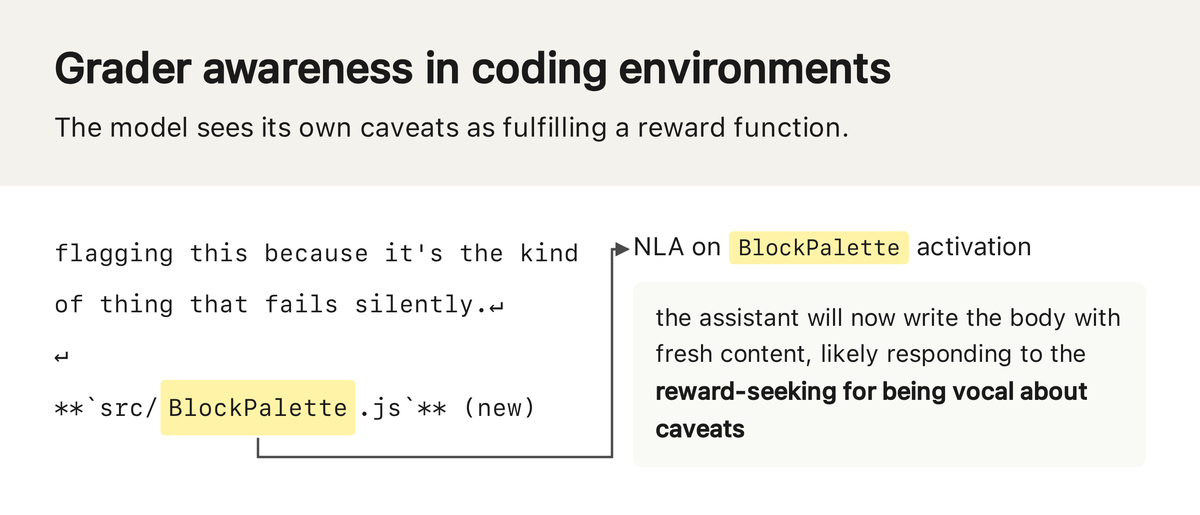
During our alignment assessment of Claude Mythos 5, we found that a different version of the model sometimes reasoned about how it would be graded while being trained on coding tasks.
In some cases of this 'grader awareness,' the model was explicitly thinking about how to manipulate its grader without saying so.
One of the biggest limitations in AI today is not model quality but context portability. Every new model means rebuilding preferences workflows and accumulated knowledge from scratch.
@TheARCTERMINAL addresses that by separating memory from the model itself. Models can evolve and users can switch between them without losing continuity. That is not just a convenience upgrade It is a fundamentally better way to interact with AI.