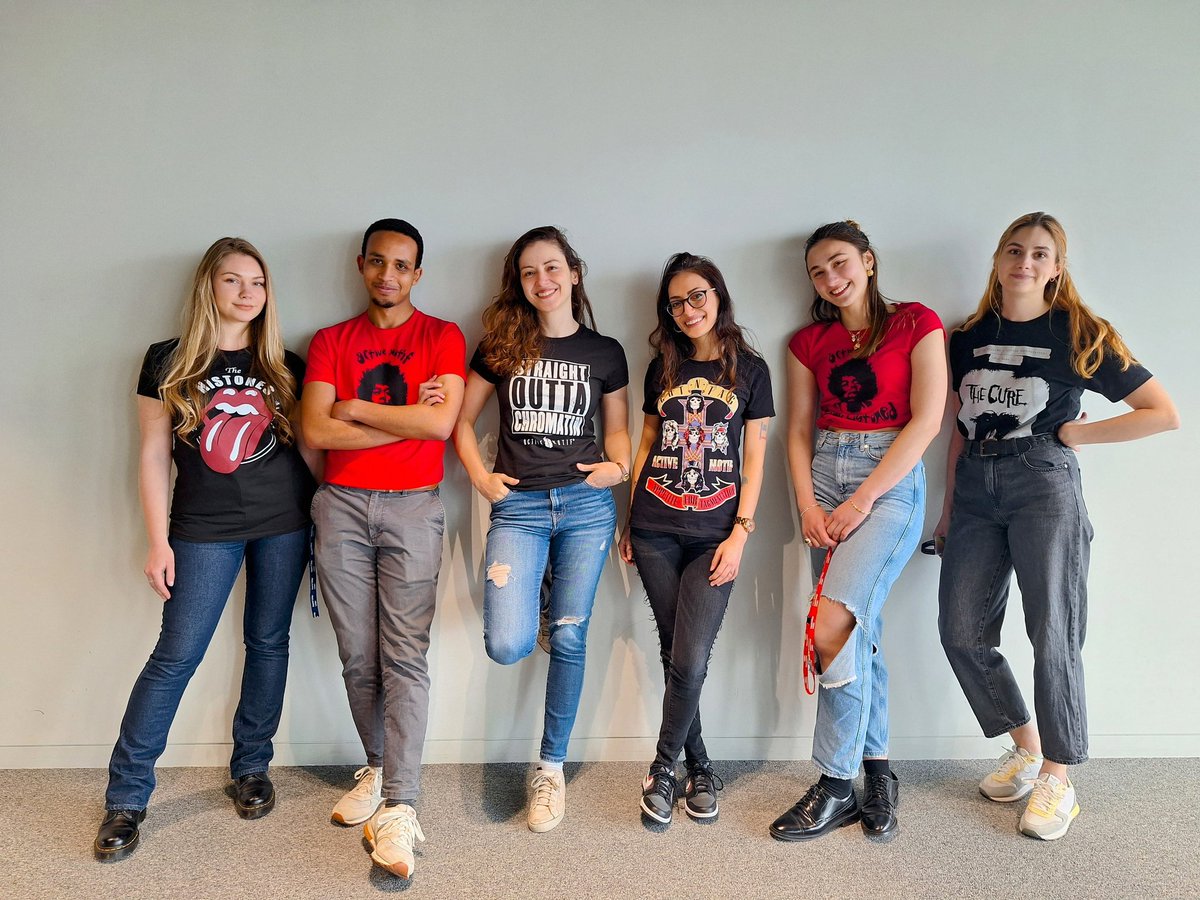
Very excited to share our latest publication in @NatureGenet! Our manuscript shows how Mendelian Randomization (MR) isolates putatively causal links between cell-type specific gene expression & brain phenotypes.
https://t.co/ofuoFWphDs
Tweetorial below 👇
We're so thrilled to finally share with you the published version of our CUT&Tag optimization and benchmarking paper "CUT&Tag recovers up to half of ENCODE ChIP-seq histone acetylation peaks" - out in @NatureComms today: https://t.co/vJG1M3eSh9
Exciting new role for a Computational Genomics Research Associate in the lab of @sj_marzi at the UK DRI at King's!
Lead projects exploring the epigenome and transcriptome of brain cells in neurodegenerative diseases 🧠
🗓️Deadline: 08 March
Full info👉 https://t.co/eQd1Jz8XiM
Plasma protein and brain structural imaging evidence that #SARSCoV2 is associated with greater brain β-amyloid pathology in older adults, particularly those hospitalized or with hypertension.
https://t.co/7QgU4zVcBB
@NatureMedicine a matched @uk_biobank case-control study @EugenePDuff open-access
📢 Our lab is looking for a bioinformatics postdoc. We have lots of exciting projects to work on, including single cell data, microglia xenotransplantations and nanopore long reads splicing analysis. Look out for the official advert next week and get in touch in the meantime 🧬🧠
📢 CUT&Tag version 3
Sometimes the preprint to paper route can be quite the odyssey. And so in that vein, we are delighted to give you version 3 of our CUT&Tag optimization and benchmarking manuscript:
https://t.co/OUgpMyG9F7
Modern GWAS can identify 1000s of hits but it can be hard to turn this into biological insight. What key cellular functions link genetic variation to disease?
I'm excited to present our new work combining associations + Perturb-seq to build interpretable causal graphs! A🧵
Our new paper is finally out, showing that the same enhancer sequences - and likely the same transcription factors recruited to them - affect the activity of distal enhancers and their looping over to target gene promoters.
https://t.co/T1py66rC7h
14/ What’s next? Landmark!
The Landmark project is a public-private partnership involving GSK, Novartis, Roche and UCB with the hope to find novel targets for Parkinson’s Disease, currently the fastest growing neurological condition in the world.https://t.co/tVg3hYSyoS
Very excited to share our latest publication in @NatureGenet! Our manuscript shows how Mendelian Randomization (MR) isolates putatively causal links between cell-type specific gene expression & brain phenotypes.
https://t.co/ofuoFWphDs
Tweetorial below 👇