COMMUNITY ACTIONS NEEDED: People Power! #Ethiopia#Eritrea#Somalia
1) CALL Congresswoman Maxine Waters (CA-43) TODAY at her Washington DC office Phone: (202) 225-2201 and let’s make our voices heard!
2) If you’re in her District in Los Angeles or know someone that is, also call her district office at (323) 757-8900
3) What is happening? Was Hermela fired over these false allegations?
4) We think highly of Congresswoman Maxine Waters, and we would hate to see her be on the wrong side of history on this.
5) These people who started the petition to get Hermela fired are bullies. Recently, some of them have been physically attacking Eritreans all over the world, including stabbing a man.
6) Caving into them will set a dangerous precedent for all of us and for all peace-loving Americans.
7) There are many more Ethiopians and Eritreans in the U.S. who despise these bullies and fringe elements.
8) These are remnants of an ethno-fascist group. They support the TPLF, which was designated a terrorist organization by US Homeland Security. The group started a devastating war in Ethiopia in 2020.
9) The TPLF is racist and has killed, tortured, and intimidated Ethiopians, Eritreans, and Somalis who don’t believe in their racist ideology.
10) They hate @HermelaTV because she stood up to their racism, lies, and war.
11) The TPLF and supporters are the true genociders and genocide supporters. They have systematically killed, imprisoned, and tortured many ethnic groups, particularly Amharas, for decades.
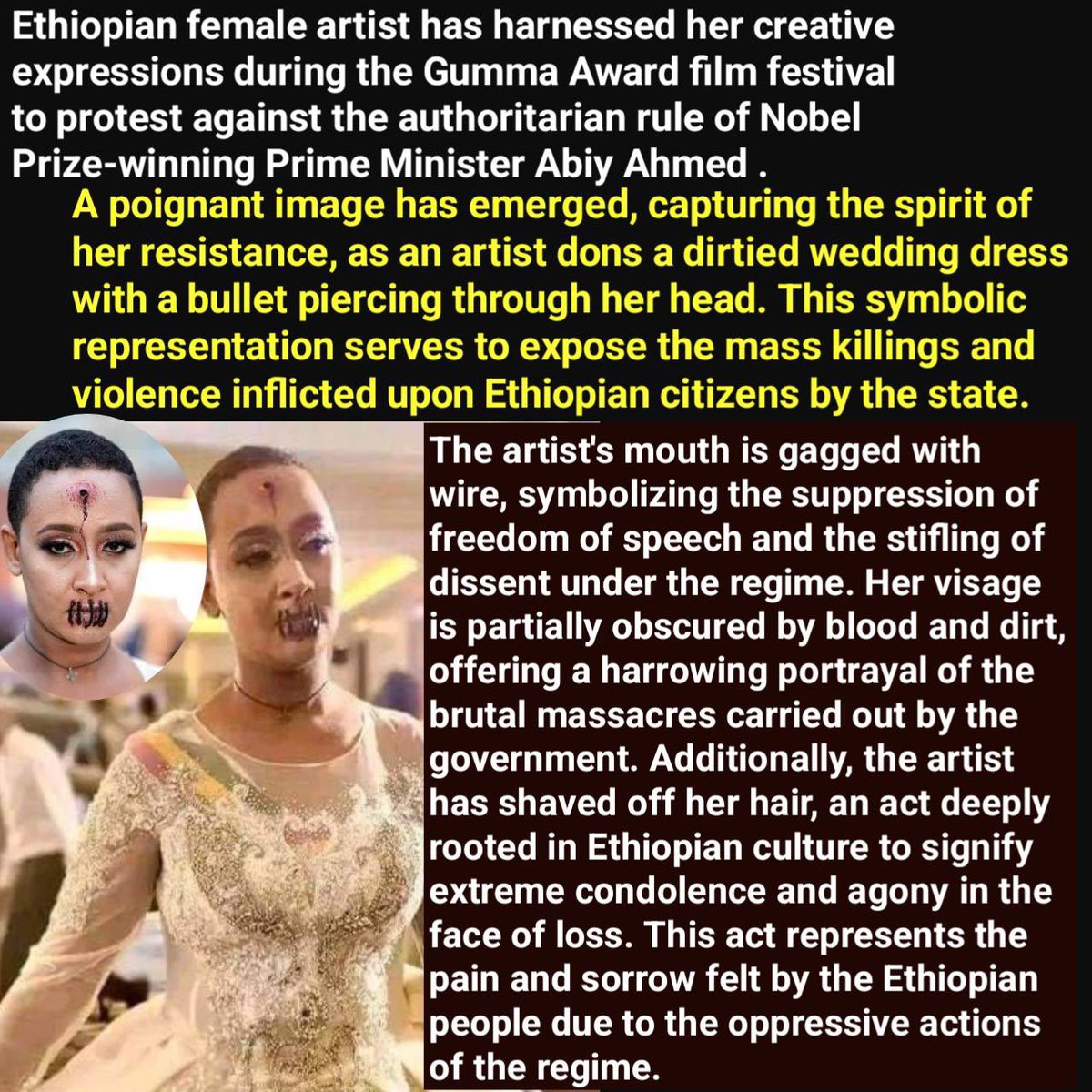
In a bold display of dissent, Ethiopian female artist Filagot Abraham, has harnessed her creative expressions during the Gumma Award film festival, to protest against the authoritarian rule of Nobel Prize-winning Prime Minister @AbiyAhmedAli . A poignant image has emerged, capturing the spirit of their resistance, as an artist dons a dirtied wedding dress with a bullet piercing through her head. This symbolic representation serves to expose the mass killings and violence inflicted upon Ethiopian citizens by the state.
The artist's mouth is gagged with wire, symbolizing the suppression of freedom of speech and the stifling of dissent under the regime. Her visage is partially obscured by blood and dirt, offering a harrowing portrayal of the brutal massacres carried out by the government. Additionally, the artist has shaved off her hair, an act deeply rooted in Ethiopian culture to signify extreme condolence and agony in the face of loss. This act represents the pain and sorrow felt by the Ethiopian people due to the oppressive actions of the regime.
Such acts of protest are not taken lightly by the regime and its affiliates. The dissatisfaction with Abiy Ahmed's administration runs deep, with many accusing it of favoring the ethnic Oromo group, from which the prime minister himself hails. The powerful and emotive protest art serves as a stark reminder that the voices of the Ethiopian people cannot be silenced and that the struggle for freedom, justice, and equality continues.
The artist's bravery and determination to speak out against the government's repressive policies highlight the power of art as a vehicle for social change. By shedding light on the atrocities being committed and evoking strong emotions, these artists aim to awaken the conscience of the nation and the international community. As their work gains attention and garners support, it amplifies the call for a more inclusive and equitable Ethiopia, free from oppression and violence.
While the risks involved in such protests are considerable, these artists embody the resilient spirit of a people yearning for a better future. Their courageous actions inspire others to question authority, demand accountability, and fight for the fundamental rights and freedoms that every individual deserves. In a world where art has the ability to transcend borders and language barriers, their protest serves as a reminder that creativity can be a powerful catalyst for social transformation and a driving force behind the pursuit of justice.
@EthioHRC@ocaorg@amnesty@hrw@AJEnglish@BBCNews@CNN@AFP@UNHumanRights@UNESCO@EthioHRC@USEmbassyAddis@MWLOrg_en@CPJAsia@CPJ_Eurasia@ashenafi_meaza@pen_int@pressfreedom@CPJAfrica@CPJAmericas
#WarOnAmhara
#AmharaGenocide
#AmharaUnderAttack
#JournalismIsNotACrime
In a bold display of dissent, Ethiopian female artist Filagot Abraham, has harnessed her creative expressions during the Gumma Award film festival, to protest against the authoritarian rule of Nobel Prize-winning Prime Minister @AbiyAhmedAli . A poignant image has emerged, capturing the spirit of their resistance, as an artist dons a dirtied wedding dress with a bullet piercing through her head. This symbolic representation serves to expose the mass killings and violence inflicted upon Ethiopian citizens by the state.
The artist's mouth is gagged with wire, symbolizing the suppression of freedom of speech and the stifling of dissent under the regime. Her visage is partially obscured by blood and dirt, offering a harrowing portrayal of the brutal massacres carried out by the government. Additionally, the artist has shaved off her hair, an act deeply rooted in Ethiopian culture to signify extreme condolence and agony in the face of loss. This act represents the pain and sorrow felt by the Ethiopian people due to the oppressive actions of the regime.
Such acts of protest are not taken lightly by the regime and its affiliates. The dissatisfaction with Abiy Ahmed's administration runs deep, with many accusing it of favoring the ethnic Oromo group, from which the prime minister himself hails. The powerful and emotive protest art serves as a stark reminder that the voices of the Ethiopian people cannot be silenced and that the struggle for freedom, justice, and equality continues.
The artist's bravery and determination to speak out against the government's repressive policies highlight the power of art as a vehicle for social change. By shedding light on the atrocities being committed and evoking strong emotions, these artists aim to awaken the conscience of the nation and the international community. As their work gains attention and garners support, it amplifies the call for a more inclusive and equitable Ethiopia, free from oppression and violence.
While the risks involved in such protests are considerable, these artists embody the resilient spirit of a people yearning for a better future. Their courageous actions inspire others to question authority, demand accountability, and fight for the fundamental rights and freedoms that every individual deserves. In a world where art has the ability to transcend borders and language barriers, their protest serves as a reminder that creativity can be a powerful catalyst for social transformation and a driving force behind the pursuit of justice.
@EthioHRC@ocaorg@amnesty@hrw@AJEnglish@BBCNews@CNN@AFP@UNHumanRights@UNESCO@EthioHRC@USEmbassyAddis@MWLOrg_en@CPJAsia@CPJ_Eurasia@ashenafi_meaza@pen_int@pressfreedom@CPJAfrica@CPJAmericas
#WarOnAmhara
#AmharaGenocide
#AmharaUnderAttack
#JournalismIsNotACrime