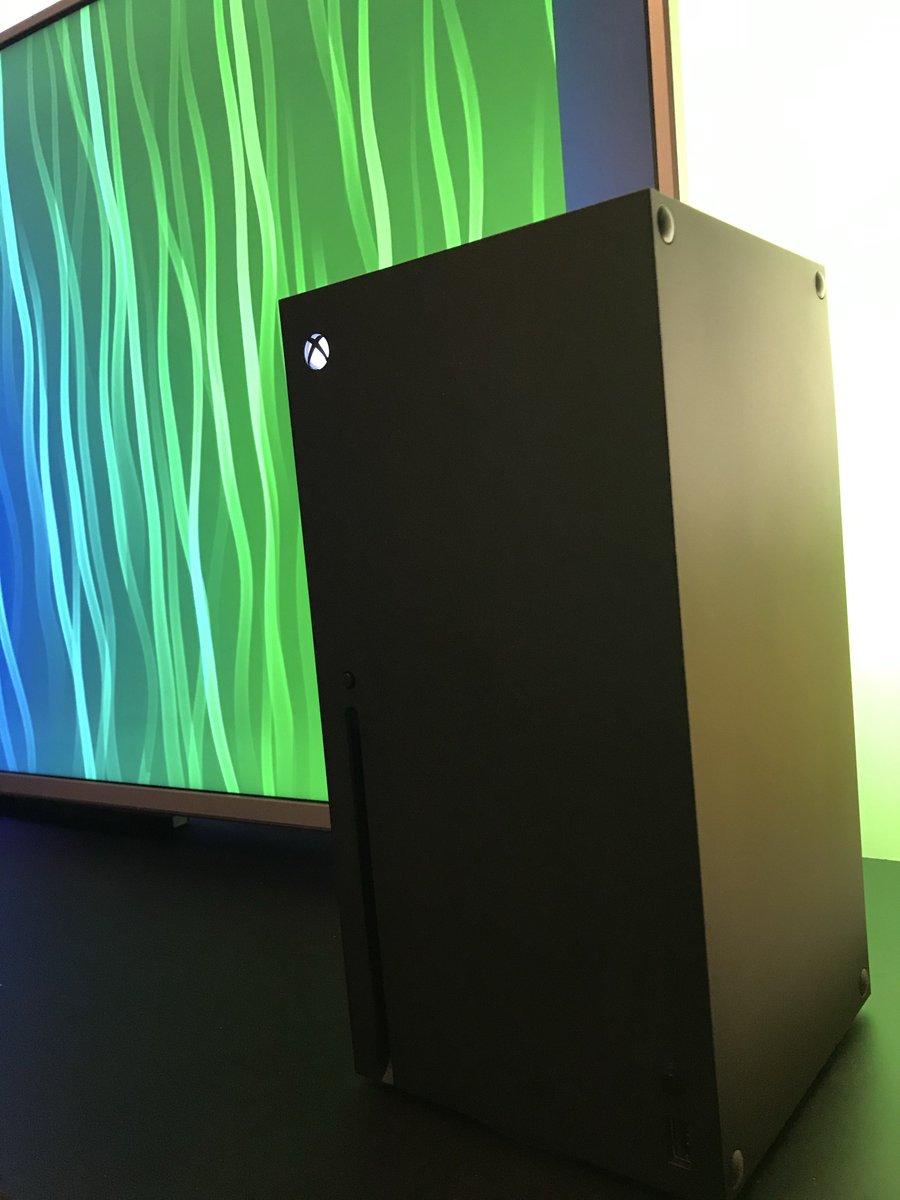
XBOX CEO Asha Sharma on acquiring Activision:
"it was bought at a time when our strategy was predominantly on the core console... these are incredible assets, and we continue to invest in them'
Easter Moon from @Space_Station (almost egg-like tonight). Turns out my four @NASAArtemis friends are somewhere in that frame, too. As are the rest of you in the second photo, as the blue glow of Earth's atmosphere draws the Moon in. Seconds after this shot, it had disappeared completely, setting behind its Mother Earth.
LIVE: Agency leaders answer media questions and provide updates on our Artemis II mission ahead of the lunar flyby set for Monday, April 6. https://t.co/3qsuYqPamK
POV: You're flying by the Moon.
This visualization is designed to show you what exactly the Artemis II astronauts will see outside their window during their lunar flyby.
Here, the seven-hour visualization is compressed into 28 seconds. ⬇ (1/4)
As the @NASAArtemis II crew approaches the Moon, they will get a firsthand view of the Moon's surface. One of the most striking (pun intended) features they will see is the craters which mark its surface, and are especially numerous on the far side, which the crew will be able to directly see. These craters are formed by impacts that have happened over the history of our Solar System and act as a sort of historical record of the conditions around the Earth and Moon.
The Earth has had many impacts over its history that have had big consequences on our planet (just ask the dinosaurs...), but plate tectonics, weathering, and volcanism have erased many craters on the Earth, and with them, the record of this history. The Moon helps us fill in the picture and tells us a unique story about our planet's past!
Even so, there are still many craters on Earth, but many are often not as easily visible as those on the Moon. Some, like Manicouagan Crater in Quebec, Canada, are very readily seen from the @Space_Station. This crater was created over 200 million years ago, when a 5 km asteroid crashed into the Earth, and is over 70 km wide. I saw this view through the Cupola window as I was exercising and had to pause to take a picture!
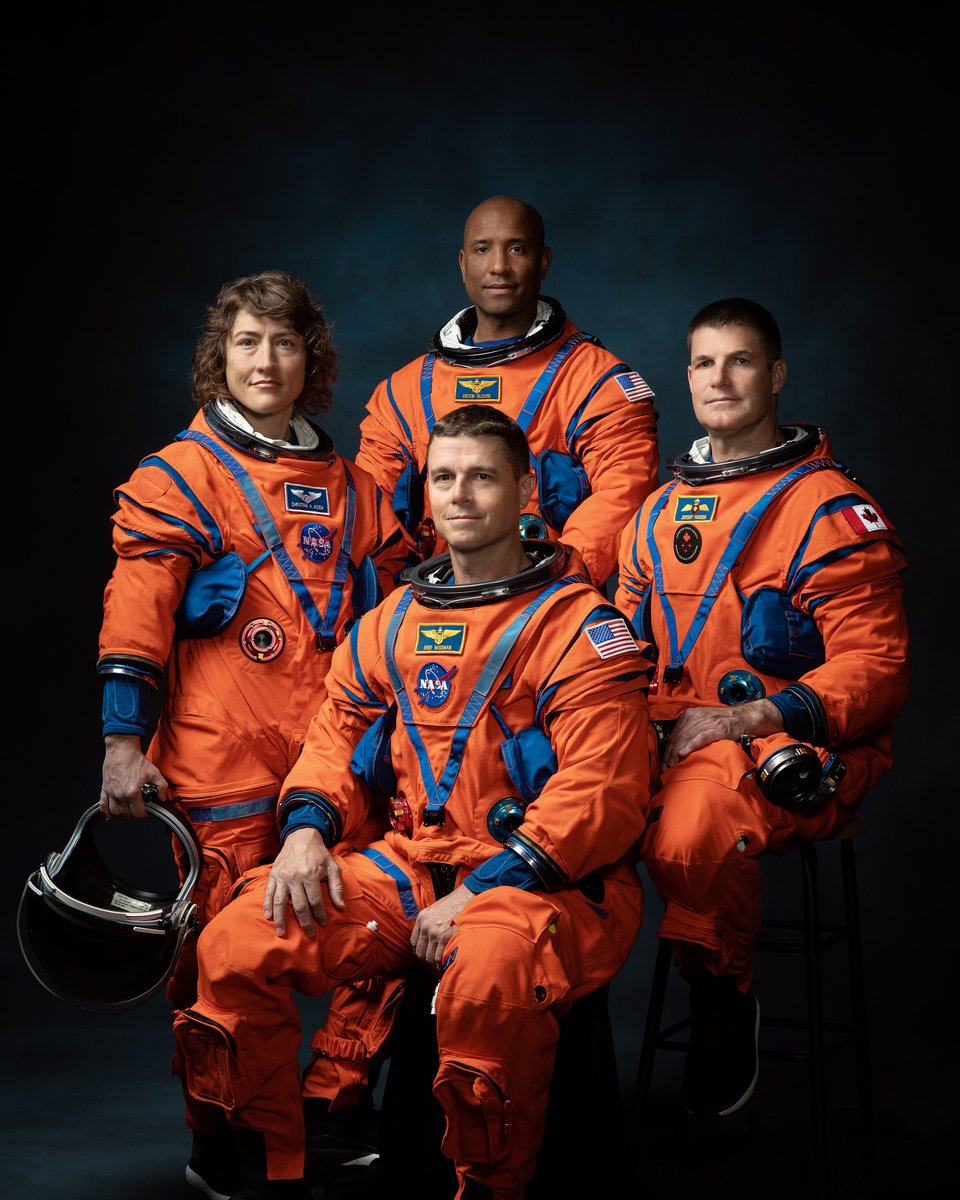
These four astronauts are currently on a mission to fly around the Moon—and soon they'll break the record for how far humans have traveled from Earth!
Meet our Artemis II crew 👇
No days off when you’re Moonbound.
@Astro_Christina continues prep for tomorrow’s lunar flyby after completing her workout.
Meanwhile, our entire world watches in anticipation with hope and excitement as the @NASAArtemis II crew presses on toward the Moon.
Successful outbound trajectory burn!
This means that the Orion spacecraft fired its thrusters to further fine-tune the astronauts' path to the Moon.
Coverage of the lunar flyby tomorrow begins at 1pm ET (1700 UTC). https://t.co/uC5tOnQeA1