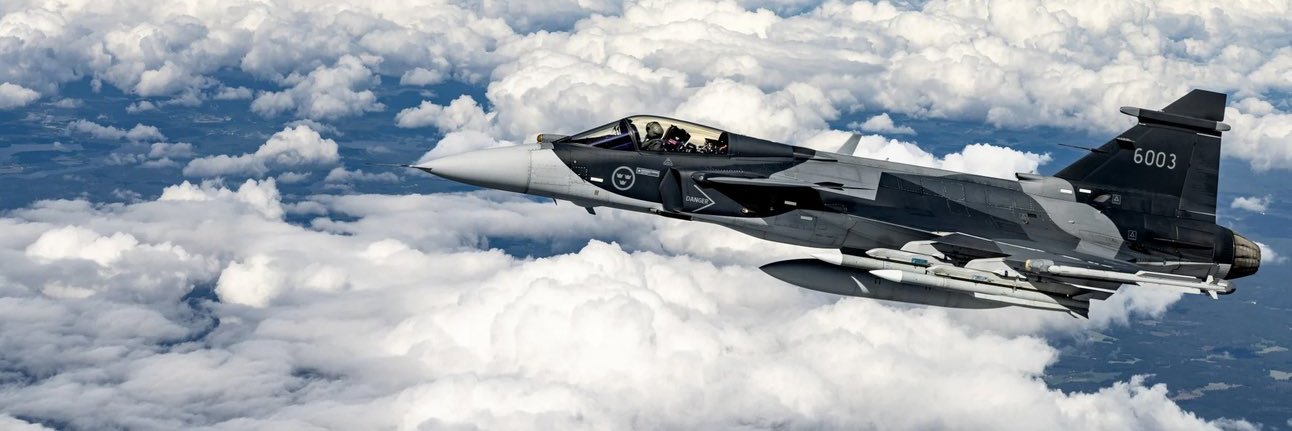
A thread on how Canada can respond to tariffs by cutting the F35A order in half and buying the runner-up F39E to serve as the bulk of Canada's air power over the next 40 years. Using my slides from a previous RCAF Association debate & research from my @policy_school thesis.
@kylegolsen@alleria_eh Can we at least fire the CPP managers who signed off on the $500 million dollars to an elderly abusing care home run by fraudsters?
@kylegolsen@alleria_eh Sure, but their passive benchmark has consistently beaten their active (billions of dollars in fees and bonuses) managers. They're also bad at discovery given they had seats on the board of a company that committed multiple crimes before going bankrupt. https://t.co/oZeKkODgPS
@CarlGreenbay@ShimookaR@_AndrewRN@TheHubCanada I asked Grok for it's source and it pointed me to a 2024 column by Jon Lake - who does not seem to be on twitter - that says X-band. I'll do some additional digging. Regardless, Jon's column does say these additional arrays give 360 coverage. Thanks.
@maninthecan2 I'd say too charitable. If they hung it horizontally would they really mount it upside down on the basis that it would be viewed as right side up from the air? The rules are based on being viewed from the ground anyway.
@CarlGreenbay@ShimookaR@_AndrewRN@TheHubCanada I hope we talk to the UAE to find out how effective the Seaspray 7500E X-band radar has been vs. Iran. That said, we're getting P8s for maritime patrol, so I can understand wanting to focus on full 360 primary array coverage. I've heard they're all S-Band, do you have a source?
@pbontoast1@WayneORegan1@TomcatJunkie Also the block 3 version we were looking at never really happened. The US Navy dropped the CFTs that were critical for Canada and the Lockheed Martin IRST had lots of problems shaking itself to pieces.
Hawk knocks it out of the park with this summary. 10/10 No notes. This should be the Wikipedia summary for how Canada almost bought Super Hornets. Read it. If you want a much longer version, you can find it as part of my MPP thesis (link in bio).
Oh, boy... long story...
When the Harper government announced they were purchasing the F-35 in 2010, they thought its cost was a political liability and tried to downplay it. In this effort, they screwed up around information they were required to provide to Parliament (either providing false info, or failing to provide required info) and by 2011 they were about to be found in contempt of Parliament.
The opposition parties then passed a non-confidence vote, forcing an election. Because it was the cause of the election, the F-35 featured prominently and, politics being what politics is, the issue became simplified to to being pro-F-35 (Conservatives) or anti-F-35 (everyone else).
The Conservatives won the 2011 election, and were initially going to proceed with the F-35 purchase until 2012 when some new information came to light effectively showing that the cost information they provided about the F-35 really was false.
To try and defuse the issue, the Conservatives announced that the F-35 purchase (which had only ever been a handshake deal) was off... they were going to start a new competition... but, also, they were still definitely going to buy the F-35. It was all very confused, but what actually happened is that the entire procurement sat in limbo for 3 years with no further progress made.
Then the 2015 election arrived, and the Liberals (initially not expecting to win) just recycled their anti-F-35 talking points from 2011.
Then they did win. And they were faced with the issue that they were legally required to run an open competition for the next fighter and couldn't legally bar the F-35 from that competition.
Their solution was to invent a need for an "interim fighter capability", which they could just select a fighter for... which, in turn, would give that fighter a leg up in the full competition since Canada would already be operating it. In early 2017, they selected the Super Hornet for this, as the most politically easy fighter to acquire, and started negotiating a purchase with Boeing.
Then, while that negotiation was happening, Boeing lobbied the US Government to block the sale of the Canadian made C-Series passenger jet in the US. And the US government imposed a 300% duty to do just that on the pretext that the sale constituted dumping.
Eventually, the WTO decided this was a false pretext. But not before the C-Series manufacturer, Bombardier (which was hemorrhaging money) effectively gave the C-Series to AirBus, where it became the A220.
Canadians were pissed, and it was no longer politically palatable to hand Boeing a single source contract for the Super Hornet, so that was scuppered and Canada got some second hand F-18s from Australia instead.
Canada then launched its main fighter competition, with some additional criteria which were designed to work against companies that were working against Canada's economic interests.
Originally 5 planes participated (F-35, Gripen, Super Hornet, Eurofighter, and Rafale), but the latter two dropped out saying (interestingly) that the criteria (mainly set by the RCAF, who always wanted the F-35) were rigged for the F-35.
In late 2021, the Super Hornet was down selected out of the competition on grounds that it didn't meet Canada's requirements. No additional information on why was ever released.
The remaining Gripen and F-35 were both deemed to meet Canada's requirements, with the Gripen proposal being understood to have performed better in economic criteria and the F-35 on performance criteria.
The F-35 was selected in 2022, and that purchase moved ahead smoothly until Trump's second election when he launched a trade war against Canada and Mark Carney decided to review if such a large contract should go to the US under those circumstances.
That review is still on-going today.
@WayneORegan1@pbontoast1@TomcatJunkie Already effectively closed as the long lead time key component lines have already closed. Boeing still has the line open as they’re finishing the final jets, but there will be no more.
@CDNPolicyHawk@pbontoast1 Normally when someone writes a summary like this I feel compelled to add notes, but yeah, this is fantastic. Copy and Paste this into a Wikipedia article as it’s perfect.
@mario4thenorth The CPP used to have their own passive benchmark, a theoretical low-cost diversification scheme that they measured their high-fee active strategy against. They got rid of it because they kept underperforming it. We could scale back and just adopt the passive plan.
Victoria’s planning reforms are working. There's been nearly a 50% increase in Townhouse permits since last year.
Turns out it's not complicated: make building easier, and the homes follow.