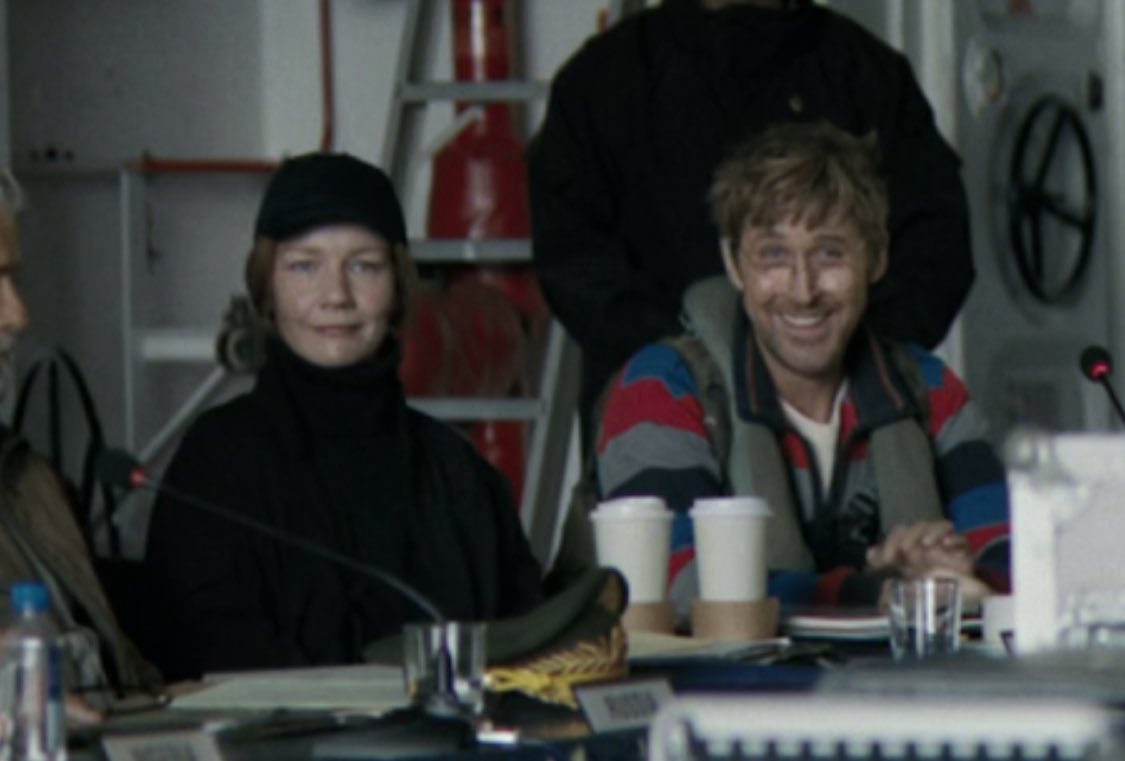
the pitt is full of nepo babies and veteran actors but you guys are mad at this guy for being grateful that he finally gets to pay his bills after struggling for 15 years? you gotta calm down man
@hoziermybeloved It took me 11 hours to come up with that answer. I'm still not happy with it. I used to got to AA meetings just to hear people talk. I wasn't recovering, I was just crashing the meetings so I wasn't alone. I think this is the first question I don't have an answer for. Thinking.
When I was DEEP in postpartum depression I used to @ Richard Siken and I know some ppl think he’s a rude grumpy old man but I will forever have a soft spot for him bc he did genuinely help shift how I viewed things & offer new perspectives. #GRUMPYOLDMANDEFENCECLUB
You aren't making sense anymore. 1) Apologies don't *work*, they're about being sorry. They aren't a magic trick you use to bend someone to your will. 2) Should you stop? Stop what? Are you just apologizing over and over again? That's weird and gross. 3) If you have to apologize, then you fucked up. Saying sorry isn't alway enough. You get to sit quietly with your hands folded in your lap until they're ready to respond. It may take years. The answer might be "Go pound sand." 4) You don't get to say goodbye, they do. 5) Are they worth it? Worth what? You hurt them and you're evaluating their worth? All of this sounds messed up. 6) I don't even know what that last sentence means.
I invite you to be new threads to weave new networks that harmonize every aspect of life for a renewed society in which time is imbued with eternity, culture preserves memory and fosters dialogue, education promotes the search for truth with a critical spirit, art awakens wonder and gives rise to noble emotions, business recognizes the dignity of each person, and work continues to be a driving force for hope. #ApostolicJourney https://t.co/2IeHrzWmSb
Waiting is a thief. It steals your time. Even when you have your forever love, you are waiting for them to get off of work, waiting for them to wake up on Saturday, waiting for them to get out of the shower. They will have to clean the guest room for your parents visit, walk the dog, exercise. It is all of it you just waiting for their attention.
This is life: learning how to deal with the minutes that are unsatisfactory. It will always be imperfect and you will always want more. Not because you are greedy but because you have a big, strong imagination.
Do something cool, even while you are waiting. Fill the imperfect minutes in a way you decide.
Okay, let’s do a close reading of “Piano Lesson” to chart the leaps and lands. The goal is to stick the landing. To get there, you need a setup. A volleyball metaphor: the association is the set, and the conclusion is the spike. In the poem, there are three things to track: 1) The musical instruments. 2) The artificial body. 3) Transformation. This poem is not a memory poem, and it is not a recovery poem. It is from the third set of poems: the hypotheses. The memory poems are the past. The recovery poems are the present. The hypothetical poems are outside of time. They could be alternate times or even the future.
This book is concerned with the body. One of the main questions of the book is “What is a body and how do you live in one?” This poem is an investigation of the body as an instrument. The conclusions are: 1) Imaginary bodies are hollow. 2) We want to be what we are not. 3) The body can continue its work, even when the hands are finished.
The first thing to track is the musical instruments. They are little landings. The poem can hinge away in any direction, but it stays contained by the repeated return to the musical instruments. The words for the musical instruments are colored red. Visually, you can see how they make stepping stones through the poem. The first big leap/land is the comparison of Pinocchio to a musical instrument. It relies on the connection of a stringed instrument to a stringed marionette. Pinocchio is a pivot. He is the body as an instrument. His proxies are the imaginary friend, the piano, the robot, the lazy Susan. Those comparisons are little conceptual leaps. So the second thing to track is the artificial body. Those terms and concepts are colored blue. The second big leap/land is where Pinocchio returns and wants to be a real boy. It’s where the word want appears. These inanimate things have some animation and agency: the instruments make noise, the piano dreams, Pinocchio desires. Even the lazy Susan has a name and an attitude. The “dream of becoming—” of animating—is supported by the little lands of transformation. The if/then and the becoming are underlined. They are also repeated several times. The ages and dates also count as transformations. The third big leap/land is the effect of the piano pedals. They allow the sound/song of the instrument—the animation of the instrument—to continue after the hands have left the instrument, implying continued animation for Pinocchio after the hands leave the strings.
In an even larger sense of leaps and lands, there are the later poems, where a robot and a ventriloquist’s dummy will also be compared to empty bodies. The idea of an imaginary friend returns in the poem “Spoon.” And the clock, knocked to the floor and left on its back, staring at the ceiling, will be the speaker in the poem “Velocity.”
So, the associations aren’t random. There were scores of associations that occurred to me while writing this poem. I only kept the ones that were in the service of the argument, of the investigation. It would have been easy enough to go on for pages about everything that occurred to me. The goal wasn’t to associate wildly for the sake of it; the goal was compression and cohesion. You need a goal when you’re writing. You need to know why and how you’re doing the things you’re doing. Random thoughts don’t always accumulate in interesting or powerful ways. For me, the strategy of leaping and landing lets me structure my wide-ranging notions and asides into something focused and intentional.
The sentences are clear and make sense. How they follow each other is mysterious. Take each sentence seriously. Don't let the order of them confuse you. A poem isn't a puzzle to figure out, it's a shape a cloud makes. You guess at the shape and it's delightful. Clouds aren't puzzles.
"Here I am leaving you clues" means the speaker is telling you how he feels. You are overthinking it all. The poem isn't alluding to anything, it is telling you facts. Read the poem as if every statement is literal. Tell me what changes.
Poems are art. They are not diaries or advocacy. If you want to "write about it," then write essays or do journalism. Poems aren't supposed to come out the way you want them to. Poems should surprise you. Poems are how you discover things. If you know what you want to say ahead of time, poetry is the wrong venue. Everyone is in pain. Everyone has content. If you want a good poem, make good images. Make good sentences, metaphors, line breaks.
@slooterman Yeah. Caretaking a parent or a child counts, too. Not just a partner. Some would even argue that the bar back that cleans the bathrooms when the bar closes is performing a type of love.
I found a 14th century poem by a rabbi wishing he had been born a girl & I cried for half an hour
Absolutely heartbreaking that practically every single trans person born more than 100 years ago had to die without transition. And even worse that so many of us still have to