An amazing tale of how nature keeps evolving, sometimes flummoxing us humans as we try to fix what we broke, via @alexaroblesgil https://t.co/0Regd3xqwW
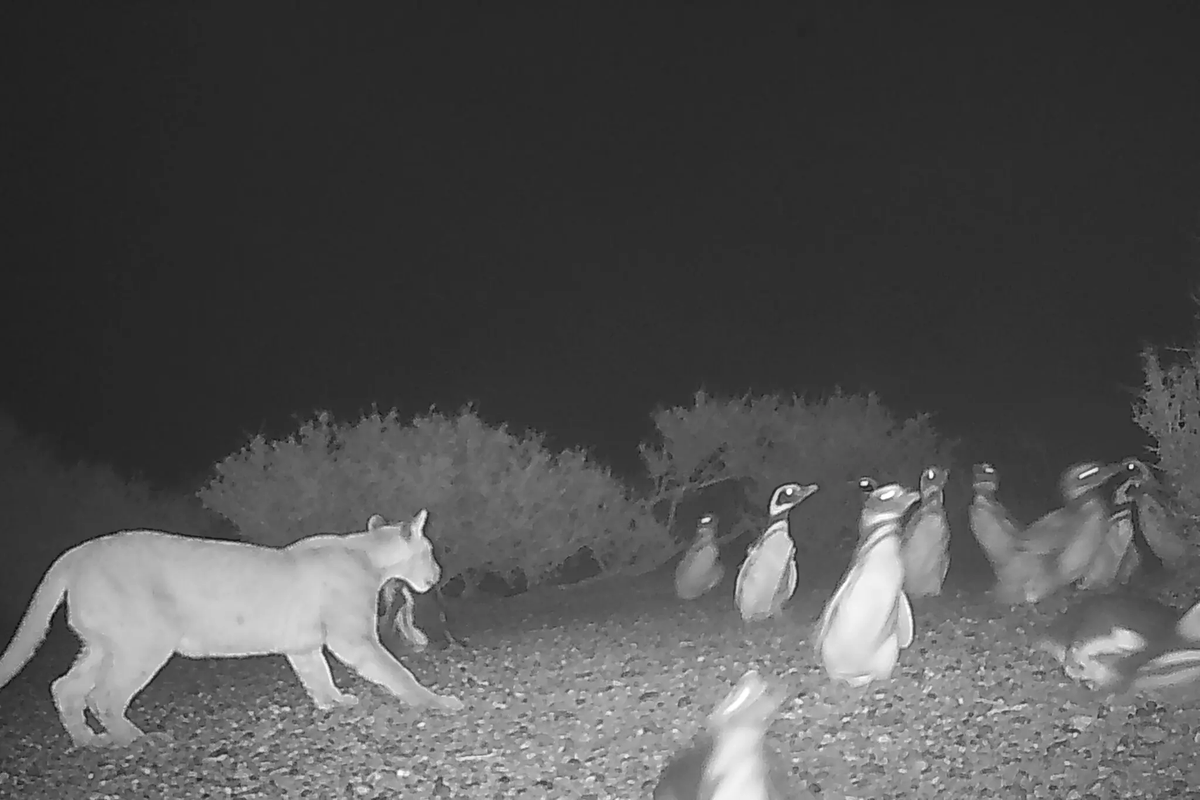
I think this picture of a puma in Patagonia pursuing penguins it wants to prey on is probably my favorite wildlife photo of the year (via Mitchell Serota)
#Sharks & Rays Gain Sweeping Protections From #Wildlife Trade | By @AlexaRoblesGil for @NYTScience
The species brought under an international trade ban “are some of the species that have been traded almost to #extinction,” said Luke Warwick.
https://t.co/8Wmh6AgOoQ @WCSsharks
Some personal news: I'll be joining The New York Times as a reporting fellow on the Science desk in June! Hard to put into words how excited and grateful I am for this opportunity. So happy to be back in New York.
https://t.co/uuaJH9SFjc
Once a surfer's paradise, a string of deadly attacks made Réunion Island synonymous with one word only: sharks. But a team of scientists turned this tiny island into a hub of lifesaving research. For @ScienceMagazine, I wrote about this fascinating place.
https://t.co/rQkfUvuozR
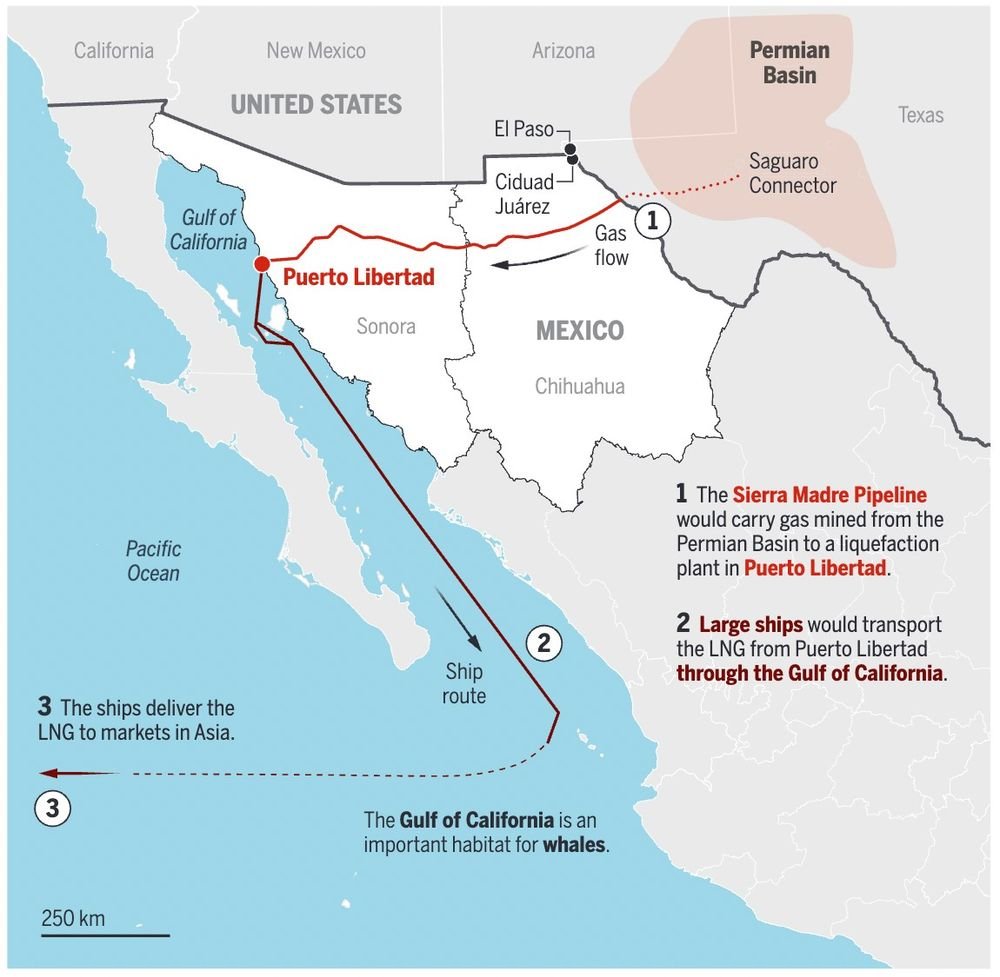
Saguaro Energía plans to use a 500-mile-long pipeline and a fleet of tankers to move up to 2.8 billion cubic feet of natural gas per day from wells in Texas, through Mexico, and then across the Pacific Ocean, primarily to Asia. The tankers would navigate through a whale hotspot.
In Mexico, a planned gas terminal threatens an important whale sanctuary. The Saguaro project would routinely send huge tankers through the Gulf of California. If it moves forward, "we are going to regret it a lot," a whale researcher told me. https://t.co/tK5lASx5iO
Humpback whale songs have the same statistical structure as human language, offering a glimpse into the origins of complex communication.
Learn more: https://t.co/kXkRUS5Fnq
Humans spend a lot of time and money keeping their hair from getting too oily. Polar bears, on the other hand, depend on that greasy sheen to prevent ice from sticking to their bodies in frigid Arctic weather. https://t.co/7426vGgZaS
How do polar bears keep their fur ice-free despite living in the Arctic? These scientists have an answer
My latest / @ScienceMagazine
https://t.co/1FKJBgVW78
A team of scientists trekked for two weeks and collected the sounds of birds, frogs, a jaguar and whales in order to make this song. https://t.co/QthmA55cTy
This is the way to give a song a natural vibe. A team of researchers trekked through Colombia and recorded the sounds of birds, frogs, jaguars and more, and used them to create a version of the national anthem. @alexaroblesgil with the story. https://t.co/6DLouEsdlg
🧵 1/7 The Atacama Desert, with its extraordinary darkness, is a haven for astronomy. But light pollution threatens its skies, making it harder to observe planets and stars.
Here's how Chile is working to protect the night ⤵️
🔗: https://t.co/aLP3RTLpwE
After Hurricane Helene hit the southeast, there were reports of as many as 40 hellbenders washed out in a single area. In the 'Salamander Capital of the World', the impact for these amphibians remains uncertain.
My story for @SmithsonianMag
https://t.co/wt8iteFOe1
On the evening of October 22, Grizzly 399 was hit and killed by a car south of Grand Teton National Park, leaving behind a cub named Spirit. Was her death preventable?
My latest @SmithsonianMag
https://t.co/a86V5ntKcV
Grizzly 399 became a celebrity of Grand Teton National Park in her lifetime. Now, her death has drawn attention to wildlife-vehicle collisions and how they might be reduced. https://t.co/pYSwqj0P6X