🚨 We’re hiring! Oxford Biology is recruiting 3 new Associate Professors in:
🌱 Plant Sciences
🦉 Animal Behaviour
🔬 Molecular Cell Biology
Join us as we move into our new building with world-class research & teaching facilities.
Vacancies 👉 https://t.co/FEI1YO6ghz
Excited to share our new study revealing the intricate dynamics of pregnancy & postpartum physiology! We analyzed 40M lab tests from 300K pregnancies and 160K women (cross-sectional),
we mapped week-by-week changes starting from preconception to months-long postpartum recovery.
New paper!
Our stick insects have weird chromosome segregation.
The major centromere protein, CenH3, binds to the autosomes in a monocentric pattern, but in a holocentric pattern on the X.
https://t.co/GIiqZy6mQ6
New paper!
Dosage compensation in male reproductive tissues is present only in the early nymphal stages. This is likely due to the establishment of meiotic sex chromosome inactivation during development.
https://t.co/oZHRd6CNr1
We have our very detailed protocol out that walks through the process of going from an intact fly to an annotated genome assembly.
@DK_Fabian, @erikgarrison, and @LabGlover
Online now: Protocol for preparing Drosophila genomic DNA to create chromosome-level de novo genome assemblies https://t.co/feYX0EBkfU #protocol#starprotocols#cellpress
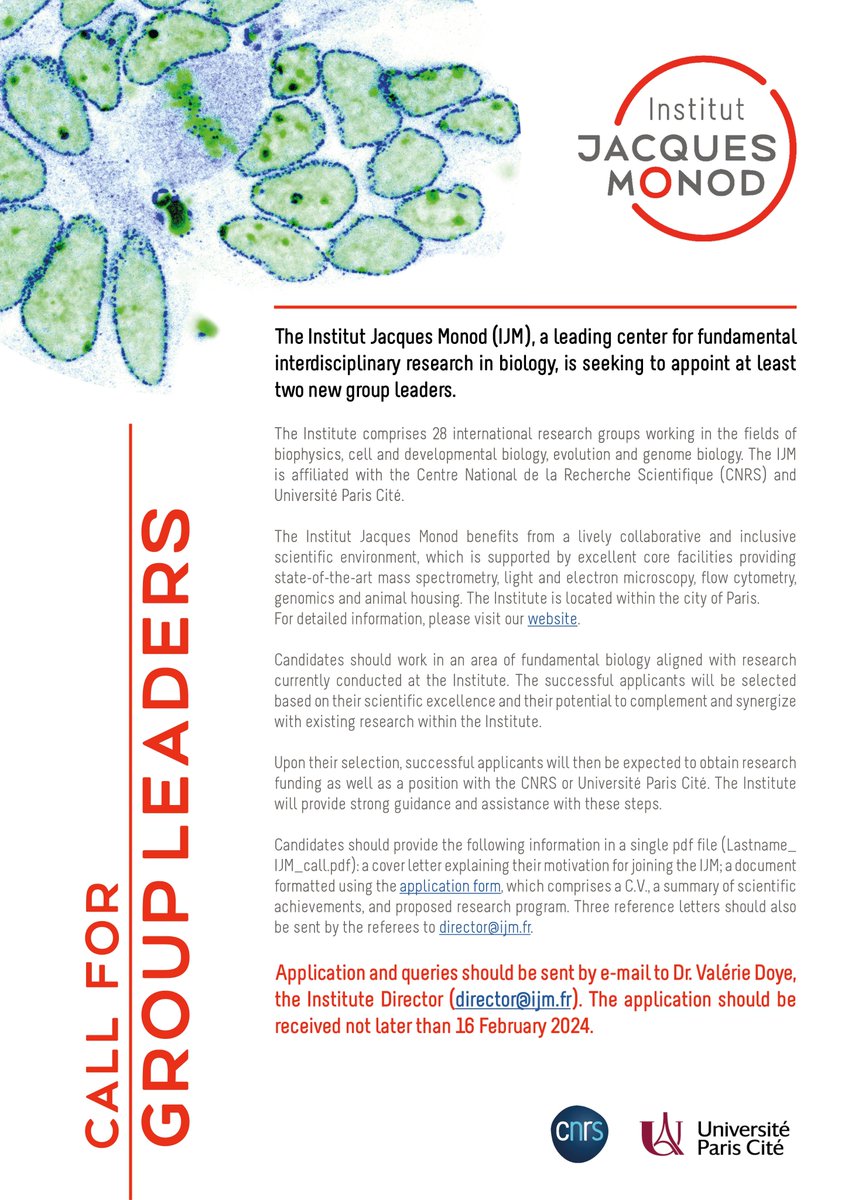
❗️Call for Group Leaders❗️
The @IJMonod, a leading center for fundamental interdisciplinary research in biology, is seeking to appoint at least two new group leaders.
➡️https://t.co/QLbio8Evfk
Apply before February 16th 2024
Application form➡️https://t.co/8UAZGjGlgX
There can’t be a better time to present our recent review/perspective on Gastruloids — a minimalistic model to study complex developmental metabolism | Emerging Topics in Life Sciences | Portland Press https://t.co/oGIHqEXn8b
!!!New paper alert with @AlexisLSperling !!!
@PlantMethods
Very nice new in situ protocol for plant-parasitic nematodes - un-ambiguous localisation of multiple transcripts within the same parasite.
https://t.co/9uizwRe5VA
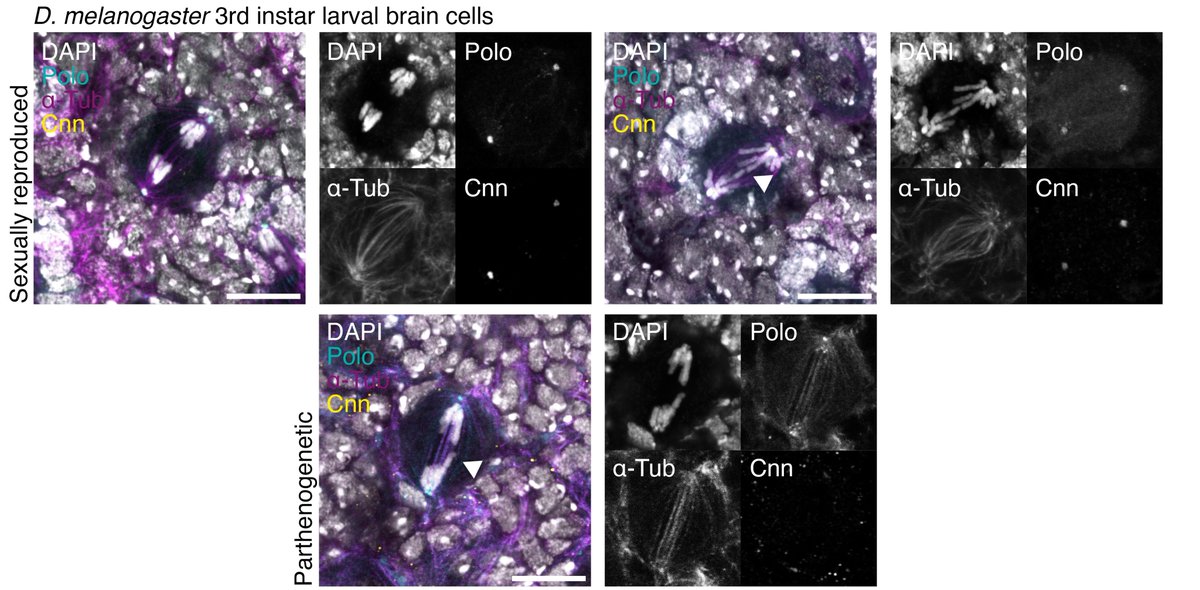
I have a new parthenogenesis paper with @LabGlover!
We found that aneuploidy arises during development in natural Drosophila parthenogens and our genetically induced parthenogens
@HeredityJournal
https://t.co/RVDCPpZmfm
Interested in figuring out if an animal is secretly capable of facultative parthenogenesis?
@LabGlover and I made our detailed method available
It works in Drosophila and is worth a try in other animals!
For an excellent start to the week, why not delve into this excellent new preprint by @AlexisLSperling@Seb_EvdA at @CropSciCentre ? 🪱
'Whole mount multiplexed visualization of DNA, mRNA, and protein in plant-parasitic nematodes'
https://t.co/sl42BVi7EE
Wrap your eyeballs around this!
New in situ protocol by @AlexisLSperling
Multiple mRNA, in the same animal, sub-cellular resolution 🥲. Here is DG + SvG effector at the same time.
Preprint:
https://t.co/hzepii49NJ
@plantsci@CropSciCentre
@JullienFlynn@NeedhiBhalla@DK_Fabian@erikgarrison@LabGlover Thank you! I haven't come across any specific mutant that is associated with triploid or or tetraploid offspring. We never see it in the sexually reproducing offspring that have the same maternal genotype, so it is not the mutations themselves that cause it.
I am excited to share the final version of our work on the genetic basis of virgin birth (parthenogenesis) in fruit flies! It was a joy working with @DK_Fabian@erikgarrison@LabGlover on this understudied phenomenon.
https://t.co/y1rcag4cOE
@Hoosierflyman@joshdubnau@DK_Fabian@erikgarrison@LabGlover There are a number of obligate parthenogenetic animals, in Diptera and beyond, that are triploid. We know that some of the triploid D. mel are fertile so perhaps what enables parthenogenesis also enables triploid meiosis.